Bookshelf Travelling for Insane Times: a New Friday Meme

Judith at Reader in the Wilderness has started a new meme for Fridays – Bookshelf Travelling for Insane Times.

The idea is to share your bookshelves with other bloggers. Any aspect you like:

1. Home.
2. Books in the home.
3. Touring books in the home.
4. Books organized or not organized on shelves, in bookcases, in stacks, or heaped in a helter-skelter fashion on any surface, including the floor, the top of the piano, etc.
5. Talking about books and reading experiences from the past, present, or future.

Whatever you fancy as long as you have fun basically.

Here is my first post for this meme:

I’ve made it simple by taking a photo of one of my bookshelves, so I didn’t have to think about which books to choose. I attempt to organise my shelves in a-z author order but without rearranging all my books I couldn’t insert these in the right places, so they have ended up on this shelf as a random collection of books.

There are 18 books on this shelf but the photo below shows just part of that shelf.
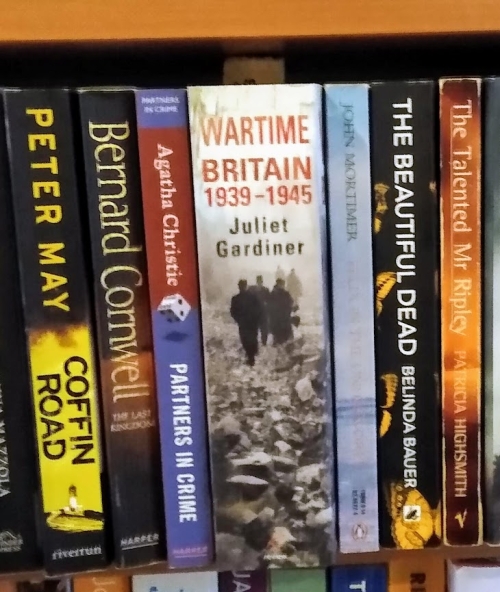
Friday meme 10 random books

I haven’t read any of these books.

Coffin Road by Peter May, one of my favourite authors. It’s set on the Hebridean Isle of Harris, where a man stands bewildered on a deserted beach. He cannot remember who he is. The only clue to his identity is a folded map of a path named the Coffin Road. He does not know where this search will take him.

The Last Kingdom by Bernard Cornwell, the first book in the Last Kingdom series. It’s set in the England of the ninth and tenth centuries. These were the years when the Danish Vikings had invaded and occupied three of England’s four kingdoms, and when King Alfred, his son and grandson fought back and won the freedom of the country again.

Partners in Crime by Agatha Christie, another of my favourite authors. This book is a collection of her Tommy and Tuppence stories. I’ve some, but not all of these.

Wartime Britain 1939 – 1945 by Juliet Gardiner. This is a book I’ve had a long time and  I’ve dipped into it and read some short sections. It’s social history about how the war impacted the lives of men, women, and children on the Home Front in Britain.

Felix in the Underworld by John Mortimer, the author of the Rumpole books. In this novel a successful and self-contained novelist, Felix Morsom suddenly gets thrust into the underworld of London’s homeless, when a strange woman proclaims him the father of her son and he becomes a prime suspect in a murder case.

The Beautiful Dead by Belinda Bauer, crime fiction. Eve Singer is a TV crime reporter who finds that a twisted serial killer is using her to the publicity he craves. She has to decide how far she’s willing to go … and how close she’ll let him get.

The Talented Mr Ripley by Patricia Highsmith. This is this first novel about Tom Ripley: a young striver, newly arrived in the heady world of Manhattan in the 1950s. He wants money, success and the good life and he is willing to kill for it.

I’d love to get round to reading more of my TBRs whilst I’m in self-isolation!
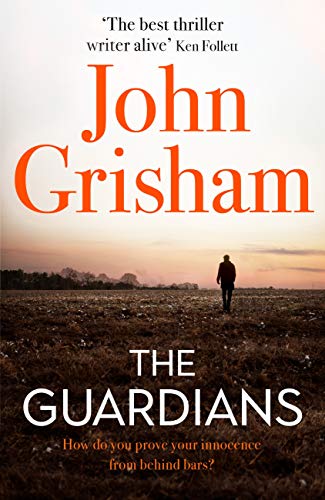
My Friday Post: The Guardians by John Grisham

Book Beginnings Button

Every Friday Book Beginnings on Friday is hosted by Gillion at Rose City Reader where you can share the first sentence (or so) of the book you are reading, along with your initial thoughts about the sentence, impressions of the book, or anything else the opener inspires.

The guardians

The Guardians by John Grisham is described as ‘A canny and engrossing blend of two types of Grisham novel: enough of the familiar formula of a single lawsuit in a single town, mixed with a more picaresque and multistranded approach that has the significant advantage of taking in a wider swathe of America’ – The Sunday Times

Duke Russell is not guilty of the unspeakable crimes for which he was convicted; nonetheless, he is scheduled to be executed for them in one hour and forty-four minutes.

Also every Friday there is The Friday 56, hosted by Freda at Freda’s Voice.

30879-friday2b56These are the rules:

  1. Grab a book, any book.
  2. Turn to page 56, or 56% on your eReader. If you have to improvise, that is okay.
  3. Find any sentence (or a few, just don’t spoil it) that grabs you.
  4. Post it.
  5. Add the URL to your post in the link on Freda’s most recent Friday 56 post.

Page 56:

Otis has been married to June for seventeen years. Frankie is assuming he is quite aware of her struggles with the truth, so why beat around the bush?

‘You’re calling her a liar?’ Otis said.

‘No not now. But you said yourself she was a different woman back then. She and  Quincy were at war. He owed her a bunch of money that he couldn’t pay. The cops leaned on her to take the stand and point the finger.’

Blurb

22 years ago Quincy Miller was sentenced to life without parole. He was accused of killing Keith Russo, a lawyer in a small Florida town. But there were no reliable witnesses and little motive. Just the fact that Russo had botched Quincy’s divorce case, that Quincy was black in a largely all-white town and that a blood-splattered torch was found in the boot of Quincy’s car. A torch he swore was planted. A torch that was conveniently destroyed in a fire just before his trial.

The lack of evidence made no difference to judge or jury. In the eyes of the law Quincy was guilty and, no matter how often he protested his innocence, his punishment was life in prison.

Finally, after 22 years, comes Quincy’s one and only chance of freedom. An innocence lawyer and minister, Cullen Post, takes on his case. Post has exonerated eight men in the last ten years. He intends to make Quincy the next.

But there were powerful and ruthless people behind Russo’s murder. They prefer that an innocent man dies in jail rather than one of them. There’s one way to guarantee that. They killed one lawyer 22 years ago, and they’ll kill another without a second thought.

~~~

Have you read this book? What did you think?

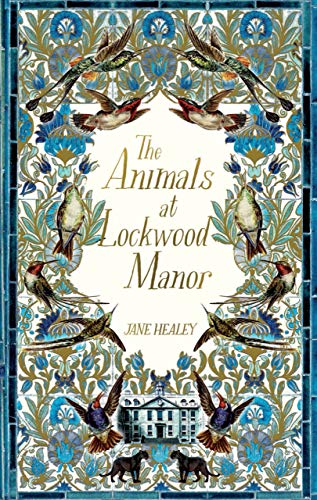
The Animals at Lockwood Manor by Jane Healey

A terrible secret lies buried at the heart of this house

Animals at Lockwood Manor

Mantle| 5 March 2020| 352 pages| e-book| review copy via NetGalley| 3*

I enjoyed The Animals at Lockwood Manor by Jane Healey although I think is too long with some repetitions and so in places I felt it dragged a bit. It is historical fiction, part a love story and part a mystery, beginning in 1939 at the outbreak of World War Two. A taxidermy collection of mainly mammals is being evacuated from a natural history museum in London to Lockwood Manor in the countryside to save them from the threat of bombs. Owned by Major Lord Lockwood, the Lockwood estate is ancient, although most of the house had been built in the Jacobean style in the nineteenth century, with two round turrets and a pierce parapet with pinnacles. Most of its many rooms are empty as the only residents are the Major and his daughter, Lucy along with the servants, whose numbers are down as they enlist.

In charge of the collection is Hetty Cartwright, a young woman, who soon realises she had taken on more than she expected. And it’s not long before, one after another, some of the animals go missing or are mysteriously moved from their positions in the long gallery. The book begins well as the scene is set, and I could feel the tension and mystery surrounding the house and in particular surrounding Lucy and her mother, Heloise. Heloise died in a car crash not long before the book begins, but we see her in Lucy’s journal in which she writes down her nightmares, thoughts and memories.

The narration alternates between Lucy’s journal and the events as experienced by Hetty. The characters of Hetty and Lucy are well drawn as their relationship develops, and the house and the museum animals too are vividly described. I loved the details of the museum collection, and how the conditions at Lockwood affected their condition as insects invaded the stuffed creatures. 

After a good start the pace then slows down and not a lot really happens until the final dramatic ending. Some of the characters are caricatured – for example the Major who is portrayed as an overbearing lecherous man, a pantomime villain. There is a more than a touch of the supernatural in the book, and a lot in it that reminded me of Jane Eyre and The Woman in White, as Hetty fears she is descending into madness. It’s the type of story that would make an excellent film or TV drama and, this is not something I usually think, would probably be better than the book.

Many thanks to Mantle for a review copy via NetGalley.

Reading Challenges: Mount TBR Challenge, Calendar of Crime, Historical Fiction Reading Challenge

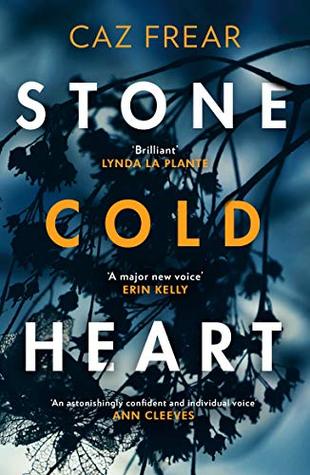
Stone Cold Heart by Caz Frear

Stone Cold Heart

2*

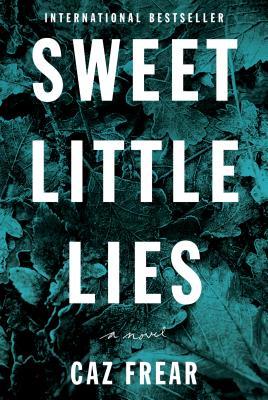
Stone Cold Heart is Caz Frear’s second novel and I’m sorry to say that I didn’t get on with it very well. However, I’m in the minority as there are lots of 4 and 5 star reviews on Amazon and Goodreads. My copy is a NetGalley copy that I’ve had far too long – I did start reading it when I first downloaded it but soon realised that it would be better if I read her debut novel, Sweet Little Lies first. These are police procedurals written in the first person present tense narrated by DC Cat Kinsella who is part of the Murder Investigation Team 4, and her personal life is a major part of both books.

Naomi Lockhart, a young Australian woman was murdered and at first it looked as though her flatmate had killed her. The night before she was murdered Naomi had been at a party held by her employer, Kirstie Connor and her husband, Marcus. Also at the party were Joseph Madden and his meek wife, Rachel, Marcus’ sister. Joseph is an emotionally abusive narcissist, who manages the local coffee shop and when suspicion then falls on him and he is arrested he claims that Rachel is setting him up. And so begins a most convoluted and tangled tale about Joseph and the rest of his family, filled with secrets and lies, most of which are complete red herrings.  

Alongside the murder mystery, the book follows the story of DC Cat Kinsella’s family and the mystery surrounding Maryanne Doyle that was told in Sweet Little Lies – you really do need to read that book first to understand what is going on in her family life in this book. Cat is a conflicted character to say the least and although other readers have found her a warm and likeable character I found her one of the most irritating fictional detectives in crime fiction. She is full of guilt and angst about her family, in particular about her father and her brother. She is keeping the identity of her boyfriend a secret from everybody – if you’ve read Sweet Little Lies you’ll know why, otherwise you’ll be as mystified as her family and police colleagues are.

I found the secrets surrounding Cat’s family the most interesting part of the book, more so than the investigation into Naomi’s murder. The Murder Investigation Team all get on well together, but their continuing team meetings in which they endlessly consider all the possible theories about the murder and what happened, although interesting at first soon became tedious – far too much hypothesising. The book just dragged on and on. And then there is the ending – except it’s just the murder mystery that ends as it looks as though there is still more to come about Cat Kinsella. If you like long detective stories, full of twists and turns, lots of red herrings and dubious and unreliable characters who withhold evidence you may like it more than I did.

Amazon UK link
Amazon US link

My thanks to the publishers, Zaffre, for a review copy via NetGalley.

Reading challenges: Mount TBR challenge and Calendar of Crime – the main action takes place in November.

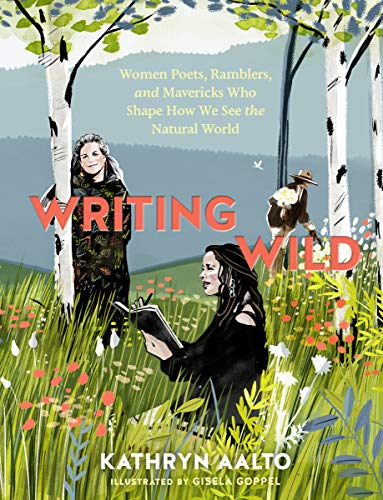
Writing Wild by Kathryn Aalto

Writing Wild

3.5*

‘An exciting, expert, and invaluable group portrait of seminal women writers enriching a genre crucial to our future.’ —Booklist

Blurb:

In Writing Wild, Kathryn Aalto celebrates 25 women, both historical and current, whose influential writing helps deepen our connection to and understanding of the natural world. These inspiring wordsmiths are scholars, spiritual seekers, conservationists, scientists, novelists, and explorers. They defy easy categorization, yet they all share a bold authenticity that makes their work both distinct and universal.

Part travel essay, literary biography, and cultural history, Writing Wild ventures into the landscapes and lives of extraordinary writers and encourages a new generation of women to pick up their pens, head outdoors, and start writing wild.

My thoughts:

Writing Wild: Women Poets, Ramblers and Mavericks Who Shape How We See The Natural World is by Kathryn Aalto and illustrated by Gisela Goppel. Published by Timber Press it will be released in paperback on 1 April, with a Kindle edition to follow on 14 April 2020.

I don’t read a lot of nonfiction, but I do enjoy reading books about nature, so Writing Wild appealed to me. Kathryn Aalto’s reason for writing her book was to highlight what these 25 women writers have written, their historical significance and the barriers, biases and bullying they overcame to write. It covers two hundred years of women’s history through nature writing, including natural history, environmental philosophy, country life, scientific writing, garden arts, memoirs and meditations and does not aim to dismiss men’s contributions. Gisela Goppel’s portraits of each writer head each chapter. Aalto writes an introduction to each writer and includes excerpts of prose, poems and essays with added recommendations for further reading, plus a list of sources and an index.

Predominantly American and British, some of these women writers are familiar to me, such as Dorothy Wordsworth, Vita Sackville West, Nan Shepherd, Rachel Carson, Mary Oliver, Annie Dillard and Helen Macdonald. Others are new to me, but I would like to read several of their works, such as Andrea Wulf’s book The  Brother Gardeners in which  she explores how England became a nation of gardeners. Wulf, a design historian, writes horticultural and historical history through narrative nonfiction, borrowing techniques from fiction to make nonfiction come alive. Elena Passarello’s Animals Strike Curious Poses essay collection, which Aalto describes as written with  laugh-out-loud humour and depth of empathy, also particularly appeals to me.

One of the things I learned reading this book is the name ‘Cli-fi’. I hadn’t come across it before but of course, it is not a new genre. As Aalto points out it goes back at least to Jules Verne’s 1889 The Purchase of the North Pole. Contemporary examples including Oryx and Crake by Margaret Atwood and Barbara Kingsolver’s Flight Behaviour. The writer she chooses to illustrate this genre is Saci Lloyd, an acclaimed writer of cli-fi, whose vivid and action packed books include The Carbon Diaries, about the effects of carbon reduction policies. They are gritty eco-thrillers featuring Laura Brown a 16 year old trying to manage life with a carbon deficit card.

Kathryn Aalto is a writer, designer, historian and lecturer. For the past twenty-five years, her focus has been on places where nature and culture intersect: teaching literature of nature and place, designing gardens, and writing about the natural world. Her work explores historic and horticultural themes with a contemporary twist. She is the author of The Natural World of Winnie-the-Pooh: A Walk Through the Forest that Inspired the Hundred Acre Wood (2015) and Nature and Human Intervention (2011). Her website is kathrynaalto.com.

My thanks to Timber Press for a review copy via NetGalley.

Sweet Little Lies by Caz Frear


Sweet Little Lies

3*

Sweet Little Lies is one of my TBRs. When it was first published nearly three years ago I kept seeing rave reviews of Caz Frear’s debut novel and wondered whether I would like it. It begins very slowly and I was beginning to think I wasn’t going to bother finishing it. It was only at about the halfway mark that it picked up pace. What I didn’t like about it is that it’s written in the first person present tense and apart from that I didn’t like the style of writing – very wordy, with much that adds very little to the plot. Once it finally got going this is mainly a police procedural set in the present day in London with flashbacks to Ireland in 1998. Whilst I found the plot a  touch over complicated and relying too much on coincidence I think the characters are well defined, and the dialogue is convincing.

When DC Cat Kinsella was a child of eight, visiting family in Ireland, teenager Maryanne Doyle went missing and Cat suspected her father had something to do with Maryanne’s disappearance because of something she had seen. But she kept it to herself and that had affected her relationship with her father ever since. So she is a complex and conflicted character who has changed her name, from McBride, distancing herself from her family and in particular from her father, whom she both loves and hates.  Her secret means that when the body of a woman, who turns out to be Maryanne Doyle, has been found strangled, not far from the pub that Cat’s father runs in Islington she is in a quandary – should she tell her boss that she had known Maryanne in the past?  But she is desperate to know the truth – and that is what kept me turning the pages to the end of the book.

Amazon UK link
Amazon US link

Reading challenges: Mount TBR challenge and Calendar of Crime – the main action takes place in December.