John Murray Press|7 March 2019 |288 pages|e-book |Review copy|4*I enjoyed The Frank Business by Olivia Glazebook very much. It’s about a rather dysfunctional family in crisis and it begins dramatically:
Frank dropped down dead on Christmas Eve at four minutes past midday. He died alone – alone in a crowded mass of travelling humans – and underneath a big yellow sign: Bus Train Underground Taxi Cashpoint Toilets Tickets Information Help. He fell to the ground in the grip of a dreadful agony; his heart, to all intents and purposes, was splitting in two.
He died at London Heathrow airport, having travelled from his home in France. His next of kin is his estranged daughter Jem, who hadn’t seen him or had any contact with him since she was a child. Trying to find out why he was at Heathrow, she travelled to Frank’s house and discovers that she was not an only child as she had believed, because Frank had also had a son. She finds his name and address on Frank’s laptop and as Frank had died of a congenital heart defect, she decides that she has to warn her half-brother that he may have inherited the defect. But this results in chaos for his son’s family as secrets from the past come to light.
At first I liked Frank, an illustrator. He had been listening to a performance of Hamlet on the radio and was astonished to find that Kathleen Griffin was playing Gertrude with her son Scott playing the role of Hamlet. He had had a brief affair with Kathleen years earlier and on googling Scott he realises that they look so alike that he must be his son. He decides he must see Kathleen to discover the truth.
It quickly becomes clear that Frank is not the nice man I had first imagined – he’s a violent, cruel man, capable of abusive and despicable behaviour. Just what is the truth? What had happened in the past – why hadn’t Jem, a young woman of 26, not seen Frank since she was a small child and why was she brought up by a guardian, Marian, who had been her mother’s nanny?Scott, known to his family as Sonny, had no idea that Walter was not his biological father and the whole family find it almost impossible to come to terms with their situation.
I’m not going into any more detail about the plot, other than to say that the whole sad story is revealed as Kathleen remembers the past and her affair with Frank. It’s well written and had me gripped right to the end. The characters are all flawed in one way or another and come across as real people. I read it quickly, keen to find out how they sorted out the mess this has made of all their lives and my only criticism is that the ending seems a bit rushed and I think it wraps everything up a bit too neatly.Olivia Glazebrook studied English Literature at University College London and has written as a journalist, screenwriter, film critic and book critic for fifteen years. The Frank Business is her third novel. Her earlier books are The Trouble With Alice (2011) and Never Mind Miss Fox (2014).My thanks to the publishers, John Murray Press, for my review copy via NetGalley.
In 1536, Henry VIII was almost toppled when Northern England rose to oppose the Dissolution of the Monasteries. For a few weeks Robert Aske, the leader of the rebels, held the fate of the entire nation in his hand … An enthralling novel about a moment in history when England’s Catholic heritage was scattered to the four winds by a powerful and arrogant king.
Opening paragraph:
Sir John Uvedale had business at Coverham Abbey in Wensleydale, lately suppressed, so he sent his people on before him to Marrick, to make ready for him, and to take over possession of the Priory of St. Andrew from the Nuns, who should all be gone by noon or thereabouts. Sir John’s steward had been there for a week already, making sure that the Ladies carried away nothing but what was their own, and having the best of the silver and gold ornaments of the Church packed up in canvas, then in barrels, ready to be sent to the King. The lesser stuff was pushed, all anyhow, into big wicker baskets; since it would be melted down, scratches and dints did not matter.
My thoughts:
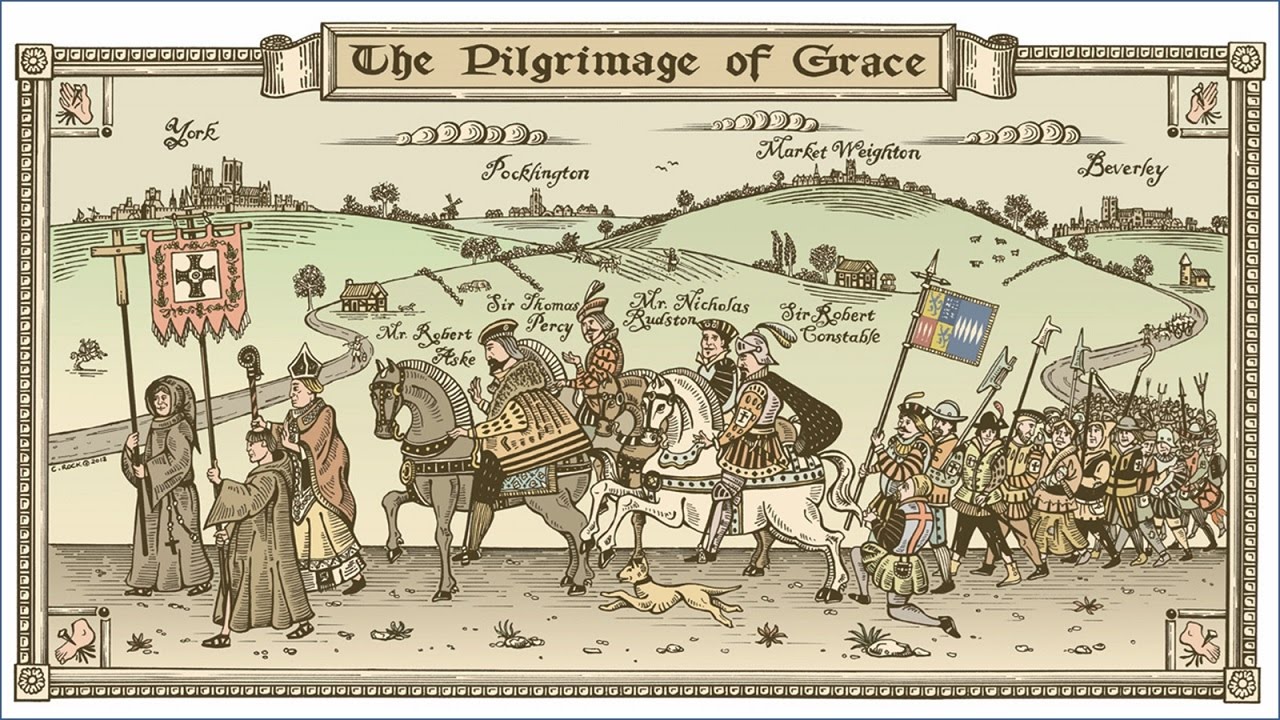
The Man on a Donkey is the longest book I’ve read this year and at times I thought it was overlong. It certainly is not a book to read quickly, as John Cooper writes in his Introduction it ‘requires persistence from the reader.’ Hilda Prescott (1896 – 1972) was a historian and biographer as well as a novelist and based this novel on documentary evidence relating to the Pilgrimage of Grace in 1536 led by Robert Aske, a lawyer. It was a protest against Henry VIII‘s break with the Roman Catholic Church, the Dissolution of the Monasteries, and the policies of the King’s chief minister, Thomas Cromwell.
It’s written in the form of a chronicle, written from the various characters’ viewpoints. It’s as much about the ordinary people as the rich and powerful. There are many characters including many real historical people, such as Henry VIII, Katherine of Aragon, Anne Boleyn, Thomas Cromwell, Princess Mary and Thomas More amongst others. The two main characters are historical figures too – Robert (Robin) Aske and Christabel Cowper, the last Prioress of the Benedictine nunnery at Marrick in Yorkshire. They and the fictional characters came to life as I got used to their individual voices – some instantly likeable, such as Robin and Christabel despite their flaws and others so despicable. Henry VIII, a tyrant and Thomas Cromwell, a real villain, for example were much reviled as between them they created fear and terror in a totalitarian regime.
In fact this book is in line with much of what I had learnt of the period from history lessons at school, films, books and TV series up until I read Hilary Mantel’s books that portray a much kinder view of Cromwell. But just like Mantel’s books, this book transported me back to that time, with lyrical descriptions of the settings, both of the countryside and of the towns, of Marrick Priory and of the king’s court, of the people, and the mood of the times, both religious and political.
The Pilgrimage of Grace was not a revolution against Henry but an attempt to get him to change his mind and to understand how people felt. They wanted Henry to stop the dissolution and his attacks on the monks and nuns and to return the country to following the Pope. There were several uprisings and thousands of people were involved, nobles as well as the ‘commons’. But it cost many people their lives in excruciating pain as they were hanged, drawn and quartered.
The source of the book’s title comes from the mystic, Malle, a simple-minded young woman who the nuns had bought at a York market in the belief that she was a mermaid. She is a strange character who sees a vision of Christ riding on a donkey over a bridge across a stream in the Yorkshire countryside. Her visions and strange sayings continue to puzzle and frighten people throughout the book.
Reading A Man on a Donkey has reminded me that I have Tracy Borman’s biography of Thomas Cromwell still to read. It’s a detailed account of his life, subtitled ‘the untold story of Henry VIII’s most faithful servant’. I wonder what this will reveal about Cromwell’s controversial character?
After I’d enjoyed reading Watching You by Lisa Jewell so much I looked for more of her books to read and borrowed I Found You from my local library.
Blurb:
Surrey: Lily Monrose has only been married for three weeks. When her new husband fails to come home from work one night she is left stranded in a new country where she knows no one.
East Yorkshire: Alice Lake finds a man on the beach outside her house. He has no name, no jacket, no idea what he is doing there. Against her better judgement she invites him in to her home.
But who is he, and how can she trust a man who has lost his memory?
My thoughts:
I Found You plunged me straight away into the mystery of the identity of the man Alice Lake found sitting on the beach at Ridinghouse Bay (a fictional seaside resort) in the pouring rain. He can’t remember who he is, or how or why he is sitting there. And, of course, I thought he must be Lily Monrose’s husband, Carl who has gone missing. These two strands of the story are written in the present tense. They alternate with another strand written in the past tense about events that took place 22 years earlier when a family of four, teenagers Kirsty and Gray, with their parents, are spending their summer holiday in Rabbit Cottage, a former coastguard’s cottage. That holiday changed all their lives.
One of the things I liked about this novel is its strong sense of place. Ridinghouse Bay is a small seaside town with the usual attractions for holidaymakers – a pub, a seafood restaurant, cafe, a beach bar and a fairground . And there is a map showing all the locations around the Bay.
Alice’s cottage is tiny, an old coastguard’s cottage built over three hundred years ago.
Beyond her window, between Victorian street lights, a string of sun-faded bunting swings back and forth in the boisterous April wind. To the left there is a slipway where small fishing boats form a colourful spine down to a concrete jetty and where the great dreadful froth of the North Sea hits the rocky shoreline. And beyond that the sea. Black and infinite. (page 2)
Alice is a bit eccentric, a generous and kind-hearted woman, living on her own with her four children and three dogs. The cottage is too small for her family, cramped, with low ceilings that slope and bulge, but she invites the man in to stay in the studio/shed in her back yard which is where she makes art from old maps to sell on the internet. The children decide to call him ‘Frank’ and she tries to help him remember what had happened to him. Then Frank begins to have flashbacks and thinks he may have killed someone.
Lily, meanwhile is trying to find Carl. They had met and married in the Ukraine and although she has spoken to his mother on the phone she has never met her. The police tell her his passport is a fake and his mother isn’t answering her phone, but she finds her address and goes to see her. But the house is empty.
I read this quickly, it’s very readable. The characters are realistically drawn with depth – and the puzzle about Frank’s identity kept me guessing. It’s not as clear-cut as it first appeared and I kept changing my mind as I read on. It certainly isn’t the ‘cosy’ mystery, that the opening pages seem to indicate, but it is a story that me gripped as the tension rose to a dramatic and violent climax.
I’ll certainly be looking out for more of Lisa Jewell’s books to read.
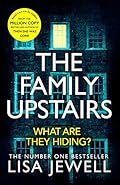
There will be a new Lisa Jewell novel – The Family Upstairs which is out on 25 July. Her earlier books are:
Ralph’s Party (1999) Thirtynothing (2000) One-hit Wonder (2001) A Friend of the Family (2003) Vince and Joy (2005) 31 Dream Street (2007) The Truth About Melody Browne (2009) After the Party (2010) The Making of Us (2011) Before I Met You (2012) The House We Grew Up In (2012) The Third Wife (2012) The Girls (2015) aka The Girls in the Garden I Found You (2016) Then She Was Gone (2017) Watching You (2018)
Penguin UK Viking|21 February 2019 |517 pages|e-book |Review copy|4*
The Wych Elm by Tana French is a long book and it starts very slowly, so it’s a book to savour rather than one to rush through. I was engrossed in this psychological thriller, a standalone book, as dark family secrets gradually came to light. It isn’t a page-turner and yet it is full of mystery and suspense about a family in crisis.
Toby Hennessy, the narrator, is twenty eight. He’s a good looking and charming young man from an affluent and supportive family who love him. He has had an easy start to life, everything had just seemed to fall into place for him. He works for an art gallery in the centre of Dublin, where he does the gallery’s PR and is thinking of getting a place together with his girl friend, Melissa. But then his luck and his life change dramatically when he is brutally attacked by burglars in his flat, leaving him in a terrible state, physically and psychologically damaged. The first mystery is to find out why he was burgled and so savagely beaten. The police investigation doesn’t get very far and Toby is left to solve it himself – for a while at least.
He then learns that his Uncle Hugo has terminal cancer and he and Melissa go to stay with him at the Hennessy family home, the Ivy House, to care for Hugo and to recuperate. Their large family – his parents, his aunts and uncles, and his cousins, Susanna and Leo – descend on Ivy House for lunch every Sunday and one Sunday afternoon Susanna’s young children discover a human skull in the hollow trunk of a wych elm, the biggest tree in the garden.
So there is a second mystery to be solved – and one that is slowly unravelled taking Toby back to his teenage years and he realises that there was so much going on in his friends’ and cousins’ lives that he had just not known about. It’s as though he was cocooned within his own comfortable bubble, totally unaware of the bullying and struggles that other people had to face. He really finds it hard to come to terms with this. Much of the rest of the book is made up of long conversations with his uncle and cousins and the police investigations.
The Wych Elm is an intense book, digging deeply into the nature of privilege, luck and empathy, with the dynamics of relationship, with memory and coming to terms with the past and with death. There were times when I wasn’t sure just how reliable Toby was as a narrator and then I wondered which of the other characters were telling the truth. The account of Hugo’s illness, the way he copes with it and his family’s reactions are completely convincing. This is a nuanced book, with several complex layers and when I wasn’t reading it I was still thinking about it. I thoroughly enjoyed it.
My thanks to the publishers, Penguin UK, for my review copy via NetGalley.
A Wych Elm in our garden – you couldn’t hide a body in this tree!
Poisoned Pen Press|2 October 2018 |227 pages|e-book |Review copy|2.5*
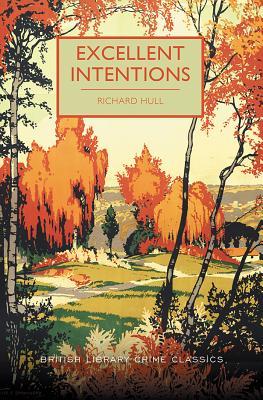
This edition, published in association with the British Library, has an introduction by Martin Edwards. It was first published in 1938 by Faber and Faber. It’s the second book by Richard Hull that I’ve read. However, I didn’t think Excellent Intentions was as enjoyable as the first one, The Murder of My Aunt.
Henry Cargate, of Scotney End Hall, died on a train for London, from a heart attack brought on when he inhaled snuff laced with potassium cyanide. He was an unpleasant man, the most disliked person in the village of Scotney End and several people were suspected of murdering him. One of those suspects (who is not named until near the end of the book) was arrested and is on trial for his murder. The potassium cyanide crystals, mixed into Cargate’s snuff had been bought to destroy a wasps’ nest. So, Inspector Fenby’s investigation concentrates on the limited opportunities available for the murderer to add the poison to Cargate’s snuffbox, which he kept in his study.
The book begins as the counsel for the prosecution makes his opening speech and makes his case for the judge and jury. It then follows the trial through its various stages to the verdict and subsequent appeal.
My problem with this book is that it is so very factual and focused on the times that no one was in Cargate’s study, concentrating on four people that Fenby suspected had an opportunity to tamper with the snuff, and on the position of the bottle of potassium cyanide – whether it was on the desk or on the window sill. It’s clever, but it’s also repetitive and very long-winded. But, I liked the twist in the conclusion.
My thanks to the publishers, Poisoned Pen Press, for my review copy via NetGalley.
This is qualifies for the Mount TBR Challenge and for the Calendar of Crime Challenge for September in the category of the author’s birth month.
A story of guilt, betrayal and secrets, set in colonial era Ceylon.
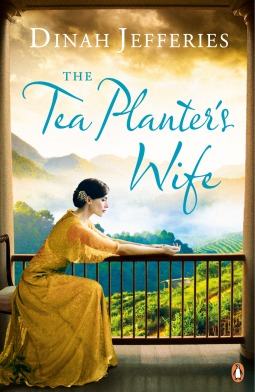
The Tea Planter’s Wife by Dinah Jefferies begins in Ceylon (now called Sri Lanka) in 1913, with a scene showing a woman leaving a house, cradling a baby with one arm. She had left a letter behind and I wondered what was in that letter and about the significance of her choosing to wear her favourite dress – a vivid sea green dress she wore the night she was certain the baby was conceived. It didn’t become clear until nearly the end of the book.
Move on twelve years to 1923, when 19 year old Gwendolyn Hooper arrives at the same house, the home of a tea planter, Laurence, an older man, a widower she had met and married in England after a whirlwind romance. The house is set in beautiful flower-filled gardens, sloping down to a shining silver lake and rising up behind the lake a tapestry of green velvet made up of rows of tea bushes where women in brightly coloured saris were plucking the tea leaves. Gwen is enchanted by the scene and is eagerly anticipating her new life with Laurence.
But this is not the idyllic life she expected – there are secrets, locked doors and a caste system and culture that is alien to her. Laurence, no longer as passionate about her as he had been in England, leaves her alone more than she would like. But with the help of one of the servants, Naveen and Savi Ravasinghe, a Sinhalese artist, she begins to settle into life on the plantation, even though it’s obvious that Laurence disapproves of Savi. In turn, Gwen is not happy about the way a glamorous American woman, Christina flirts with Laurence.
There is a mystery, too, surrounding the death of Caroline, Laurence’s first wife and when she finds a tiny overgrown grave no one wants to talk about it. The arrival of Laurence’s younger sister, Verity, only adds to Gwen’s problems – she’s bitter and twisted and it looks as though she has moved in permanently. So, when Gwen becomes pregnant she hopes that will improve her relationship with Laurence, especially as he is delighted that she is expecting twins. This is in many ways such a sad and tragic story – none more so than what happened when the babies were born and Gwen is faced with a terrible dilemma, one that she feels she must keep hidden from Laurence.
This is historical fiction set in a time and place that I know very little about, but I thought the setting in Ceylon, was beautifully described, exotic and mysterious. It was a time of unrest too, with political and racial tension between the Sinhalese and Tamil workers and the British plantation owners. Gwen was horrified by the living conditions of the plantation workers but her attempts to improve them and provide basic medical treatment weren’t very successful. I thought the portrayal of Gwen’s character was well done, a young woman with a charming husband, older than her and initially their relationship reminded me of Max and his second wife in Daphne Du Maurier’s Rebecca, but the similarity ended there as the story developed.
In her Author’s Note at the end of the book (don’t read it before you read the book as it gives away the main secret) Dinah Jefferies explains that the idea for this novel came from her mother-in-law who told her stories passed down by her family, which included tea planters in Ceylon and also in India in the 1920s and early 1930s. They led her to think about the attitudes to race and the typical prejudices of that time – in particular about how such attitudes and assumptions could spell tragedy for a tea planter’s wife who lived an extraordinarily privileged life. She also includes a list of books that she had found useful whilst researching her book.
I’m not sure that I want to read any more of Dinah Jefferies’s books as although I did enjoy The Tea Planter’s Wife and it held my interest to the end, I also thought much of it was predictable and in places a bit too sentimentally melodramatic for me.
 John Murray Press|7 March 2019 |288 pages|e-book |Review copy|4*
I enjoyed The Frank Business by Olivia Glazebook very much. It’s about a rather dysfunctional family in crisis and it begins dramatically:
John Murray Press|7 March 2019 |288 pages|e-book |Review copy|4*
I enjoyed The Frank Business by Olivia Glazebook very much. It’s about a rather dysfunctional family in crisis and it begins dramatically:


 Reading A Man on a Donkey has reminded me that I have Tracy Borman’s biography of


 BooksPlease