The Lake District Murder by John Bude

I first came across John Bude’s books nearly a year ago on Martin Edward’s blog Do You Write Under Your Own Name and thought they looked very interesting. His books are amongst those published by the British Library – reprints of unknown and undiscovered murder mysteries written in the thirties.  John Bude, whose real name was Ernest Carpenter Elmore, was writing in the Golden Age of detective fiction in the years between the two world wars. In 1953 he became one  of the founding members of the Crime Writers’ Association.

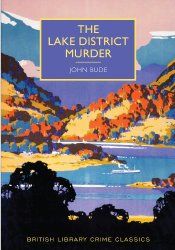
Anyway I made a mental note about the name and it lodged in the back of my mind until this September when I was in the Lake District and came across The Lake District Murder in the tourist information office in Glenridding on the shores of Ullswater. It has a striking cover, reproduced from a London & North Eastern Railway travel poster dating from the 1920s, showing a small steamer boat sailing on Ullswater, surrounded by the hills and mountains of the Lake District.
The LD mystery

The artist was John Littlejohns, who was born in Devon in 1874. He was a painter, illustrator, writer and teacher. As we had just been on a boat trip on Ullswater, in the Lady of the Lake (originally a steamboat), this immediately caught my eye.

The Lake District Murder as Martin Edwards writes in the introduction is ‘a world away from the unreality of bodies in libraries and cunningly derived killings on transcontinental trains.’ It is a police procedural, showing in intricate detail how the detectives investigate a crime. In this case a body is discovered in a car outside a lonely garage on a little used road. At first it appears that Jack Clayton one of the garage owners had committed suicide, but there are a couple of clues pointing to murder and when Inspector Meredith discovers that Clayton was planning to marry and move abroad it turns into a murder investigation. But what is the motive for murder and as everyone seems to have an alibi, who had the opportunity to kill Clayton? 

This book really takes you back in time. It was first published in 1935, which means that police methods of investigations particularly in rural areas was very different. Inspector Meredith uses buses or trains or travels the local roads on a motor cycle with a side car and pops into the local post office to use the telephone. It’s a slow process.

Having recently visited the Northern Lakes, I was fairly familiar with the landscape and could follow the action quite easily, but what I did find difficult was following the calculations Meredith and his colleagues carried out to work out petrol deliveries to the local garages, the lorries’ loads and the petrol storage capacities at the various garages. Inspector Meredith is a likeable character, with a happy home life, although his wife thought the police force made more than enough demands on his time  and tried to discourage their son’s interest in police affairs.

The Lake District Mystery is Bude’s second mystery novel. His first was The Cornish Coast Mystery,  and the third is The Sussex Downs Mystery (due to be released 27 October) both also reprinted by the British Library.
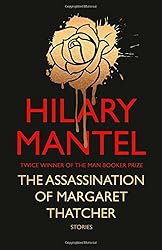
The Assassination of Margaret Thatcher and Other Stories by Hilary Mantel

When I first saw The Assassination of Margaret Thatcher I wasn’t sure I wanted to read it – not because of the controversy over the title story, but because I’m not especially keen on short stories. But Hilary Mantel is one of my favourite authors and after seeing her talk with James Runcie on The Culture Show I decided I definitely wanted to get the book.

I enjoyed this collection of stories,  which are brooding, somewhat melancholic, dark, disturbing and full of sharp and penetrating observations – brilliant! The title story is the last one in the book and is the only new story, the others having first appeared in other publications. I don’t find it easy writing about short stories, especially the very short ones, and so I’m not going to attempt to write about each of the ten stories in this book.

The first one, Sorry to Disturb, describes the dilemma of a British woman living in Jeddah in Saudi Arabia when she finds herself befriended by a young Pakistani businessman – a situation that was ‘ripe for misunderstanding‘. This is one of my favourites in the collection. It has a claustrophobic atmosphere, as feeling trapped in her flat, yet ‘always observed: overlooked, without being precisely seen, recognised’ she was unable to refuse a friendship, wondering if Jeddah had left her ‘for ever off-kilter in some way‘.

This view of life from a slightly different, skewed perspective and of being trapped is there in all these stories. The children in Comma, for example, spend their days during a long hot summer, ‘each day a sun like a child’s painted sun burned in a sky made white with heat’, drawn to watch what was happening at the Hathaways’ house, the house of the rich, built of stone, with a lofty round tower. In both this and Sorry to Disturb, there is an element of distinct class/cultural difference, of being outsiders.

Winter Break is one of the shorter stories, but complete in itself, unlike so many short stories I’ve read. A childless couple are taking a winter break, the husband trying to convince his wife she wants a child – she’s reluctant as she ‘had reached that stage in her fertile life when genetic strings got knotted and chromosomes went whizzing around and re-attaching themselves.’ A moment of anxiety on the journey to their hotel ends in horror.

How Shall I Know You is a much longer story. I often wonder what it’s like for authors going to venues and talking about their books and this story gives an insight into how it can be a dispiriting experience, staying in obscure and dingy places, feeling forlorn, exposed and generally insufficient. It has a grimly humorous side and underneath there is a darkness and bleakness. As with the other stories in this collection it is superbly written – you are there with the narrator, seeing the scenes, meeting the people and understanding their feelings and emotions.

And then the last story – The Assassination of Margaret Thatcher. Mantel sets the scene – of the ‘place where she breathed her last‘ – a ‘quiet street, sedate, shaded by old trees: a street of tall houses, their façades smooth as white icing, their brickwork the colour of honey.’  Waiting for the plumber to arrive, a woman lets a man into her flat, only to find out he has a gun and wants to shoot Margaret Thatcher from the flat window, as she leaves the hospital behind the flats. Far from being horrified or scared the woman sympathises with the gunman – her first reaction is that she should get a fee for the use of her premises. This too is a dark tale told with a dark sense of humour, and with depth of feeling.

Overall then this is a compelling book, brilliantly written, keenly observed, with the power to chill and shock me. It is one that I will re-visit.

  • Hardcover: 256 pages
  • Publisher: Fourth Estate (25 Sep 2014)
  • Language: Unknown
  • ISBN-10: 0007580975
  • ISBN-13: 978-0007580972
  • Source: I bought it

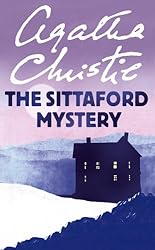
The Sittaford Mystery by Agatha Christie

The Sittaford Mystery is one of the earlier of Agatha Christie’s books, first published in the UK in 1931 and in the US as Murder at Hazelmoor. It’s not one of her Poirot or Miss Marple mysteries, but features Inspector Narracott, ably assisted, if not lead, by Emily Trefusis, a remarkably resourceful and determined young woman. I really liked Emily.

The Sittaford Mystery begins with a seance, or rather a table-turning session at Sittaford House in a tiny moorland village near Dartmoor, not very far from the prison at Princetown. Snow has been falling for four days and now Sittaford is almost completely cut off from the rest of the world. At the seance are the tenants of Sittaford House, Mrs Willett and her daughter Violet, and their neighbours. When the message of Captain Trevelyan’s death is tapped out, followed by the word M-U-R-D-E-R, his friend Major Burnaby immediately decides to see if Trevelyan has indeed been murdered, walking in the snow walking six miles to Exhampton. Of course, when he gets there, he does indeed discover that his friend is dead, probably killed at the precise time that the message was received in the seance.

Inspector Narracott is called in and a young man, James Pearson, Trevelyan’s nephew is arrested for the murder. Emily, his fiancée is convinced of his innocence. She enlists the help of the journalist, Charles Enderby and together they set out to discover the real culprit. Inspector Narracott is a quiet man, a thoughtful and efficient police officer, with a logical mind and attention to detail but Emily is determined and courageous in her search for the truth.

There are two mysteries in this book, who killed Trevelyan and why have the Willetts rented the house from him for the winter? I found it all very interesting, with plenty of clues, red herrings and suspects. Added to that is the escaped prisoner on Dartmoor, reminding me a bit of Dickens’ novel, Great Expectations, and of Conan Doyle’s The Hound of the Baskervilles, emphasised Charles Enderby’s reference to the seance as a ‘queer’ business, and thinking of getting Sir Arthur Conan Doyle’s opinion on the matter.

The setting and the characterisation are good. But although the plotting is good for most of the book, I felt the ending and the motive for the murder are rather inadequate, not least because I don’t think you could actually deduce who the murderer is – I guessed, but it was only a guess – not all of the facts are revealed until the denouement. For this reason I can’t rank The Sittaford Mystery with Agatha Christie’s best mysteries, but it is still a good read.

Note: the TV version in the Agatha Christie Marple series not only changes the identity of the killer but also inserts Miss Marple into the story!

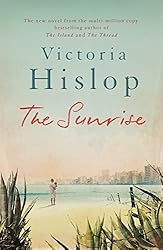
The Sunrise by Victoria Hislop

I love historical fiction – books that take me away to another time and place. I think one definition of historical fiction is that it should be written about 50 years after the events it describes and so The Sunrise by Victoria Hislop just falls short of that, set 40+ years ago in Cyprus, but I think it would be pedantic to say it’s not ‘historical fiction’.
Forty years ago Famagusta, on the east coast of Cyprus was one of the island’s most visited and most glamorous tourist resorts with its beautiful coastline and its luxury hotels and apartments in the modern district, now known as Varosha. The medieval walled city to the north of the beach resort was a historian’s dream, with its Byzantine churches, treasures and14th century cathedral. Then in 1974, following a Greek military coup, Cyprus was split in two as Turkish forces invaded the northern part of the island to protect the minority Turkish Cypriots. The population of Famagusta fled and the city was sealed off with barbed wire, leaving it a ghost town.

The Sunrise begins in 1972 before the war erupted. Everything is looking good – on the surface – the tourist trade in Famagusta is booming.

‘It was one of the world’s finest resorts, purpose-built for pleasure, with little in its conception that did not have the comfort of the holidaymaker in mind. The tall buildings that hugged the coastline mostly comprised hotels with smart cafes and expensive shops beneath them. They were modern, sophisticated and reminiscent of Monaco and Cannes, and existed for leisure and pleasure, for a new international jet set ready to be seduced by the island’s charms.’

Hotel owner Savvas Papacosta is aiming to build up a chain of international hotels as recognisable as the Hilton chain. He and his beautiful wife, Aphroditi, have just opened the island’s largest and most luxurious hotel in Famagusta, unmatched by any other in the resort, offering better facilities and entertainment – The Sunrise.

But beneath the surface tension is building as fear and suspicion grows not only between the Greek Cypriots and the Turkish Cypriots, but also amongst the Greek Cypriots themselves, a minority wanting unification with Greece.

Cyprus was like a vine leaf that looked opaque and green in the hand but held up to the light was lined with veins. The threat of violence coursed invisibly through the island, and while its sunny, sensual image continued to attract visitors, conspiracies were being hatched and whispers clandestinely exchanged behind closed doors.

The first part of the book sets the scene and introduces the main characters against this prosperous but tense atmosphere. This part began really well focussing on the Papacostas and their hotels. But I felt it was rather too long, with so much emphasis on the wealth and prosperity of the owners and their guests. There is so much description of clothes, jewellery and their wealthy lifestyle that I began to tire of it, but I can see why the glamour and lavish lifestyle was emphasised as it provides such a contrast to the deprivations and horrors that came later.

The second part of the book details what happens after Famagusta was isolated, following the lives of the Papacostas and of two families who were employed by the Pappacostas – the Georgious (Greek Cypriots) and the Ozkans (Turkish Cypriots). These two families remain in the city in secret, living in fear for their lives, scouring the streets for food and hiding from the Turkish soldiers.

The tension between the characters is maintained throughout the book and they are well-drawn, so much so that I found myself being irritated by some of their actions – in particular I thought that Aphroditi’s behaviour was so predictable and a little naïve. The story is told through the different characters’ perspective, which gives a rounded view of the events as they unfold and also means that the gory atrocities are reported at a distance rather than seeing them in close-up.

Overall, despite my feelings about the first part of the book, I liked The Sunrise very much – a story of human tragedy in the face of war. It’s a novel about love, friendship and war, the love between parents and their children, and the relationships between men and women. It’s about the struggle for power, about greed, betrayal and deceit. It’s about religion and nationality and the conflict these can cause. Above all it’s about the effect war has on individuals, in particular the brutality and the horrors it engenders.

It is very readable, but I didn’t find it too quick or too easy to read. Victoria Hislop has certainly done her research. I’ve visited the Greek part of Cyprus several times and was aware of the history of the conflict between the north and south of the island, but not in such detail. Victoria Hislop has filled in that detail very well, having visited Cyprus since 1978. Over the last two years she has been there regularly to research this book, although she not been allowed to visit Varosha, which remains entirely sealed with rusting barbed wire and guarded by Turkish troops.

For those who, like me, like historical fiction The Sunrise is a must-read book, especially if you also like Cyprus.

This review of The Sunrise was also in the Autumn edition of Shiny New Books.

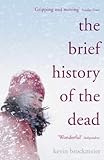
The Brief History of the Dead by Kevin Brockmeier

The Brief History of the Dead by Kevin Brockmeier, has been sitting on my bookshelves for 7 years (and moved house with me). It’s one of those books that I kept taking down off the shelf, flicking through it and putting it back.

As we’re in the middle of the R.I.P. IX Challenge it seemed this could be a good book to read as it’s fantasy fiction set some time in the future, about a place between heaven and earth, and the people who end up there after they’ve died and what happens to them. Amazingly they eat, sleep, fall in love and go to work in a city that looks like any on Earth with trees, houses, roads, businesses, shops, cafés and so on. It seems they are kept there as long as there is someone alive who remembers them. Parallel with this is the story of Laura, trapped in the Antarctic.  She is one of an expedition exploring methods of converting polar ice to use in manufacturing soft drinks. When their communication system fails two of the team go for help leaving Laura on her own. Eventually she too ventures out across the snow towards the Ross Sea, where there is a station studying emperor penguins.

I’m glad I read this book even if it didn’t quite live up to my expectations. The idea is good, and the two stories are dealt with in alternate chapters. It’s soon obvious that there has been some sort of worldwide disaster or epidemic and at first I was caught up with both stories, but the link between them is so obvious that the element of surprise or suspense just frittered away very quickly.

There is plenty of description; rather too much though and I got tired of reading about Laura’s struggle to cross the Antarctic, and the numerous descriptions of her battles to get in and out of her frozen sleeping bag, and hauling the sledge across the snow. There are plenty of flashbacks and digressions that promised to be interesting but were left undeveloped. It’s as though Brockmeier compiled the book from a series of short stories and scenic descriptions. By the end I really didn’t care what happened to any of the characters as they all waited for whatever came next. It’s a shame because I thought the idea had so much promise – what does happen when we die?

Reading Challenges

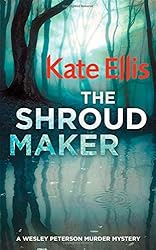
The Shroud Maker by Kate Ellis

When I saw The Shroud Maker by Kate Ellis in the mobile library I thought I’d seen reviews of her books on other blogs, so I borrowed it. It is the eighteenth Wesley Peterson Mystery, but I think it reads well without knowing the background to the main characters. Although I suppose if I went back in the series I’d find that I know things that maybe I shouldn’t.

Summary:

It’s the Palkin Festival in Tradmouth, a town in Devon, when the body of a strangled women is discovered floating out to sea in a dinghy. A year earlier Jenny Bercival had disappeared from the festival and her mother returns to look for her bringing with her anonymous letters claiming she is still alive. DI Wesley Peterson and his boss DCI Gerry Heffernan are investigating the two cases. Are they connected and is there a link to a fantasy website called ‘Shipworld’ which features the 14th century mayor and privateer of Tradmouth, Palkin as a supernatural hero with a sinister, faceless nemesis called the ‘Shroud Maker’?

 When Wesley’s friend, archaeologist Neil Watson finds a skeleton on the site of Palkin’s warehouse, the question is whether an ancient crime has been uncovered, or is it Jenny’s body?

My view:

I liked the way the historical mystery intertwines with the modern one, through the archaelogical evidence, and the extracts from a 19th century biography of John Palkin written by his descendant, Josiah Palkin-Wright and letters from Josiah’s wife to her sister, worried about her marriage and that her sister does not reply. Kate Ellis’s style of writing is deceptively simple, so much so that the locations and characters came to life in my mind, whether it was Tradmouth in the past or the present.

There is plenty of mystery in this novel. I really had to concentrate to keep all the characters, red-herrings, twists and turns, and sub-plots in my mind. I thought I’d followed it as I read it, but now I’m not sure that I can give a clear account of what happened and why. However, as I do like complex mysteries I think I’ll have to look out for the first books in the Wesley Peterson series.

A note on the title:

From the title I thought that the ‘Shroud Maker’ would be a person who makes shrouds ie cloths used to wrap a body for burial, but that is not so in this book. Instead the name of ‘Shroud Maker’ is taken from a rope maker, shrouds being the ropes that support a ship’s masts. He or she is a mysterious figure, who in the Shipworld website appears as a faceless monster, wearing what looks like a white ski mask, a malevolent dark force.

The Author’s Note:

It didn’t take me long reading this book to realise that ‘Tradmouth’ is an inversion of the name of Dartmouth in Devon and Kate Ellis’s note at the end of the book clarifies that. She refers to Geoffrey Chaucer, the author of The Canterbury Tales which features a character called the Shipman, a seaman from ‘Dertemouth’, who like her own invented character, was little better than a pirate. She writes that during the 19th century people were fascinated with the medieval period, perhaps as a reaction against industrialisation and her fictional writings of Josiah Palkin-Wright reflected that interest. And coming up to the present day she reflects that fantasy fiction is as popular today as it ever was, with the influence of J R R Tolkien’s works and fantasy fiction websites.

Reading Challenges: R.I.P. Challenge, the My Kind of Mystery Challenge, and the Historical Fiction Reading Challenge.