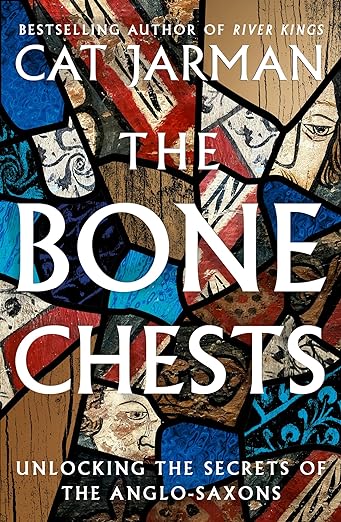
The Bone Chests by Cat Jarman

A history of the making of England as a nation, told through six bone chests, stored for over a thousand years in Winchester Cathedral.

William Collins| 14 September 2023| 400 pages| Review copy| 4*

The front cover shows a section of the Great West Window of Winchester Cathedral, made up of mosaics created after 1660 from the glass that had been smashed during the Civil War in 1642. I think it is just beautiful.

Description:

In December 1642, during the Civil War, Parliamentarian troops stormed the magnificent cathedral, intent on destruction. Reaching the presbytery, its beating heart, the soldiers searched out ten beautifully decorated wooden chests resting high up on the stone screens.

Those chests contained some of England’s most venerated, ancient remains: the bones of eight kings, including William Rufus and Cnut the Great – the only Scandinavian king to rule England and a North Sea empire; three bishops ; and a formidable queen, Emma of Normandy. These remains belong to the very people who witnessed and orchestrated the creation of the kingdom of Wessex in the seventh century, who lived through the creation of England as a unified country in response to the Viking threat, and who were part and parcel of the Norman conquest.

On that day, the soldiers smashed several chests to the ground, using the bones as missiles to shatter the cathedral’s stained glass windows. Afterwards, the clergy scrambled to collect the scattered remains.

In 2012, the six remaining chests were reopened. Using the latest scientific methods, a team of forensic archaeologists attempted to identify the contents: they discovered an elaborate jumble of bones, including the remains of two forgotten princes. In The Bone Chests, Cat Jarman builds on this evidence to untangle the stories of the people within. It is an extraordinary and sometimes tragic tale, and one of transformation. Why these bones? Why there? Can we ever really identify them? In a palimpsest narrative that runs through more than a millennium of British history, it tells the story of both the seekers and the sought, of those who protected the bones and those who spurned them; and of the methods used to investigate.

My knowledge of the Anglo-Saxons from school history lessons is very basic – little more than Alfred the Great on the run from the Vikings and letting the cakes burn, and King Canute, sitting in his throne placed at the water’s edge and trying unsuccessfully to forbid the waves from advancing and wetting his feet.

So I was looking forward to learning more in The Bone Chests: Unlocking the Secrets of the Anglo-Saxons. In her Author’s Note Cat Jarman clarifies that her intention with this book is to tell the stories of the chests, and of the tumultuous times that they and the people interred in them, lived through. She has concentrated on the south and south-west of England to consider why Wessex and Winchester took on such significance in the history of England in the early medieval period. So, the main emphasis in this book is on the history, on the kings and politics of the period rather than on the forensic archaeology and the modern scientific techniques.

Having said that there is enough about the use of DNA and isotopic analysis of teeth to investigate the diet and origins of the owners of the bones for me as a non scientist to understand. I found it all fascinating even though in places I was left wondering what century I was in, having moved from the 11th to the 21st century (when Richard III’s remains were discovered under a Leicester car park), via various Viking raids and the 17th century. At times I had to keep reminding myself which chest was being described.

The mortuary, or bone chests, themselves, are most interesting and I would love to visit Winchester Cathedral to see them for myself. There are six chests, painted wooden caskets which are displayed high on stone screen walls on either side of the high altar area. The bones are the remains of many kings and bishops who were originally buried in the Anglo-Saxon cathedral known as Old Minster, north of the present cathedral.

Jarman describes the chests in, vaguely, chronological order and has relied on the Mortuary Chests Project, a research project led by archaeologists from Bristol University in collaboration with Winchester Cathedral that began in 2012. She is not involved in the Project but has incorporated details of the team’s partial results released in May 2019 in her book.

The book is very detailed and well researched and I learned so much, bringing the medieval period to life as I read. I had never heard of Queen Emma and the details about her life stand out for me. She was the daughter of Richard I, Duke of Normandy, wife of two Anglo- Saxon kings – Æthelred the Unready and Cnut (Canute) – and the mother of Edward the Confessor and Harthacnut of Denmark. She was given the name Ælfgifu and in 1017 she married Cnut. I was fascinated to read that the Project team has put together a set of bones that they confidently determine to be a female that could be the body of Emma. (See – details of an exhibition at Winchester Cathedral, Kings and Scribes: the birth of a nation. This includes a 3D model of the female skeleton thought to be Queen Emma).

The last section of the book is made up of Notes of the sources used, an extensive Bibliography, and an Index. There is also a List of Illustrations; the illustrations were not included in my review copy.

Many thanks to the publishers for a review copy via NetGalley.

Dr Cat Jarman is a bioarchaeologist and field archaeologist specialising in the Viking Age, Viking women, and Rapa Nui. She uses forensic techniques like isotope analysis, carbon dating, and DNA analysis on human remains to untangle the experiences of past people from broader historical narratives. Dr Jarman has contributed to numerous TV documentaries as both an on-screen expert and historical consultant, including programmes for the BBC, Channel 4, History, Discovery, and more.
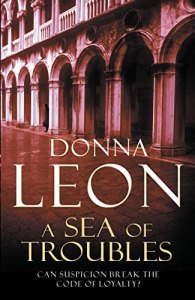
A Sea of Troubles by Donna Leon

A Sea of Troubles is Donna Leon’s 10th Commissario Guido Brunetti novel. I’ve been reading them out of order of publication on and off for several years now and this book is the earliest one in the series that I’ve read. Her books are crime fiction, but also discuss various social and cultural issues and A Sea of Troubles is no exception. 

Brunetti is one of my favourite detectives. He is happily married with two children. He doesn’t smoke or drink to excess and often goes home for lunch to his beautiful wife Paola, who is a wonderful cook – in this book she treats him to a delicious apple cake made with lemon and apple juice and ‘enough Grand Marnier to permeate the whole thing and linger on the tongue for ever.’ (page 238)

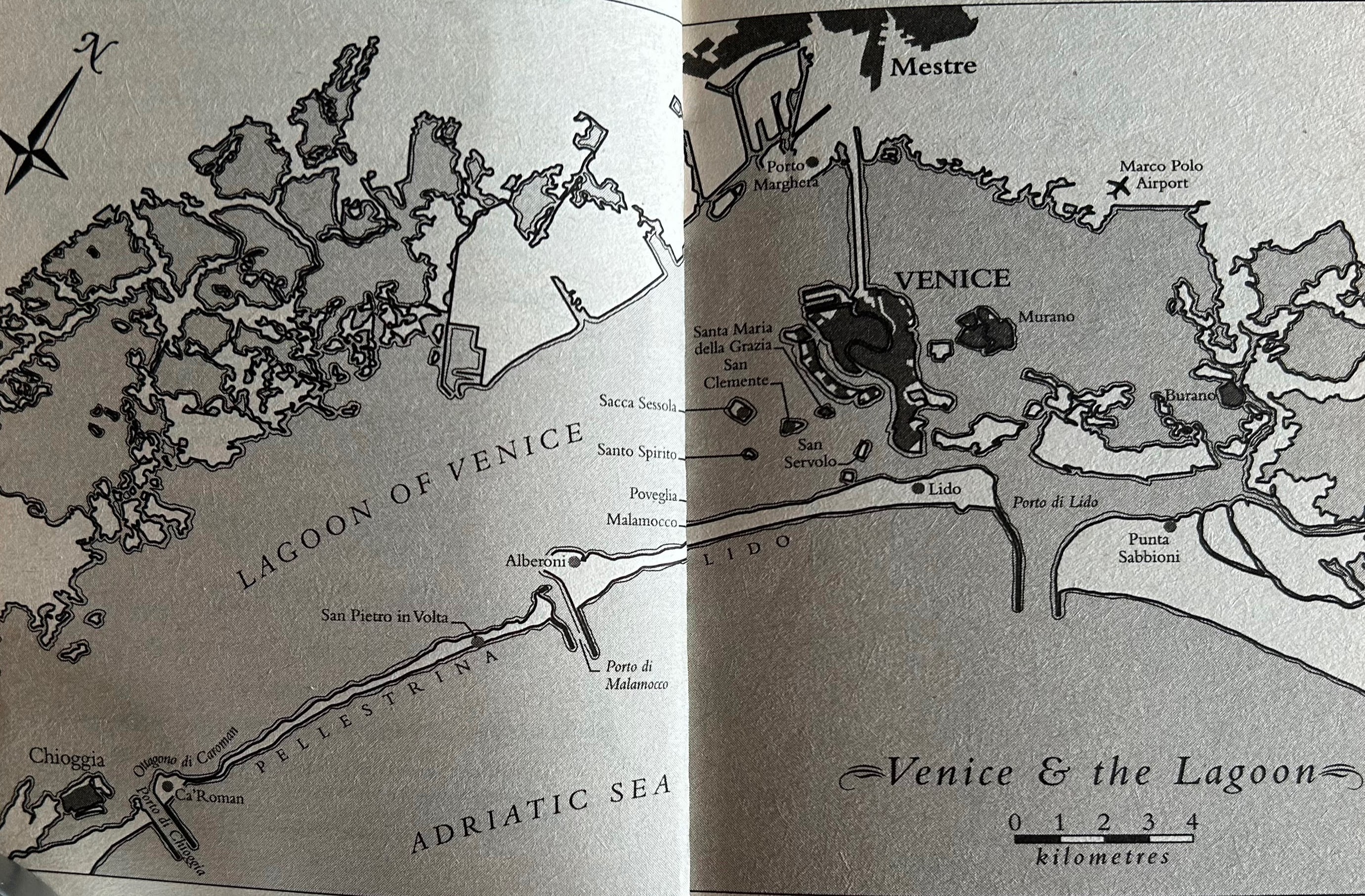
I read it eagerly, keen to get to the bottom of the mystery surrounding the deaths of two clam fishermen, father and son, off the island of Pellestrina, south of the Lido on the Venetian lagoon, when their boat suddenly exploded. As well as the mystery the issues Leon highlights in this book are concerning pollution and the overfishing of clams that is destroying the clam beds.

I was fascinated by the island, never having heard of it before. It’s a long and narrow island (11 km long, and 25 to 210 metres wide) that separates the Venetian Lagoon from the Adriatic Sea. Fishing is the primary source of income and alongside the inner side of the thin peninsular are scores of vongolari, the clam fishing boats.

Pellestrina is a closely knit community, the islanders bound together by a code of loyalty and a suspicion of outsiders. Brunetti is finding it difficult to penetrate their silence, as even though he is a Venetian, he is regarded by the islanders as an outsider, a foreigner. So when his boss’s secretary, the ever-resourceful Signorina Elettra, volunteers to visit her cousin who lives in the village there to see what she can find out, he lets her go. And then is most concerned when she falls for a young man on the island. And Paola begins to question why he is so interested in Elettra, having noticed that he had thought about little else than her for over a week. He then realises his feelings for Elletra are not so straightforward after all.

However, the crime still needs resolving and Brunetti finds himself in a web of political intrigue, corruption and secrets. From a slow start the ending is dramatic and action packed with Brunetti and Elletra in danger of their lives.

  • Publisher ‏ : ‎ Arrow; 1st edition (26 Feb. 2009)
  • Language ‏ : ‎ English
  • Paperback ‏ : ‎ 336 pages
  • Source: I bought it
  • My rating: 5*

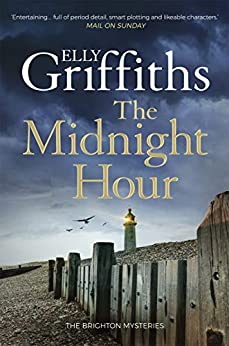
The Midnight Hour by Elly Griffiths

Brighton, 1965

When theatrical impresario Bert Billington is found dead in his retirement home, no one suspects foul play. But when the postmortem reveals that he was poisoned, suspicion falls on his wife, eccentric ex-Music Hall star Verity Malone.

Frustrated by the police response to Bert’s death and determined to prove her innocence, Verity calls in private detective duo Emma Holmes and Sam Collins. This is their first real case, but as luck would have it they have a friend on the inside: Max Mephisto is filming a remake of Dracula, starring Seth Billington, Bert’s son. But when they question Max, they feel he isn’t telling them the whole story.

Emma and Sam must vie with the police to untangle the case and bring the killer to justice. They’re sure the answers must lie in Bert’s dark past and in the glamorous, occasionally deadly, days of Music Hall. But the closer they get to the truth, the more danger they find themselves in…

The Midnight Hour is the sixth book in the DI Edgar Stephens and Max Mephisto series. Known as the ‘Magic Men’ they had been part of a top-secret espionage unit during the War. These books are historical crime fiction, beginning with The Zig Zag Girl set in 1950. Now, with The Midnight Hour, fifteen years have gone by and DI Stephens’ wife, Emma formerly a policewoman is now a private detective working with Sam (Samantha) Collins, formerly an investigative reporter.

There’s a lot going on as both Edgar’s team and Emma and Sam investigate Bert’s death, at first in competition and then they combine forces. Bert’s son Aaron thinks his mother, Verity, killed Bert, who has a very shady past, with plenty of affairs with other women. And there are other suspects with a motive to want him dead.

It provides an insight into what life was like in the mid 1960s, particularly for women. There was plenty of sexism, with, for example, married women being forced to retire from the police force. Married women were not allowed to drive panda cars, and were largely employed to make tea and do the paperwork. Women were expected to stay at home looking after the home and their children.

I enjoy the Dr. Ruth Galloway series, with the forensic archaeological details, despite wishing they weren’t written in the present tense. I also find the theatrical elements of this series fascinating and much prefer the fact that they are written in the past tense. I really liked the glimpses of Max and Seth Bellington, Bert’s son, filming a remake of Dracula in Whitby.

You can read this as a standalone as there is a guide to the main characters and their back stories at the end of the book, but it helps if you read at least some of the earlier books to have a sense of who everyone is and the character progression.

Rating: 4 out of 5.

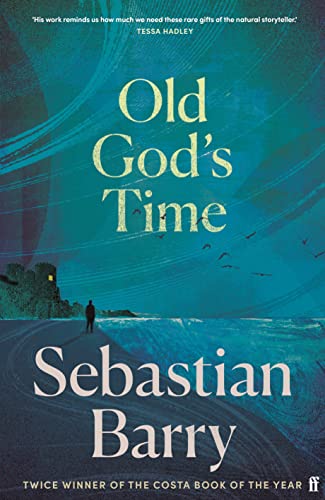
Old God’s Time by Sebastian Barry

Rating: 4 out of 5.

Faber and Faber Ltd| 2 March 2023 | 228 pages|e-book |Review copy|4*

Synopsis:

Have you ever been the custodian of a story no one else believed?’
‘Oh yes,’ he said.
‘You have?’
‘Yes,’ he said.
‘Then I can tell you.’

Recently retired policeman Tom Kettle is settling into the quiet of his new home, a lean-to annexed to a Victorian castle overlooking the Irish Sea. For months he has barely seen a soul, catching only glimpses of his eccentric landlord and a nervous young mother who has moved in next door. Occasionally, fond memories return, of his family, his beloved wife June and their two children.

But when two former colleagues turn up at his door with questions about a decades-old case, one which Tom never quite came to terms with, he finds himself pulled into the darkest currents of his past.

A beautiful, haunting novel, in which nothing is quite as it seems, Old God’s Time is about what we live through, what we live with, and what may survive of us.

My thoughts:

I’ve enjoyed all Sebastian Barry’s books and Old God’s Time is no exception. It’s set in Dalkey, a small coastal town south of Dublin, where Tom, a recently retired policeman is living in a tiny flat annexed to a Victorian castle. One afternoon he was sitting in a sun-faded wicker chair, enjoying a cigarillo, listening to the sound of the sea below. He was quite content to just gaze out, watching the cormorants on the rocks to the left of Dalkey Island, when two of his former colleagues disturbed his peaceful afternoon, asking for his help on a cold case he had worked on. He doesn’t want to, knowing it will open up painful memories he would rather forget.

So this appears to be a detective story, but the main focus is Tom, himself as the narrative reveals in streams of consciousness. It soon becomes clear that his memories are unreliable and for a while I was confused, not knowing what was going on, whether Tom was remembering, or imagining what had happened in his life. It is beautifully written, showing the beauties of the landscape. It takes us right inside Tom’s mind, highlighting the horrors that Tom had experienced both in his childhood and family life as well as in his professional life. The past had not been kind to him. But now it was as though enough time had gone by and it was as if it had never happened; it had receded away into ‘old God’s time’, and Tom didn’t want to reach back into those memories. They were locked away, preserved in the long-ago.

It is a tragic story, not shying away from describing the horrific details of child abuse, nor the despair and sadness as the details of Tom’s family life are gradually revealed. It is a harrowing book, made even more so as I had to read it slowly making sure I fully understood what I was reading, even going back to re-read some passages. It is bleak, but Tom’s story is also one of love and immeasurable happiness, of strength and goodness, alongside grief and pain.

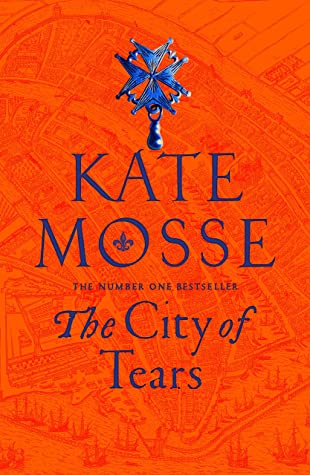
The City of Tears by Kate Mosse

Rating: 5 out of 5.

Pan Macmillan, Mantle| 19 January 2021 | 562 pages|e-book |Review copy|4*

Kate Mosse sets out in her Historical Note the history of the French Wars of Religion that took place between Huguenots (Protestants) and Catholics from 1562 and 1598 and explains that The City of Tears is the second book in The Burning Chambers series of novels set against the backdrop of 300 years of history from 16th century France and Amsterdam to the Cape of Good Hope in the 18th and 19th centuries. And there is a useful list of the principal characters and the historical characters at the beginning of the book, that helps in remembering who was who and how they were connected.

It’s been four years since I read The Burning Chambers, the first book in The Burning Chambers series, and time has moved on ten years since the events in that first book. You don’t have to read the first book before reading The City of Tears as with four years between the two books I didn’t find it hard to pick up the story, but I do think you need to read the Historical Note to get the background details of the French Wars of Religion first.

There is now a precarious peace in the French Wars of Religion and it looks as though that peace could be maintained as the queen mother, Catherine de Medici, has negotiated a marriage between her Catholic daughter Margot and the Huguenot Henri of Navarre. But that union is opposed by the hardline Catholic faction led by the Duke of Guise. As the novel opens Minou Joubert and Piet Reydon, now married and living in their castle in south west France, are preparing for their visit to Paris for the wedding.

This is a complicated story centred on Minou and Piet Reydon and their family. The wedding took place followed by the St Bartholomew’s Day Massacre on 24 August 1572 when thousands of Protestants were murdered by Catholic troops, in Paris and across France. I’m not going to go into any more detail about the story other than to say it’s a compelling story of chaos and fear as Minou and her family escape, though suffering dreadful losses, including the disappearance of her seven year old daughter, and almost losing their lives. There’s murder, conspiracies, stolen relics and innumerable secrets are brought to light.

It is an enjoyable book, but because of its length it does lose pace in parts. It is not a book you can or would want to read quickly. The strength of the book for me is in the characterisation and the settings. Kate Mosse has thoroughly researched the period and the locations, rooting it firmly in the time it was set. What I particularly like is that she identifies that the characters and their families, apart from the historical ones, are imagined, inspired by ‘the kind of people who might have lived: ordinary women and men , struggling to live, love and survive against a backdrop of religious war and displacement.’ Just as devastating today, as it was then.

It is also a book that is strong on developing the characters, so that you feel for them as they struggle to survive all that is thrown at them, as it is certainly a tragic story. Having said that the ending is a positive one, except for cliff hanger on the last page that hints at what is to come in the third book, The Ghost Ship, a sweeping historical epic about love in a time of war, due out in July this year.

The Dancing Bear by Frances Faviell

Rating: 5 out of 5.

The Dancing Bear by Frances Faviell took me by surprise by how much I enjoyed it. I wasn’t expecting it to be so good.

Frances Faviell (1905-1959) was the pen name of Olivia Faviell Lucas, painter and author. After the war, in 1946, she went with her young son, John, to Berlin where Richard Parker, her second husband, had been posted as a senior civil servant in the post-war British Administration. It was here that she befriended the Altmann family, which prompted her first book The Dancing Bear (1954), a memoir of the Occupation seen through the eyes of both occupier and occupied. She later wrote three novels, A House on the Rhine (1955), Thalia (1957), and The Fledgeling (1958). These are now all available as Furrowed Middlebrow books.

The Dancing Bear covers the years from Autumn 1946 to Autumn 1949, with an Epilogue dated Autumn 1953 and, in this edition, an Afterword by John Parker, Faviell’s son. Her memoir is mainly about her friendship with the Altmann family – Frau Maria Altmann, her husband, Oskar and her children, Ursula, who works for a group of American service men, Lilli, a ballet dancer and son, Fritz, who was a member of the Hitler Youth and is now involved in the Black Market. Their eldest son. Kurt. is missing in Russia. Berlin had been divided into four sectors by the Allies – Britain, the United States, France and the Soviet Union – and Frances is horrified by the conditions she found. There were deaths from hunger and cold as the winter approached and queues for bread, milk, cigarettes, cinemas, buses and trams.

The complete and utter devastation of Berlin had shaken me profoundly. Nothing … had prepared one for the dead horror of this city. (page 15)

The complete absence of shops was something the Allied and German women felt. There was scarcely a single shop left standing in Berlin. The great stores and emporiums lay in dust, as did the great blocks of flats. One could not get the simplest articles except on the Black Market, and then only in exchange for cigarettes and coffee which had taken the place of money. (page 166)

The Altmanns live on the ground floor of a large ruined house – the upper storeys had disappeared and just the twisted iron girders remained, sticking up grotesquely against the sky. The ground floor looked very shaky and the windows were covered in cardboard and the door had been repaired from odd pieces of wood. It was freezing cold, and although they had a stove they had no fuel to light it and because electricity was rationed they had to use candles. There were two bedrooms, a small kitchen, a sitting room and a bathroom. With the help of her driver, Stampie, she does what she can to help them.

The British, unlike the Americans were forbidden to be friendly with the Germans, or to allow them in their homes or any of their buildings, clubs or messes and also to give them lifts, but these rules were frequently broken. At night Berlin ‘became a whirl of revelry’:

But if Berlin was a tragic city by day; at night it became a whirl of revelry. The Allies entertained on a scale which was extraordinary in a starving town, and if one went down to the Kurfurstendamm or the Kaiserdamm at night every cafe and night club was packed with revellers. (page 63)

I have only touched the surface of this book in this short post. It’s a moving memoir and I was fascinated by it all – the people, their situations, and their morale and attitudes as well as the condition of Berlin in the aftermath of World War Two. The realities of living under occupation are clearly shown, as well as the will to survive despite all the devastation and deprivation. I now want to read more of Frances Faviell’s books.

  • ASIN ‏ : ‎ B01M12EH2E
  • Publisher ‏ : ‎ Dean Street Press (3 Oct. 2016)
  • Language ‏ : ‎ English
  • Print length ‏ : ‎ 311 pages
  • My Rating: 5*