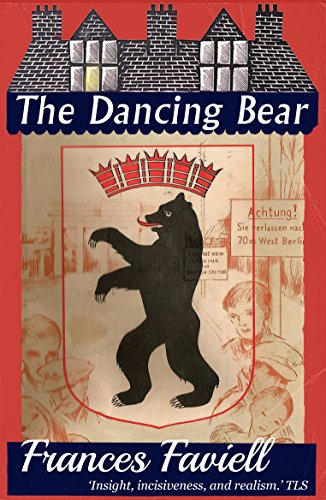
The Dancing Bear by Frances Faviell

Rating: 5 out of 5.

The Dancing Bear by Frances Faviell took me by surprise by how much I enjoyed it. I wasn’t expecting it to be so good.

Frances Faviell (1905-1959) was the pen name of Olivia Faviell Lucas, painter and author. After the war, in 1946, she went with her young son, John, to Berlin where Richard Parker, her second husband, had been posted as a senior civil servant in the post-war British Administration. It was here that she befriended the Altmann family, which prompted her first book The Dancing Bear (1954), a memoir of the Occupation seen through the eyes of both occupier and occupied. She later wrote three novels, A House on the Rhine (1955), Thalia (1957), and The Fledgeling (1958). These are now all available as Furrowed Middlebrow books.

The Dancing Bear covers the years from Autumn 1946 to Autumn 1949, with an Epilogue dated Autumn 1953 and, in this edition, an Afterword by John Parker, Faviell’s son. Her memoir is mainly about her friendship with the Altmann family – Frau Maria Altmann, her husband, Oskar and her children, Ursula, who works for a group of American service men, Lilli, a ballet dancer and son, Fritz, who was a member of the Hitler Youth and is now involved in the Black Market. Their eldest son. Kurt. is missing in Russia. Berlin had been divided into four sectors by the Allies – Britain, the United States, France and the Soviet Union – and Frances is horrified by the conditions she found. There were deaths from hunger and cold as the winter approached and queues for bread, milk, cigarettes, cinemas, buses and trams.

The complete and utter devastation of Berlin had shaken me profoundly. Nothing … had prepared one for the dead horror of this city. (page 15)

…

The complete absence of shops was something the Allied and German women felt. There was scarcely a single shop left standing in Berlin. The great stores and emporiums lay in dust, as did the great blocks of flats. One could not get the simplest articles except on the Black Market, and then only in exchange for cigarettes and coffee which had taken the place of money. (page 166)

The Altmanns live on the ground floor of a large ruined house – the upper storeys had disappeared and just the twisted iron girders remained, sticking up grotesquely against the sky. The ground floor looked very shaky and the windows were covered in cardboard and the door had been repaired from odd pieces of wood. It was freezing cold, and although they had a stove they had no fuel to light it and because electricity was rationed they had to use candles. There were two bedrooms, a small kitchen, a sitting room and a bathroom. With the help of her driver, Stampie, she does what she can to help them.

The British, unlike the Americans were forbidden to be friendly with the Germans, or to allow them in their homes or any of their buildings, clubs or messes and also to give them lifts, but these rules were frequently broken. At night Berlin ‘became a whirl of revelry’:

But if Berlin was a tragic city by day; at night it became a whirl of revelry. The Allies entertained on a scale which was extraordinary in a starving town, and if one went down to the Kurfurstendamm or the Kaiserdamm at night every cafe and night club was packed with revellers. (page 63)

I have only touched the surface of this book in this short post. It’s a moving memoir and I was fascinated by it all – the people, their situations, and their morale and attitudes as well as the condition of Berlin in the aftermath of World War Two. The realities of living under occupation are clearly shown, as well as the will to survive despite all the devastation and deprivation. I now want to read more of Frances Faviell’s books.

  • ASIN ‏ : ‎ B01M12EH2E
  • Publisher ‏ : ‎ Dean Street Press (3 Oct. 2016)
  • Language ‏ : ‎ English
  • Print length ‏ : ‎ 311 pages
  • My Rating: 5*

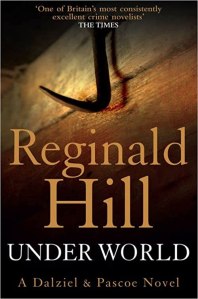
Underworld by Reginald Hill

Rating: 5 out of 5.

Deadheads is the 10th Dalziel and Pascoe novel first published in 1988, set in the small mining town of Burrthorpe (a fictional town) in Yorkshire. The setting is excellent and Hill paints a compelling account of the mining community and gives a convincing insight into the period a few years after the Miners’ Strike of 1984. The majority of the book is about the miners, their families, their hatred of the bosses, and their distrust and dislike of the police.

There are two mysteries facing Dalziel and Pascoe. One is current and the other is a case that had appeared to have been resolved several years earlier, when Tracy Pedley, a young girl disappeared. Her body was never discovered and some of the residents believed that Billy Farr, who was the last person to see her alive, was responsible for her death. But then Donald Pickford committed suicide leaving a letter confessing to killing several young girls in the area and although he hadn’t mentioned Tracy by name, she was counted as a probable victim. Even so, some people still thought Billy was guilty and their suspicions were confirmed when later on it appeared that he committed suicide when he fell to his death in an abandoned mineshaft.

Matters are brought to boiling point when the local newspaper serialises the memoirs of ex-Deputy Chief Constable Neville Whatmough, who had been in charge of the Pickford case. This incenses Colin Farr, Billy’s son. And then another man is found dead in the mine …

Dalziel has just a minor role as Pascoe leads the investigation. Ellie, Pascoe’s wife, also plays a major role. Her involvement comes about when she tutors some of the miners as part of the union-sponsored day release courses and meets Colin Farr, Billy’s son. He is an angry young man and Ellie is attracted both to his intelligence and his physical masculinity, despite the strength of her feminist views. She really is an irritating character, an angry young woman and for most of the book it looked as though the Pascoes’ marriage was about to come to an end. It’s left to Dalziel to bring a touch of humour to the book and his down to earth approach to the miners gets more results than Pascoe’s middle class attempts to understand them.

I thoroughly enjoyed Underworld.

Note:

The title appears as ‘Under World‘ in some editions and as ‘Underworld‘ on others. On the front cover of the paperback I read it is ‘Under World‘ but on the title page it is one word -‘Underworld‘. The Underworld or Hades in ancient Greek and Roman Mythology was where the souls of the dead resided. Hill divides Underworld into three parts and begins each part with verses from Dante’s The Divine Comedy, thus equating the mine with hell.

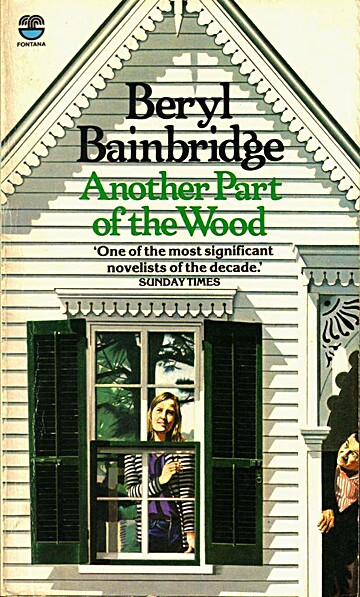
Another Part of the Wood by Beryl Bainbridge

Rating: 4 out of 5.

Synopsis from Amazon:

Joseph decides to take his mistress and son, together with a few friends, to stay in a cabin in deepest Wales for the weekend – with absolutely disastrous results. Beryl Bainbridge’s gift for deadpan dialogue and spare narrative, and her darkly comic vision of the world, are all in evidence in this early novel.

I read Another Part of the Wood because I’ve enjoyed other books by Beryl Bainbridge. It’s a novella, really, as it’s only 159 pages. I love her style, dark humour with clear, concise prose, and fully realised characters. It was her second book, first published in 1968. She revised the book and reissued it in 1979. My copy is a Fontana edition published in 1980. I read it at this time because it’s the novel that came up for me to read for the latest Classics Club Spin. It’s also one of my TBRs, a book that I’ve owned since 2016.

Like all of Beryl Bainbridge’s books that I’ve read it is well written and makes compulsive reading, with individual, mainly unlikable, characters who are mostly at odds with each other. I enjoyed the oddness, never really knowing what would happen next. The title has a theatrical feeling, pointing out the different scenes in the book as the action switches from one part of the wood to another, with one or more of the characters taking centre stage.

It’s set in Flintshire, Wales, in a holiday camp, which consists of huts in a wood at the foot of a mountain. There is George, the owner of the land, and Balfour who works in a factory during the week and helps him at the weekends. George, is obsessed with the Holocaust and Balfour, a shy, quiet man suffers from some sort of illness – he gets sick very suddenly with a high temperature and the shivers as though he’s turned to ice. All he can do is hide away and sleep it off.

The book begins as George’s friend, Joseph, a selfish, insensitive man, arrives for the weekend from London, with his young son, Roland, his girlfriend Dotty, and Kidney, a fat teenager who apparently has learning disabilities and a health problem (never explained), dependent on his pills. In addition Joseph has invited another couple to join them, Lionel and his wife, May, an unhappy couple with a dysfunctional and argumentative relationship. They are all townies, like fish out of water in the countryside and find the huts claustrophobic and too basic – May refuses to use either the chemical toilet or the bushes.

The atmosphere is tense right from the start and rises throughout the book as their relationships become increasingly fractious. Having promised Roland that he would take him for a walk up the mountain, Joseph leaves him to his own devices. He withholds Kidney’s pills and argues with Dotty. Dotty and Balfour walk off to the village where she buys a coat of many colours and Balfour falls ill. The wood, as in fairy tales, is not a safe place.

The world was a deep deceptive forest, full of promises and little glades and clearings, and in the dark depths roamed the wolves, savage, snapping their great teeth, waiting to spring on those who wandered from the path. (page 73)

There’s a sense of foreboding, the sense that something terrible is about to happen … but what, and who is in danger? I felt that more than one of these characters could come to a sticky end. And I was unsure, fearing the worst for one particular character – and sadly I was right. It was inevitable.

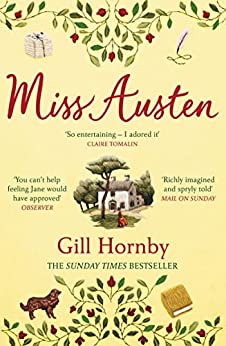
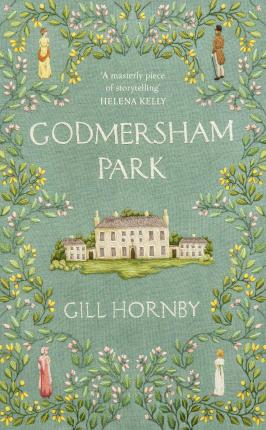
Miss Austen & Godmersham Park by Gill Hornby

In January I read Miss Austen by Gill Hornby, but despite enjoying it I didn’t write about it then. And in September I read Godmersham Park. Both are based on Jane Austen and her relationships with family and friends.

Miss Austen is the untold story of the most important person in Jane’s life – her sister Cassandra. After Jane’s death, Cassandra lived alone and unwed, spending her days visiting friends and relations and quietly, purposefully working to preserve her sister’s reputation. Set in 1840, Cassandra in her ’60s, visits Isabella Fowle following the death of her father, the Reverend Fowle when Isabella is packing up her parents’ belongings so that a new reverend can move in. Cassandra is convinced that her own and Jane’s letters to Eliza Fowle, the mother of Cassandra’s long-dead fiancé, are still somewhere in the vicarage. Eventually she finds the letters and confronts the secrets they hold, secrets not only about Jane but about Cassandra herself. Will Cassandra reveal the most private details of Jane’s life to the world, or commit her sister’s legacy to the flames?

I was surprised by how much i enjoyed this book as I don’t usually like spin-offs, sequels or prequels of my favourite books, but I really enjoyed this book as Cassandra relives her life with Jane, revealing what life was like for spinsters living in the early 1800s. It is different from Jane Austen’s own novels but still manages to recreate that flavour of her novels that I have loved ever since I first read Pride and Prejudice. It’s very well researched, a novel that held my attention from the beginning right to the end. A definite 4.5 star book.

I didn’t enjoy Godmersham Park quite as much as Miss Austen. It is the fictionalised life of Anne Sharp, employed as the governess to Fanny, Jane Austen’s niece. Fanny’s father was Edward Austen, who was adopted by the wealthy Knight family (Thomas Knight was a cousin), taking their name in 1812. Anne became one of Jane’s closest friends.

Little is actually known about Anne as Gill Hornby acknowledges in her Author’s Note. So the story of her early life before her arrival in 1804 at Godmersham Park is a ‘fiction, fashioned out of the biographies of other, contemporary genteel ladies who found themselves working as governesses.’ But the two years she spent working for the Austen family were recorded by Fanny in her diaries and so Gill Hornby has closely followed her account. Henry Austen, Jane’s favourite brother was a regular visitor at Godmersham and Jane, Cassandra and their mother visited too during those two years.

Anne had no experience of teaching, but was left with no alternative as her mother had died and she had to find employment. She found it difficult – treated neither as a servant nor as one of the family, she risked dismissal if she overstepped the mark. Similarly she found that Henry Austen’s attention put her in the most awkward situations. But when Jane visited she was able to relax in her company and the two struck up a friendship.

I can’t quite put my finger on why I find this novel not as good as Miss Austen. But it moves at a slower pace and apart from the mystery that surrounds Anne’s father, I didn’t find it as absorbing – there’s that anticipation in Miss Austen of will Cassandra find the letters and what will they reveal. In parts Godmersham Park came over to me as just a tiny bit flat and I never grew as fond of Anne as I did of Cassandra. Having said that, I did enjoy this book enough to give it 3.5 stars.

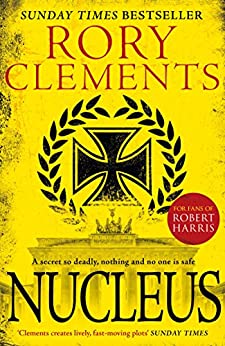
Nucleus by Rory Clements

Rating: 5 out of 5.

Zaffre| January 2018| 453 pages| Hardback| My own copy| 5 stars

Nucleus by Rory Clements is the second book in his Tom Wilde series (the full list is at the end of this post). I have been reading them out of order, as I came across them. I think I’d have understood the relationship of the characters better if I had read the series in order from the start, but that has not stopped me from enjoying them.

Blurb

WINNER OF THE CWA HISTORICAL DAGGER 2018.
The eve of war: a secret so deadly, nothing and no one is safe

June 1939. England is partying like there’s no tomorrow . . . but the good times won’t last. The Nazis have invaded Czechoslovakia, in Germany Jewish persecution is widespread and, closer to home, the IRA has embarked on a bombing campaign.

Perhaps most worryingly of all, in Germany Otto Hahn has produced man-made fission and an atomic device is now possible. German High Command knows Cambridge’s Cavendish Laboratory is also close, and when one of the Cavendish’s finest brains is murdered, Professor Tom Wilde is drawn into the investigation. In a conspiracy that stretches from Cambridge to Berlin, and from the US to Ireland, can he discover the truth before it’s too late?

I’ve found this quite a difficult book to summarise as there are various elements to the plot. I think the publishers’ blurb merely skims the surface, but to go into detail would give away too much. With several plot lines, this is a mix of historical fact and fiction, set in 1939 when England and Germany are on the brink of war. It is a fast-paced and gripping book, involving murder, IRA bombers, and espionage, with many twists and turns

In Nazi Germany Jews are in fear of their lives, trying to leave the country. Some have made it to England and America. In both countries the race is on to develop an atomic bomb.

There’s a large cast of characters – the main one being Tom Wilde, an American professor of history at Cambridge University, who has returned from America after a meeting with President Roosevelt. There he was asked to liaise with two Americans in England, Colonel Dexter Flood and also to keep an eye on Milt Hardman, an American millionaire who is staying at Old Hall in Cambridgeshire with his family.

And so Wilde is drawn into Hardman’s world, meeting a Hollywood actress, drinking champagne, playing tennis, and partying. And then he soon finds himself having to deal with an increasingly complex situation when one of the Cavendish scientists, an introverted genius who was due to move to America to work with Oppenheimer, is found drowned in the River Cam, and then another one goes missing.

Meanwhile Albert, Eva Haas’ young son is also missing, apparently having been abducted from a Kindertransport train. Eva is a German Jewish physicist, who along with Arnold Lindberg, an elderly scientist rescued from Dachau, has arrived in Cambridge. Lydia, who is Tom’s neighbour and lover is a friend of Eva’s. She was to meet Albert in England and goes to Berlin to try to find out what has happened to him. There she is helped by Bertha Bracey and Frank Foley (real-life heroes). Bertha was working to rescue German Jewish children, organising Kindertransports, finding homes and schools for the children in Britain, and Frank, who was MI6’s top spy in Berlin. He broke all the rules to make sure as many Jewish people had visas to leave the country, saving many thousands of people.

I was totally immersed in the plot. It’s full of danger and action, and I thoroughly enjoyed it. I learned much – not only about atomic fission, but also about the situation in Germany leading up to the Second World War – I hadn’t heard of the work of Bertha Bracey and Frank Foley before.

I’ve read three of Rory Clements’ books in his Tom Wilde series, with links to my posts:

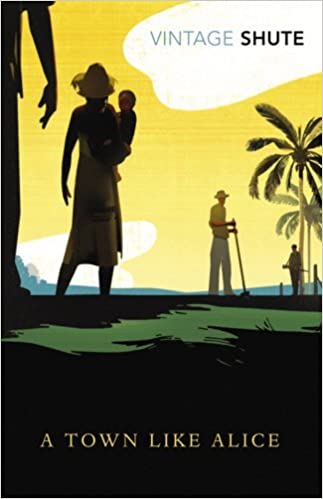
A Town Like Alice by Nevil Shute

Rating: 4 out of 5.

First published in 1950 A Town Like Alice by Nevil Shute is one of those books I’ve been meaning to read for years and now I have at last read it. It was not quite what I had imagined it to be, about Alice Springs in Australia. It is actually set in three parts, with just the third part set in Australia, not in Alice Springs but in Willstown, a fictional town in the outback.

Narrated by Noel Strachan, a solicitor, this is the story of Jean Paget. It begins a few years after the Second World War, when he tells her she has inherited a considerable sum of money from her uncle. But it is held in trust until she reaches the age of thirty five. Until then she will receive about £900 a year to spend. She wonders what to do with the money and eventually decides she wants to go back to Malaya, where she had been a prisoner of war, to dig a well. She tells Noel about what had happened to her in Malaya.

The second part is about that time in Malaya during the War at the time when the Japanese invaded the island. Jean and a group of European women and children were forced by the Japanese to walk for hundreds of miles from place to place before finally managing to stay in one village. Able to speak Malay and being courageous and resourceful, she takes on the role of the leader of their group. She met an Australian soldier, Sergeant Joe Harman, also a prisoner, who was driving a lorry for the Japanese and they became friends with disastrous consequences. This section is the best in the book to my mind.

On her return after the War she writes to Noel telling him how she set about organising the villagers to dig the well so that the women would have fresh water close to their houses and also build a washing-house. And it is here that she learns more about what had happened to Joe and decides to carry on travelling to Australia to find him and thank him for the help he had given her and the other women.

The third part is set in Australia. Jean is an organiser and on her arrival in Willstown she discovers that this is a place where the young women leave as soon as they are old enough. There are no jobs or entertainment to keep them there. So Jean decides she wants to make the town into a town just like Alice Springs. And she does this with remarkable success building a workshop for the girls to make shoes and handbags, providing an ice cream parlour and a public swimming pool and shops. At the same time her search for Joe is eventually successful. She continues writing to Noel about her life in the Australian outback, letters full of detail about her enterprises and the difficulties of cattle ranching in such isolated places – a bit too much detail for me really. But the episode where Jean helped in rescuing an injured stockman is full of drama.

This is really just the bare bones of the story – there is so much more to it than that. Others have commented on the casual racism in the book. It tells it as it was, how people lived at the time, and reflects the attitudes that people had. Jean is of course the main character, a woman somewhat ahead of her time with great strength of character, determination and entrepreneurial skills. The resourcefulness she showed in Malaya is developed in Australia.

In his Author’s Note Shute explains that the forced march during WW2 took place in Sumatra and not in Malaya and the women in the group were Dutch and not British. As in his novel, the local Japanese commander was reluctant to assume responsibility for these women and, to solve his problem, marched them out of his area and took them on a trek all around Sumatra that lasted for two and a half years.

Jean Paget was based on Mrs Geysel, whom Shute had met when he visited Sumatra in 1949. She had been one of the Dutch party, then aged 21, recently married and with a young baby she had carried for over twelve hundred miles around Sumatra. A remarkable story that I really enjoyed.