Recent Additions – Waiting to be Read

I wrote about some of the books I have waiting to-be-read in May and I thought it was time to do another post about some more recent additions to my to-be-read piles.

This post is just to list some of the titles, quoting the publishers’ blurbs, with no recommendation to read them, as these are simply books that have been sent to me by the author/publisher to read and review, or books that I’ve recently bought. I may post my own thoughts on these books at a later date.

Gardam

First two books that the publishers have sent to me:

Silver by Andrew Motion. I’m really looking forward to reading this book because I loved Treasure Island. I hope Andrew Motion has remained faithful to the spirit of the original.

Silver‘Silver is the rip-roaring sequel to the greatest adventure ever told: Treasure Island. Almost forty years following the events of Robert Louis Stevenson’s classic, Jim Hawkins and Long John Silver have seemingly put their maritime adventures to rest. Jim has settled on the English coast with his son Jim, and Silver has returned to rural England with his daughter Natty. While their escapades may have ended, for Jim and Natty the adventure is only just beginning. One night, Natty approaches young Jim with a proposition: return to Treasure Island and find the remaining treasure that their fathers left behind. As they set sail in their fathers’ footsteps, Jim and Natty cannot imagine what awaits them. Murderous pirates, long-held grudges, noxious greed, and wily deception lurk wickedly in the high seas, and disembarking onto Treasure Island only proves more perilous. Their search for buried treasure leaves every last wit tested and ounce of courage spent. And the adventure doesn’t end there, since they still have to make their way home…’ (Blurb from Broadway Paperbacks)

The Year of Miracle and Grief by Leonid Borodin. This was first published in English in 1984. This new edition is to be released later this year.
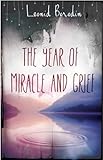
‘Deep in Siberia lies the oldest lake on earth, lake Baikal. When a small boy arrives on its banks, he is amazed by the beauty of the lake and surrounding mountains. As this astonishment yields to inquisitiveness, he begins to explore the fairytale of the area.  We’ve published a beautiful new edition of this magnificent title, which the New York Times called €˜a work of art so seamless and so natural one can only imagine it took ages and ages of hard dreaming to construct’. (Blurb from Quartet Books)

And lastly two secondhand books that look brand new hardbacks:

The Man in the Wooden Hat by Jane Gardam and Last Friends by Jane Gardam. These are companion books to Old Filth, which I read and loved a while back.
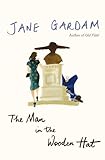
The Man in the Wooden Hat (blurb from the book jacket)

‘Written from the perspective of Filth’s wife, Betty, this is a story which will make the reader weep for the missed opportunities, while laughing aloud for the joy and the wit.

Filth (Failed ILondon Try Hong Kong) is a successful lawyer when he marries Elisabeth in Hong Kong soon after the War. Reserved, immaculate and courteous, Filth finds it hard to demonstrate his emotions. But Elisabeth is different – a free spirit. She was brought up in the Japanese Internment Camps, which killed both her parents, but left her with a lust for survival and an affinity with the Far East. No wonder she is attracted to Filth’s hated rival at the Bar – the brash, forceful Veneering. Veneering has a Chinese wife and an adored son – and no difficulty whatsoever in demonstrating his emotions ….

How Elisabeth turns into Betty, and whether she remains loyal to stolid Filth or swept up by caddish Veneering, make for a page-turning plot, in a lovely novel which is full of surprises and revelations, as well as the humour and eccentricities for which Jane Gardam’s writing is famous.’
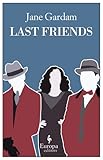
Last Friends (blurb from the book jacket):

‘Old Filth and The Man in the Wooden Hat told with bristling tenderness and black humour the stories of that Titan of the Hong Kong law courts, Old Filth QC, and his clever, misunderstood wife Betty. Last Friends, the final volume of this trilogy, picks up with Terence Veneering, Filth’s great rival in work and – though it was never spoken of – in love.

Veneering’s were not the usual beginnings of an establishment silk: the son of a Russian acrobat marooned in northeast England and a devoted local girl, he escapes the war to emerge in the Far East as a man of panache, success and fame. But, always, at the stuffy English Bar he is treated with suspicion: where did this blond, louche, brilliant Slav come from?

Veneering, Filth and their friends tell a tale of love, friendship, grace, the bittersweet experiences of a now-forgotten Empire and the disappointments and consolations of age.’

I just can’t wait to read all of them!!

Wondrous Words

wondrous2Wondrous Words Wednesday is a weekly meme run by Kathy at Bermuda Onion’s Weblog where you can share new words that you’ve encountered or spotlight words you love.

These are some words from Barnaby Rudge by Charles Dickens:

Usquebaugh – ‘what does my noble captain drink – is it brandy, rum, usquebaugh?’

This is obviously a drink of some sort, but I didn’t know what. Usquebaugh is Gaelic meaning “Water of Life”, phonetically it became “usky” and then “whisky” in English.

Flip – ‘every man … put down his sixpence for a can of flip, which grateful beverage was brewed with all dispatch, and set down in the midst of them on the brick floor; both that it might simmer and stew before the fire, and that its fragrant steam, rising up among them, and mixing with the wreaths of vapour from their pipes, might shroud them in a delicious atmosphere of their own and shut out all the world.’

Another intoxicating drink, I thought. Flip is eggnog, a drink of eggs and hot beer or spirits. I was interested to see it came in a can! Canning food was invented by a French chef in 1795 to preserve military food for Napoleon’s army. Barnaby Rudge, although written in 1839-41 when sealed cans similar to those we use now would have been in use, is set in 1775 and 1780 so Dickens was probably using the word to mean a container for holding liquid – or it’s an anachronism?

Poussetting – ‘Joe Willet rode leisurely along in his desponding mood, picturing the locksmith’s daughter going down long country dances, and poussetting dreadfully with bold strangers – which was almost too much to bear ...’

Poussette is simply a figure in country dancing when the couples hold hands and move up or down the set changing places with the next couple. And by the way Joe describes it he was thinking the locksmith’s daughter was being too familiar with strangers.

June's Books & Crime Fiction Pick of the Month

I read six books in June, a bit less than usual as one of the books, Barnaby Rudge by Charles Dickens is a long book. Three are books from my backlog of to-be-read books, two are historical fiction and one was a re-read. All but one are crime fiction!

June 2013

  • A Fearful Madness by Julius Falconer – after the violent death of a part-time cathedral verger the dead man’s sister, anxious to see justice done, and two of the police suspects, both released without charge carry out their own investigations into his death. A complex mystery that kept me guessing right to the end.
  • The Third Pig Detective Agency by Bob Burke – a fairytale detective story in which Harry, the third little pig is employed by Aladdin to find his stolen lamp, aided or hindered by numerous characters, and finding himself in all sorts of tricky and dangerous situations.
  • The Owl Killers by Karen Maitland – a tale of witchcraft and pagan superstition set in 1321, mystical and mysterious and tragic as it explores the struggle to survive and the battleground between the old pagan beliefs and Christianity.
  • Kissing the Gunner’s Daughter by Ruth Rendell – this begins with the shooting of Sergeant Martin of Kingsmarkham CID whilst he was standing in a queue at the local bank. Then DCI Wexford is faced with more murders a few months later, when author Davina Flory, her husband and daughter, are shot dead at Tancred House.
  • Raven Black by Ann Cleeves – a re-read. This is the first of the Inspector Perez books set on Shetland, in which Perez investigates the death of a schoolgirl. I had forgotten who the culprit was and as on my first reading I failed to identify the murderer.
  • Barnaby Rudge by Charles Dickens – historical murder mystery set in England in the 1770s and the Gordon Riots of 1780. This  is now one of my favourite of Dickens’s books.

My Crime Fiction Pick of the Month is: Kissing the Gunner’s Daughter by Ruth Rendell, a book I just did not want to put down.

Kissing the Gunner's DaughterFor more Crime Fiction Picks of the Month see Kerrie’s blog, Mysteries in Paradise.

Barnaby Rudge by Charles Dickens

I knew absolutely nothing about Barnaby Rudge: a Tale of the Riots of ‘Eighty before I started to read it. It’s not a book that I’ve seen dramatised. But whilst reading (very slowly) Claire Tomalin’s biography, Charles Dickens A Life I came across the following information. In May 1836, the year that Dickens, then 24, married Catherine Hogarth on 2 April, he agreed he would write a three volume novel, called Gabriel Vardon by November. But by November he was trying to withdraw from the agreement, due to his commitments in writing Pickwick and Sketches by  Boz. He began writing Gabriel Vardon in 1839 and it was only in February 1841 that its serialisation began. By then he had renamed it as Barnaby Rudge.

It’s a murder mystery as well as a historical novel, mainly concerning the events surrounding the Gordon Riots of 1780. The Riots began in protest to the Catholic Relief Act of 1778, which granted Roman Catholics exemption from taking the religious oath when joining the British Armed Forces and granted them a few liberties, previously denied to them. Led by Lord George Gordon the protests quickly turned violent, Parliament was invaded and Newgate prison was burned to the ground. I was rather surprised that Tomalin gave away most of the plot in describing Barnaby Rudge and gave away the identity of the murderer. I don’t intend to do the same as it spoilt the mystery for me.

Barnaby Rudge begins in 1775, five years before the riots as a group of customers in the Maypole Inn in the village of Chigwell, on the borders of Epping Forest and about 112 miles from London, recollect the murder of Reuben Haredale, the owner of The Warren, 22 years earlier to the day. His steward, a Mr Rudge was found months later, stabbed to death.The murderer had never been discovered. Reuben’s brother Geoffrey had lived at The Warren with his niece, Emma ever since.

From then on the book becomes much more complicated with many characters and sub-plots. There is the love story of Emma, a Catholic and Edward Chester, the son of Sir John Chester, a Protestant and opponent of her uncle, who is dead against their marriage. Also crossed in love are Joe Willet, whose father John Willet is the landlord of the Maypole and the captivating Dolly Varden whose father Gabriel Vardon is a locksmith. Barnaby Rudge is a simple young man, living with his mother. His pet raven, Grip goes everywhere with him. He’s a most amazing bird who can mimic voices and seems to have more wits about him than Barnaby. Grip is based on Dickens’s own ravens, one of whom was also called Grip. (Edgar Allen Poe was inspired by Dickens’s portrait to write his poem The Raven).

It’s a long book and in parts loses its impetus, but picks up when Dickens jumps five years forward into the Riots and I was taken aback by his vivid and dramatic descriptions of the violence and horror:

If Bedlam gates had been flung wide open, there would not have issued forth such maniacs as the frenzy of that night had made. … There were men who cast their lighted torches in the air, and suffered them to fall upon their hands and faces, blistering the skin with deep unseemly burns. There were men who rushed up to the fire, and paddled in it with their hands as if in water; and others who were restrained by force from plunging in, to gratify their deadly longing. On the skull of one drunken lad – not twenty, by his looks – who lay upon the ground with a bottle to his mouth, the lead from the roof came streaming down in a shower of liquid fire, white hot; melting his head like wax.

And then there is the attack on Newgate prison, the release of the prisoners and finally the scene as the mob set fire to the prison, scenes that rival the storming of the Bastille in A Tale of Two Cities.

By the end of the novel the murderer is revealed and all the plot strands are completed. There are a number of themes running through the novel – the relationship between fathers and sons, the position of authority, justice and the question of punishment for crime, and religious conflict. Dickens paints a picture of London, the dirt and poverty, the terrible condition of the roads, the perils of footpads and highwaymen which is in contrast to the countryside that still at that period surrounded London making it a cleaner, purer place to live in. There are detailed descriptions of the old inn, the Maypole and Vardon’s house and shop with their individual irregularities and strangeness.

And alongside all this are the characters, the restless innocent that is Barnaby, his over-protective and distracted mother, the melodramatic servant Miggs, the pure evil of Hugh, an idle servant at the Maypole who becomes one of the leaders of the riots, and Mr Dennis, the hangman to name but a few.

It wasn’t such a success as some of Dickens’s other novels but I think that that is not a fair reflection of its qualities. It’s almost a book of two parts and the dramatic second half, to my mind, more than makes up for the slow beginning which I had to read slowly and carefully. The portrayal of Barnaby Rudge is also masterly – a sympathetic but totally unsentimental characterisation of his ‘madness’ and his underlying common sense.

Barnaby Rudge was number 6 in the Classics Club Spin, which is the reason I’ve been reading it this June, rather than later.  I’ve had the book on my Kindle since March 2013, so not as long as some of my to-be-read books, so it also counts towards the Mount TBR Reading Challenge and the Historical Fiction Challenge too. There are numerous editions of Barnaby Rudge and each one gives different page numbers, depending, I suppose on the format and font size. The Kindle edition estimates its length at 845 pages, so it also counts towards the Tea and Books Challenge.

Saturday Snapshots: Wych Elm

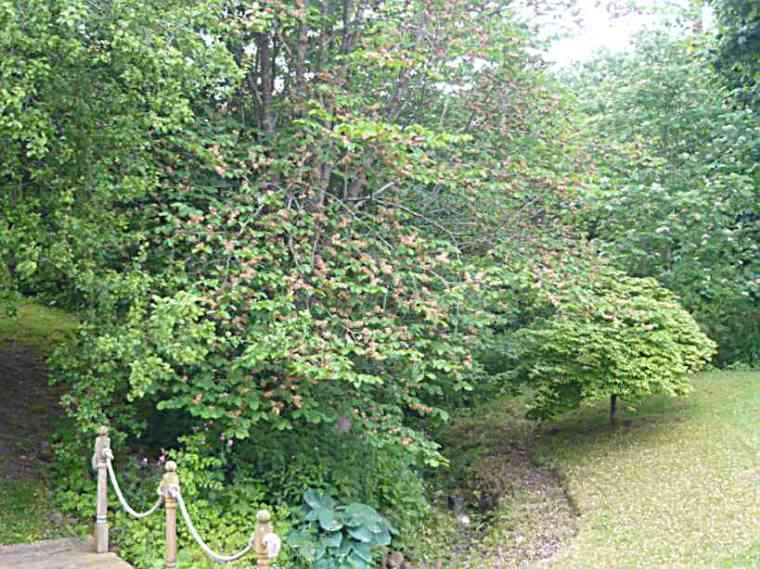
We have a wych elm in the back garden. This year it’s been absolutely full of seeds, many more than usual:

Wych elm P1080810

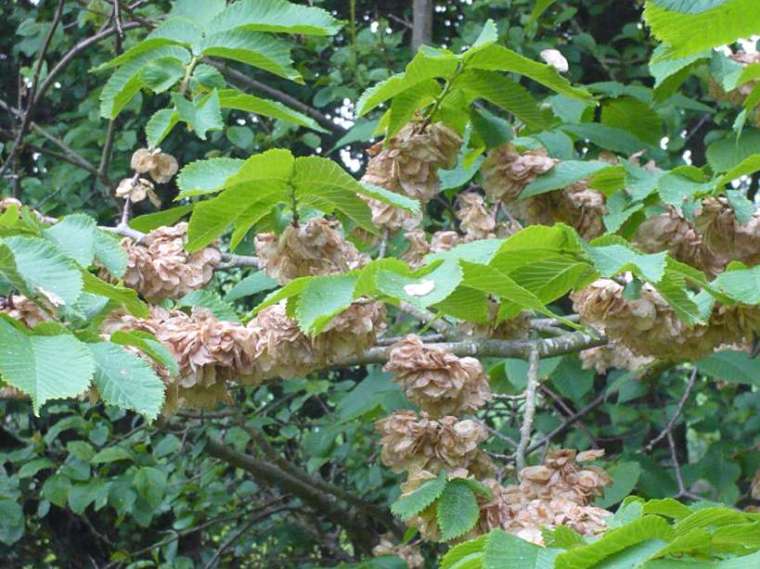
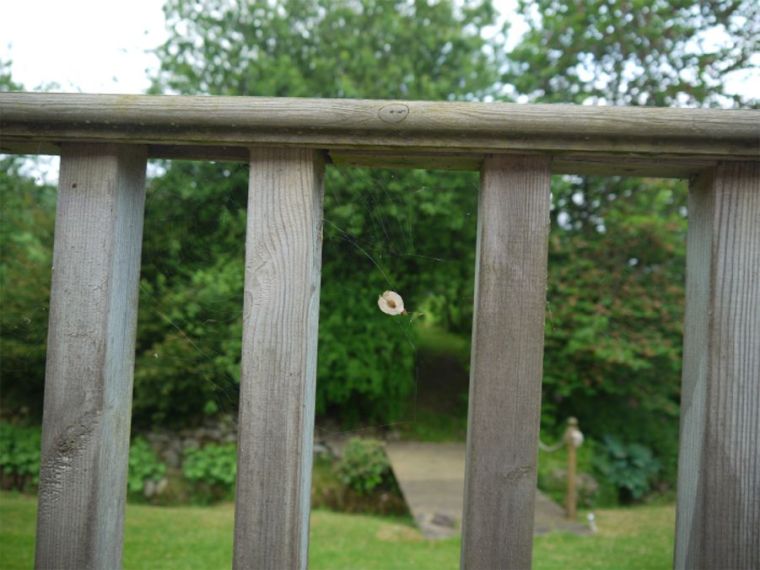
The seeds have been blowing all over the garden, covering the lawn and borders. They grow in clusters:Wych elm P1080813One got caught in a cobweb:

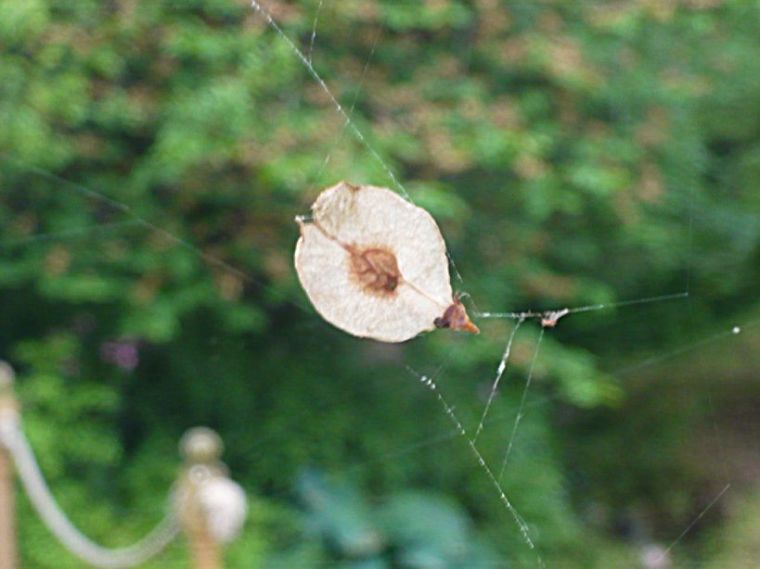
Wych elm seed P1010780Here it is in close-up:

Wych elm seed P1080809Wych Elms are hardy trees and have greater resistance to Dutch elm disease than other elms. The name ‘wych’ comes from an Anglo-Saxon word meaning pliable and refers to the tree’s twigs. Its wood has many uses, including underground water pipes (in the past), boat building and the seats of chairs – it’s also the traditional wood used for coffins.

I love trees – and they are good for you:

A garden without trees is as hard to envisage as an art gallery with pictures. Trees soften the landscape. They provide shade in the summer and protection during the winter. A screen of trees around the house can provide enough wind-shelter to reduce by a tenth the energy consumption in the home. Their canopy of leaves acts as a highly effective pollution filter, absorbing many of the major atmospheric pollution gases, including carbon monoxide, nitrogen and sulphur dioxide. Research also reveals that we are happier and more relaxed when we are in leafy surroundings … (The Therapeutic Garden by Donald Norfolk page 105)

For more Saturday Snapshots see Melinda’s blog West Metro Mommy Reads.

Click on the photos to enlarge.

Mount TBR: June Checkpoint

Mount TBRIt’s time for the second quarterly check-in post for the Mount TBR Challenge 2013.  Bev asks:

1. Tell us how many miles you’ve made it up your mountain (# of books read).  If you’re really ambitious, you can do some intricate math and figure out how the number of books you’ve read correlates to actual miles up Pike’s Peak, Mt. Ararat, etc.
  • I’ve read just a quarter of my target – 12 books, reaching Pike’s Peak, so I’m not looking too good to reach Mount Ararat, that is, to read 48 books from my own bookshelves.

These are the books I’ve read:

  1. The Case of the Curious Bride by Erle Stanley Gardner
  2. The Lacuna by Barbara Kingsolver
  3. Cat Among the Pigeons by Agatha Christie
  4. Small Kindnesses by Fiona Robyn
  5. The Hobbit by J R R Tolkien
  6. The Distant Hours by Kate Morton
  7. Daughters of Fire by Barbara Erskine
  8. Balthazar Jones and the Tower of London Zoo by Julia Stuart
  9. The Lollipop Shoes by Joanne Harris
  10. The Owl Killers by Karen Maitland
  11. Kissing the Gunner’s Daughter by Ruth Rendell
  12. Barnaby Rudge by Charles Dickens
2.
What has been your most difficult read so far.  And why?  (Length?  Subject matter?  Difficult style?  Out of your comfort zone reading?)
  • That has to be The Lacuna by Barbara Kingsolver. Although it began and ended well, I got bored several times in the middle. I felt there was something missing, the personal elements that brought the story to life for me were few and far between; I couldn’t feel involved and just wanted it to end. I persevered because it has had such good reviews and recommendations, but sadly it dragged for me.
Which book (read so far) has been on your TBR mountain the longest? Was it worth the wait? Or is it possible you should have tackled it back when you first put it on the pile? Or tossed it off the edge without reading it all?
  • This is Kissing the Gunner’s Daughter by Ruth Rendell, which I’ve had for about 20 years! It was well worth the wait and I thoroughly enjoyed reading it.