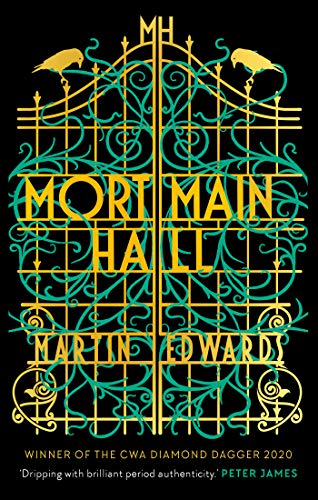
Mortmain Hall by Martin Edwards

a perfect crime

Rating: 4 out of 4.

Mortmain Hall by Martin Edwards is the sequel to Gallows Court. Both books are set in 1930 in London and reflect Martin Edwards’ fascination with that period in history and his love of Golden Age detective fiction.

1930. A chilling encounter on London’s Necropolis Railway leads to murder and a man escapes the gallows after a witness gives sensational evidence. After this string of strange, fatal events, journalist Jacob Flint discovers that he has been framed for murder. To save himself, he flees to Mortmain Hall, a remote estate on the northern coast. There, an eccentric female criminologist hosts a gathering of eclectic people who have all escaped miscarriages of cruel justice. This strange group puts Jacob a little on edge, but they may be his only hope to clear his name.

When a body is found beneath the cliffs near the house, it seems this gathering might be an ingenious plot to get away with murder. Are these eccentrics victims or are they orchestrators of the great deception? Jacob must now set out to uncover the labyrinthine of secrets within Mortmain Hall, alongside Rachel Savernake, woman whose relentless quest for the truth might just bring down the British establishment…

This is one of those books that I find difficult to review – it is complex with several plot lines. So, I’m going to be brief. It begins most unusually with an Epilogue in which Rachel Savernake is talking to a dying man about a ‘perfect crime’ and asks him what had happened at Mortmain Hall. Then chapter one begins with this strange statement, ‘The ghost climbed out of a hackney carriage‘ and I was hooked. Rachel followed the ‘ghost’ as he entered a funeral train run by the London Necropolis Company for privileged first-class passengers. What was going on?

The novel moves on to a scene in the Old Bailey where Jacob Flint, a journalist is watching the trial of Clive Daneskin, accused of murder. After the trial he meets Leonora Dobell, a mysterious woman. Then the book gets very detailed, as more murder cases were described at length and I couldn’t see, at first, how they were connected, or how Mortmain Hall came into the story. But then I thought about the Epilogue and I realised that this is a book about ‘a perfect crime’, so I persevered and eventually it all became much clearer.

And there is further clarification when you reach the end of the book where the Epilogue, in its right place, is continued, followed by a chapter called Cluefinder, in which Martin Edwards lists 30 clues in the narrative, in the tradition of the Golden Age detective novels. Mortmain Hall is not a quick read because it is so detailed, but I did enjoy it.

Mortmain Hall was first published in the UK by Head of Zeus in April 2020 and is scheduled to be published in the US by Poisoned Pen Press on 20 September 2020. My thanks to Poisoned Press and NetGalley for a review copy.
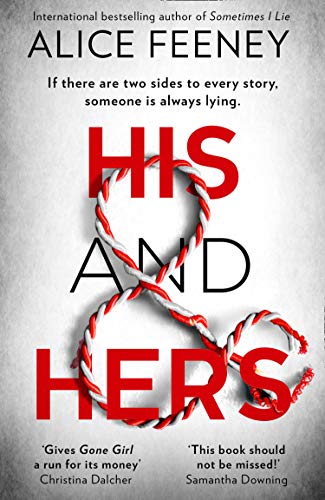
His and Hers by Alice Feeney

HQ| 28 May 2020| 384 pages| Review copy| 4*

I read Alice Feeney’s debut novel, Sometimes I Lie three years ago and loved it. His and Hers is her third book and just like her first book I was utterly gripped by it and compelled to read it, puzzled and amazed by the cleverness of the plot. It’s a standalone psychological thriller.

Blurb:

Jack: Three words to describe my wife: Beautiful. Ambitious. Unforgiving.
Anna: I only need one word to describe my husband: Liar.

When a woman is murdered in Blackdown village, newsreader Anna Andrews is reluctant to cover the case. Anna’s ex-husband, DCI Jack Harper, is suspicious of her involvement, until he becomes a suspect in his own murder investigation.

Someone is lying, and some secrets are worth killing to keep.

The narrative moves between two characters ‘Him’, Jack Harper and ‘Her’, Anna Andrews and there is also a third narrator, the unnamed killer. Anna lives in London, working for the BBC. She grew up in Blackdown, and is an alcoholic, who is still recovering from a recent tragedy that pushed her to drink. Jack is a Detective Chief Inspector, who has recently moved to Blackdown from London to be in charge of the Major Crime Team based in Surrey. He knows Blackdown well as he also grew up there and Anna is his ex wife.

There is so much ambiguity and misdirection that there were times when I thought the killer could just as easily be Jack, or Anna, or one of the other characters – and wondered just which one was the narrator. More murders follow after that first one. But these are not random killings – and it’s soon apparent that the victims are all connected. They had all been at to the same school and had been guests at Anna’s sixteenth birthday party.

I read it quickly, suspending my disbelief and disliking most of the main characters – they really are downright nasty – cheating, lying, manipulating and abusing others, bullying and blackmailing them. – and worse. It kept me guessing throughout, changing my mind about the culprit, or culprits, as I read on. It’s not a comfortable read, dark and twisted with some gruesomely graphic scenes, which is why I’m giving this book 4 stars instead of 5. It’s one of those books I didn’t really like, but I did enjoy working out the puzzle of who could be trusted, who to be wary of and most of all who was doing the murders.

Many thanks to NetGalley and the publishers HQ for an ARC.

Alice Feeney’s second book, I Know Who You Are, is one of the books lost in the depths of my Kindle library – I must dig it out.

The Classics Club Spin Result

Classics Club

The spin number in The Classics Club Spin was announced yesterday. It’s number …

18

which for me is Far from the Madding Crowd by Thomas Hardy. The rules of the Spin are that this is the book for me to read by 30 September, 2020.

My last Spin result was The Return of the Native, which I loved. So I am delighted this time to get another of Hardy’s books to read.

Independent and spirited Bathsheba Everdene has come to Weatherbury to take up her position as a farmer on the largest estate in the area. Her bold presence draws three very different suitors: the gentleman-farmer Boldwood, soldier-seducer Sergeant Troy and the devoted shepherd Gabriel Oak. Each, in contrasting ways, unsettles her decisions and complicates her life, and tragedy ensues, threatening the stability of the whole community. The first of his works set in the fictional county of Wessex, Hardy’s novel of swift passion and slow courtship is imbued with his evocative descriptions of rural life and landscapes, and with unflinching honesty about sexual relationships.  (Goodreads)

Did you take part in the Classics Spin? What will you be reading?

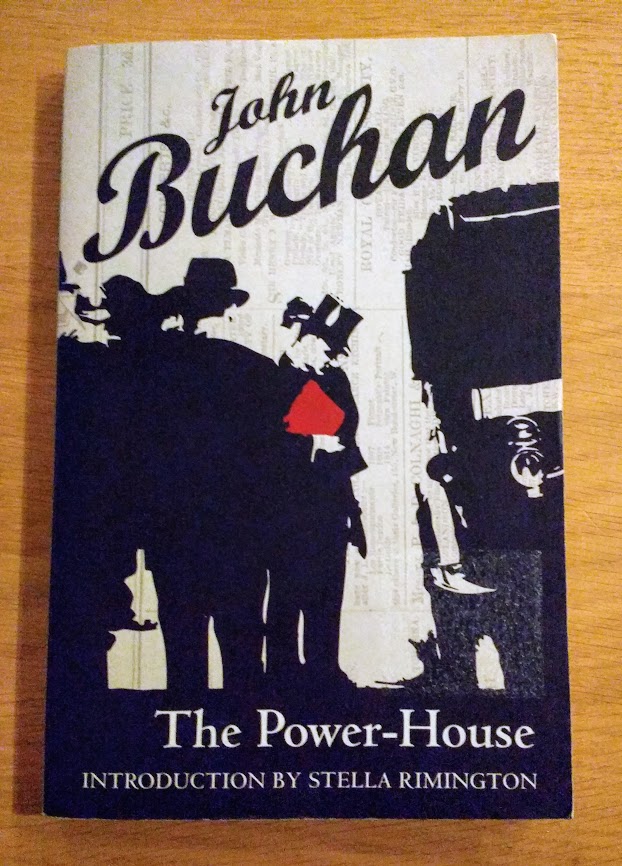
The Power-House by John Buchan

As usual I am behind with writing book reviews, but whilst it is still relatively fresh in my mind I’m going to begin catching up with the latest book I read. It’s only short – 108 pages – and I enjoyed it far more than I thought I would.

Rating: 5 out of 5.

John Buchan’s The Power-House, was written in 1913 when it was serialised in Blackwood’s Magazine and then published in book form in 1916. In her Introduction to the Polygon Books edition Stella Rimington described it as:

Pure essence of Buchan – a demonstration of his magical power to weave a tale out of no materials but the threads and colours of his imagination. It does, however, possess a theme – John Bunyan’s idea, in Pilgrim’s Progress, of men of goodwill and courage struggling with an intelligent, evil power at the root of all the world’s troubles and confessions. (page vii)

The narrator is Edward Leithen, a barrister and MP. His friend and fellow MP Tommy Deloraine tells him is off to Moscow to track down one of their Oxford contemporaries, Charles Pitt-Heron, who had disappeared without letting his wife where he was going. He told her he’d be home for luncheon, but never came back. Whilst Tommy goes off in pursuit of Pitt-Heron, Leithen stays in London, but soon his curiosity draws him into the mystery, because, as he tells himself, ‘every man at the bottom of his heart believes that he is a born detective.’ And so, having collected a few items of information merely by accident and coincidence, he finds the connecting link between them in the person of Andrew Lumley, a wealthy Englishman. Lumley, an elderly man, with menacing, pale eyes, hidden behind his tinted glasses is the key to the whole mystery.

Just as Hannay in Buchan’s later novel, The Thirty-nine Steps, meets the villain Von Schwabing in the library of his country house, so Leithen meets Lumley in his gentleman’s country house, High Ashes, in his library. The two men dine together and then settle themselves in armchairs to smoke cigars and proceed to talk about many things. Leithen is perplexed by him and his speculations on the nature of civilisation, and of power.

I was struck by these thoughts: Lumley states that civilisation is a conspiracy to which Leithen responds that it is in the interests ‘of all the best brains in the world to keep up the conspiracy.‘ To which Lumley replies:

Do we really get the all the best brains working on the side of the compact? Take the business of Government. When all is said, we are ruled by amateurs and the second-rate. The methods of our departments would bring any private firm to bankruptcy. The methods of Parliament – pardon me – would disgrace any board of directors. Our rulers pretend to buy expert knowledge, but they never pay the price of it that a business man would pay, and if they get it they have not the courage to use it. (pages 33 -34)

Lumley continues in this vein and concludes that what is needed is some sort of Power-House to start the ‘age of miracles‘. Leithen is unsettled, to say the least, by his talk and his ‘eerie persuasiveness’.

From an somewhat slow start and a middle consisting mainly of conversation, the novel then picks up pace dramatically. Just as in The Thirty-nine Steps when Hannay goes on the run, fearing for his life, over the moors, so Leithen, in danger of his life, flees his pursuers through the streets of London, as he is lured in deserted buildings, taxis and a decidedly dodgy restaurant. He realises how thin the protection of civilisation is and how there were dozens of ways of spiriting him out of ‘this gay, bustling world‘, alone in a crowd with no one to help him, only his own wits.

Buchan tells a good story, even if I had little idea what the Power-House really was. It’s an international anarchist network, but who they were, what they were actually after, or how they hoped to achieve their ends was never clear to me. But I really enjoyed this book. As Stella Rimington says it has an ‘intoxicating blend of madness with scents of home and countryside.’ And

… the thinness of the crust of civilisation, whatever that may be these days, is as relevant in our time as it was when Buchan was writing in the early war-torn years of the twentieth century. (page xi)

WWW Wednesday: 5 August 2020

IMG_1384-0

WWW Wednesday is run by Taking on a World of Words.

The Three Ws are:

 What are you currently reading?
What did you recently finish reading?
What do you think you’ll read next?

Currently reading:

The Birdwatcher by William Shaw and it’s looking good so far. Police Sergeant William South is investigating the murder of his friend and neighbour Bob Rayner. It’s set in Dungeness on the Kent coast, a bleak landscape of gravel pits towered over by lighthouses and a nuclear power station and the story moves between the present day and South’s childhood. I have a strong feeling that I’ll be reading more of William Shaw’s books in the future.

Recently Finished: 

I finished reading The Power-House by John Buchan yesterday. I really enjoyed it. I’ll post my review shortly.

When his friend Charles Pitt-Heron vanishes mysteriously, Sir Edward Leithen is at first only mildly concerned. But a series of strange events that follow Pitt-Heron’s disappearance convinces Leithen that he is dealing with a sinister secret society. Their codename is ‘The Power-House’. The authorities are unable to act without evidence. As he gets deeper involved with the underworld, Leithen finds himself facing the enemy alone and in terrible danger. 

Reading Next:

I’m not sure at the moment. It ‘should’ be His and Hers by Alice Feeney, because it’s the book I’ve had the longest on my NetGalley shelf and it’s making me feel guilty that I haven’t read it yet.

When a woman is murdered in Blackdown village, newsreader Anna Andrews is reluctant to cover the case. Anna’s ex-husband, DCI Jack Harper, is suspicious of her involvement, until he becomes a suspect in his own murder investigation.

Someone is lying, and some secrets are worth killing to keep.

But it could be another book when the time comes!

Top Ten Tuesday: Books With Colours in the Titles

Top Ten Tuesday is a weekly meme created by The Broke and the Bookish and now hosted by Jana at That Artsy Reader Girl. For the rules see her blog. This week’s topic is

Books With Colours in the Titles.

These are all books I really enjoyed reading.

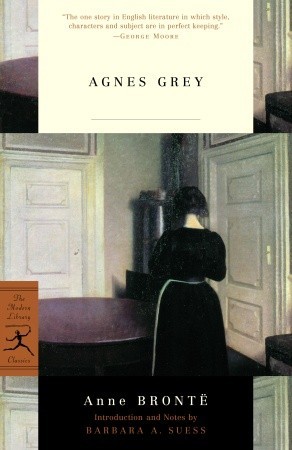
  • Agnes Grey by Anne Bronte like Jane Eyre, Agnes is a governess and this is the story of her experiences working for two families in Victorian England.
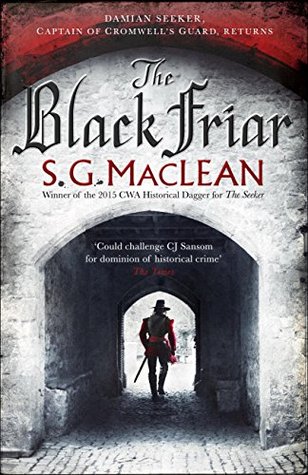
  • The Black Friar – the second book in the Damian Seeker series, historical crime fiction set in 1655 during the Interregnum under Oliver Cromwell, the Lord Protector. Damian Seeker is the Captain of Cromwell’s Guard.
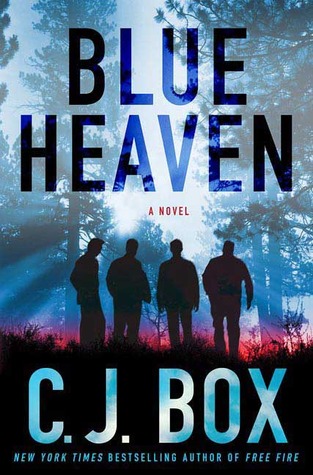
  • Blue Heaven by C J Box – set in North Idaho this a story about two children, Annie and William who decide to go fishing without telling their mother, Monica, and witness a murder in the woods. One of the killers sees them and they run for their lives.
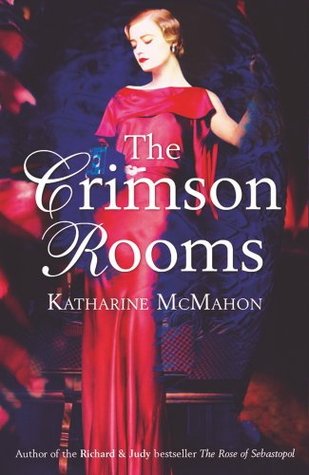
  • The Crimson Rooms by Katharine McMahon – set in London in 1924, Evelyn Gifford is one of the few pioneer female lawyers. It’s early days for women to be accepted as lawyers and this novel clearly shows the prejudice these women had to overcome
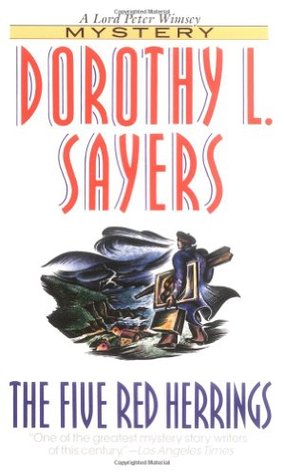
  • Five Red Herrings by Dorothy L Sayers – a Lord Peter Wimsey mystery in which he investigates the death of a landscape painter and fisherman who was found dead in a burn near Newton Stewart.
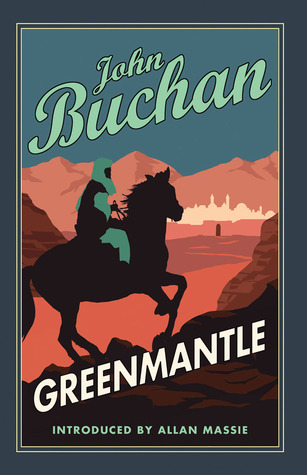
  • Greenmantle by John Buchan – this is basically an adventure and spy story with a highly improbable plot. It’s pure escapism.
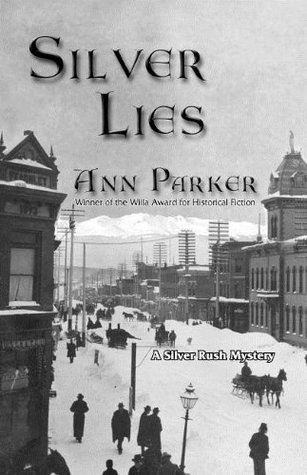
  • Silver Lies by Ann Parker  – historical crime fiction set in 1879/80 in the silver-mining town of Leadville, Colarado in the heart of the Rocky Mountains. Joe Rose, a silver assayer, is found dead in Tiger Alley propped up behind the Silver Queen saloon.
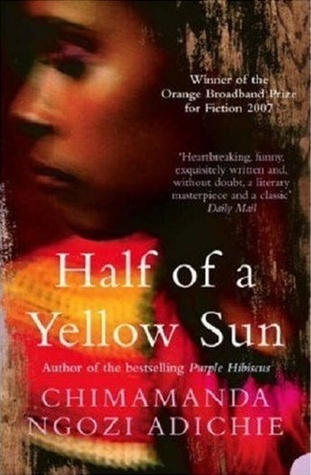
  • Half of a Yellow Sun by Chimamanda Ngozi Adichie, based on the Nigeria-Biafra War of 1967 – 70 this focuses on the struggle between the north and the south, the Igbo, Yoruba and Hausa people.
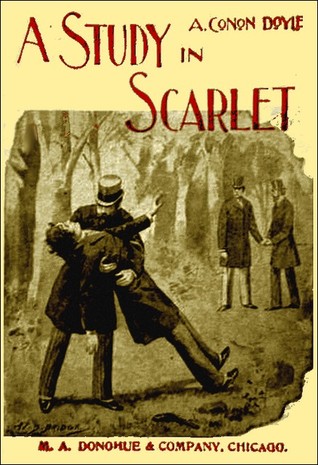
  • A Study in Scarlet by Arthur Conan Doyle Sherlock Holmes and Dr Watson investigate the murder of Enoch J Drebber, an American found dead in the front room of an empty house at 3 Lauriston Gardens, off the Brixton Road,  with the word “RACHE” scrawled in blood on the wall beside the body. The TV version A Study in Pink in the Sherlock series, which although very different in some respects is surprisingly faithful to the book in others.
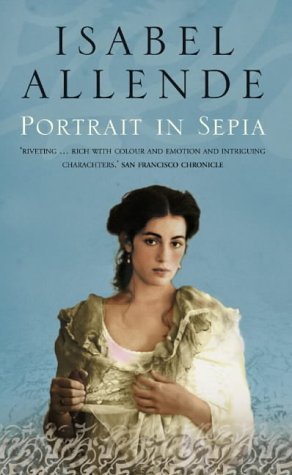
  • Portrait in Sepia by Isabel Allende – Aurora is the narrator and this is the story of her family. After giving details of her birth, in 1880 in San Francisco in the Chinese quarter, she goes back to 1862 beginning her story with details about her grandparents.