Blue Tits in Our Nest Box

Our garden is visited by many birds and each year we’ve enjoyed watching them on the bird feeders. House martins have nested in the gable ends of the house and given us splendid aerial displays. Pheasants are regular visitors, Other birds have also made nests, some in bird boxes and this year we got a new blue tit box – one with a camera and waited to see whether it would be occupied.

We were lucky, as one blue tit spotted it and she started to occupy it, flying in and out and pecking the edges of the hole. For a while she was on her own. She spent quite a lot of time knocking with her beak on the walls of the box and then a male came flying in and joined her hopping around the box to inspect it. They looked so funny as their feet skidded on the smooth floor of the box, but then they began to bring in bits of plant material, scattering it around, then re-arranging it haphazardly. And then they removed all of it and I thought they’d decided to go elsewhere – but no, they came back and more material appeared and then they took it all out. This went on for a while.

I wondered if this was normal and decided I needed to find out more about their nesting habits. After checking several bird websites, I found this little book – Blue Tits in My Nest Box by David Gains, a mine of information.

And I was relieved to read that this was exactly what the blue tits in his bird box did too. I breathed a sigh of relief and waited to see what would happen next. It’s the female that does most of the nest building And she kept on bringing in more plant material and feathers, tossing it all around, then sitting in the middle of the mass, holding out her wings and shuffling round and round, she made a hollow with her body.
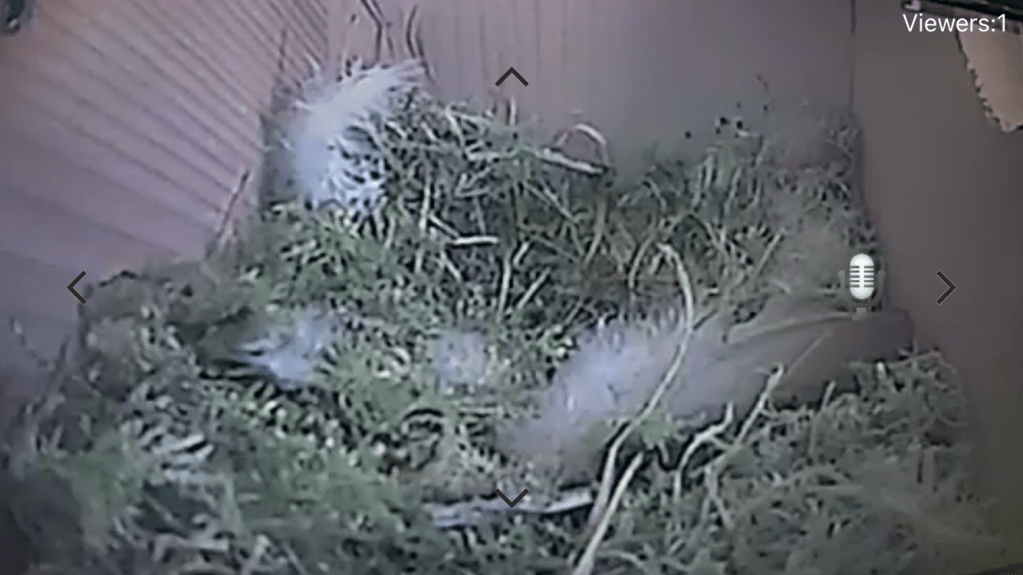
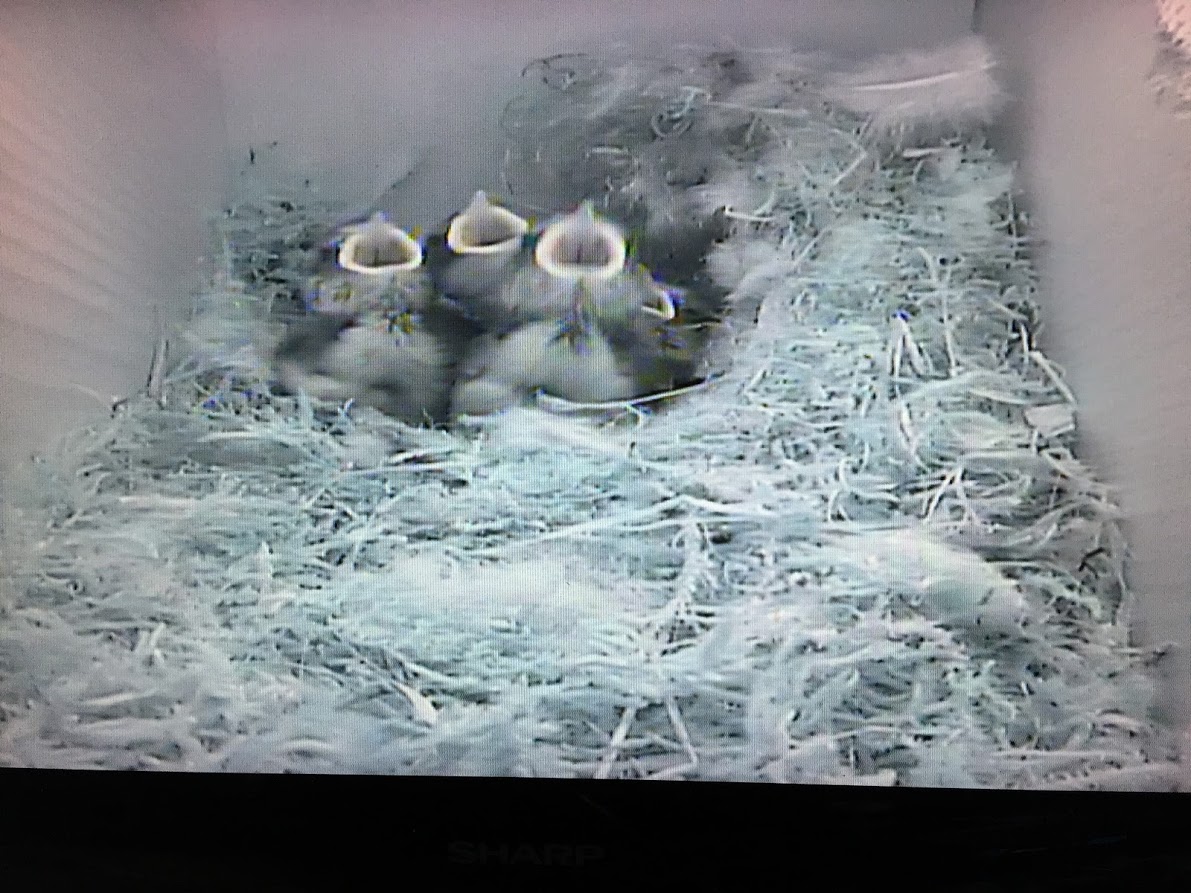
This doesn’t look like the nests you see on TV wildlife programmes, but eventually she was satisfied with it and laid her eggs. We were so excited as one by one five little featherless chicks hatched. Sadly one of them died and we had to remove it from the nest. In the photo below you can see their open mouths as they waved the heads around when the adult birds came in to feed them. The fourth bird was smaller than the others – you can just see its little mouth behind the others. I’m sure it didn’t get as much as the others as they jumped on top of it to get fed!
As they got bigger they began to flatten the nest, jumping up and down, trying out their wings. Eventually the day came when one by one they left the nest until there was just the smallest one left. It kept trying to jump up to the hole and I didn’t think it was big enough to survive outside, but it made it. And we next saw them in the garden on the bird feeders and trees, fluttering their wings and opening their beaks as the parents continued to feed them.
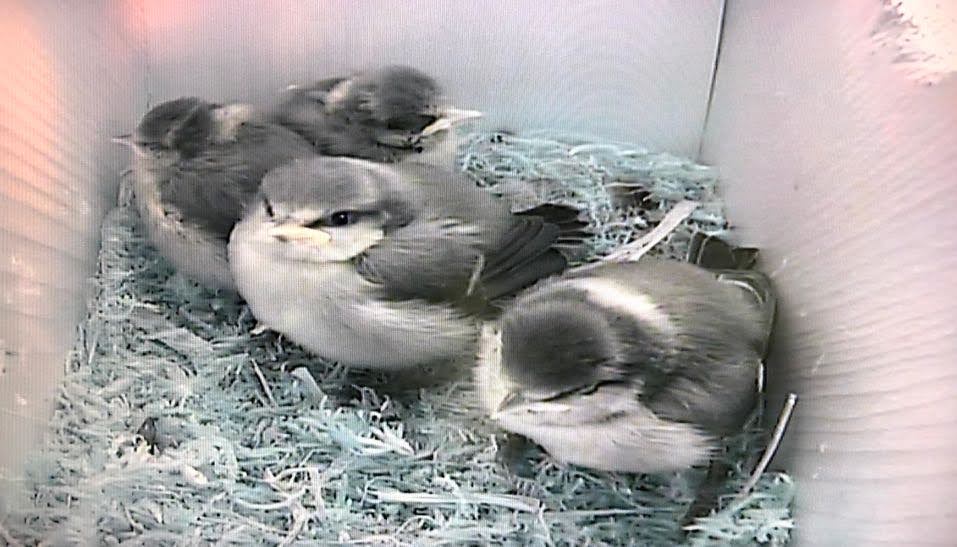
I began writing this post earlier this year when the blue tits were hatching and never finished it. I spent so much time watching what was going on in the nest I got so behind with everything. It was fascinating.

20 Books of Summer

At the beginning of the summer I joined Cathy’s 20 Books of Summer Challenge which ran from June 1st until September 1st, 2020.

I revised my original my list on 19 July because after reading six of the books on my original list I began reading The Luminaries by Eleanor Catton, a book that was NOT on my original list and I realised that as it has 853 pages there was no way I could read the rest of the books before 1 September.

Although I read 20 books during the period, only 13 of them are books from my list – they are:

  1. The Deep by Alma Katsu 3*
  2. How to Disappear by Gillian McAllister 2*
  3. The Mist by Ragnar Jonasson 4*
  4. Maigret’s Holiday by Georges Simenon 5*
  5. Deadheads by Reginald Hill 5*
  6. Moonflower Murders by Anthony Horowitz 5*
  7. The Luminaries by Eleanor Catton 4* – review to follow
  8. The Power-House by John Buchan 5*
  9. How to Kill a Cat by W J Burley 5* – review to follow
  10. Thin Air by Michelle Paver 4* – review to follow
  11. Smallbone Deceased by Michael Gilbert 4*
  12. A Thousand Moons by Sebastian Barry 5*
  13. Mortmain Hall by Martin Edward 4*

So, I still have 7 books left to read and I hope to read them soon :

  1. The Inheritance by Louisa May Alcott
  2. Bilgewater by Jane Gardam
  3. The Case of the Gilded Fly by Edmund Crispin
  4. The Silence Between Breaths by Cath Staincliffe
  5. Giant’s Breath by Mary Westmacott (Agatha Christie)
  6. A Moment of Silence by Anna Dean
  7. The Dry by Jane Harper

Top Ten Tuesday: Books that Make Me Hungry

I’ve chosen books that ether have food in their title, or include food/recipes in their content.

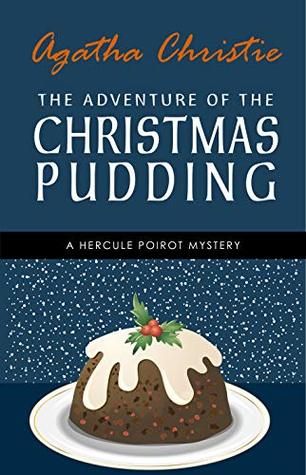
  • The Adventure of the Christmas Pudding by Agatha Christie – Poirot is invited to spend ‘a good old-fashioned Christmas in the English countryside’ .
  • Chocolat by Joanne Harris – descriptions of delicious food – not just chocolate.
  • Peaches for Monsieur Le Curé by Joanne Harris – a diluted version of Chocolat, but it is too long and drawn out for the story line.
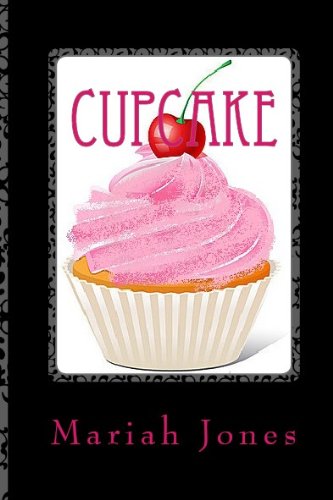
  • Cupcake by Mariah Jones – I haven’t read this one, but I like the cover – even better though if it was a chocolate cupcake.
  • Toast by Nigel Slater – a memoir of his childhood remembered through food.
  • Garden Spells by Sarah Addison Allen – a modern fairy tale/myth – Claire creates dishes from the plants in her garden.
  • The Woman Who Wanted More by Vicky Zimmerman – about a cookery manual, featuring menus for anything life can throw at ‘the easily dismayed.
  • The Co-Op’s Got Bananas by Hunter Davies – a memoir of the Forties and Fifties… In among the rationing and the bombsites.
  • The Gourmet by Muriel Barber – tantalising glimpses of food that Pierre Arthens, France’s celebrated food critic recalls.
  • Bella Tuscany by Frances Mayes – the follow up book to Under the Tuscan Sun with more details about the restoration of the villa and its garden, plus recipes. 

Bookshelf Travelling

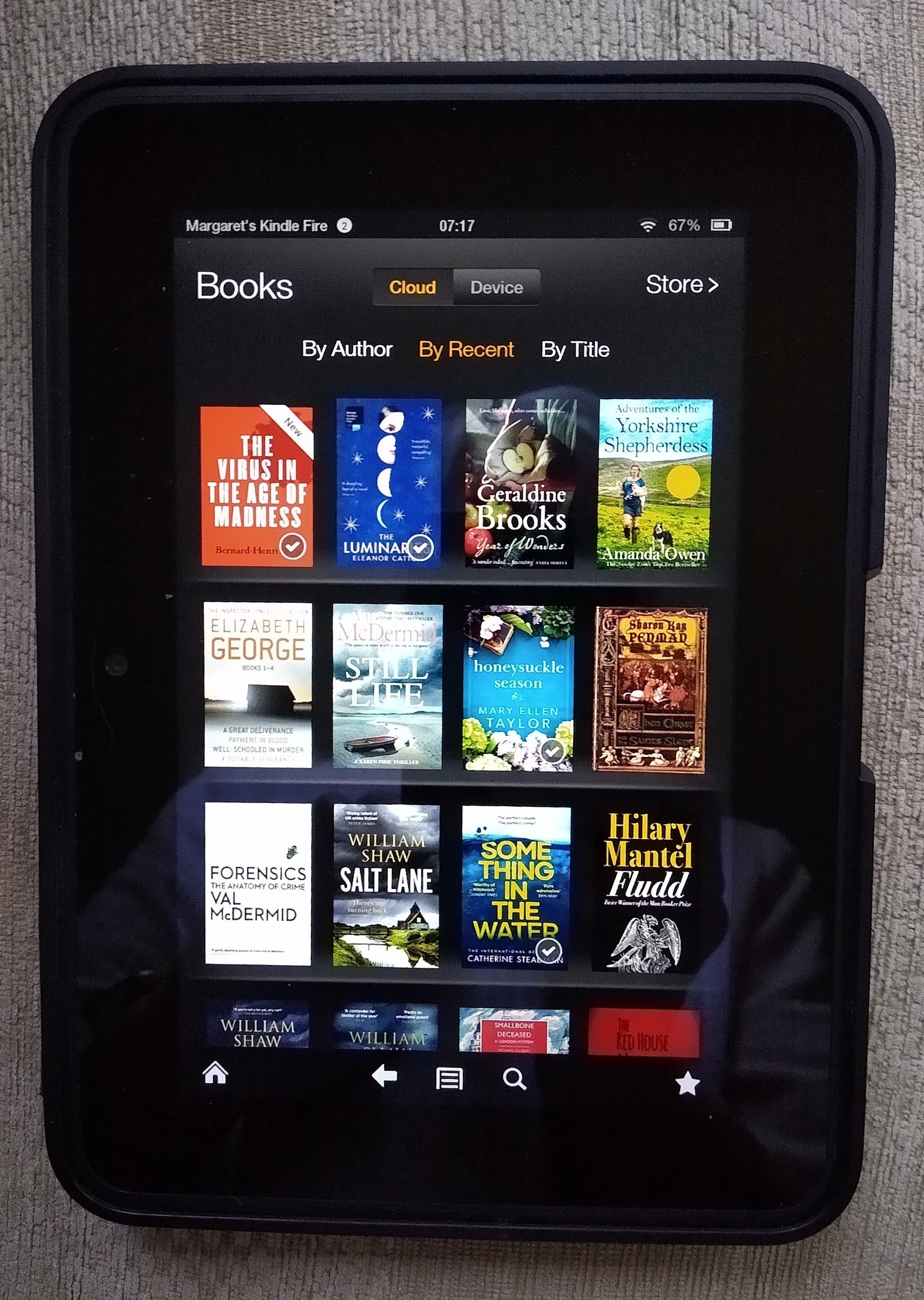
Katrina of Pining for the West is currently hosting Bookshelf Travelling in Insane Times originally hosted by Judith at Reader in the Wilderness. This week my ‘bookshelf’ holds some recent additions on my Kindle. I haven’t been to a bookshop since January but I have been acquiring e-books, some presents, some free books and some I’ve bought, mostly when they’ve been on offer at 99p.

These are just some of them:

I’ve read two of these – The Luminaries and Still Life. As there are too many here to write about all of the others today I’ve focused on these:

On the top row:

The Virus in the Age of Madness by Bernard-Henri Levy – I bought this book because I saw him talking about it on a TV programme recently. I think it’s time I read something about the pandemic. It’s just a short book – 128 pages.

Adventures of the Yorkshire Shepherdess by Amanda Owen – I bought this as we’ve been watching Our Yorkshire Farm on Channel 5. It is a documentary series following life on a remote sheep farm in Yorkshire for Clive and Amanda Owen and their nine children. I love it, so I wanted to read Amanda’s books. She’s written two more – The Yorkshire Shepherdess and A Year in the Life of a Yorkshire Shepherdess.

Year of Wonders by Geraldine Brooks – a book I’ve been wondering about reading for ages. Ive read some of her books and enjoyed them. This one is a novel set in 1666, when plague suddenly struck the small village of Eyam in Derbyshire.

On the bottom row:

Forensics: the Anatomy of Crime by Val McDermid. I love her Karen Pirie books and after reading Still Life, I saw she’s written this non-fiction book and I thought it looked interesting. She traces the history of forensics from its earliest beginnings to the cutting-edge science of the modern day.

Fludd by Hilary Mantel – another author whose books I love. This is one of her earlier novels, described on Amazon as a dark fable of lost faith and awakening love amidst the moors, set in Fetherhoughton is a drab, dreary town somewhere in a magical, half-real 1950s north England, a preserve of ignorance and superstition.

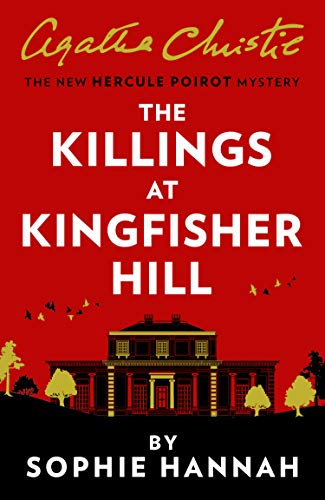
The Killings at Kingfisher Hill by Sophie Hannah

HarperCollins/ 20 August 2020/ Print length 346 pages/ Kindle edition/ 3*

The Killings at Kingfisher Hill is Sophie Hannah’s fourth Hercules Poirot mystery novel and the first one I’ve read. I have read some of Hannah’s books previously. So, I know that she writes complicated and tricky plots. Whilst not attempting to reproduce Christie’s Poirot this book is loosely based on Christie’s books, as Hannah incorporates all the twists and turns, red herrings and misdirections that you find in them. There’s a country house setting, a number of suspects, and a gathering together at the end where Poirot reveals all.

Blurb:

Hercule Poirot is travelling by luxury passenger coach from London to the exclusive Kingfisher Hill estate, where Richard Devonport has summoned him to prove that his fiancée, Helen, is innocent of the murder of his brother, Frank. But there is a strange condition attached to this request: Poirot must conceal his true reason for being there.
 
The coach is forced to stop when a distressed woman demands to get off, insisting that if she stays in her seat, she will be murdered. Although the rest of the journey passes without anyone being harmed, Poirot’s curiosity is aroused, and his fears are later confirmed when a body is discovered with a macabre note attached…

Could this new murder and the peculiar incident on the coach be clues to solving the mystery of who killed Frank Devonport? And if Helen is innocent, can Poirot find the true culprit in time to save her from the gallows?

I wasn’t expecting a cloned Poirot and Hannah’s Poirot is not Christie’s Poirot. There’s no Captain Hastings in this book, Poirot’s faithful friend. Instead Poirot is accompanied by Inspector Catchpole from Scotland Yard. How on earth he got to be an inspector is beyond me – he comes across as rather dim and stupid and Poirot treats him as such, endlessly explaining things to him and telling him what to do in an officious manner.

There are three strands to the plot – who killed Frank Devonport; who is the hysterical woman with an ‘unfinished face’ who insists she will be murdered if she sits in a specific seat on the coach; and who is the mysterious woman who tells Poirot she is a murderer – what a stupid thing to do when she knows he is a ‘world-renowned detective’? And I wondered what makes Richard so sure that Helen didn’t kill Frank when she had immediately confessed that she had? And I’m still wondering why when he was invited to Kingfisher Hall, an exclusive and private country estate, he went by coach with 30 other passengers – even if it was a ‘luxury’ coach. I just can’t see Poirot travelling by coach!

This all makes the book extremely convoluted, confusing and tangled as well as long-winded. Poirot though works his way methodically through the mess and gets to the truth. However, I found it quite dull and repetitive and rather contrived. So, my rating for this book is 2.5 stars, rounded up to 3.

My thanks to HarperCollins for a review copy via NetGalley.

WWW Wednesday: 26 August 2020

WWW Wednesday is run by Taking on a World of Words.

The Three Ws are:

 What are you currently reading?
What did you recently finish reading?
What do you think you’ll read next?

I’m currently reading Wycliffe and How To Kill a Cat by W J Burley, one of my TBRs. It’s the second in the Wycliffe series, set in Cornwall.

Superintendent Wycliffe is on holiday, but popping into the local police station to see an old friend he hears that a woman has been found dead, probably murdered and he can’t resist offering to help. It’s immensely readable. The title puzzles me – I suspect that it’s not really about how to kill a cat – I hope not!

The last book I read was Still Life by Val McDermid, her latest Karen Pirie mystery. I’ll be writing more about this book. It combines a cold case investigation into a skeleton found in a campervan and a current investigation into the discovery of a body in the Firth of Forth. I loved it.

I see that ITV are adapting the first Karen Pirie book, The Distant Echo. Filming began in February this year, but I couldn’t find any other details – one to look out for.

I’d like to read several books next

But at the moment I’m leaning towards reading the first book in the Inspector Lynley series, A Great Deliverance by Elizabeth George. I’ve dipped into it and it looks good.

Blurb:

Fat, unlovely Roberta Teys is found beside her father’s headless corpse, wearing her best dress and with an axe in her lap. Her first words are: ‘I did it. And I am not sorry’ and she refuses to say more. Inspector Thomas Lynley and DS Barbara Havers are sent by Scotland Yard to solve this particularly gruesome murder. And as they navigate their way around a dark labyrinth of secret scandals and appalling crimes, they uncover a series of shocking revelations that shatter the façade of the peaceful Yorkshire village.