Book Beginnings & The Friday 56: The Silence of the Girls by Pat Barker

Every Friday Book Beginnings on Friday is hosted by Gillion at Rose City Reader where you can share the first sentence (or so) of the book you are reading. You can also share from a book you want to highlight just because it caught your fancy.

The Silence of the Girls is one of the latest books I bought. It is the first book in Pat Barker’s Troy series, historical fiction retelling the story of the Trojan war from the point of view of the women.
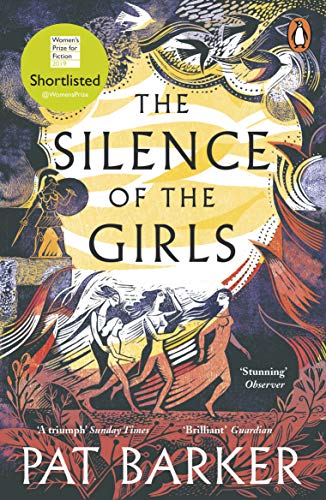
The Book begins:

Great Achilles. Brilliant Achilles, shining Achilles, godlike Achilles … How the epithets pile up. We never called him any of those things; we called him ‘the butcher’.

Also every Friday there is The Friday 56, hosted by Freda at Freda’s Voice, where you grab a book and turn to page 56 (or 56% of an eBook), find one or more interesting sentences (no spoilers), and post them.

Page 56:

Somebody once said to me: You never mention his looks. And it’s true, I don’t, I find it difficult. At that time, he was probably the most beautiful man alive, as he was certainly the most violent, but that’s the problem. How do you separate a tiger’s beauty from its ferocity? Or a cheetah’s elegance from its speed of attack? Achilles was like that – the beauty and the terror were two sides of a single coin.

Synopsis from Fantastic Fiction:

Here is the story of the Iliad as we’ve never heard it before: in the words of Briseis, Trojan queen and captive of Achilles. Given only a few words in Homer’s epic and largely erased by history, she is nonetheless a pivotal figure in the Trojan War. In these pages she comes fully to life: wry, watchful, forging connections among her fellow female prisoners even as she is caught between Greece’s two most powerful warriors. Her story pulls back the veil on the thousands of women who lived behind the scenes of the Greek army camp—concubines, nurses, prostitutes, the women who lay out the dead—as gods and mortals spar, and as a legendary war hurtles toward its inevitable conclusion. Brilliantly written, filled with moments of terror and beauty, The Silence of the Girls gives voice to an extraordinary woman—and makes an ancient story new again.

The Silence of the Girls was nominated for


Baileys Women’s Prize for Fiction Best Book
Women’s Prize For Fiction Best Novel
Costa Book Awards Best Novel

It was also:

A Washington Post Notable Book
One of the Best Books of the Year: NPR, The Economist, Financial Times
 
Shortlisted for the Costa Novel Award
Finalist for the Women’s Prize for Fiction

So, I’m really hoping I’ll enjoy it. What do you think? If you’ve read it do you think it lives up to its reputation?

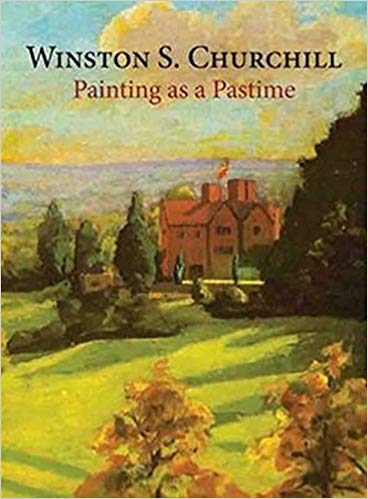
Throwback Thursday: Painting as a Pastime by Winston S. Churchill

Today I’m looking back at my post on Painting as a Pastime by Winston S. Churchill. I first reviewed it on March 15, 2018.

My review begins:

I was delighted on Sunday when my son gave me Painting as a Pastime by Winston Churchill as a Mother’s Day present. I read it straight away and loved it. The cover shows Churchill’s painting of his home, Chartwell. Churchill was forty when he first started to paint at ‘a most trying time‘ in his life and art became his passion and an ‘astonishing and enriching experience‘.

Click here to read my full review

The next Throwback Thursday post is scheduled for June 2, 2022.

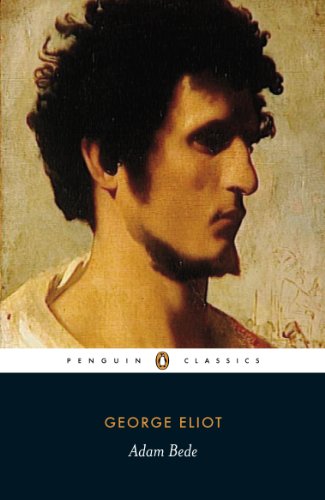
Adam Bede by George Eliot

I’ve finished reading the 50 books on my first Classics Club List, but there are two books I didn’t review immediately after I finished reading them, which means now I can only write short reviews as the details are no longer fresh in my mind. And that is difficult as they are both long novels.

The first is Adam Bede by George Eliot (Mary Ann Evans). It was her first novel, published in 1859.

Rating: 3 out of 5.

Synopsis

Carpenter Adam Bede is in love with the beautiful Hetty Sorrel, but unknown to him, he has a rival, in the local squire’s son Arthur Donnithorne. Hetty is soon attracted by Arthur’s seductive charm and they begin to meet in secret. The relationship is to have tragic consequences that reach far beyond the couple themselves, touching not just Adam Bede, but many others, not least, pious Methodist Preacher Dinah Morris. A tale of seduction, betrayal, love and deception, the plot of Adam Bede has the quality of an English folk song. Within the setting of Hayslope, a small, rural community, Eliot brilliantly creates a sense of earthy reality, making the landscape itself as vital a presence in the novel as that of her characters themselves. (Amazon)

This is a long and slow-moving novel set in the rural community of Hayslope, a fictional village, based on Ellastone in the West Midlands in 1799. Overall I liked the book, but not as much as I remember liking Middlemarch, which I read long before I began this blog, and Silas Marner (my review). As in those two books it took me a while to get used to George Eliot’s style of writing, with her long, long sentences – some so long I had forgotten how they had started, before I got to the end. But I liked the dialect used by the characters, according to their class, that helps identify their position within the village community.

They’re cur’ous talkers i’ this country, sir; the gentry’s hard work to hunderstand ’em. I was brought hup among the gentry, sir, ‘an’ got the turn o’ their tongue when I was a bye. Why, what do you think the folks here says for ‘hevn’t you?’ – the gentry, you know, says, ‘hevn’t you’ – well, the people about here says ‘hanna yey.’ It’s what they call the dileck as is spoke hereabout, sir. That’s what I’ve heared Squire Donnithorne say many a time; it’s the dileck, says he.’

It is about love, seduction, remorse, crime and religion. a study of early 19th century rural life and education. It emphasises the value of hard work; the power of love; and the consequences of bad behaviour. As the title indicates the main character is Adam Bede, a hard working young man, a carpenter, with a strong sense of right and wrong, strong and intelligent:

In his tall stalwartness Adam Bede was a Saxon, and justified his name; but the jet black hair, made the more noticeable by its contrast with the light paper cap, and the keen glance of the dark eyes that shone from under strongly marked, prominent and mobile eyebrows, indicated a mixture of Celtic blood. The face was large and roughly hewn, and when in repose had no other beauty than such as belongs to an expression of good-humoured honest intelligence.

The novel revolves around a love ‘rectangle’ – the beautiful but self-absorbed Hetty Sorrel; Captain Arthur Donnithorne, the young squire who seduces her; Adam Bede, her unacknowledged suitor; and Dinah Morris, Hetty’s cousin, a fervent, virtuous and beautiful Methodist lay preacher.

This short post doesn’t do justice to the novel. I gave it 3 stars on Goodreads when I read it in 2015, but I have started to re-read it and I am enjoying it. I think that this time round maybe l’ll change my rating to 4 stars …

~~~

The other book I have left to review is Martin Chuzzlewit by Charles Dickens – my post will follow next week.

One-Word Reviews for the Last Ten Books I Read.

Top Ten Tuesday is a weekly meme created by The Broke and the Bookish and now hosted by Jana at That Artsy Reader Girl. For the rules see her blog.

The topic this week is One-Word Reviews for the Last Ten Books I Read. I thought this would difficult because how can you sum up a book with just one word? You can’t, because there is so much more to say about a book. On the other hand, it’s good to try to define what a book is about – but not in just one word! There are so many layers and complications, sub-plots and twists and turns to a book to even try to sum it up in one sentence, let alone in one word!

Anyway, I’m not happy with the words I’ve chosen for these books – they fall far short … totally inadequate.

I’ve linked the book to my posts where I’ve written them for a more detailed account. I’m aiming to write reviews for the other three books.

  1. The Homecoming by Anna Enquist -heart-wrenching
  2. The Drowned City by K L Maitland – dark
  3. The Honourable Schoolboy by John Le Carré – spies
  4. Notre-Dame de Paris by Victor Hugo – tragic
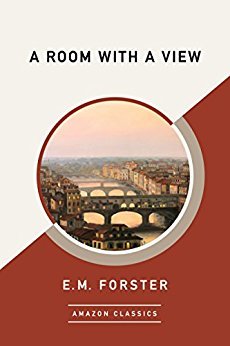
  5. A Room With a View by E M Forster – satirical
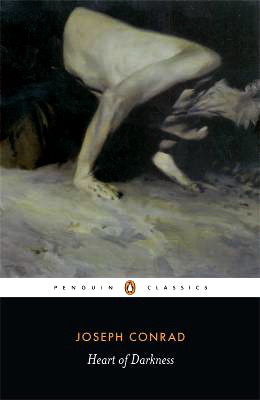
  6. Heart of Darkness by Joseph Conrad – horrific
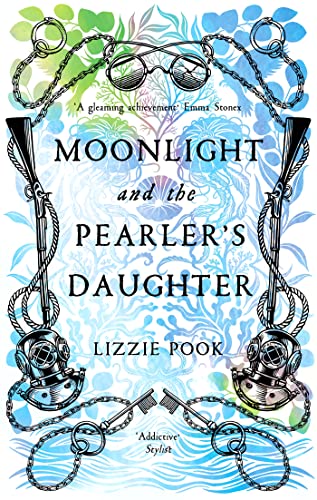
  7. Moonlight and the Pearler’s Daughter by Lizzie Pook – perilous
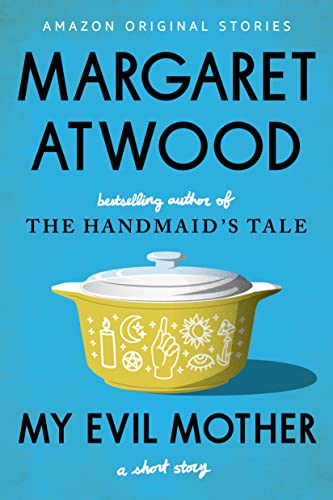
  8. My Evil Mother: a short story by Margaret Atwood – quirky
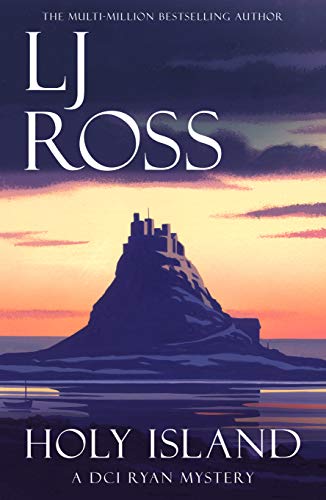
  9. Holy Island by L J Ross – disappointing
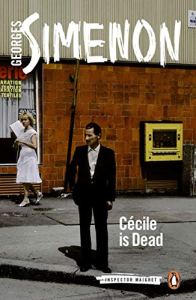
  10. Cécile is Dead by Georges Simenon – greed

Cécile is Dead by Georges Simenon

Cécile is Dead by Georges Simenon, translated by Anthea Bell, an Inspector Maigret novel.

Synopsis (Amazon)

Poor Cécile! And yet she was still young. Maigret had seen her papers: barely twenty-eight years old. But it would be difficult to look more like an old maid, to move less gracefully, in spite of the care she took to be friendly and pleasant. Those black dresses that she must make for herself from bad paper patterns, that ridiculous green hat!

In the dreary suburbs of Paris, the merciless greed of a seemingly respectable woman is unearthed by her long suffering niece, and Maigret discovers the far-reaching consequences of their actions.

This novel has been published in a previous translation as Maigret and the Spinster.


My thoughts:

This is one of the best Maigret books I’ve read – and it is complicated, remarkably so in a novella of just 151 pages. At first it seems quite straight forward. Cécile has been wanting to see Detective Chief Inspector Maigret for months, sitting patiently in the ‘Aquarium’, as the waiting room at the Police Judiciaire in Paris, is known. She was convinced that someone had been breaking into her aunt’s apartment. But no one takes her seriously and Maigret is always busy, until one day he decides to see her. But she had left the waiting room, so he goes to the apartment where she lives with her elderly aunt, Juliette Boynet, the owner of the apartment building. She wasn’t there, but her aunt was – lying dead on the floor, strangled. Cécile was missing and the title tells you why – she was indeed dead.

And from then on, the mystery became more complex, with several suspects with a variety of motives. Juliette was very wealthy, but also miserly. She had a large family, mostly estranged from her and at odds with each other. They all turn up for her funeral, arguing about who should take precedence in the funeral cortège, and about who should inherit her money and property.

Maigret has to sort it out in his own way – musing over the details and feeling bad that he hadn’t spoken to Cécile earlier, thinking her worry over an intruder who just moved things around the apartment without taking anything was trivial. We see more of how he thinks and works when later in the investigation he is accompanied by an American, a Mr Spencer Oates from the Institute of Criminology of Philadelphia, who had asked if he could study Maigret’s methods.

This is the second time I’ve read Cécile is Dead. I first read it in 2018, but didn’t write about it at that time. Reading it for the second time, I realised I had forgotten all the details – it was like reading a new book. I thoroughly enjoyed it. It is either the 20th or the 22nd Maigret novel – Amazon records it as the 20th, whereas Goodreads has it as the 22nd! Whichever it is, it is a good read.

  • ASIN ‏ : ‎ B00SSKM6OC
  • Publisher ‏ : ‎ Penguin (4 Jun. 2015)
  • Print length ‏ : ‎ 151 pages
  • Source: I bought the e-book
  • My Rating: 4*