The Lake District: Aira Force

Last Saturday I wrote about our trip on Ullswater on a grey, overcast morning, a couple of weeks ago. That same day the the sky cleared, and the sun shone as we went to see Aira Force, below Gowbarrow Fell above the shores of Ullswater.  You wouldn’t have thought it was the same day, as the extra layers of clothing had to come off!

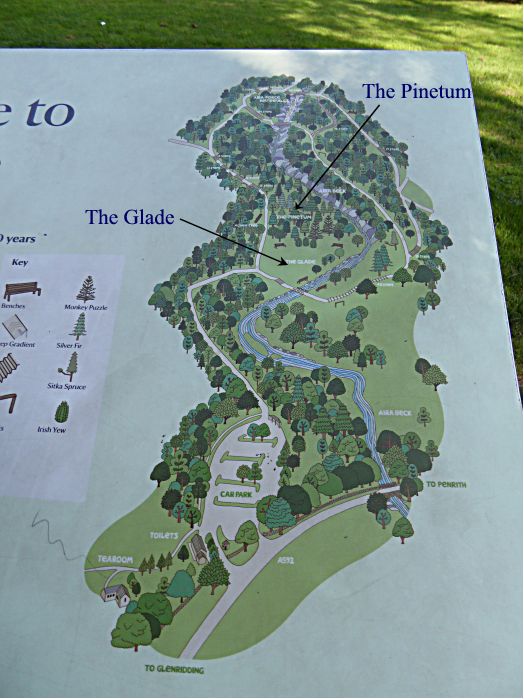
Aira Force (from ‘fors’ the Viking word for waterfall) is a beautiful, wonderful place – a series of waterfalls, cascading down a fracture in the ancient volcanic rocks in a deep gorge. People have been visiting Aira Force for about 250 years. This is the plan of Aira Force on the National Trust board at the entrance to the Glade (with my added notation):

Aira Force plan P1010130

 From the Glade you start to ascend the waterfall walking through the Pinetum, which includes firs, pines, spruces, cedars and yews planted in the 19th century. The photo below shows the trunk of a Monkey Puzzle tree, the top way above me:

Pinetum P1010133

The paths are circular, most of them dating back to the early 19th century when visitors were escorted by tour guides. There are three bridges across the Aira Beck – the first reference to a bridge was by Wordsworth in 1787. Below is a view of one of the bridges:

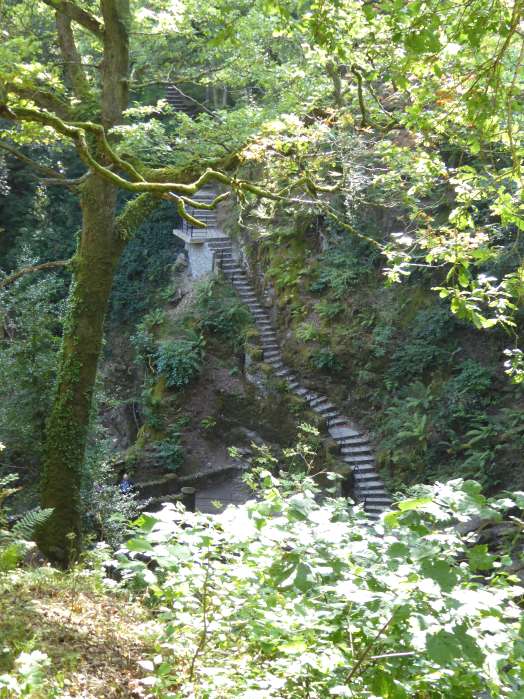
There are also several sets of steps:

Steps P1010144

and of course, the cascades, falling 66 feet from the top to the bottom:

Waterfall P1010149

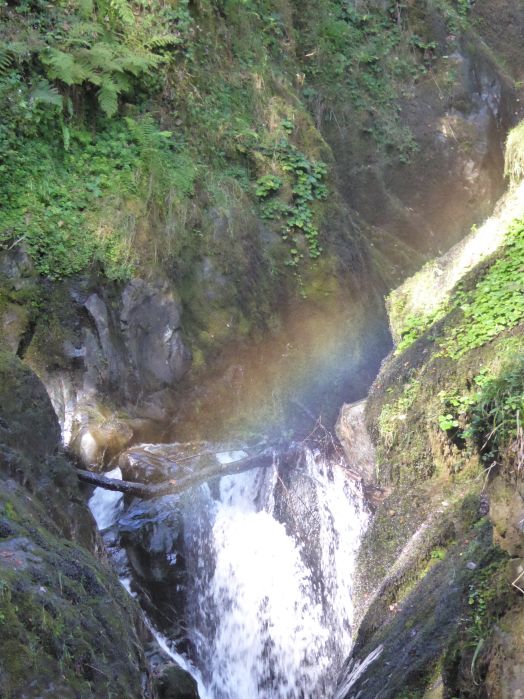
I managed to snap a rainbow:

Rainbow P1010148

For more Saturday Snapshots see Melinda’s blog West Metro Mommy Reads.

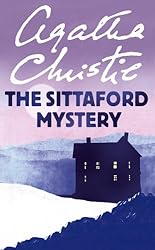
The Sittaford Mystery by Agatha Christie

The Sittaford Mystery is one of the earlier of Agatha Christie’s books, first published in the UK in 1931 and in the US as Murder at Hazelmoor. It’s not one of her Poirot or Miss Marple mysteries, but features Inspector Narracott, ably assisted, if not lead, by Emily Trefusis, a remarkably resourceful and determined young woman. I really liked Emily.

The Sittaford Mystery begins with a seance, or rather a table-turning session at Sittaford House in a tiny moorland village near Dartmoor, not very far from the prison at Princetown. Snow has been falling for four days and now Sittaford is almost completely cut off from the rest of the world. At the seance are the tenants of Sittaford House, Mrs Willett and her daughter Violet, and their neighbours. When the message of Captain Trevelyan’s death is tapped out, followed by the word M-U-R-D-E-R, his friend Major Burnaby immediately decides to see if Trevelyan has indeed been murdered, walking in the snow walking six miles to Exhampton. Of course, when he gets there, he does indeed discover that his friend is dead, probably killed at the precise time that the message was received in the seance.

Inspector Narracott is called in and a young man, James Pearson, Trevelyan’s nephew is arrested for the murder. Emily, his fiancée is convinced of his innocence. She enlists the help of the journalist, Charles Enderby and together they set out to discover the real culprit. Inspector Narracott is a quiet man, a thoughtful and efficient police officer, with a logical mind and attention to detail but Emily is determined and courageous in her search for the truth.

There are two mysteries in this book, who killed Trevelyan and why have the Willetts rented the house from him for the winter? I found it all very interesting, with plenty of clues, red herrings and suspects. Added to that is the escaped prisoner on Dartmoor, reminding me a bit of Dickens’ novel, Great Expectations, and of Conan Doyle’s The Hound of the Baskervilles, emphasised Charles Enderby’s reference to the seance as a ‘queer’ business, and thinking of getting Sir Arthur Conan Doyle’s opinion on the matter.

The setting and the characterisation are good. But although the plotting is good for most of the book, I felt the ending and the motive for the murder are rather inadequate, not least because I don’t think you could actually deduce who the murderer is – I guessed, but it was only a guess – not all of the facts are revealed until the denouement. For this reason I can’t rank The Sittaford Mystery with Agatha Christie’s best mysteries, but it is still a good read.

Note: the TV version in the Agatha Christie Marple series not only changes the identity of the killer but also inserts Miss Marple into the story!

First Chapter, First Paragraph: Time's Echo

First chapterEvery Tuesday Diane at Bibliophile by the Sea hosts First Chapter First Paragraph Tuesday Intros, where you can share the first paragraph, or a few, of a book you are reading or thinking about reading soon.

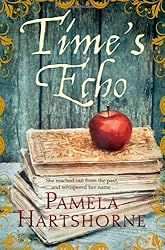
My choice this week is Time’s Echo by Pamela Hartshorne, historical timeslip fiction.

It begins:

I feel no fear, not yet. I am just astounded to find myself in the air, looking down the murky rush of the river. It is as if time itself has paused, and I am somehow suspended between the sky and the wate, between the past and the present, between then and now. Between disbelief and horror.

It is All Hallows’ Eve, and I am going to die.

Time’s Echo mixes time as Grace Trewe is drawn into Hawise Aske’s life, four and a half centuries earlier in York, 1577. I saw this book in the library and although I hadn’t heard of Pamela Hartshorne I thought the title was interesting, and from the description on the back cover and the opening paragraphs, I thought it was worth borrowing.  From what I’ve read so far I’m hoping it will be an enjoyable book.

What's In A Name 7: Completed

Whats in a name 7Hosted by  by Charlie at The Worm Hole this challenge runs from January to December 2014. During this time you choose a book to read from six categories.

I’ve now completed the challenge and these are the books I read:

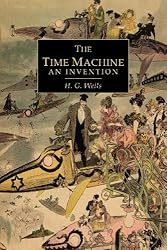
  • A reference to time €“ The Time Machine by H G Wells, first published in 1895, is a work of imagination and an early example of science fiction, but it is also a commentary on late 19th century society and a vehicle for H G Well’s views on socialism and industrialisation.

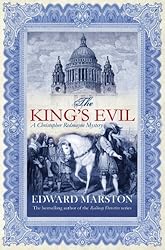
  • A position of royalty €“ The King’s Evil by Edward Marston. This is historical crime fiction set in London in September 1666, just as the Great Fire of London has begun, eventually devastating a large part of the old medieval City of London

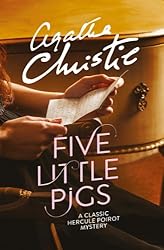
  • number written in letters – Five Little Pigs by Agatha Christie, a Poirot mystery
    first published in 1943. Caroline Crale was convicted of the murder of her husband, Amyas and died in prison. Sixteen years later, her daughter, a child of five at the time of the murder, asks Poirot to clear her mother’s name, convinced that she was innocent.
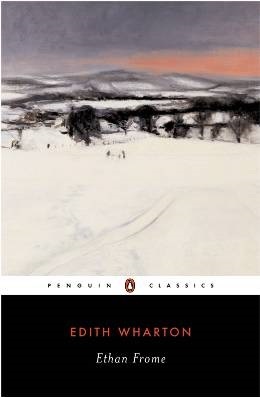
  • forename or names  Ethan Frome by Edith Wharton  a beautifully told tale €“ a tragedy, signalled right from the beginning of the book, when the unnamed narrator first saw Ethan Frome and was told he had been disfigured and crippled in a €˜smash up’, twenty four years earlier. Ethan Frome
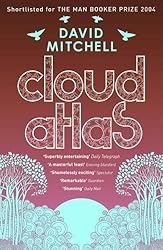
  • type or element of weather – Cloud Atlas by David Mitchell covers a time period from the 19th century to a post apocalyptic future. It’s not a book to read quickly; it requires patience, but on the whole I enjoyed it. I liked the change in style, suited to each time period, moving between straight narrative and letters and journal entries, encompassing historical fiction, thriller and sci-fi.

  • A book with a school subject in the title €“ The Brief History of the Dead by Kevin Brockmeier  fantasy fiction set some time in the future, about a place between heaven and earth, and the people who end up there after they’ve died and what happens to them. 

My favourite of these books is Ethan Frome by Edith Wharton.

Thanks to Charlie for an interesting challenge that helped me reduce my to-be-read piles.

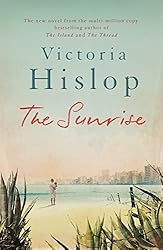
The Sunrise by Victoria Hislop

I love historical fiction – books that take me away to another time and place. I think one definition of historical fiction is that it should be written about 50 years after the events it describes and so The Sunrise by Victoria Hislop just falls short of that, set 40+ years ago in Cyprus, but I think it would be pedantic to say it’s not ‘historical fiction’.

Forty years ago Famagusta, on the east coast of Cyprus was one of the island’s most visited and most glamorous tourist resorts with its beautiful coastline and its luxury hotels and apartments in the modern district, now known as Varosha. The medieval walled city to the north of the beach resort was a historian’s dream, with its Byzantine churches, treasures and14th century cathedral. Then in 1974, following a Greek military coup, Cyprus was split in two as Turkish forces invaded the northern part of the island to protect the minority Turkish Cypriots. The population of Famagusta fled and the city was sealed off with barbed wire, leaving it a ghost town.

The Sunrise begins in 1972 before the war erupted. Everything is looking good – on the surface – the tourist trade in Famagusta is booming.

‘It was one of the world’s finest resorts, purpose-built for pleasure, with little in its conception that did not have the comfort of the holidaymaker in mind. The tall buildings that hugged the coastline mostly comprised hotels with smart cafes and expensive shops beneath them. They were modern, sophisticated and reminiscent of Monaco and Cannes, and existed for leisure and pleasure, for a new international jet set ready to be seduced by the island’s charms.’

Hotel owner Savvas Papacosta is aiming to build up a chain of international hotels as recognisable as the Hilton chain. He and his beautiful wife, Aphroditi, have just opened the island’s largest and most luxurious hotel in Famagusta, unmatched by any other in the resort, offering better facilities and entertainment – The Sunrise.

But beneath the surface tension is building as fear and suspicion grows not only between the Greek Cypriots and the Turkish Cypriots, but also amongst the Greek Cypriots themselves, a minority wanting unification with Greece.

Cyprus was like a vine leaf that looked opaque and green in the hand but held up to the light was lined with veins. The threat of violence coursed invisibly through the island, and while its sunny, sensual image continued to attract visitors, conspiracies were being hatched and whispers clandestinely exchanged behind closed doors.

The first part of the book sets the scene and introduces the main characters against this prosperous but tense atmosphere. This part began really well focussing on the Papacostas and their hotels. But I felt it was rather too long, with so much emphasis on the wealth and prosperity of the owners and their guests. There is so much description of clothes, jewellery and their wealthy lifestyle that I began to tire of it, but I can see why the glamour and lavish lifestyle was emphasised as it provides such a contrast to the deprivations and horrors that came later.

The second part of the book details what happens after Famagusta was isolated, following the lives of the Papacostas and of two families who were employed by the Pappacostas – the Georgious (Greek Cypriots) and the Ozkans (Turkish Cypriots). These two families remain in the city in secret, living in fear for their lives, scouring the streets for food and hiding from the Turkish soldiers.

The tension between the characters is maintained throughout the book and they are well-drawn, so much so that I found myself being irritated by some of their actions – in particular I thought that Aphroditi’s behaviour was so predictable and a little naïve. The story is told through the different characters’ perspective, which gives a rounded view of the events as they unfold and also means that the gory atrocities are reported at a distance rather than seeing them in close-up.

Overall, despite my feelings about the first part of the book, I liked The Sunrise very much – a story of human tragedy in the face of war. It’s a novel about love, friendship and war, the love between parents and their children, and the relationships between men and women. It’s about the struggle for power, about greed, betrayal and deceit. It’s about religion and nationality and the conflict these can cause. Above all it’s about the effect war has on individuals, in particular the brutality and the horrors it engenders.

It is very readable, but I didn’t find it too quick or too easy to read. Victoria Hislop has certainly done her research. I’ve visited the Greek part of Cyprus several times and was aware of the history of the conflict between the north and south of the island, but not in such detail. Victoria Hislop has filled in that detail very well, having visited Cyprus since 1978. Over the last two years she has been there regularly to research this book, although she not been allowed to visit Varosha, which remains entirely sealed with rusting barbed wire and guarded by Turkish troops.

For those who, like me, like historical fiction The Sunrise is a must-read book, especially if you also like Cyprus.

This review of The Sunrise was also in the Autumn edition of Shiny New Books.
The Lake District: Ullswater

The shore of Ullswater is famous as the place that inspired Wordsworth to write his poem ‘I wandered lonely as a cloud‘, after a lakeshore walk in 1802, and it’s also where Donald Campbell broke the world water speed record on 23 July 1955 in the jet powered Bluebird K7. The lake is a ribbon lake formed after the last ice age, sculpted by three separate glaciers.

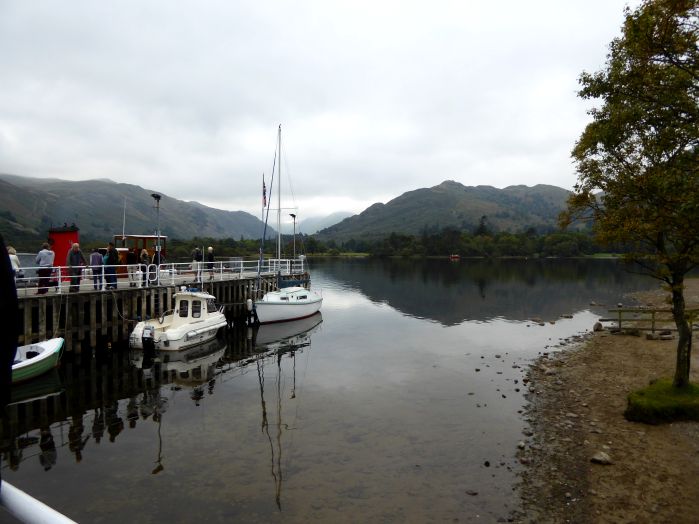
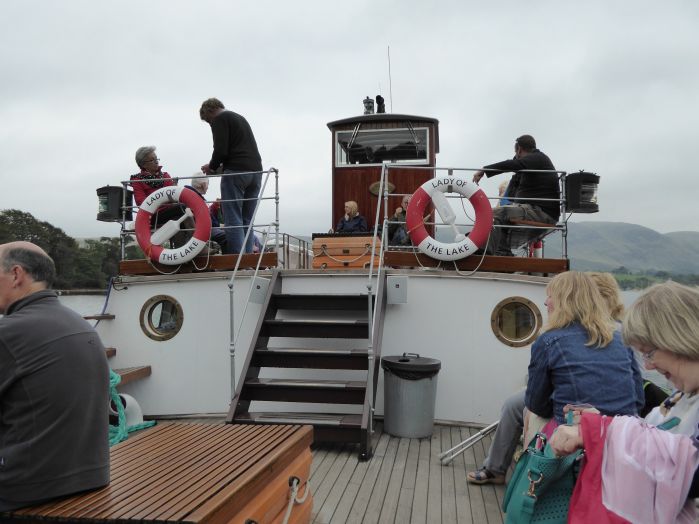
There were no speed boats on the lake, they’re banned now, and the season for daffodils was over on the dull, cloudy morning when we went on a ‘steamer’ on Ullswater, during our recent holiday in the Lake District. The Ullswater ‘Steamers’ have been sailing on the lake since 1859 and the oldest boat currently still in use is the Lady of the Lake, built in 1877, believed to be the oldest working passenger vessel in the world. It was in steam until the 1930s and it was the boat we boarded for our trip down the length of the lake and back again.

waitig for the boat P1010096
Waiting for the boat at Glenridding Pier

Lady of the Lake P1010111

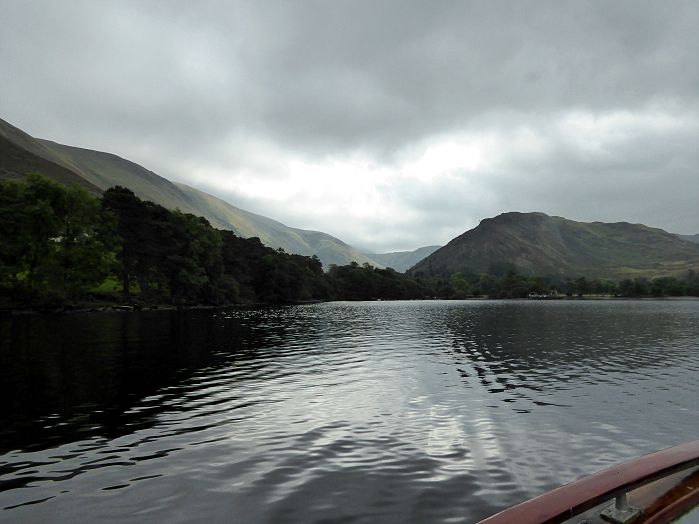
Even though the weather wasn’t very good it wasn’t raining and we had a pleasant trip with views of both sides of the lake and the mountains .

Norfolk Island, Ullswater P1010103
Norfolk Island, Ullswater

return journey P1010120

return journey P1010120
Ullswater

For more Saturday Snapshots see Melinda’s blog West Metro Mommy Reads.