Top Ten Tuesday: Genre freebie

Top Ten Tuesday is a weekly meme created by The Broke and the Bookish and now hosted by Jana at That Artsy Reader Girl. For the rules see her blog

The topic today is a Genre freebie (Pick any genre you’d like and build a list around it. You can even narrow the topic if you’d like, such as: thrillers with unreliable narrators, fantasy romance with fae characters, or historical romance with suspense elements.)

I decided to list ten of my favourite historical fiction books:

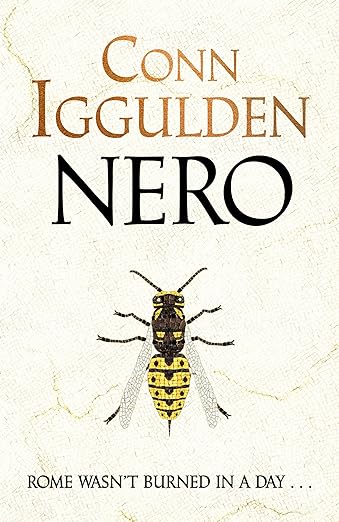
  1. Nero by Conn Iggulden. Ancient Rome (beginning in AD37)
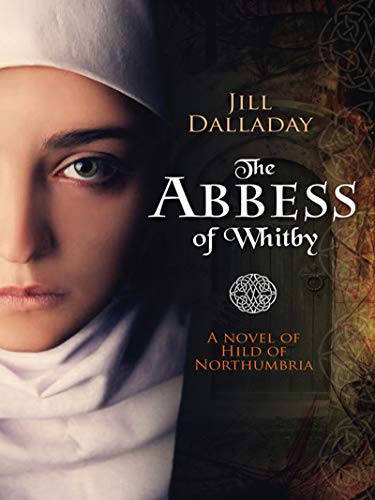
  2. The Abbess of Whitby: a Novel of Hild of Northumbria by Jill Dalladay (7th century Britain)
  3. The Raven’s Head by Karen Maitland  (13th century England)
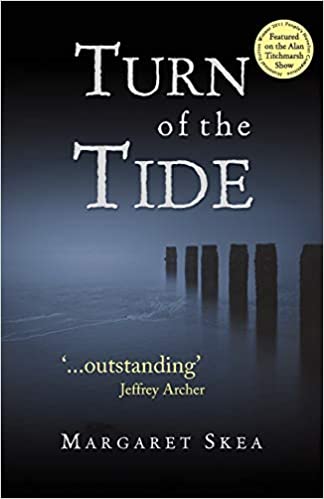
  4. Turn of the Tide by Margaret Skea (16th century Scotland)
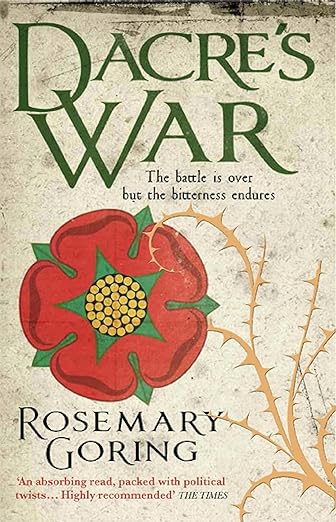
  5. Dacre’s War by Rosemary Goring (16th century Scotland and England)
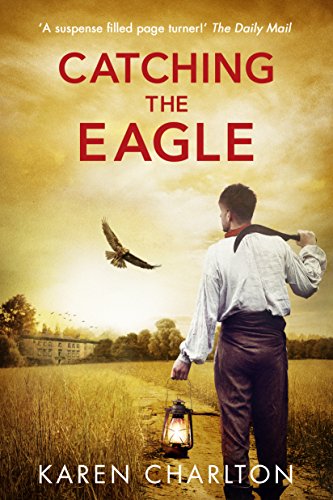
  6. Catching the Eagle by Karen Charlton (1809 -1811 Northumberland)
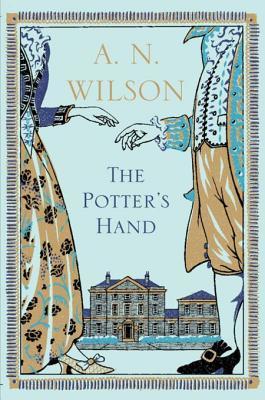
  7. The Potter’s Hand by A N Wilson (the Wedgewood family 1785 – 1805)
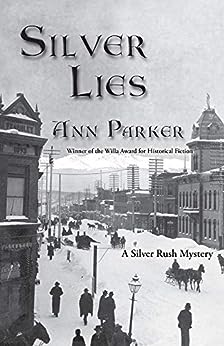
  8. Silver Lies by Ann Parker (1880s USA)
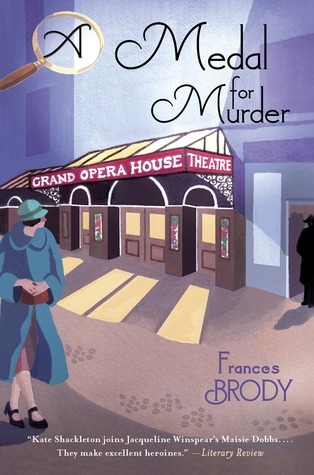
  9. A Medal for Murder by Frances Brody (1922 England and 1899 South Africa – the Boer War)
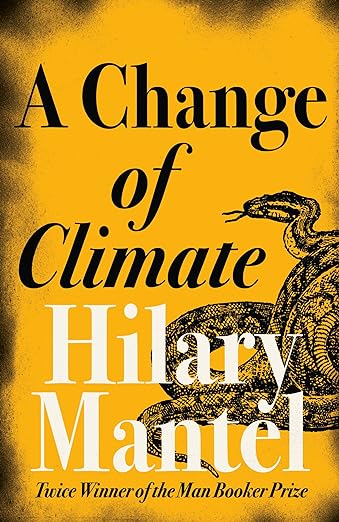
  10. A Climate of Change by Hilary Mantel (1950s Africa and 1980s England)

Spell the Month in Books – April 2025

Spell the Month in Books is a linkup hosted by Jana on Reviews From the Stacks on the first Saturday of each month. The goal is to spell the current month with the first letter of book titles, excluding articles such as ‘the’ and ‘a’ as needed. That’s all there is to it! Some months there are optional theme challenges, such as “books with an orange cover” or books of a particular genre, but for the most part, any book you want to use is fair game!

This option this month is Animal on the Cover or in the Title, which I found much easier to do than some of the previous options. These are all books I’ve read, apart from Inchworm.

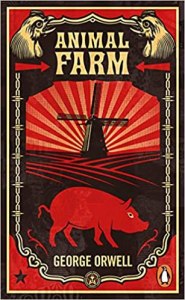
A is for Animal Farm by George Orwell is an allegorical novella, of the Russian Revolution and the rise of the Soviet Union. It tells the story of a farm where the animals rebel against the farmer, Mr Jones, and throw him off the land. They hope to create a society where they are all equal, free and happy. Ultimately, the farm ends up in a state that is as bad, if not worse than it was before, under the dictatorship of a pig named Napoleon. It begins as the old boar Major tells the animals about his dream of overthrowing the human race when the produce of their labour would then be their own and he incites them to rebel. In the story that follows the Major is based on Marx, Farmer Jones on the Tsar, the pigs Napoleon and Snowball are based on Stalin and Trotsky respectively. Their revolution began by declaring that all animals are equal and ended with the added phrase but some animals are more equal than others.

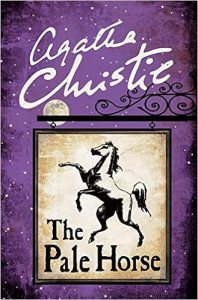
P is for The Pale Horse by Agatha Christie. Neither Hercule Poirot, nor Miss Marple feature in this novel and Mrs Ariadne Oliver has only a small part. Detective Inspector Lejeune is in charge of the investigation into the murder of Father Gorman who was killed one night on his way home. A list of names is found on Father Gorman’s body, seemingly unconnected in any way. The title,  a reference from the Book of Revelation  to a pale horse ridden by Death suggested to me from the beginning that what they had in common was death.

The Pale Horse is an old house  which was formerly an inn in the village and is now the home of three weird women, thought by the locals to be witches. The Pale Horse is also the name of a sinister organisation that arranges murders based on black magic. It’s a fascinating book conveying a feeling of real menace.

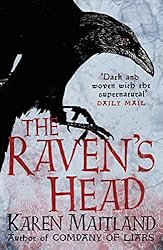
R is for The Raven’s Head by Karen Maitland. Set in 1224 in France and England this is a dark book. I found parts of it very uncomfortable and disturbing to read and yet also very compelling. Life in the medieval world was cruel and brutal and The Raven’s Head describes that world in minute detail, evoking the superstitious fear of the period.

The story is told from the three main characters point of view – Vincent, Wilky, a young boy taken from his family to live in a monastery in Norfolk where unspeakable terrors await him and the other young boys, and Gisa also living in Norfolk, working in her uncle’s apothecary’s shop. Their lives are connected through Lord Sylvain who is trying to find a way to bring the dead back to life and the abbot, trying to find the elixir of life – both experimenting with alchemy.

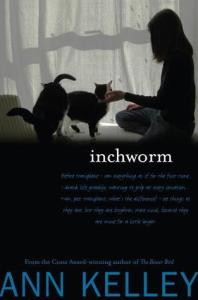
I is for Inchworm by Ann Kelly. Gussie is a twelve year old girl from St. Ives in Cornwall. She is passionate about learning, wildlife, poetry, literature, and she wants to be a photographer when she grows up. But her dreams were put on hold as she struggled with a serious heart condition. Now she has got what she needed: a heart and lung transplant. But it isn’t working out quite the way she thought. Firstly she has to leave her beloved Cornwall to live in London and in the months following her operation she is unable to do very much except read and adopt a stray kitten, but she could do that when she was sick. She craves adventure and experience beyond her four walls, until, that is, she hits upon a plan – she is going to get her divorced parents to fall in love again. It’s not going to be easy, her mum is still dating her doctor boyfriend and despises Gussie’s father, who happens to be living with his new girlfriend – the Snow Queen. But Gussie is a determined girl and there is only one thing that could stop her now.

L is for Lion by Conn Iggluden. This is the first book in Conn Iggulden’s Golden Age series set in Amcient Greece in the 5th century BCE. I thoroughly enjoyed it which surprised me as generally speaking I’m not keen on reading battle scenes and the book starts and ends with battles. But I had no problem with following the action of the battles between the Greeks and the Persians, and was able to visualise what was going on without any difficulty. The characters’ names took me a little while to get clear in my mind but I soon got used to them. The two main characters are both young men, Cimon the older of the two has more authority than Pericles, the younger man. Lion is the story of their early careers.

The next link up will be on May 3, 2025 when the theme will be: Freebie

Six Degrees of Separation from The Poisonwood Bible to …

I love doing Six Degrees of Separation, a monthly link-up hosted by Kate at Books Are My Favourite and Best. Each month a book is chosen as a starting point and linked to six other books to form a chain. A book doesn’t need to be connected to all the other books on the list, only to the one next to it in the chain.

This month the chain begins with The Poisonwood Bible by Barbara Kingsolver, one of my favourite books. I’ve read it several times.

The Poisonwood Bible

Told by the wife and four daughters of Nathan Price, a fierce evangelical Baptist who takes his family and mission to the Belgian Congo in 1959, The Poisonwood Bible is the story of one family’s tragic undoing and remarkable reconstruction over the course of three decades in postcolonial Africa.

I bought The Poisonwood Bible in Gatwick airport bookshop just before boarding a plane to go on holiday. So my first link in the chain is to another book I bought in an another airport bookshop waiting to board another plane:

Fortune's Rocks

It’s Fortune’s Rocks by Anita Shreve. I had never heard of Anita Shreve, but I liked the look of this book – and the fact that it’s a chunky book of nearly 600 pages, good to read on holiday. It’s set in the summer of 1899 when Olympia Biddeford and her parents are on holiday at the family’s vacation home in Fortune’s Rocks, a coastal resort in New Hampshire. She is fifteen years old and this is the story of her love affair with an older man.

When I looked at it today, I saw that it’s written in the present tense. Recently I’ve been writing about my dislike of the present tense – but I obviously haven’t always disliked it, because I remember really enjoying this book.

Wolf Hall (Thomas Cromwell, #1)

Another book written in the present tense that I loved is Wolf Hall by Hilary Mantel, the story of Thomas Cromwell, the son of a blacksmith, and his political rise, set against the background of Henry VIII’s England and his struggle with the Pope over his desire to marry Anne Boleyn. Historical fiction is one of my favourite genres, which takes me to my next link, another book set in the reign of Henry VIII –

Lamentation (Matthew Shardlake, #6)

Lamentation by C J Sansom set in 1546, the last year of Henry VIII’s life. Shardlake, a lawyer is asked by Queen Catherine (Parr) for help in discovering who has stolen her confessional book, Lamentation of a Sinner. It evokes the people, the sights, smells and atmosphere of Henry’s last year and at the same time it’s an ingenious crime mystery, full of suspense and tension.

Barnaby Rudge

The next book also combines historical and crime fiction – Barnaby Rudge by Charles Dickens, set in 1780 at the time of the Gordon Riots.  It’s a story of mystery and suspense which begins with an unsolved double murder and goes on to involve conspiracy, blackmail, abduction and retribution.

Barnaby Rudge is a simple young man, living with his mother. His pet raven, Grip goes everywhere with him. He’s a most amazing bird who can mimic voices and seems to have more wits about him than Barnaby. Grip is based on Dickens’s own ravens, one of whom was also called Grip.

Ravens form the next link-

The Raven's Head

to The Raven’s Head by Karen Maitland, set in 1224 in France and England about Vincent, an apprentice librarian who stumbles upon a secret powerful enough to destroy his master. He attempts blackmail but when this fails Vincent goes on the run in possession of an intricately carved silver raven’s head. The plot revolves around the practice of alchemy – the search for a way to transform the base soul of man into pure incorruptible spirit, as well as the way to find the stone, elixir or tincture to turn base metals into precious metals.

And finally to the last link in this chain another book featuring alchemy –

Crucible (Alexander Seaton, #3)

Crucible by S G MacLean, the third of her Alexander Seaton books. Set in 1631 in Aberdeen Robert Sim, a librarian is killed. Alexander investigates his murder and finds, amongst the library books, works on alchemy and hermetics – the pursuit of ancient knowledge and the quest for ‘a secret, unifying knowledge, known to the ancients’ since lost to us. S G MacLean’s books are full of atmosphere. I think her style of writing suits me perfectly, the characters are just right, credible well-rounded people, and the plot moves along swiftly with no unnecessary digressions.

My chain this month has travelled from Africa to Scotland via America and England, and spans the years from the 13th century to the mid 20th century. It has followed a missionary and his family, a teenager in love with an older man, and looked in on power struggles in Tudor England, and the pursuit of the secret to turn metal into gold.

Links are: books I bought to read on holiday, books in the present tense, crime fiction and historical fiction (and a combination of these genres), ravens and alchemy.

Next month  (June 2, 2018), we’ll begin with  Malcolm Gladwell’s debut (and best seller), The Tipping Point, a book and author I’ve never come across before.
The Raven’s Head by Karen Maitland

I loved Karen Maitland’s medieval mysteries, Company of Liars: a novel of the plague and The Owl Killers and although I didn’t think The Vanishing Witch had quite the same magic spark I still enjoyed it. So when Lovereading offered me a proof copy of The Raven’s Head for review I was keen to read it.

Publisher: Headline Review
Publication date: March 12, 2015
ISBN: 9781472215055

Summary from Karen Maitland’s website:

Vincent is an apprentice librarian who stumbles upon a secret powerful enough to destroy his master. With the foolish arrogance of youth, he attempts blackmail but the attempt fails and Vincent finds himself on the run and in possession of an intricately carved silver raven’s head.

Any attempt to sell the head fails ‘¦ until Vincent tries to palm it off on the intimidating Lord Sylvain ‘“ unbeknown to Vincent, a powerful Alchemist with an all-consuming quest. Once more Vincent’s life is in danger because Sylvain and his neighbours, the menacing White Canons, consider him a predestined sacrifice in their shocking experiment.

Chilling and with compelling hints of the supernatural.

My thoughts:

Set in 1224 in France and England this is a dark book. I found parts of it very uncomfortable and disturbing to read and yet also very compelling. Life in the medieval world was cruel and brutal and The Raven’s Head describes that world in minute detail, evoking the superstitious fear of the period.

The story is told from the three main characters point of view -Vincent, Wilky, a young boy taken from his family to live in a monastery in Norfolk where unspeakable terrors await him and the other young boys, and Gisa also living in Norfolk, working in her uncle’s apothecary’s shop. Their lives are connected through Lord Sylvain who is trying to find a way to bring the dead back to life and the abbot, trying to find the elixir of life – both experimenting with alchemy.

Karen Maitland provides a cast of characters and sets out the historical background and provides notes and a glossary on the practice of  alchemy during the Middle Ages, all of which I found indispensable. Each chapter is headed by a quotation taken from the writings of early Christian and Islamic alchemists – most of which I found incomprehensible.

She explains that alchemy was a dangerous practice, many chemical experiments could go horribly wrong – as in this book. Alchemists worked in secret. It was mystical, as they searched for the means to transform the base soul of man into pure incorruptible spirit, as well as physical, searching for the stone, elixir or tincture to turn base metals into precious metals.

Although long this is a fast-paced book and I read it quite quickly.  I enjoyed the historical setting and even though it took me right to the edge of my comfort zone as far as reading horrific detail the rest of the book made up for that in terms of a well constructed storyline and believable characters. Once I began I had to finish the book.