Six Degrees of Separation from  After Story by Larissa Behrendt to The Butterfly Room by Lucinda Riley

It’s time again for Six Degrees of Separation, a monthly link-up hosted by Kate at Books Are My Favourite and Best. Each month a book is chosen as a starting point and linked to six other books to form a chain. A book doesn’t need to be connected to all the other books on the list, only to the one next to it in the chain.
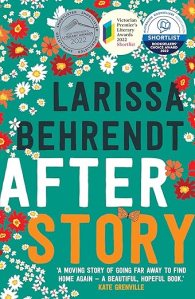
This month starts  After Story by Larissa Behrendt. This is the description on Amazon UK:

When Indigenous lawyer Jasmine decides to take her mother, Della, on a tour of England’s most revered literary sites, Jasmine hopes it will bring them closer together and help them reconcile the past. Twenty-five years earlier the disappearance of Jasmine’s older sister devastated their tight-knit community. This tragedy returns to haunt Jasmine and Della when another child mysteriously goes missing on Hampstead Heath. As Jasmine immerses herself in the world of her literary idols – including Jane Austen, the Brontë sisters and Virginia Woolf – Della is inspired to rediscover the wisdom of her own culture and storytelling. But sometimes the stories that are not told can become too great to bear. Ambitious and engrossing, After Story celebrates the extraordinary power of words and the quiet spaces between. We can be ready to listen, but are we ready to hear?
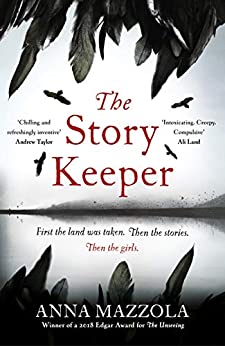
My first link is using the word Story, in the title, and it’s also a book about storytelling – The Story Keeper, set on the Isle of Skye in 1857, by Anna Mazzola. It stresses the importance of folk tales – stories that have been told to make sense of the world and reflect people’s strengths, flaws, hopes and fears. 

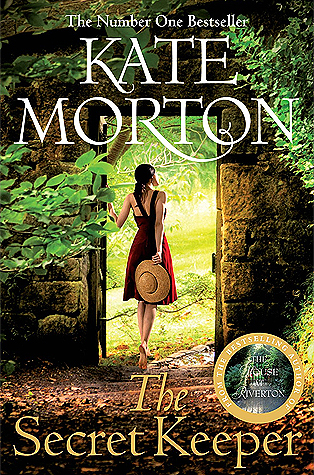
My second link is The Secret Keeper by Kate Morton, a story moving between time periods from 2011, back to the 1960s and also to the 1940s. It begins in 1961 in Suffolk when sixteen-year old Laurel is shocked when she sees her mother stabbing a stranger who had come to their farm. 

In my third link another sixteen year old girl, Nouf ash-Shrawi, disappears from her home in Jeddah, in The Night of the Mi’raj by Zoë Ferraris, just before her arranged marriage. Her body is eventually found in a desert wadi. It appears that her death was an accident and that she died by drowning in the wadi after a sudden storm.

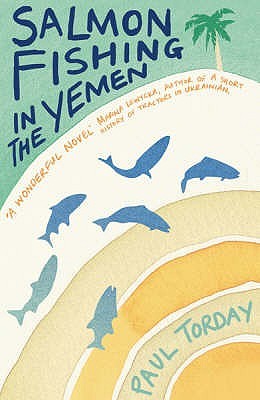
My fourth link is Salmon Fishing in the Yemen by Paul Torday about a project to introduce salmon fishing in the waters of the Wadi Aleyn in the heart of the mountains of Heraz, in Yemen.

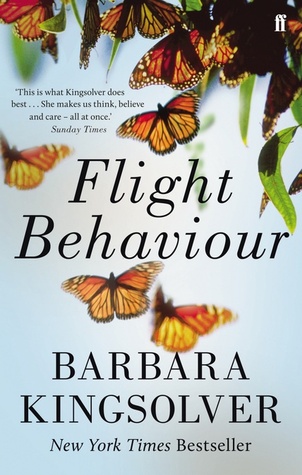
My fifth link takes the chain from the mountains of Heraz to the Appalachian Mountains in Flight Behaviour by Barbara Kingsolver in which a young mother discovers a beautiful and terrible marvel of nature: the monarch butterflies have not migrated south for the winter that year.

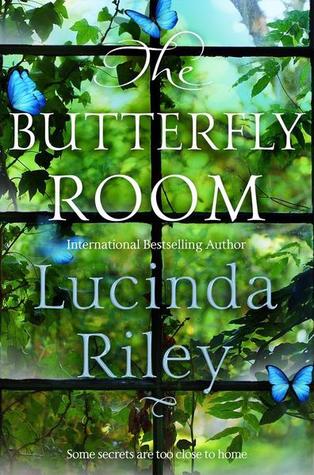
My final link is to The Butterfly Room by Lucinda Riley. The story revolves around Posy Montague and her family home, Admiral House in the Suffolk countryside. Her father encouraged her to draw plants and showed her how to catch butterflies. As a child Posy thought The Butterfly Room in the Folly in the grounds of Admiral House  looked like a fairy-tale castle with its turret made of yellow sandy brick. But the Folly was not the wonderful place she imagined – and there is a dark secret hidden behind its locked door.

The books in my chain are all fiction including historical fiction, mysteries and crime fiction. The chain travels through Australia, the UK, Saudi Arabia, Yemen and the USA,

Next month (October 5, 2024), we’ll start with Colm Tóibín’s Long Island.
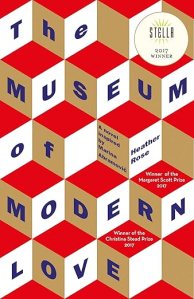
Six Degrees of Separation from The Museum of Modern Love to:

It’s time again for Six Degrees of Separation, a monthly link-up hosted by Kate at Books Are My Favourite and Best. Each month a book is chosen as a starting point and linked to six other books to form a chain. A book doesn’t need to be connected to all the other books on the list, only to the one next to it in the chain.

This month starts with The Museum of Modern Love by by Heather Rose (Kate’s pick was inspired by Sue’s recent post about writers and artists). I haven’t read this, but I would like to. This is the description on Amazon UK:

Arky Levin, a film composer in New York, has promised his wife that he will not visit her in hospital, where she is suffering in the final stages of a terminal illness. She wants to spare him a burden that would curtail his creativity, but the promise is tearing him apart. One day he finds his way to MOMA and sees Mariana Abramovic in The Artist is Present. The performance continues for seventy-five days and, as it unfolds, so does Arky. As he watches and meets other people drawn to the exhibit, he slowly starts to understand what might be missing in his life and what he must do.

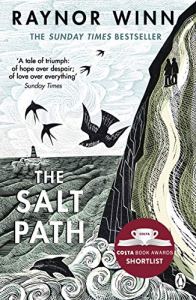
My first link is via a terminal illness to The Salt Path, Raynor Winn’s memoir about walking the South Coast Path when Moth her husband was diagnosed with a terminal illness. They were homeless, with no means of income except for £48 pounds a week. They had lost their home, business and livelihood, after investing in one of a friend’s companies that had failed. It is about the determination to live life, about overcoming pain and hardship, and the healing power of nature. It is about homelessness and the different reactions and attitudes of the people they met when they told them they were homeless.

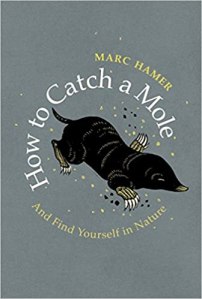
My second link is How to Catch a Mole by Marc Hamer, part memoir, part a nature study of the British countryside, part poetry, and, of course, about moles. After leaving school Marc Hamer was homeless for a while. He has worked in art galleries, marketing, graphic design and taught creative writing in a prison before becoming a gardener. And before writing this book he had been a traditional molecatcher for years.

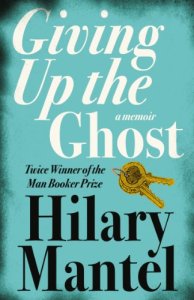
My third link is Hilary Mantel’s Giving Up the Ghost, a remarkable memoir. It came across to me as being clear, honest and very moving. She thought it was because of her that her parents were not happy and that without her they would have had a chance in life. It didn’t get any better when her father left home and she was left to live with two younger brothers, their mother and her mother’s lover. Home was a place where secrets were kept and opinions were not voiced. Her experience of ghosts at the age of 7 was horrifying as she felt as though something came inside her, ‘some formless, borderless evil’.

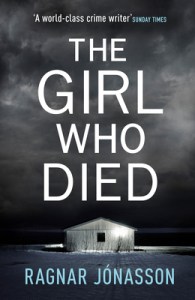
My fourth link is The Girl Who Died by Ragnar Jonasson, Icelandic noir, a mix of horror and psychological thriller, with a strong sense of place. Skálar is a close-knit community that doesn’t welcome newcomers, keeping its secrets well hidden. The only person who welcomes Una, to the village is Salka, the mother of Edda, one of the two girls Una is to teach. Her house is said to be haunted by the ghost of a young girl who had died fifty years earlier,

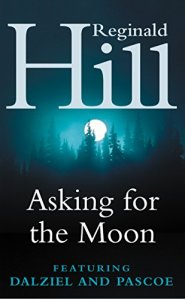
My fifth link is Asking for the Moon by Reginald Kill, a collection of four novellas. Two of them feature ghosts, Pascoe’s Ghost and Dalziel’s Ghost. But I think that the best one is the first story, The Last National Service Man which tells how Dalziel and Pascoe first met. Neither of them are impressed by the other. Dalziel thinks Pascoe is everything he dislikes – a graduate, well spoken, and a Southerner from south of Sheffield. Pascoe thinks Dalziel is an archetypical bruiser who got results by kicking down doors and beating out questions in Morse code on a suspect’s head.

My final link is to the final Inspector Morse novel, The Remorseful Day by Colin Dexter. The plot is detailed, complex and as usual, with Morse, a puzzle type murder mystery with plenty of challenging clues. Sergeant Lewis is left to investigate the murder of nurse Yvonne Harrison that had remained unsolved for a year. When Morse phones to say he is feeling unwell Lewis is most concerned – Morse seldom mentioned his health, what is wrong with him?

The main focus of the book is on Morse and how he copes with his illness and his drinking habits. It becomes obvious just how alone he is in the world and how devastating his situation is to Lewis.

The first three books in my chain are memoirs and the other three are crime fiction/psychological thriller novels. Beginning in America it travels to the UK, then to Iceland, before ending back in the UK.

Next month (September 7, 2024), we’ll start with  After Story by Larissa Behrendt.

How to Catch a Mole by Marc Hamer

Longlisted for the Wainwright Book Prize 2019, How to Catch a Mole and Find Yourself in Nature is a beautiful book by Marc Hamer and illustrated by Joe McLaren. It is part memoir, part a nature study of the British Countryside, part poetry, and, of course, about moles. It is a mine of information. After leaving school Marc Hamer was homeless for a while, then worked on the railway, before returning to education and studying fine art in Manchester and Stoke-on-Trent. He has worked in art galleries, marketing, graphic design and taught creative writing in a prison before becoming a gardener. And before writing this book he had been a traditional molecatcher for years.

I read the book in January and have been wondering what to write about it, mulling it over in my mind. I’ve made several attempts to write this post as it’s not a straight forward non fiction book. He tells the story of his life intermingled with that of the mole, writing about what his life as a molecatcher was like, how it affected him and why eventually he decided to stop. The result is that this book is a mix of recollections and information about moles. He doesn’t write his recollections in chronological order – the harder he tries to remember, the more his memory seems to shift and change as though he is looking into a kaleidoscope where the colours remain the same and although the patterns are slightly different every time, the picture remains true to itself.

He no longer catches moles and says:

Molecatching is a traditional skill that has given me a good life but I am old and tired of hunting and it has taught me what I wanted to learn.

I’ve only seen a mole once when our cat caught what I think, sadly, was a baby one, and I know very little about them. Our garden has mole hills on the edges of it, piles of earth that the moles have turned over, and dug to a fine crumb – ‘the kind of damp rich earth that farmers and gardeners love for its texture and nutrients.’ So, I’m comfortable with having moles in the garden.

Not everybody is happy about them, however as Hamer points out:

Apparently sane people lose sleep over the chaos the moles create. We do not like to lose control of our property it makes us feel uncomfortable, impermanent, weak. Moles can ruin domestic lawns, and I have seen real hatred developing in homeowners as they lose control and ownership of their gardens. An obsession grows and an endless, unwinnable war can take over their lives. (pages 17-18)

Moles are small and powerful, moving at speed in their tunnels hunting worms and digging about 20 metres of tunnel in a day. They pack the soil into the roof and walls, pushing the soil ahead until there is too much to push and then make a diversion pushing the earth out onto the surface making a molehill. They go where the worms go. I was fascinated by this fact:

In times of plenty a mole will dig a little room in the wall of his tunnel, then gather lots of worms and bite their heads off, leaving them all knotted together in a section of tunnel. We call this the worm larder; it is a fairly common sight. A tunnel system could have any number of worm larders. (pages 202-203)

I was also interested in his thoughts on gardening. Here are a few extracts:

Gardening is not nature: it is using the laws of nature and science to impose our will on a place; and for some people this need for control goes to extremes. (page 19)

As a gardener I do not dig any more: I hoe off the weeds and top-dress the gardens in autumn with compost just as nature does with falling leaves and grasses. This keeps the moisture in and the weeds suppressed; it allows the worms to break up hard soil and increases microbial activity, allowing life to expand its range, and lets air and water into the soil. Moles do this for us. Some gardeners still double-dig, but more and more people are coming to understand the importance of microbes and fungi, and often see digging as destructive and prefer to stay off the soil to avoid compacting it. (pages 58-59)

And

A fine-looking garden is a sterile place. A perfect green lawn is only kept that way by continually dousing it with chemicals. A lawn that is not treated will naturally become home to a massive number of species of birds and worms and native wild plants, crane-fly larvae, beetles, invertebrates. (page 223)

I don’t usually include so many quotations and such lengthy ones, but I’ll end with one more quotation:

Having worked all my life, created a family, discovered a home, I feel as secure as a working-class man ever feels, and I feel a sense of equality again with the crow and the toad and the hawthorn, with the rain and wind. I am them and they are me. . . . I am just another animal, another tree, another wild flower in the meadow among billions of others. . . . There is something deeply magnificent in being just ordinary. (page 115)

  • Publisher ‏ : ‎ Harvill Secker; 1st edition (4 April 2019)
  • Language ‏ : ‎ English
  • Hardcover ‏ : ‎ 256 pages
  • ISBN-10 ‏ : ‎ 1787301249
  • ISBN-13 ‏ : ‎ 978-1787301245
  • Source: Borrowed from my son
  • My Rating: 5*