Top Ten Tuesday: Books that Feature Travel

Top Ten Tuesday is a weekly meme created by The Broke and the Bookish and now hosted by Jana at That Artsy Reader Girl. For the rules see her blog.

The topic today is Books that Feature Travel and the books I’ve chosen feature different types of travelling in a variety of countries – on a bicycle, on boats and ocean liners, as well as on foot. I’ve read all of them except for Sea Change, which is still sat on my bookshelves.
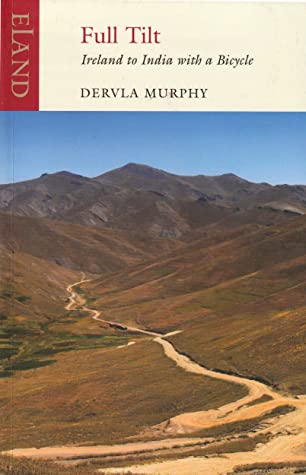
  1. Full Tilt: Dunkirk to Delhi on a Bicycle, first published in 1965  by Dervla Murphy this is an account of her journey in 1963, which took her through Europe, Persia (Iran), Afghanistan, over the Himalayas to Pakistan and into India.
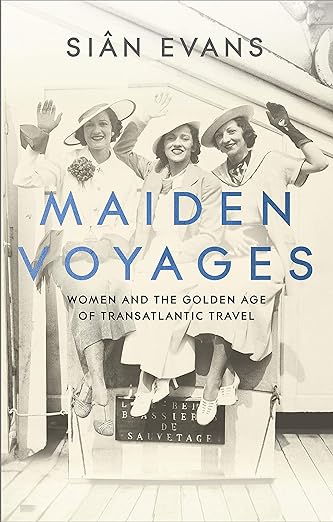
  2. Maiden Voyages by Siân Evans – transatlantic travel between the two World Wars on magnificent ocean liners undertaken by many women. Some travelled for leisure, some for work; others to find a new life, marriage, to reinvent themselves or find new opportunities. 
  3. Eat, Pray, Love by Elizabeth Gilbert. She travelled to Italy (Eat), India (Pray) and Indonesia (Love) spending four months in each place, searching for pleasure in Italy, mainly through food, God in India at an ashram, and balance in Indonesia.
  4. A Walk in the Woods by Bill Bryson about his hike along the Appalachian Trail, the longest continuous footpath in the world.
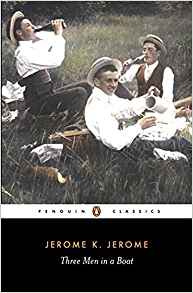
  5. Three Men in a Boat by Jerome K Jerome, first published in 1889. He intended it to be a serious travel book about the Thames, its scenery and history, but, as he wrote it turned into a funny book. It’s a story of a journey, comparing their trip to Stanley’s expedition to Africa searching for Dr Livingstone. 
  6. A Time of Gifts by Patrick Leigh Fermor in which he describes his travels on foot in 1933 from the Hook of Holland through Germany, to Austria, Slovakia and Hungary, on his way to Constantinople.
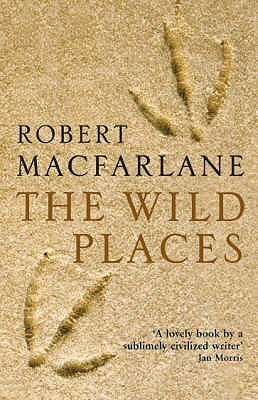
  7. The Wild Places by Robert Macfarlane, with a map showing the places he visited from the cliffs of Cape Wrath, to the holloways of Dorset, the storm-beaches of Norfolk, the saltmarshes and estuaries of Essex, and the moors of Rannoch and the Pennines.
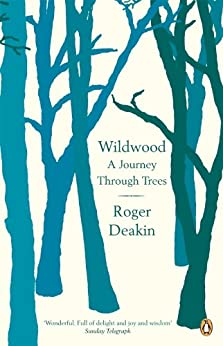
  8. Wildwood: a Journey Through Trees by Roger Deakin about his journeys through a wide variety of trees and woods in various parts of the world. It’s a memoir, a travelogue and also it’s about the interdependence of human beings and trees
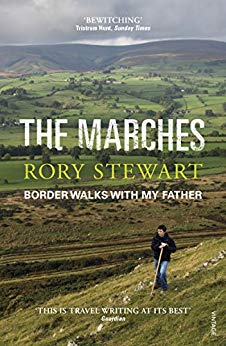
  9. The Marches Border Walks With My Father by Rory Stewart walking in the borderlands between England and Scotland, along Hadrian’s Wall and his coast to coast walk from Cunbria Cumbria to Berwick-upon-Tweed.
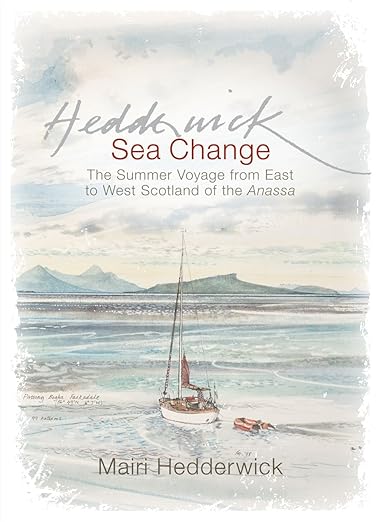
  10. Sea Change: The Summer Voyage from East to West Scotland of the Anassa by Mairi Hedderwick, describing her journey in an antiquated 26-foot long yacht through the Caledonian Canal to the fjords of the west: Lochs Linnhe, Etive, Ailort, Moidart, Nevis and Leven.
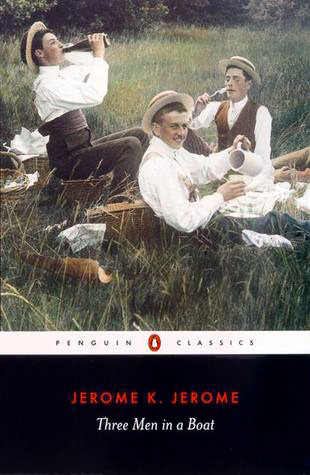
Three Men in a Boat by Jerome K Jerome

Three Men in a Boat

4*

I’ve wondered about reading Three Men in a Boat (to say nothing of the dog) by Jerome K Jerome for many years  – I first heard about it when I was at school when one of my friends read it and said she thought it was very good. And since I’ve been blogging I’ve seen that people love this book and think it’s very funny. So, I decided that it was about time that I read it.

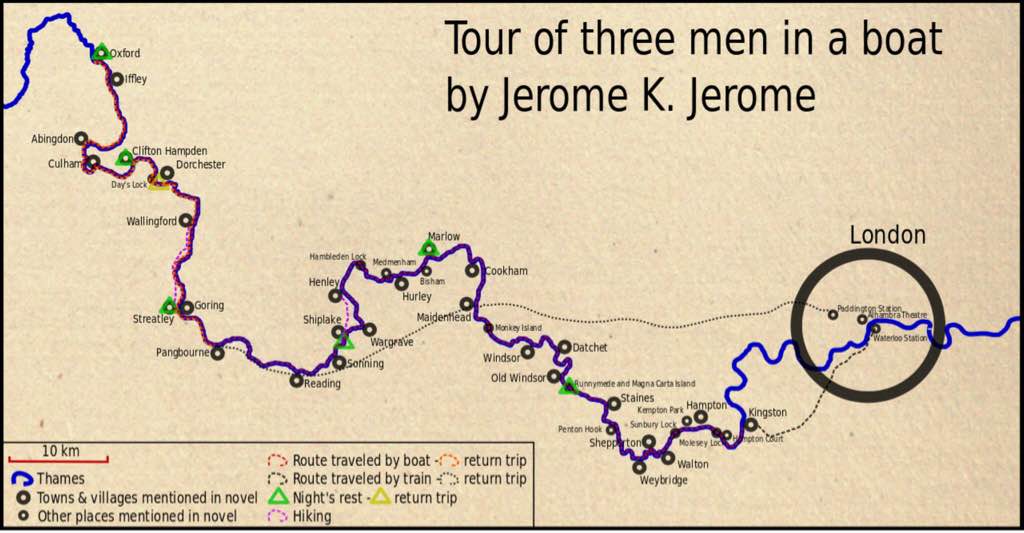
three men map

When Jerome began writing this book he intended it to be a serious travel book about the Thames, its scenery and history, but, as he wrote it turned into a funny book.  The Thames remains at the centre of the book but it is also full of anecdotes about the events that happened to him and his friends whilst out on the river, interspersed with passages about the scenery and history. The main characters were real people, Jerome’s friends – ‘George‘ is George Wingrave who was the best man at his wedding, and ‘Harris‘ is Carl Hentschel, a photographer. Only the dog ‘Montmorency‘ is fictional.

This book was first published in 1889, which means that the descriptions of the places they passed through or stayed the night, are like a snapshot in time of what life was like in the Thames Valley, showing the how use of the river had changed with the coming of the railways for transporting goods. Cheap excursion tickets to stations along the river also meant that people could reach places like Henley, Hampton Court and Windsor as the river became the place for picnics, and regattas and hiring skiffs and punts. As time went on the river became more and more popular for fishing, boating and photography as well as a fashionable venue for young ladies to parade their elegant dresses.

It’s a story of a journey, comparing their trip to Stanley’s expedition to Africa searching for Dr Livingstone. It’s satirical, ironic and farcical.The book is composed of amusing mishaps and situations as the three friends decide what to take with them and what not to take, come across the problems of packing and unpacking the boat, where to stop the night, what food to take, and showing how they entertained themselves, for example singing comic songs, accompanied by George’s banjo, and ending in sentiment as they break down in tears singing ‘Two Lovely Black Eyes’. George’s tale of getting lost in the Hampton Court Maze made me chuckle as time after time whichever route he took he couldn’t find the way out.

I liked the way Jerome breaks up his account of their journey with recording historical events, such as his imaginative description of the signing of Magna Carta when they reach Runnymede and his account of Henry VIII’s wooing of Anne Boleyn at the priory in the grounds of Ankerwyke House, describing him as ‘that foolish boy‘ and imagining that people would have come upon them ‘when they were mooning round Windsor and Wraysbury, and have exclaimed, “Oh! you here!” and Henry would have blushed’, and Anne would have said ‘isn’t it funny? I’ve just met Mr Henry VIII in the lane, and he’s going the same way I am.’

It’s  a gentle witty book that kept me entertained all the way through – and I can’t say that for every book I read. It’s been on my Classics Club list from the first time I complied my list in 2013 and it’s also a book I’ve owned for over 11 years.

Choosing a Classic

It’s time I began reading another classic for the Classics Challenge. I thought I’d look at the openings of some to see which takes my fancy.

Wives and Daughters by Elizabeth Gaskell:

To begin with the old rigmarole of childhood. In a country there was a shire, and in that shire there was a town, and in that town there was a house, and in that house there was a room, and in that room there was a bed, and in that bed there lay a little girl; wide awake and longing to get up, but not daring to do so for fear of the unseen power in the next room – a certain Betty, whose slumbers must not be disturbed until six o’clock struck, when she awakened herself ‘as sure as clockwork’, and left the household very little peace afterwards.

It reminds me of the children’s song Old MacDonald had a Farm with its repetitions. The little girl is Molly Gibson and Betty with the unseen powers is the family’s servant. It promises a story of a family and Molly’s place within it and this opening interests me. I don’t know anything about the book and have not seen any of the TV adaptations, so I’m coming to it with a completely open mind – no other interpretations to influence my reading of Elizabeth Gaskell’s words.

Silas Marner by George Eliot:

In the days when the spinning-wheels hummed busily in the farmhouses – and even great ladies, clothed in silk and thread-lace, had their toy spinning-wheels of polished oak – there might be seen, in districts far away from the lanes, or deep in the bosom of the hills, certain pallid undersized men, who, by the side of brawny country-folk, looked like the remnants of a disinherited race.

This one looks good too about village/rural life at the beginning of the 19th century. The only book by George Eliot that I’ve read is Middlemarch, which I loved. You have to have time and patience to read her books. Silas Marner, however, is a much shorter book with less characters than Middlemarch.

Three Men in a Boat by Jerome K Jerome:

There were four of us – George and William Samuel Harris, and myself, and Montmorency. We were sitting in my room, smoking, and talking about how bad we were – bad from a medical point of view I mean, of course.

We were all feeling seedy, and we were getting quite nervous about it.

Yet another author I know nothing about and as for the book I only know it’s reckoned to be a comedy. Again I have very few preconceptions about this book and have no ideas about the characters or what happens. I think Montmorency may be a dog as the book’s full title is Three Men in a Boat (to say nothing of the dog).

Now I just have to decide which one to read.