Top Ten Tuesday: Genre freebie

Top Ten Tuesday is a weekly meme created by The Broke and the Bookish and now hosted by Jana at That Artsy Reader Girl. For the rules see her blog

The topic today is a Genre freebie (Pick any genre you’d like and build a list around it. You can even narrow the topic if you’d like, such as: thrillers with unreliable narrators, fantasy romance with fae characters, or historical romance with suspense elements.)

I decided to list ten of my favourite historical fiction books:

  1. Nero by Conn Iggulden. Ancient Rome (beginning in AD37)
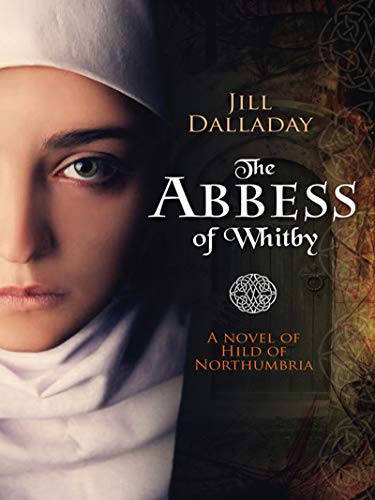
  2. The Abbess of Whitby: a Novel of Hild of Northumbria by Jill Dalladay (7th century Britain)
  3. The Raven’s Head by Karen Maitland  (13th century England)
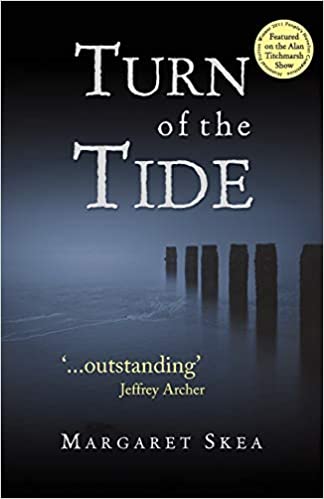
  4. Turn of the Tide by Margaret Skea (16th century Scotland)
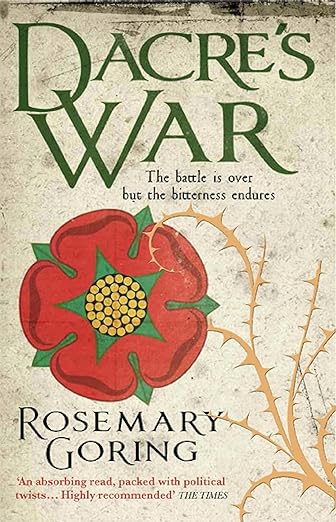
  5. Dacre’s War by Rosemary Goring (16th century Scotland and England)
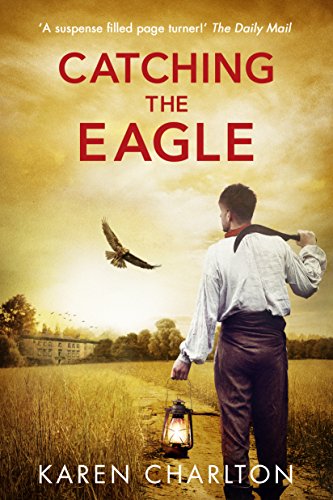
  6. Catching the Eagle by Karen Charlton (1809 -1811 Northumberland)
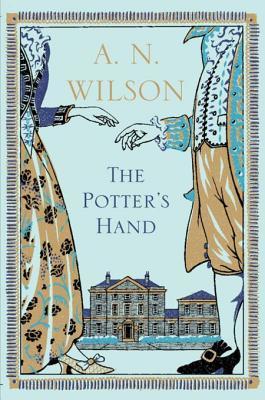
  7. The Potter’s Hand by A N Wilson (the Wedgewood family 1785 – 1805)
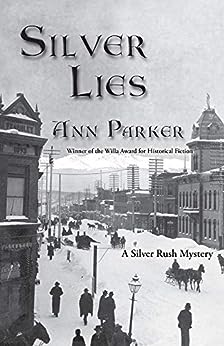
  8. Silver Lies by Ann Parker (1880s USA)
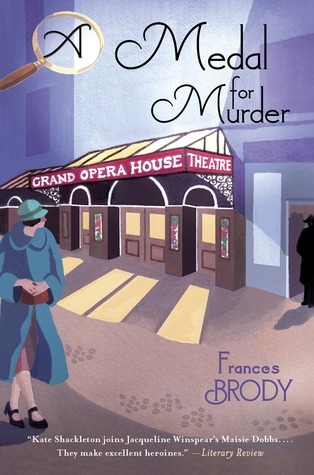
  9. A Medal for Murder by Frances Brody (1922 England and 1899 South Africa – the Boer War)
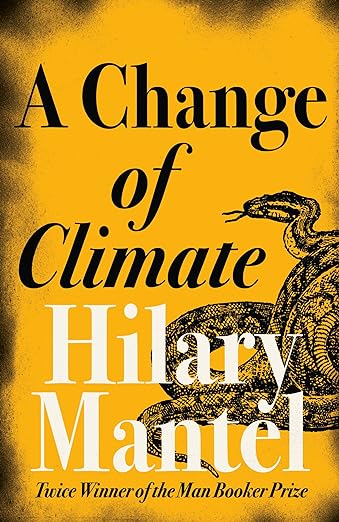
  10. A Climate of Change by Hilary Mantel (1950s Africa and 1980s England)

Spell the Month in Books – April 2025

Spell the Month in Books is a linkup hosted by Jana on Reviews From the Stacks on the first Saturday of each month. The goal is to spell the current month with the first letter of book titles, excluding articles such as ‘the’ and ‘a’ as needed. That’s all there is to it! Some months there are optional theme challenges, such as “books with an orange cover” or books of a particular genre, but for the most part, any book you want to use is fair game!

This option this month is Animal on the Cover or in the Title, which I found much easier to do than some of the previous options. These are all books I’ve read, apart from Inchworm.

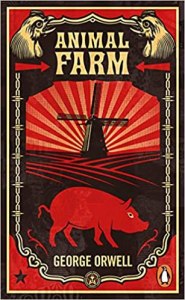
A is for Animal Farm by George Orwell is an allegorical novella, of the Russian Revolution and the rise of the Soviet Union. It tells the story of a farm where the animals rebel against the farmer, Mr Jones, and throw him off the land. They hope to create a society where they are all equal, free and happy. Ultimately, the farm ends up in a state that is as bad, if not worse than it was before, under the dictatorship of a pig named Napoleon. It begins as the old boar Major tells the animals about his dream of overthrowing the human race when the produce of their labour would then be their own and he incites them to rebel. In the story that follows the Major is based on Marx, Farmer Jones on the Tsar, the pigs Napoleon and Snowball are based on Stalin and Trotsky respectively. Their revolution began by declaring that all animals are equal and ended with the added phrase but some animals are more equal than others.

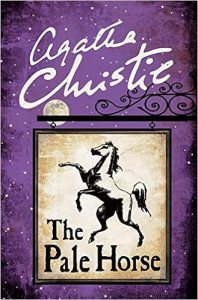
P is for The Pale Horse by Agatha Christie. Neither Hercule Poirot, nor Miss Marple feature in this novel and Mrs Ariadne Oliver has only a small part. Detective Inspector Lejeune is in charge of the investigation into the murder of Father Gorman who was killed one night on his way home. A list of names is found on Father Gorman’s body, seemingly unconnected in any way. The title,  a reference from the Book of Revelation  to a pale horse ridden by Death suggested to me from the beginning that what they had in common was death.

The Pale Horse is an old house  which was formerly an inn in the village and is now the home of three weird women, thought by the locals to be witches. The Pale Horse is also the name of a sinister organisation that arranges murders based on black magic. It’s a fascinating book conveying a feeling of real menace.

R is for The Raven’s Head by Karen Maitland. Set in 1224 in France and England this is a dark book. I found parts of it very uncomfortable and disturbing to read and yet also very compelling. Life in the medieval world was cruel and brutal and The Raven’s Head describes that world in minute detail, evoking the superstitious fear of the period.

The story is told from the three main characters point of view – Vincent, Wilky, a young boy taken from his family to live in a monastery in Norfolk where unspeakable terrors await him and the other young boys, and Gisa also living in Norfolk, working in her uncle’s apothecary’s shop. Their lives are connected through Lord Sylvain who is trying to find a way to bring the dead back to life and the abbot, trying to find the elixir of life – both experimenting with alchemy.

I is for Inchworm by Ann Kelly. Gussie is a twelve year old girl from St. Ives in Cornwall. She is passionate about learning, wildlife, poetry, literature, and she wants to be a photographer when she grows up. But her dreams were put on hold as she struggled with a serious heart condition. Now she has got what she needed: a heart and lung transplant. But it isn’t working out quite the way she thought. Firstly she has to leave her beloved Cornwall to live in London and in the months following her operation she is unable to do very much except read and adopt a stray kitten, but she could do that when she was sick. She craves adventure and experience beyond her four walls, until, that is, she hits upon a plan – she is going to get her divorced parents to fall in love again. It’s not going to be easy, her mum is still dating her doctor boyfriend and despises Gussie’s father, who happens to be living with his new girlfriend – the Snow Queen. But Gussie is a determined girl and there is only one thing that could stop her now.

L is for Lion by Conn Iggluden. This is the first book in Conn Iggulden’s Golden Age series set in Amcient Greece in the 5th century BCE. I thoroughly enjoyed it which surprised me as generally speaking I’m not keen on reading battle scenes and the book starts and ends with battles. But I had no problem with following the action of the battles between the Greeks and the Persians, and was able to visualise what was going on without any difficulty. The characters’ names took me a little while to get clear in my mind but I soon got used to them. The two main characters are both young men, Cimon the older of the two has more authority than Pericles, the younger man. Lion is the story of their early careers.

The next link up will be on May 3, 2025 when the theme will be: Freebie

Recent Additions: Christmas Presents

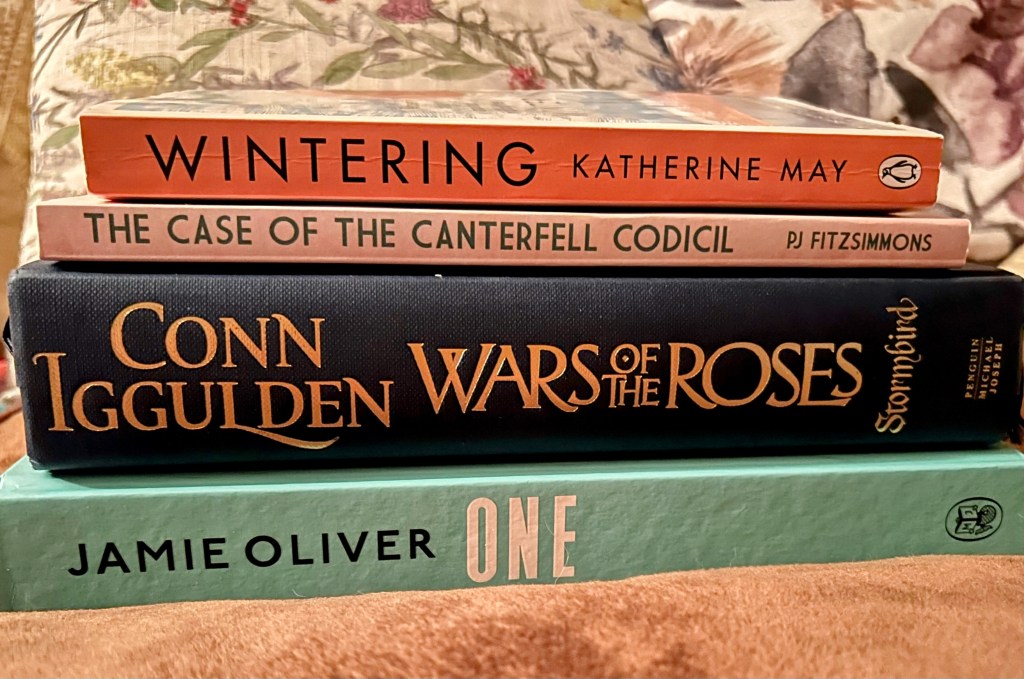
I’ve always loved books and whenever anyone asked me what I’d like for my birthday or Christmas the answer was always ‘books, please’ . So l was delighted this last Christmas to receive four books!

Two of them are books that were on my wish list and the other two were complete surprises.

One: Simple One-Pan Wonders by Jamie Oliver (from my wish list)

I’ve got some of Jamie’s books, and this one looks like a good addition. In his introduction he writes ‘With a twinkle in my eye I want to position this book as one that is absolutely dedicated to the art of minimal washing up – you cook each recipe in just one pan or tray … it’s about making your life easier.’ I like the idea of minimal washing up and will be cooking quite a lot of these recipes.

It has over 120 recipes for tasty, fuss-free and satisfying dishes cooked in just one pan. What’s better: each recipe has just eight ingredients or fewer, meaning minimal prep (and washing up) and offering maximum convenience. With chapters including Veggie Delights, Celebrating Chicken, Frying Pan Pasta, Batch Cooking, Puds & Cakes, it all looks simply delicious.

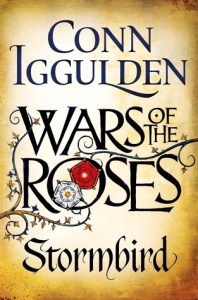
Wars of the Roses: Stormbird Book One by Conn Iggulden (from my wish list)

Historical fiction has long been a great favourite of mine. I absolutely loved Sharon Penman’s The Sunne in Splendour that made me want to know more about the Wars of the Roses.So, when I found Iggulden had written a trilogy about the civil war I was keen to read it. I’ve read some of Iggulden’s other historical fiction novels and loved them, so I’m looking forward to reading this.

King Henry V – the great Lion of England – is long dead. In 1437, after years of regency, the pious and gentle Henry VI, the Lamb, comes of age and accedes to the English throne. His poor health and frailty of mind render him a weakling king -Henry depends on his closest men, Spymaster Derry Brewer and William de la Pole, Duke of Suffolk, to run his kingdom.

Yet there are those, such as the Plantagenet Richard, Duke of York, who believe England must be led by a strong king if she is to survive. With England’s territories in France under threat, and rumours of revolt at home, fears grow that Henry and his advisers will see the country slide into ruin. With a secret deal struck for Henry to marry a young French noblewoman, Margaret of Anjou, those fears become all too real.

As storm clouds gather over England, King Henry and his supporters find themselves besieged abroad and at home. Who, or what can save the kingdom before it is too late?

The Case of the Canterfell Codicil (Anty Boisjoly Mysteries Book 1) by PJ Fitzsimmons (not on my wish list). This was a complete surprise for me as I don’t know anything about this book, or the author. It’ll be good reading a new-to-me author and I do like locked room mysteries.

1920s gadabout Anty Boisjoly takes on his first case when his Oxford chum is facing the gallows, accused of the murder of his wealthy uncle.


Not one but two locked-room murders later, Boisjoly’s pitting his wits and witticisms against a subversive butler, a senile footman, a single-minded detective-inspector, an errant goat, and the eccentric conventions of the pastoral Sussex countryside to untangle a multi-layered mystery of secret bequests, ancient writs, love triangles, revenge, and a teasing twist in the final paragraph.


The Case of the Canterfell Codicil is a classic, cosy, locked-room mystery with an improbable plot inspired by Agatha Christie and prose in the style of an homage to PG Wodehouse.

Wintering: The power of rest and retreat in difficult times by Katherine May (a surprise, not on my wish list). It’s a memoir covering quite a wide range of topics, not just about winter, or rest and retreat. I’ve seen this book is one people either praise it or criticise it, so I’m keen to know what I think of it.

Wintering is a poignant and comforting meditation on the fallow periods of life, times when we must retreat to care for and repair ourselves. Katherine May thoughtfully shows us how to come through these times with the wisdom of knowing that, like the seasons, our winters and summers are the ebb and flow of life.

A moving personal narrative interwoven with lessons from literature, mythology and the natural world, May’s story offers instruction on the transformative power of rest and retreat. Illumination emerges from many sources: solstice celebrations and dormice hibernation, C.S. Lewis and Sylvia Plath, swimming in icy waters and sailing arctic seas.

Ultimately, Wintering invites us to change how we relate to our own fallow times. May models an active acceptance of sadness and finds nourishment in deep retreat, joy in the hushed beauty of winter, and encouragement in understanding life as cyclical, not linear. A secular mystic, May forms a guiding philosophy for transforming the hardships that arise before the ushering in of a new season.

Wars of the Roses:Book One -Stormbird: Book Beginnings & The Friday 56

Every Friday Book Beginnings on Friday is hosted by Gillion at Rose City Reader where you can share the first sentence (or so) of the book you are reading. You can also share from a book you want to highlight just because it caught your fancy.

Wars of the Roses: Stormbird by Conn Iggulden is the first episode of The Wars of the Roses series and is one of the books I was given at Christmas.

The book begins with a Prologue set in 1337 as Edward III lay dying.

Prologue:

Anno Domini 1377

Bowls of dark royal blood lay beneath the bed, forgotten by the physician. Alice Perrers rested on a chair, panting from the effort of wrestling the king of England into his armour. The air in the room was sour with sweat and death and Edward lay like his own effigy, pale and white-bearded.

Part One – Chapter One:

Anno Domini 1443

Sixty six years after the death of Edward III

England was cold that month.

Also every Friday there is The Friday 56, hosted by Freda at Freda’s Voice, but she is taking a break and Anne at My Head is Full of Books has taken on hosting duties in her absence. You grab a book and turn to page 56 (or 56% of an eBook), find one or more interesting sentences (no spoilers), and post them.

Page 56

‘They’ve asked for the marriage to take place in the cathedral at Tours, that’s what. Land that will have the French army camped outside, ready to take possession of the price of the truce,that’s what! I’m not letting Henry walk in there, William, not while there’s life in me.’

Description from Goodreads:

King Henry V – the great Lion of England – is long dead.

In 1437, after years of regency, the pious and gentle Henry VI, the Lamb, comes of age and accedes to the English throne. His poor health and frailty of mind render him a weakling king -Henry depends on his closest men, Spymaster Derry Brewer and William de la Pole, Duke of Suffolk, to run his kingdom

Yet there are those, such as the Plantagenet Richard, Duke of York, who believe England must be led by a strong king if she is to survive. With England’s territories in France under threat, and rumours of revolt at home, fears grow that Henry and his advisers will see the country slide into ruin. With a secret deal struck for Henry to marry a young French noblewoman, Margaret of Anjou, those fears become all too real.

As storm clouds gather over England, King Henry and his supporters find themselves besieged abroad and at home. Who, or what can save the kingdom before it is too late?

I’ve read some of Iggulden’s historical fiction novels and loved them, so I’m looking forward to reading this in the new year.

Other books in the Wars of the Roses series are:

  • Stormbird (2013)
  • Trinity (2014) (titled Margaret of Anjou in North America)
  • Bloodline (2015)
  • Ravenspur (2016)

What do you think, does this book appeal to you? What are you currently reading?

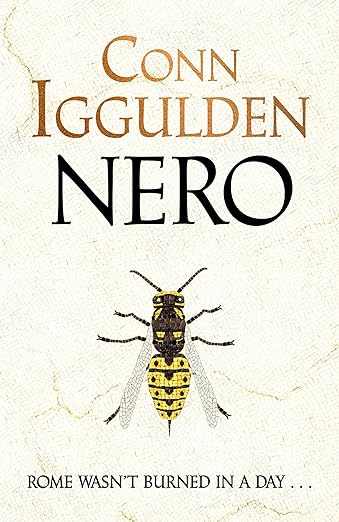
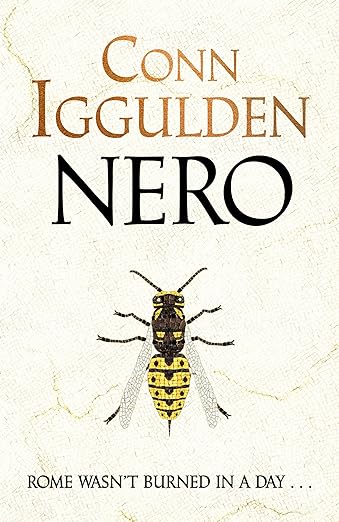
Nero by Conn Iggulden

Penguin 23 May 2024 | 392 pages|e-book |Review copy| 5*

Synopsis

ANCIENT ROME, AD 37

It begins with a man’s hand curled around another’s throat.

Emperor Tiberius first dispatches a traitor. Then his whole family.Next all his friends. It is as if he never existed.

THIS IS ROMAN JUSTICE.

Into this fevered forum, a child is born. His mother is Agrippina, granddaughter of Emperor Augustus. But their imperial blood is no protection. The closer you are to the heart of the empire, the closer you are to power, intrigue, and danger. She faces soldiers, senators, rivals, silver-tongued pretenders, each vying for position. One mistake risks exile, incarceration, execution. Or, worst of all, the loss of her infant son. For Agrippina knows that opportunity waits, even in your darkest moments. Her son is everything. She can make this boy, shape him into Rome itself – the one all must kneel before.

BUT FIRST, THEY MUST SURVIVE . . .

This then is the story of Nero’s birth and raising under the watchful and scheming eye of his mother Agrippina – a woman every man crossed at his peril.

My thoughts:

I’ve enjoyed three books by Conn Iggulden and Nero is no exception. It is excellent. It’s the first in a new trilogy and having read it I’m eagerly looking forward to reading the next two books about Nero. This is the story of his birth and early years up to his 10th year. But it’s more about his mother, Agrippina than about him. She was ruthless, scheming and ambitious for her son, allowing no one to stand in her way.

My interest in historical fiction about the Romans really began in 1976 when I watched the BBC adaptation of I, Claudius and Claudius the God by Robert Graves, starring  Derek Jacobi as Claudius. Later on I read the books, which I loved (I’m tempted to re-read them). Nero brought it back to me as it covers the reigns of Tiberius (the end of his reign), Nero’s uncle, Caligula, and then his great-uncle, Claudius.

Iggulden writes well, bringing life during this period vividly to life. He doesn’t hold back on describing the cruelty and brutality of the times. – he states in his Historical Note: ‘Tiberius was a horror of ancient Rome, who tainted or destroyed anything he touched. … Details of Tiberius’ parties on Capri are too grim to relate …’ There are episodes where, if I’d been watching on TV I would have been covering my eyes, and peeping through my fingers – but I am rather squeamish!

The Historical Note at the end of the book gives further details about the characters, their lives and relationships; and about the ad 43 invasion of Britain, about trade between the empire and Britain before the invasion, and the battle of Medway that took place in Kent.

Despite the gory and bloody scenes I thoroughly enjoyed Nero. Iggulden is a great storyteller.

My thanks to Michael Joseph / Penguin Random House, the publishers for a review copy via NetGalley.

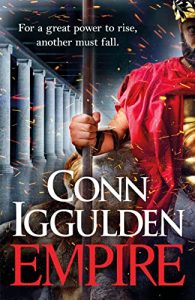
Empire by Conn Iggulden

Penguin| May 2023| 409 pages| ebook| Review Book| 5*

Pericles is more than a hero. He’s the leader of Athens. The empire’s beacon of light.

But even during times of peace, the threat of Sparta – Athens’s legendary rival – looms large on the horizon. When a sudden catastrophe brings Sparta to its knees, Pericles sees a golden opportunity to forever shift the balance of power in his city’s favour.

For sometimes, the only way to win lasting peace is to wage war. Sparta may be weak, but their power is far from extinguished. Soon a ruthless young boy steps forward to lead the Spartans back to greatness.

As the drums of battle draw closer, can Pericles rise once more?

Or will the world’s greatest empire fall under his watch?

My thoughts

Empire is the second in the Golden Age series, continuing the story told in Lion. Pericles is the main character, now the leader of Athens, appointed as a strategos (a military general). Iggulden brings the period to life as he details the continuing struggle for power between Athens and Sparta. The earthquake that struck around 464 BC destroyed most of the city of Sparta. After the Spartans rejected the Athenians’ offer of help Pericles realised that war between them was inevitable and he decided to rebuild the walls around the city to keep it safe. When the Spartans heard that the walls were rising they demanded they be taken down. The Athenians ignored this demand which, of course, led to war, with the Spartans laying siege to Athens.

Lion is an action packed and a gripping story. Iggulden tells the story, seamlessly incorporating his research into the narrative so that this doesn’t read like a textbook but as a fascinating and gripping epic tale of war and death between the states of Athens and Sparta. It’s an amazing tale of political intrigue and bloodthirsty battles. Equally as fascinating as the story is Iggulden’s Historical Note, in which he expands on the background and detail of the historical record. He also explains how he has compressed some of the years and has omitted some ‘actions, skirmishes, insults and general breakdown of good relations between the two states and their allies.’

I think it’s an entertaining and very readable book and I thoroughly enjoyed it.

My thanks to the publishers for a review copy via NetGalley.