Short Stories on Sunday

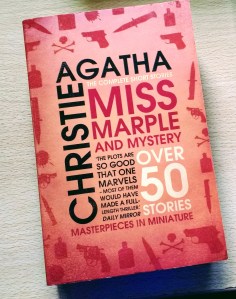
Today I’ve read one of the short stories from Agatha Christie’s collection Miss Marple and Mystery .
IMG_20180513_095855842.jpg

This collection contains 55 stories, 20 of them featuring Miss Marple. I’ve read some of these in other short story collections but there are still many I haven’t read. There is an Short Story Chronology in the Appendix with a table aiming to present all Agatha Christie’s short stories published between 1923 and 1971, listed in order of traced first publication date.

Counting how many there are in total is a difficult task – some stories that first appeared in weekly or monthly magazines were later  re-worked and became chapters in a larger work, some in Partners in Crime were sub-divided into smaller chapters, 13 were re-worked into the episodic novel, The Big Four, and some were rewritten so substantially that they appear separately in different books!

Manx Gold has also been published as an e-book. It was first published in the Manchester Daily Dispatch between 23-28 May 1930, and as a booklet distributed throughout the island, as a treasure hunt to promote tourism in the Isle of Man. She received a fee of £65 (in today’s money over £4,000!)

Cousins, who are engaged, Fenella and Juan are left an intriguing puzzle by their uncle who lived in the Isle of Man – to find four ‘ treasure chests’, not gold ingots or coins, but actually snuff boxes. In addition there are two more relatives also search for the ‘gold’.

I thought it sounded good, but I have to say that I was rather disappointed by the slightness of this short story. Their uncle has left cryptic clues leading to the ‘chests’ and a couple of sketch maps to guide them to the treasure. But I had no idea what the clues mean and could only read Fenella’s exclamations when they work it out and find the little snuff boxes. Oh, there is also a murder – one of the other relatives is bashed on the head by the other one and left to die.

It’s quite an entertaining little story, but I much prefer Agatha Christie’s full length books.

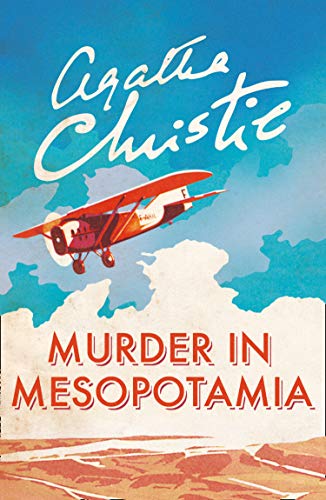
Murder in Mesopotamia by Agatha Christie

I first read Agatha Christie’s Murder in Mesopotamia in 2012 but never got round to writing about it. It was a good choice to re-read for the 1936 Club as I didn’t remember much about it. It’s a Poirot mystery, but he doesn’t appear until about halfway. As the title tells you it is set in Mesopotamia, the area in the Middle East between the two rivers, Tigris and Euphrates (the area of present-day Iraq, Kuwait, and parts of Iran, Syria, and Turkey).

An archaeologist’s wife is murdered on the shores of the River Tigris in Iraq…

It was clear to Amy Leatheran that something sinister was going on at the Hassanieh dig in Iraq; something associated with the presence of ‘Lovely Louise’, wife of celebrated archaeologist Dr Leidner.

In a few days’ time Hercule Poirot was due to drop in at the excavation site. But with Louise suffering from terrifying hallucinations, and tension within the group becoming almost unbearable, Poirot might just be too late…

Agatha Christie had first visited the Middle East in 1929 travelling on the Orient Express to Istanbul and then on to Damascus and Baghdad. She visited the excavations at Ur and returned there the following spring where she met archaeologist Max Mallowan – by the end of the summer they had decided to marry, which they did on 11 September 1930. So, by 1936 when she wrote Murder in Mesopotamia she had frequently accompanied Max on his archaeological digs and her books set in the Middle East are based on the everyday life that she experienced on a dig and on the people she met.

The murder victim is Louise Leidner, the wife of the leader of the expedition. The novel is narrated by Nurse Amy Leatheran, who had been asked by Dr Leidner to care for Louise, although he is vague about what is wrong with her. It seems she is scared and has nervous terrors. She has fearful visions and the other members of the expedition blame her for the oppressive atmosphere on the dig.

It’s a seemingly impossible murder – she is found in her room, dead from a blow on her head, and suspicion falls on Louise’s first husband who had been sending her threatening letters, or so she had claimed. But no strangers had been seen on or near the expedition house and it is down to Poirot to discover what had actually happened. Fortunately Poirot was in the area, having sorted out a military scandal in Syria (referred to at the beginning of Murder on the Orient Express) and was passing through the expedition site on his way to Baghdad before returning to London.

I thoroughly enjoyed this book, although I think the details of how the murder was committed are rather far-fetched. I was hoping that Agatha Christie had mentioned writing it in her Autobiography, but I couldn’t find any reference to it, although she wrote extensively about her time in the Middle East with Max, and in her fascinating memoir, Come, Tell Me How You Live she wrote about how much she loved the country and its people.

Top Ten Tuesday: Quotations

The topic this week is Favourite Book Quotes. At first I didn’t think I would tackle this topic, with so many to choose. But in the end I came up with the following quotations from just three authors.

First from Roger Deakin, Wildwood: A Journey through Trees, a book about Deakin’s journeys through a wide variety of trees and woods in various parts of the world. 

To enter a wood is to pass into a different world in which we ourselves are transformed. It is no accident that in the comedies of Shakespeare, people go into the greenwood to grow, learn and change. It is where you travel to find yourself, often, paradoxically , by getting lost. Merlin sends the future King Arthur as a boy into the greenwood to fend for himself in The Sword in the Stone. There, he falls asleep and dreams himself, like a chameleon, into the lives of the animals and the trees.”

And later in the book he writes about pencils:

The pencil whispers across the page and is never dogmatic.‘ And this, ‘Rub your finger long enough on a soft-pencilled phrase and it will evaporate into a pale-grey cloud. In this way, pencil is close to watercolour painting.’ 

Thinking about trees led me on to The Woodlanders by Thomas Hardy, one of my favourites of Hardy’s books, full of beautiful descriptions of the landscape and woods. In this passage he is describing Giles Winterbourne:

“He looked and smelt like Autumn’s very brother, his face being sunburnt to wheat-colour, his eyes blue as corn-flowers, his sleeves and leggings dyed with fruit stains, his hands clammy with the sweet juice of apples, his hat sprinkled with pips, and everywhere about him that atmospheres of cider which at its first return each season has such an indescribable fascination for those who have been born and bred among the orchards.”

Next from Agatha Christie’s Autobiography:

“I am today the same person as that solemn little girl with pale flaxen sausage-curls. The house in which the spirit dwells, grows, develops instincts and tastes and emotions and intellectual capacities, but I myself, the true Agatha, am the same. I do not know the whole Agatha. The whole Agatha, so I believe, is known only to God.

So there we are, all of us, little Agatha Miller, and big Agatha Miller, and Agatha Christie and Agatha Mallowan proceeding on our way – where? That one doesn’t know – which of course makes life exciting. I have always thought life exciting and I still do.”

“Always when I woke up, I had the feeling which I am sure must be natural to all of us, a joy in being alive. I don’t say you feel it consciously – you don’t – but there you are, you are alive, and you open your eyes, and here is another day; another step as it were, on your journey to an unknown place. That very exciting journey which is your life. Not that it is necessarily going to be exciting as a life, but it will be exciting to you because it is your life. That is one of the great secrets of existence, enjoying the gift of life that has been given to you.”

“Naturally happy people can be unhappy and melancholic people enjoy themselves. But if I were taking a gift to a child at a christening that is what I would choose: a naturally happy frame of mind.”

“If I could write like Elizabeth Bowen, Muriel Spark or Graham Greene, I should jump to high heaven with delight, but I know that I can’t, and it would never occur to me to attempt to copy them. I have learnt that I am me, that I can do the things, that as one might put it, me can do, but I cannot do the things that me would like to do.”

And this is probably my favourite of all:

“I like living. I have sometimes been wildly, despairingly, acutely miserable, racked with sorrow, but through it all I still know quite certainly that just to be alive is a grand thing.”

Top Ten Tuesday: First Edition Agatha Christie Book Covers

Top Ten Tuesday is a weekly meme created by The Broke and the Bookish and now hosted by Jana at That Artsy Reader Girl. For the rules see her blog. The topic this week is a Book Cover Freebie.

How it works:

There’s a new topic every Tuesday. You create your own top ten (or 2, 5, 20, etc.) list on that topic or one of your own if you wish and then link back to That Artsy Reader Girl so that others know where to find more information. If a weekly topic is listed as a “freebie”, you are invited to come up with your own topic. Sometimes she will give the freebie topic a theme, such as “love”, a season, or an upcoming holiday. That just means that you can come up with any topic you want that fits under that umbrella.

So today my top ten are twelve –

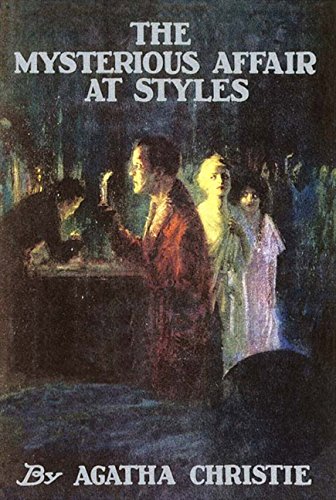
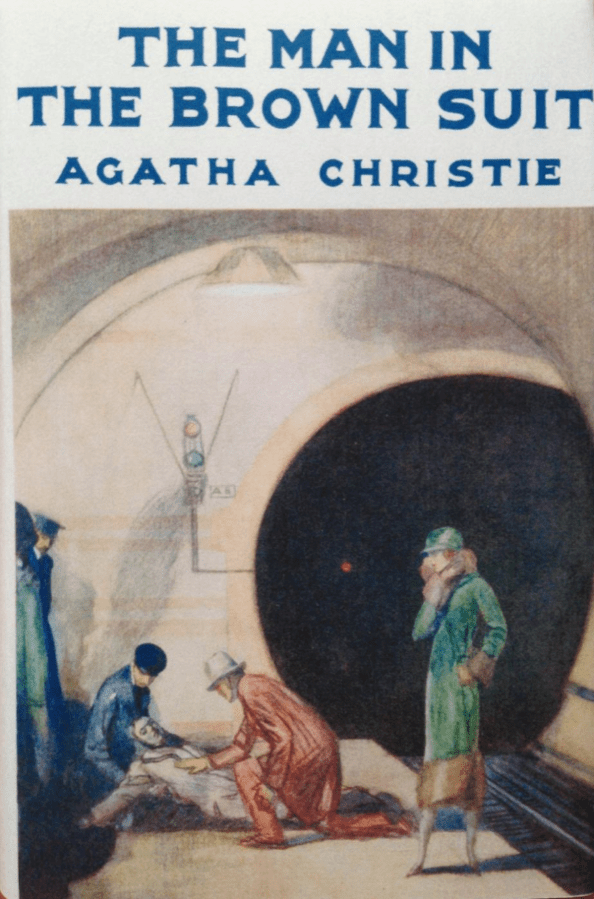
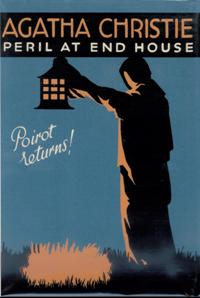
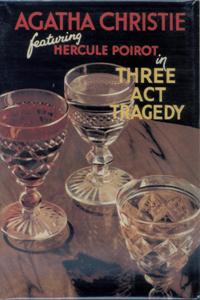
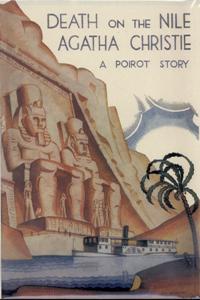
Twelve First Edition Agatha Christie book covers.

I’ve read all of Agatha Christie’s crime fiction novels and the links are to my posts – although the books I read were not first editions!

My Friday Post: Giant’s Bread by Mary Westmacott (Agatha Christie)

Every Friday Book Beginnings on Friday is hosted by Gillion at Rose City Reader where you can share the first sentence (or so) of the book you are reading. You can also share from a book you want to highlight just because it caught your fancy.

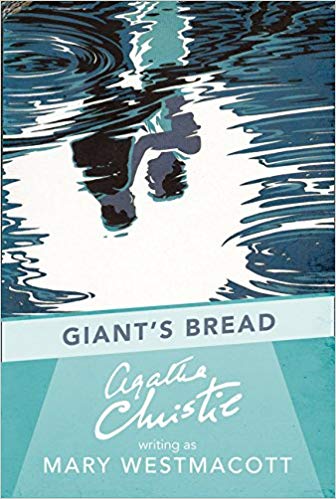
Giant’s Bread is by Agatha Christie, writing as Mary Westmacott. It’s one of the books on my 20 Books of Summer list. She wrote six novels under this pseudonym – Giant’s Bread was the first one, published in 1930. In the same year she also published The Mysterious Mr Quin and, Murder at the Vicarage – Miss Marple’s first book. 

It begins with a Prologue:

It was the opening night of London’s new National Opera House and consequentially an occasion. Royalty was there. The Press were there. The fashionable were there in large quantities. Even the musical, by hook or by crook, had managed to be there – mostly very high up in the final tier of seats under the roof.

They were there to see the performance of a new musical composition called Giant’s Bread.

And chapter one begins:

There were only three people of real importance in Vernon’s world: Nurse, God and Mr Green

Also every Friday there is The Friday 56, hosted by Freda at Freda’s Voice. *Grab a book, any book. *Turn to Page 56 or 56% on your  ereader . If you have to improvise, that is okay. *Find a snippet, short and sweet, but no spoilers!

These are the rules:

  1. Grab a book, any book.
  2. Turn to page 56, or 56% on your eReader. If you have to improvise, that is okay.
  3. Find any sentence (or a few, just don’t spoil it) that grabs you.
  4. Post it.
  5. Add the URL to your post in the link on Freda’s most recent Friday 56 post.
  1. Grab a book, any book.
  2. Turn to page 56, or 56% on your eReader. If you have to improvise, that is okay.
  3. Find any sentence (or a few, just don’t spoil it) that grabs you.
  4. Post it.
  5. Add the URL to your post in the link on Freda’s most recent Friday 56 post.

Page 56:

Poor Myra, She’d had a rotten deal on the whole. A fine looking creature, but he’d married her really for the sake of Abbots Puissants – and she had married him for love. That was the root of the whole trouble.

Blurb from Goodreads:

Vernon Deyre is a sensitive and brilliant musician, even a genius, tormented and driven by forces even he didn’t understand. His sheltered childhood in the home he loves has not prepared Vernon for the harsh reality of his adult years, and in order to write the great masterpiece of his life, he has to make a crucial decision with no time left to count the cost. But there is a high price to be paid for his talent, especially by his family and the two women in his lifee – the one he loves and the one who loves him.

Young Nell Vereker had always loved Vernon, loved him with a consuming passion that was alien to the proper social world in which she lived. But when Vernon sought solace in the arms of Jane Harding, a stranger and enigmatically beautiful older woman, Nell felt she could endure no greater pain. But Fate had only begun to work its dark mischief on this curious romantic triangle — for before their destinies were sealed, one would live, one would die, and one would return from the grave to be damned…

~~~

Mary was Agatha’s second name and Westmacott the name of some distant relatives. She succeeded in keeping her identity as Mary Westmacott unknown for nearly twenty years and the books, much to her pleasure, were modestly successful.

Short Stories on Sunday

Over several years I’ve been reading my way through Agatha Christie’s books and short stories. I’ve read all her detective/mystery novels and some of her short story collections. In an attempt to read more of the short stories I’ve decided to read some each Sunday, beginning with the stories collected in Miss Marple and Mystery.

IMG_20180513_095855842.jpgThis collection contains 55 stories, 20 of them featuring Miss Marple. There is an Short Story Chronology in the Appendix with a table aiming to present all Agatha Christie’s short stories published between 1923 and 1971, listed in order of traced first publication date. Counting how many there are in total is a difficult task – some stories that first appeared in weekly or monthly magazines were later  re-worked and became chapters in a larger work, some in Partners in Crime were sub-divided into smaller chapters, 13 were re-worked into the episodic novel, The Big Four, and some were rewritten so substantially that they appear separately in different books!

I’ve read some of these in other short story collections but there are still many I haven’t read.

The Girl in the Train is one I haven’t read before. It was first published in Grand Magazine in February 1924 and was adapted as one of the Agatha Christie Hour drama series for by Thames Television in 1982 as part of their ten-part programme. It’s a very short story that also appears in The Listerdale Mystery collection of short stories.

George Rowland is the heir to his Uncle William’s wealth but is left without a job or a home when William throws him out on his heel. On a whim George Rowland decides to catch a train down to Rowland’s Castle, a village which happens to bear his name. A beautiful girl bursts into his compartment, frantically begging to be hidden.  She gives him a package saying it is the key to everything and he is to guard it with his life. Jumping out of the train at the first stop she tells him to follow the little man with a small dark beard getting on the train. His life changes dramatically as he follows her instructions.

It’s a bit of nonsense really, in the same vein as Christie’s Tommy and Tuppence stories. A quick easy read, but entertaining nevertheless and possibly the first of books entitled The Girl …