Penguin UK| 13 January 2022| 283 pages| e-book| Review copy/4*
⭐⭐⭐⭐⭐
Rating: 5 out of 5.
Synopsis:
I still dream, every night, of Polneath on fire. Smoke unravelling from an upper window, and the terrace bathed in a hectic orange light…. Now I see that the decision I made at Polneath was the only decision of my life. Everything marred in that one dark minute.
By day, Ivy Boscawen mourns the loss of her son Tim in the Great War. But by night she mourns another boy – one whose death decades ago haunts her still.
For Ivy is sure that there is more to what happened all those years ago: the fire at the Great House, and the terrible events that came after. A truth she must uncover, if she is ever to be free.
From the award-winning author of The Witchfinder’s Sister comes a captivating story of burning secrets and buried shame, and of the loyalty and love that rises from the ashes.
My thoughts:
The Key in the Lock is Beth Underdown’s second book. I read her first book The Witchfinder’s Sister (my review) and enjoyed it immensely, so I had high expectations that I’d enjoy this book too – and it fully met my expectations. It is historical fiction set between two periods 1888 and 1918 in Cornwall.
It captures both time periods, reflecting the society both before and after the First World War showing the changes that the war had made. I loved the slow pace of this book as the secrets surrounding the death of William, the seven year old son of Edward Tremain in 1888 in a fire at Polneath, and that of Ivy’s son, Tim, on the battlefields of France are gradually revealed.
Both stories are shrouded in mystery as the circumstances of how William and Tim died are by no means clear. Ivy is devastated by Tim’s death and is determined to discover what actually happened to him, the letter informing them of his death was not phrased in the normal form of words. She wondered why.
It brought back painful memories of little William’s death. The fire at Polneath had started at night when everyone had gone to bed. William had been in the maid’s room, not his own bedroom when he had died. The postmortem revealed that he had died from asphyxiation by inhaling the smoke. Found under the bed, with paint from the door under William’s fingernails and bruised hands, it appeared that he must have been locked in and yet when he was found the door was standing open. The conclusion was that at some point the door had been locked – and later unlocked by a person or persons unknown.
The events surrounding each death are gradually revealed and there are plenty of secrets that come to light. It is described as a ‘gothic’ novel, but apart from the setting in an old isolated house, that had once been an ancient manor house, I didn’t find it gothic at all. It is a complicated story and at times I had to go back to make sure I’d got the facts right. I really liked Ivy and I liked the way her character is shown to develop with the passage of time. I loved the details about the attitudes to the First World War and the change from the earlier period. This is a novel full of grief and the circumstances surrounding both deaths provide an element of mystery. I loved the way the two time periods were interlocked as the novel progressed. I was fully engaged in it and I’ll be looking out for Beth Underdown’s next book.
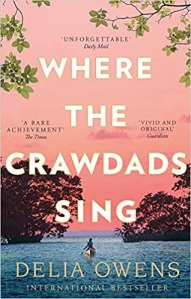
For years, rumors of the ‘Marsh Girl’ have haunted Barkley Cove, a quiet town on the North Carolina coast. So in late 1969, when handsome Chase Andrews is found dead, the locals immediately suspect Kya Clark, the so-called Marsh Girl. But Kya is not what they say. Sensitive and intelligent, she has survived for years alone in the marsh that she calls home, finding friends in the gulls and lessons in the sand. Then the time comes when she yearns to be touched and loved. When two young men from town become intrigued by her wild beauty, Kya opens herself to a new life – until the unthinkable happens.
Where the Crawdads Sing is the story of how Kya, the youngest child of five, grew up, living in a rundown shack in the marshlands in North Carolina. At the age of seven, her mother left home, then her older brothers and sisters also left, leaving her alone with her father, a violent drunkard. He then also abandoned her. It is also a murder mystery and these two strands interweave throughout the book. I wrote about the opening of this book in this Book Beginnings and The Friday 56 post.
Left alone, Kya survived with help from Jumpin’, the general store owner, who lived in Colored Town and his wife, Mabel, and also from Tate, an older boy who taught her to read and write – she only went to school for one day and after that she managed to hide from the school truant officer. Thinking about it after reading the book I did find the story of Kya’s early years rather unbelievable – the fact that such a young child managed to survive independently and that no one paid more attention to the disappearance of her mother and father bothered me. But, as I was reading it seemed plausible and it certainly did not lessen my enjoyment of the book.
I loved the setting, in an area completely unknown to me, beautifully described by Delia Owens. The details of the marshlands, in the coastal region of North Carolina, its wildlife, flora and fauna brought the setting to life for me. I liked the way that Kya gradually began to trust a few people, letting them into her life – she couldn’t have survived physically or emotionally otherwise. Her interest in her surroundings, encouraged by Tate, led to amazing things for her. So much so that she became an expert on the natural world around her.
But, when Chase Andrews, a handsome sporting hero adored by the other teenage girls, pursues her, she believes him when he promises to marry her, only to discover from the local newspaper that he was engaged to marry someone else. Later when Chase is found dead she is suspected of his murder. The latter part of the book became a courtroom drama that didn’t quite live up to the earlier part of the book for me. And before the end It became increasingly clear to me just who had killed Chase.
This is a story of loneliness and of the effects of rejection – a story of survival and the power of love combined with a murder mystery, and full of fascinating characters that had me racing through its pages. I thoroughly enjoyed it.
And for those like me who didn’t know the meaning of the saying, ‘where the crawdads sing’ this is how Tate explained it to Kya when she asked him:
‘What d’ya mean, where the crawdads sing? Ma used to say that.’ Kya remembered Ma always encouraging her to explore the marsh: ‘Go as far as you can – way out yonder where the crawdads sing.’
‘Just means far in the bush where critters are wild, still behaving like critters.’ (page 111)
Top Ten Tuesday is a weekly meme created by The Broke and the Bookish and now hosted by Jana at That Artsy Reader Girl. For the rules see her blog.
The topic this week is the Most Anticipated Books Releasing In the Second Half of 2022 I’m just listing 8 books this week all of which I’d like to read. The only one I have at the moment on my Kindle is Shrines of Gaiety by Kate Atkinson, an advanced proof copy from NetGalley.
Amy Connell and Lan Honey are having the best childhood, growing up on a West Country farm – three families, a couple of lodgers, goats, dogs and an orphaned calf called Gabriella Christmas. The parents are best friends too. Originally from the city, they’re learning about farming: growing their own vegetables, milking the goats, slaughtering chickens and scything the hay–
The adults are far too busy to keep an eye on Amy and Lan, and Amy and Lan would never tell them about climbing on the high barn roof, or what happened with the axe that time, any more than their parents would tell them the things they get up to – adult things, like betrayal – that threaten to bring the whole fragile idyll tumbling down…
In the golden city of Amsterdam, in 1705, Thea Brandt is turning eighteen, and she is ready to welcome adulthood with open arms. At the city’s theatre, Walter, the love of her life, awaits her, but at home in the house on the Herengracht, all is not well – her father Otto and Aunt Nella argue endlessly, and the Brandt family are selling their furniture in order to eat. On Thea’s birthday, also the day that her mother Marin died, the secrets from the past begin to overwhelm the present.
Nella is desperate to save the family and maintain appearances, to find Thea a husband who will guarantee her future, and when they receive an invitation to Amsterdam’s most exclusive ball, she is overjoyed – perhaps this will set their fortunes straight.
And indeed, the ball does set things spinning: new figures enter their life, promising new futures. But their fates are still unclear, and when Nella feels a strange prickling sensation on the back of her neck, she remembers the miniaturist who entered her life and toyed with her fortunes eighteen years ago. Perhaps, now, she has returned for her . . .
She’s rented a luxury getaway on its own private island. The helicopter won’t be back for seventy-two hours. They are alone. They think.
As well as Jen, there’s the pop diva and the estranged ex-bandmate, the tennis pro and the fashion guru, the embittered ex-sister-in-law and the mouthy future sister-in-law.
It’s a combustible cocktail, one that takes little time to ignite, and in the midst of the drunken chaos, one of them disappears. Then a message tells them that unless someone confesses her terrible secret to the others, their missing friend will be killed.
Problem is, everybody has a secret. And nobody wants to tell.
The New York Times bestselling author of The Glass Room brings a slice of his own family history to life through extensive research and rich storytelling.
Beginning with his great-great-grandfather Abraham Block, acclaimed novelist Simon Mawer sifts through evidence like an archaeologist, piecing together the stories of his ancestors. Illiterate and lacking opportunity in the bleak Suffolk village where his parents worked as agricultural laborers, Abraham leaves home at fifteen, in 1847. He signs away the next five years in an indenture aboard a ship, which will circuitously lead him to London and well beyond, to far-flung ports on the Mediterranean and the Black Sea. In London he crosses paths with Naomi Lulham, a young seamstress likewise seeking a better life in the city, with all its prospects and temptations.
Another branch of the family tree comes together in 1847, in Manchester, as soldier George Mawer weds his Irish bride Ann Scanlon—Annie—before embarking with his regiment. When he is called to fight in the Crimean War, Annie must fend for herself and her children on a meager income, navigating an often hostile world as a woman alone.
With a keen eye and a nuanced consideration of the limits of what we can know about the past, Mawer paints a compelling, intimate portrait of life in the nineteenth century.
After Culloden, Iain MacGillivray was left for dead on Drumossie Moor. Wounded, his face brutally slashed, he survived only by pretending to be dead as the Redcoats patrolled the corpses of his Jacobite comrades.
Six years later, with the clan chiefs routed and the Highlands subsumed into the British state, Iain lives a quiet life, working as a bookseller in Inverness. One day, after helping several of his regular customers, he notices a stranger lurking in the upper gallery of his shop, poring over his collection. But the man refuses to say what he’s searching for and only leaves when Iain closes for the night.
The next morning Iain opens up shop and finds the stranger dead, his throat cut, and the murder weapon laid out in front of him – a sword with a white cockade on its hilt, the emblem of the Jacobites. With no sign of the killer, Iain wonders whether the stranger discovered what he was looking for – and whether he paid for it with his life. He soon finds himself embroiled in a web of deceit and a series of old scores to be settled in the ashes of war.
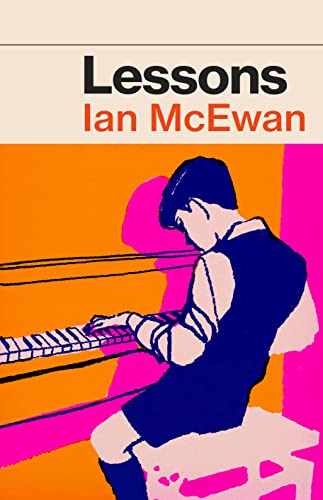
When the world is still counting the cost of the Second World War and the Iron Curtain has descended, young Roland Baines’s life is turned upside down. 2,000 miles from his mother’s protective love, stranded at an unusual boarding school, his vulnerability attracts his piano teacher Miriam Cornell, leaving scars as well as a memory of love that will never fade.
Twenty-five years later Roland’s wife mysteriously vanishes, leaving him alone with their baby son. He is forced to confront the reality of his rootless existence. As the radiation from the Chernobyl disaster spreads across Europe he begins a search for answers that looks deep into his family history and will last for the rest of his life.
From the Suez and Cuban Missile crises, the fall of the Berlin Wall to the Covid pandemic and climate change, Roland sometimes rides with the tide of history but more often struggles against it. Haunted by lost opportunities, he seeks solace through every possible means – literature, travel, friendship, drugs, sex and politics. A profound love is cut tragically short. Then, in his final years, he finds love again in another form. His journey raises important questions. Can we take full charge of the course of our lives without damage to others? How do global events
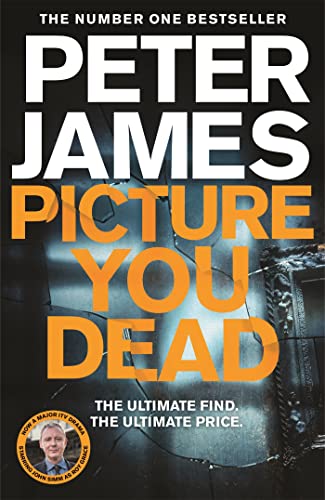
Harry and Freya, an ordinary couple, dreamed for years of finding something priceless buried amongst the tat in a car boot sale. It was a dream they knew in their hearts would never come true – until the day it did…
They buy the drab portrait for a few pounds, for its beautiful frame, planning to cut the painting out. Then studying it back at home there seems to be another picture beneath, of a stunning landscape. Could it be a long-lost masterpiece from 1770? If genuine, it could be worth millions.
One collector is certain it is genuine. Someone who uses any method he can to get want he wants and will stop at nothing.
Detective Superintendent Roy Grace finds himself plunged into an unfamiliar and rarefied world of fine art. Outwardly it appears respectable, gentlemanly, above reproach. But beneath the veneer, he rapidly finds that greed, deception and violence walk hand-in-hand. And Harry and Freya Kipling are about to discover that their dream is turning into their worst nightmare. . .
1926, and in a country still recovering from the Great War, London has become the focus for a delirious new nightlife. In the clubs of Soho, peers of the realm rub shoulders with starlets, foreign dignitaries with gangsters, and girls sell dances for a shilling a time.
The notorious queen of this glittering world is Nellie Coker, ruthless but also ambitious to advance her six children, including the enigmatic eldest, Niven whose character has been forged in the crucible of the Somme. But success breeds enemies, and Nellie’s empire faces threats from without and within. For beneath the dazzle of Soho’s gaiety, there is a dark underbelly, a world in which it is all too easy to become lost.
With her unique Dickensian flair, Kate Atkinson brings together a glittering cast of characters in a truly mesmeric novel that captures the uncertainty and mutability of life; of a world in which nothing is quite as it seems.
It’s time again for Six Degrees of Separation, a monthly link-up hosted by Kate atBooks Are My Favourite and Best. Each month a book is chosen as a starting point and linked to six other books to form a chain. A book doesn’t need to be connected to all the other books on the list, only to the one next to it in the chain.
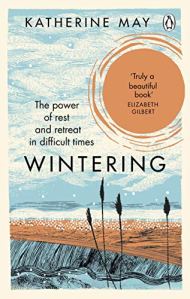
I haven’t read this book. According to Amazon ‘Wintering’ is a poignant and comforting meditation on the fallow periods of life, times when we must retreat to care for and repair ourselves. Katherine May thoughtfully shows us how to come through these times with the wisdom of knowing that, like the seasons, our winters and summers are the ebb and flow of life.‘
The Cloister Walk by Kathleen Norris a book I read many years ago, came into my mind as I wondered where to start my chain. It links to Wintering in that it is a quiet, meditative book. It is about the time she spent among the Benedictine monks, on two extended residencies at St John’s Abbey in Minnesota. The Cloister Walk demonstrates, from the rare perspective of someone who is both an insider and outsider, how immersion in the cloistered world — its liturgy, its ritual, its sense of community — can impart meaning to everyday events and deepen our secular lives.
A different type of walk is the subject of A Time of Gifts in which Patrick Leigh Fermor describes his travels on foot in 1933 from the Hook of Holland through Germany, to Austria, Slovakia and Hungary, on his way to Constantinople. In a way his journey was a gilded experience as he had introductions to people in different places – people who gave him a bed for the night, or longer stays. There were also people who didn’t know him who welcomed him into their homes as a guest – as the title says it was a time of gifts. It was also the period when Hitler came to power in Germany.
My next link is rather a stretch – ‘march‘ is another word for ‘walk‘ but in the title of my next link, March: a love story during the time of war by Geraldine Brooks it is the name of John March, the father of the four March girls, Meg, Jo, Beth and Amy in in Louisa May Alcott’s Little Women. This novel is about his life whilst he was away at war during the American Civil War when he was an abolitionist and chaplain in the Union Army. During this time, John March wrote letters to his family, but he withheld the true extent of the brutality and injustices he witnessed on and off the battlefields.
My fourth link is a double biography of Louisa May Alcott and Bronson Alcott, Eden’s Outcasts: the Story of Lousia MayAlcott and Her Father by John Matteson, a book that clearly reveals the relationship between them. Bronson Alcott was a complicated person who appeared to have mellowed as he grew older. Louisa, well known and loved for her children’s books never achieved her ambition to write serious books for mature readers, enduring debilitating illness in her later years.
From a double biography the next link is to a triple biography: Wild Swans: Three Daughters of China by Jung Chang, about her grandmother, her mother and herself, telling of their lives in China up to and during the years of the violent Cultural Revolution from 1966 until Mao Zedong’s death in 1976. Her family suffered atrociously, her father and grandmother both dying painful deaths and both her mother and father were imprisoned and tortured.
Staying in China my final link is Death of a Red Heroine by Qiu Xiaolong, his first book featuring Chief Inspector Chen. It won the Anthony Award for Best First Crime Novel in 2001. Set in Shanghai in 1990 Chen investigates the death of a prominent Communist Party member. This is as much historical fiction as it is crime fiction. But there is also so much in it about China, its culture and its history before 1990 – the Communist regime and then the Cultural Revolution in the 1960s – as well as the changes brought about in the 1990s after the massacre of Tiananmen Square.
My chain this month has a variety of books linked in different ways – either by the subject of the books or by the variations on the meaning of words. Beginning with two books of nonfiction, it then touches on historical fiction, before returning to two more books of nonfiction and ending with crime fiction, whilst travelling through a number of different countries.
Yesterday we went Barter Books in Alnwick, my favourite bookshop. This is a secondhand bookshop where you can ‘swap’ books for credit that you can then use to get more books from the Barter Books shelves. It’s back to ‘normal’ now, so there was no queue to get in, although they are still limiting the number of books you can take in.
These are the books I brought home – from top to bottom they are:
Hemingway’s Chair by Michael Palin, a comic novel about Martin, an assistant postmaster who is obsessed with Ernest Hemingway. But when Nick arrives and is appointed postmaster instead of Martin, Martin’s life is turned upside down and he plans the ultimate Hemingwayesque act of revenge.
The Mammoth Book of Historical Detectives edited by Mike Ashley, published in 1995 this anthology includes stories from the earliest locked-room mystery (35,000 BC), through ancient Rome and China to medieval England, the Wild West, the Indian Raj and Victoriam London. It’s arranged chronologically and includes stories by R L Stevenson, Ellis Peters, Peter Tremayne, Steven Saylor and others new to me.
Mr Mac and Me by Esther Freud. I remember seeing this on book blogs a while ago and thought it looked interesting. Set in 1914 on the Suffolk coast just as war with Germany is declared, this is a story of an unlikely friendship between a mysterious artist the locals call Mr Mac (Charles Rennie Macintosh)n and Thomas the crippled son of the village publican.
The Sisters Brothers by Patrick de Witt, another book I’ve spotted on some book blogs. It was shortlisted for the Man Booker Prize 2011. It’s described on the inside cover as ‘an unforgettable comic tour de force. Filled with a remarkable list of characters – losers, cheaters, and ne’er-do-wells’ … ‘it captures the humour, melancholy and grit of the Old West and two brothers bound by blood, violence and love.‘
All Among the Barley by Melissa Harrison – I enjoyed her book, Rain: Rour Walks in English Weather, so I’m keen to read this one, the winner of the EU Prize for Literature and the ‘Book of the Year’ New Statesman, Observer, Irish Times, BBC History Magazine. Set on a farm in Suffolk just before the Second World War, it introduces a girl on the cusp of adulthood. Glamorous outsider Constance FitzAllen arrives from London, determined to make a record of fading rural traditions and beliefs, and to persuade Edie’s family to return to the old ways rather than embrace modernity. She brings with her new political and social ideas – some far more dangerous than others. (Goodreads)
What do you think? Have you read any of these? Do they tempt you too?
Today I’m looking back at my post onThose Who Are Lovedby Victoria Hislop. I first reviewed it on June 15, 2019.
My review begins:
Those Who Are Lovedby Victoria Hislop is one of the most moving novels I’ve read for a long time. But it begins slowly and it was only at about the halfway stage that it really took off for me. And now I’ve come to write about it I’m finding it difficult to put into words just how exceptional I think it is. Whatever I write will not do it justice – it really is ‘an epic tale of an ordinary woman compelled to live an extraordinary life‘.
It is historical fiction ‘set against the backdrop of the German occupation of Greece, the subsequent civil war and a military dictatorship, all of which left deep scars.’








 BooksPlease