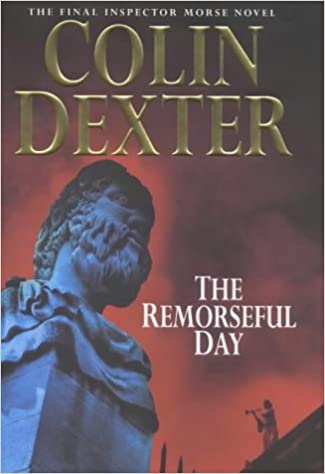
Today I’m looking back at my post on The Remorseful Day by Colin Dexter, the last Inspector Morse book. I first reviewed it on August 2, 2015.
My review begins:
Chief Inspector Morse is one of my favourite fictional detectives (maybe even the favourite). I first ‘met’ him years ago in the ITV series Inspector Morse and so, just as Joan Hickson is forever in my mind as Miss Marple and David Suchet is Poirot, John Thaw is Morse. The series was first broadcast in 1987, but I don’t intend to write about the books versus the TV adaptations – I’ve enjoyed both. This post is just about the last book in the series – The Remorseful Day.
Quercus| 4 February 2021|e-book| Print Length 321 pages| My own copy| 4*
Synopsis:
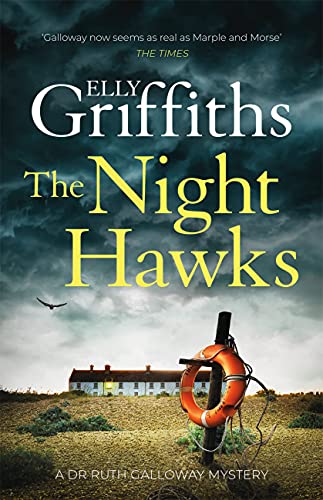
Dr Ruth Galloway returns to the moody and beautiful landscape of North Norfolk to confront another killer. A devastating new case for our favourite forensic archaeologist in this acclaimed and bestselling crime series.
The Night Hawks, a group of metal detectorists, are searching for buried treasure when they find a body on the beach in North Norfolk. At first Nelson thinks that the dead man might be an asylum seeker but he turns out to be a local boy, Jem Taylor, recently released from prison. Ruth is more interested in the treasure, a hoard of Bronze Age weapons. Nelson at first thinks that Taylor’s death is accidental drowning, but a second death suggests murder.
Nelson is called to an apparent murder-suicide of a couple at the isolated Black Dog Farm. Local legend talks of the Black Shuck, a spectral hound that appears to people before they die. Nelson ignores this, even when the owner’s suicide note includes the line, ‘He’s buried in the garden.’ Ruth excavates and finds the body of a giant dog.
All roads lead back to this farm in the middle of nowhere, but the place spells serious danger for anyone who goes near. Ruth doesn’t scare easily. Not until she finds herself at Black Dog Farm …
My thoughts:
The Night Hawks is the 13th book in the DrRuth Galloway books. I’ve enjoyed the earlier books, despite the fact that they are written in the present tense. But it’s been a while since I last read one, 5 years to be precise and I’ve missed a few of them as the last one I read was the 9th book, The Chalk Pit.
So, Ruth’s life has moved on the three books I haven’t read! There is a Who’s Who of the main characters at the end of the book giving their backstories which helps if you haven’t read the earlier books, and reminded me of who they all are and their relationships.
Ruth, the central character, is now Head of the Department of Archaeology at her old university, the fictional University of North Norfolk, having been promoted after the retirement of her old boss, Phil Trent. Her replacement as the archaeology lecturer is David Brown, who Ruth finds annoying. She doesn’t really know why as they have the same academic speciality, the prehistoric era, particularly as that is partly why she employed him to teach the courses that she used to teach. She is also a special advisor to the north Norfolk police.
Her complicated relationship with Detective Chief Inspector Nelson, the father of her daughter, Kate, now ten years old, continues in this book. Nelson thinks of himself as an old-fashioned policeman. But Superintendent Jo Archer is keen to bring the force into the twenty-first century and wants him to retire. He dismisses that idea, maintaining that the police force needs his experience and know-how. He has no plans to retire and avoids talking to her whenever he can.
A body is found on the beach at Blakeney Point, a young man who Nelson guesses is an illegal immigrant, an asylum seeker, and then a skeleton, buried in a mound of what appears to be Bronze Age weapons, discovered by the group known as the Night Hawks when they were searching for buried treasure.
The police are also investigating what at first appears to be a case of murder-suicide at Black Dog Farm, an isolated farm said to be haunted by the Black Shuck. Shuck is the name given to an East Anglian ghostly black dog that is said to roam the coastline and countryside of East Anglia, a large, shaggy dog said to be an omen of death. And there had been quite a few sightings of such a dog near Black Dog Farm.
I was thoroughly entertained by this mystery, glad to get re-acquainted with Ruth, her family and her friends and colleagues. There is a really strong sense of place, so much so that I could easily visualise the scenes and gain a sense of what it’s like to be there at the beach, with the shingle and the sand dunes at Blakeney Point and the north Norfolk countryside.
I hope to read books I’ve missed, namely The Dark Angel, The Stone Circle and The Lantern Men, before too long, and then the 14th in the series, The Locked Room.
Top Ten Tuesday is a weekly meme created by The Broke and the Bookish and now hosted by Jana at That Artsy Reader Girl. For the rules see her blog.
The topic this week is School Freebie (In honor of school starting up soon, come up with a topic that somehow ties to school/education. The book could be set at school/college, characters could be teachers, books with school supplies on the cover, nonfiction titles, books that taught you something or how to do something, your favorite required reading in school, books you think should be required reading, your favorite banned books, etc.)
These are 10 of the books set in schools/universities/colleges that I’ve enjoyed reading.
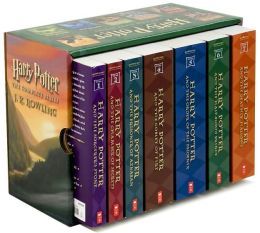
J K Rowling’s Harry Potter books are an obvious choice – all 7 of them would nearly fill a Top Ten post on their own. I haven’t got this box set, but I have read all seven books telling the story of Harry and his friends at Hogwarts School of Witchcraft and Wizardry. It’s a selective school, only children who show magical ability are admitted. Each student is allowed to bring an owl, a cat or a toad. And first-year students are required to acquire a wand, subject books, a standard size 2 pewter cauldron, a set of brass scales, a set of glass or crystal phials, a kit of basic potion ingredients (for Potions), and a telescope (for Astronomy).
The Prime of Miss Jean Brodie by Muriel Spark is set in 1936 in Edinburgh in the Marcia Blaine school, where schoolteacher Miss Brodie has groomed a group of young girls, known as the Brodie Set, to be the ‘creme de la creme‘. Marcia Blaine school is a traditional school where Miss Brodie’s ideas and methods of teaching are viewed with dislike and distrust. The Head Teacher is looking for ways to discredit and get rid of her. I enjoyed both the book and the film with Maggie Smith in the title role. The story is told in flashbacks from 1930 –1939 and quite early on in the book we are told who ‘betrayed’ Miss Brodie.
Cat Among the Pigeons by Agatha Christie is set in an exclusive and expensive girls’ school, Meadowbank, in England, said to be based on her daughter Rosalind’s school. Miss Bulstrode is the headmistress and like Miss Brodie she has built a reputation for excellence. But disaster strikes when two of the teachers, Miss Springer, the new Games Mistress and the History and German teacher, Miss Vansittart are murdered. Rather late in the day Hercules Poirot is called in to investigate their deaths.
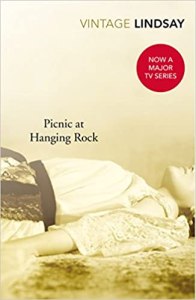
Picnic at Hanging Rock by Joan Lindsay. On St Valentine’s Day in 1900, a party of nineteen girls accompanied by two schoolmistresses sets off from the elite Appleyard College for Young Ladies, for a day’s outing at the spectacular volcanic mass called Hanging Rock. The picnic, which begins innocently and happily, ends in explicable terror, and some of the party never returned. What happened to them remains a mystery. I loved the detailed descriptions of the Australian countryside and the picture it paints of society in 1900, with the snobbery and class divisions of the period.
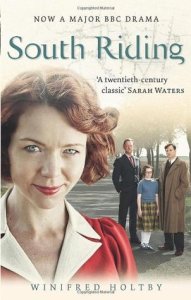
South Riding by Winifred Holtby. Set in the early 1930s in Yorkshire this book paints a moving and vivid portrait of a rural community struggling with the effects of the depression. One of the main characters is Sarah Burton, the new headmistress of Kiplington High School for Girls, a fiercely passionate and dedicated teacher. As the villagers of South Riding adjust to Sarah’s arrival and face the changing world, emotions run high, prejudices are challenged and community spirit is tested.
Miss Pym Disposes by Josephine Tey. Miss Pym was pleased and flattered to be invited to Leys Physical Training College by her old school friend, Henrietta Hodge, the college Principal, to give a lecture on psychology. But then there was a ’nasty accident‘. This is not a conventional crime fiction novel. It’s a psychological study focusing on the characters, their motivation and analysis of facial characteristics. It looks at the consequences of what people do and say.
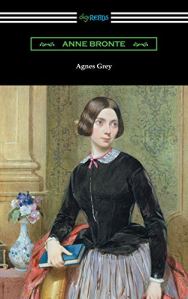
Agnes Grey by Anne Bronte, published in 1847, is a novel about a young woman, a governess and her experiences working for two families in Victorian England. Agnes is the younger daughter of an impoverished clergyman. Her parents had married against her mother’s family’s wishes and when their fortune was wrecked Agnes determines to help out by working as a governess. It gives a very clear picture of the life of a governess, with all its loneliness, frustrations, insecurities and depressions. Anne Bronte based this novel on her own experiences as a governess and depicts the loneliness, isolation, and vulnerability of the position.
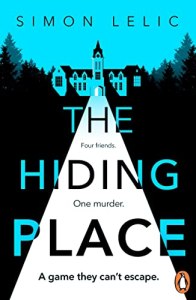
The Hiding Place by Simon Lelic, a murder mystery set in Beaconsfield, a prestigious boarding school. When Ben Draper, a 14 year-old teenager with a troubled background, and a history of absconding from school, started at the school he is bullied, disliked and feels shunned and despised. But he does make three friends, Callum, Lance and Melissa. Longing to be accepted, he thinks they are his friends, but then he is drawn unwillingly into their plot to damage the school. After playing a game of Hide and Seek with them, that ended in terror, he went missing and his body was never found.
An Advancement of Learning by Reginald Hill, the 2nd Dalziel and Pascoe novel. It’s set in a college, Holm Coultram College, where Dalziel and Pascoe investigate the discovery of a body found when an eight foot high bronze statue of a former head of the College, Miss Girling, is being moved. The two detectives uncover plenty of disagreements and power struggles in both the staff and student bodies – from rivalries to revelries on the beach, and more dead bodies turn up before the mystery is solved.
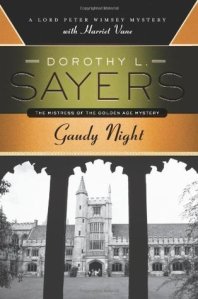
I loved the setting in Gaudy Night by Dorothy L Sayers – Shrewsbury College, a fictional all female college, at Oxford University (based on Somerville College, Sayers’ own college). Harriet Vane decides to go back to the College to attend the Shrewsbury Gaudy (a college reunion involving a celebratory dinner), not sure she can face meeting her fellow students and the dons. It doesn’t go well – there are poison pen letters, nasty graffiti and vandalism causing mayhem and upset. Under the pretence of helping one of the dons to rewrite her manuscript that had been destroyed in one of the nightly attacks Harriet is asked to investigate.
Every Friday Book Beginnings on Friday is hosted by Gillion at Rose City Readerwhere you can share the first sentence (or so) of the book you are reading. You can also share from a book you want to highlight just because it caught your fancy.
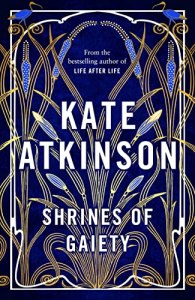
Yesterday I finished reading Shrines of Gaiety, Kate Atkinson’s new book which will be published in September. I’ll write about it in a later post. Although I’m still reading The Return of the King and The Island, I wondered what I’d like to read next. I was thinking of reading Lion by Conn Iggulden, the first in a new series ‘The Golden Age’, set in Ancient Greece in the 5th century BC. But, today I wasn’t in the mood for ancient historical fiction and fancied something more rural and more modern – and spotted All Among the Barley in a pile of books waiting to be read. It’s set on a farm in Suffolk just before the Second World War.
Prologue
Last night I lay awake again, remembering the day the Hunt ran me down in Hulver Wood when I was just a girl.
And then Chapter 1:
My name is Edith June Mather and I was born after the end of the Great War. My father, George Mather, had sixty acres of arable land known as Wych Farm; it is somewhere not far from here, I believe. Before him my grandfather Albert farmed the same fields, and his father before him, who ploughed with a team of oxen and sowed by hand.
Also every Friday there is The Friday 56, hosted by Freda at Freda’s Voice, where you grab a book and turn to page 56 (or 56% of an eBook), find one or more interesting sentences (no spoilers), and post them.
Page 56:
Unlike Doble, whose family had been tied to ours for generations, John was what we in the village called a ‘furriner’, having been born sixty miles or more north of us, where our clay gave way to flat, rich peat.
Synopsis from Amazon:
WINNER OF THE EU PRIZE FOR LITERATURE
‘BOOK OF THE YEAR’ NEW STATESMAN, OBSERVER, IRISH TIMES, BBC HISTORY MAGAZINE The fields were eternal, our life the only way of things, and I would do whatever was required of me to protect it. The autumn of 1933 is the most beautiful Edie Mather can remember, though the Great War still casts a shadow over the cornfields of her beloved home, Wych Farm.
When charismatic, outspoken Constance FitzAllen arrives from London to write about fading rural traditions, she takes an interest in fourteen-year-old Edie, showing her a kindness she has never known before. But the older woman isn’t quite what she seems.
As harvest time approaches and pressures mount on the whole community, Edie must find a way to trust her instincts and save herself from disaster.
I chose this book because earlier this year I enjoyed Melissa Harrison’s novella, Rain: Four Walks in English Weather, which is about four rain showers, in four seasons, across Wicken Fen, Shropshire, the Darent Valley and Dartmoor. I like the way she writes about the natural world and All Among the Barley looks as though it will bring to life a world governed by the old rural traditions, in an evocation of place and a lost way of life.
What are you currently reading? What did you recently finish reading? What do you think you’ll read next?
I’m still reading J R R Tolkien’s The Lord of the Rings. This is a book I’ve read several times over the years since the first time I read it, just after I left school (a long time ago). I am now well into Book 3, The Return of the King. I don’t remember this one as much as the first two books, maybe I haven’t read it before as many times as the other two. It really is an amazing book, such vivid descriptions of characters, places and events. I am reading this hardback book slowly, taking my time over it, just a small section each day – letting the story soak into my mind. I think I may have to spend more time reading it from now on – the action is really gripping me, although, of course, I know how it ends.
The Island is set mainly on the tiny, deserted island of Spinalonga – Greece’s former leper colony and is the story of Eleni and her daughters and a family rent by tragedy, war and passion. I’m reading a paperback edition, which means I’m not reading it in bed! I need more light to see the small typeface.
Shrines of Gaiety is to be published in September, so I’m reading a digital review copy from NetGalley. As with Atkinson’s Life After Life, I’ve found this a difficult book at the beginning and it took me until nearly 20% to get to know the characters. I nearly gave up a few times. But then I settled into the story and am nearing the end – now at 86%. I should finish it soon.
The last book I read is Nucleus by Rory Clements, historical fiction set in 1939 just before the start of the Second World War. I wrote about it in this post.
As always I haven’t quite decided what to read next. It could be Lion by Conn Iggulden, the first in a new series ‘The Golden Age’, set in Ancient Greece in the 5th century BC. It’s about the Athenian general and politician Pericles.
But, then again when the time comes I could choose something completely different. I just don’t know.
Although this is a weekly meme I think I’ll take part once a month from now on.
Top Ten Tuesday is a weekly meme created by The Broke and the Bookish and now hosted by Jana at That Artsy Reader Girl. For the rules see her blog.
The topic this week is Completed Series I Wish Had More Books, but I’m tweaking it a bit as I have lots of series on the go that I haven’t finished. So this is my list of Series I’m Still Reading:
Dr Ruth Galloway Mysteries by Elly Griffiths – 14 books have been published, with the 15th due out next year. I have read 8 of them.
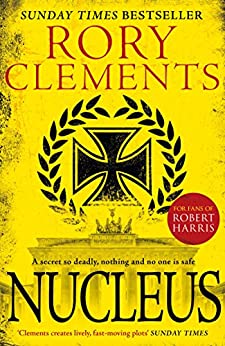
Tom Wilde books by Rory Clements – 6 books. I have read 4 of them.
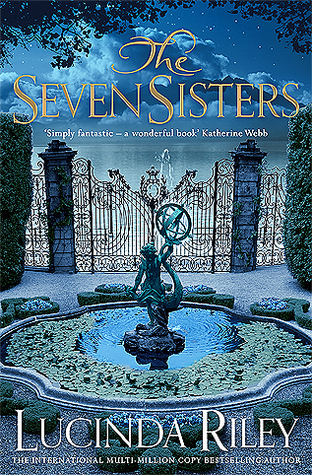
Seven Sisters by Lucinda Riley – 7 books have been published with the 8th due out next year. I have read 3 of them.
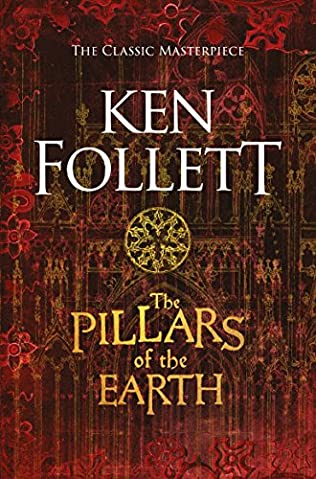
Kingsbridge by Ken Follett – 4 books. I’ve read 1.












 BooksPlease