The Hollow by Agatha Christie: Book Review

The Hollow by Agatha Christie is a country house mystery in which Hercule Poirot comes across what he decribes as “A set scene. A stage scene”; a murder scene specifically staged, he thinks at first, to deceive him.

Gerda and her husband John Christow, a Harley Street doctor were visiting Sir Henry and Lucy, Lady Angkatell at their house, The Hollow. John is an agressive dominant personality. Also down for the weekend were Lucy’s cousins Midge, who works in a London dress shop, Henrietta, a sculptress, Edward, a rather pale character and David, a student.

Lucy is sure it will be a difficult weekend – Gerda always appears vacant and lost, completely dominated by John, who is having an affair with Henrietta. Edward is in love with Henrietta and Midge is in turn in love with Edward. David is too intellectual  and Lucy herself is vague, charming and completely eccentric. As a distraction she has invited the “Crime man“, Poirot, whose weekend cottage is next door, to lunch on the Sunday. She describes Poirot’s house disparagingly as

… one of those funny new cottages – you know, beams that bump your head and a lot of new plumbing and quite the wrong kind of garden. London people like that sort of thing. (page 13)

As Poirot arrives and is taken through the garden to the swimming pool all the characters are there, with Gerda, revolver in hand, standing over the dying body of her husband, as his blood drips gently over the edge of the concrete into the pool. Poirot hears his final word “Henrietta”.

I found Lucy’s reaction amusing. It’s typical of her vague, almost detached nature. She says:

Of course, say what you like, a murder is an awkward thing – it upsets the servants and puts the general routine out – we were having ducks for lunch – fortunately they are quite nice eaten cold. (page 102)

Later she observes:

There would be something very gross, just after the death of a friend, in eating one’s favourite pudding. But caramel custard is so easy – slippery if you know what I mean – and then one leaves a little on one’s plate. (page 113)

This is now one of my favourite Agatha Christie books. She herself described it in her autobiography as “in some ways rather more of a novel than a detective story.” I agree, the characters are well drawn and the setting of both The Hollow and Ainswick, the larger country house Edward has inherited from his uncle, Lucy’s father are described with nostalgia. Agatha Christie also revealed that she thought she had ruined the book by the introduction of Poirot:

I had got used to having Poirot in my books and so naturally he had to come into this one, but he was all wrong there. He did his stuff all right, but how much better, I kept thinking, would the book have been without him. So when I came to sketch out the play, out went Poirot.(page 489-490)

Poirot has a small role, the investigation into John’s death is headed by Inspector Grange and it is a comment he makes that leads Poirot to discover the culprit. I’m used to having Poirot in her books too, so I didn’t find too much wrong with him being there.

It seems that everyone could have committed the murder and I swung from one to the other as I read, no doubt as Agatha Christie intended, but I did work it out before Poirot unveiled the killer.  As Poirot  says:

That is why every clue looked promising and then petered out and ended in nothing. (page 249)
Crime Fiction Alphabet: R is for Ian Rankin

letter_RThis week the letter in the Crime Fiction Alphabet Community Meme is R, so of course it just had to be Ian Rankin, who is fast becoming my favourite crime writer.

I’ve previously written a bit about Ian Rankin after I went to a talk he gave in January – see here.

R is also for Rebus. There are 17 Inspector Rebus books (a a book of short stories) and I’m reading them in sequence starting with the first one Knots and Crosses. Currently I’m reading the tenth book, Dead Souls. As well as the Rebus books Rankin has written a few others, the latest being The Complaints, featuring a new cop Inspector Malcom Fox. The complete list of Rebus books is on Ian Rankin’s website and on Wikipedia. Both places give more information about the man and his books. Just as a taster the author details on the latest book I read  The Hanging Garden reveal that after graduating from the University of Edinburgh he  had been employed as

a grape picker, swine-herd, taxman, alcohol researcher, hi-fi journalist and punk musician.

The Hanging Garden is full of characters, sub-plots and plenty of crime from the local gang leader Tommy Telford, vying for supremacy over crime boss, Big Ger Cafferty, currently imprisoned in Barlinnie but still in control of his empire through his second in command, the Weasel, to Chechian and Yakuza villains. Then there is Mr Pink-Eyes, a Newcastle gangleader to contend with. It’s a mix of prostitutes, drug running, money laundering and attacks on Cafferty’s territory and associates, with retaliations on Telford’s strongholds.

Rebus is struggling to keep off the alcohol, aided by his friend Jack Morton, when his daughter, Sammy is the victim of a hit and run. Who is trying to warn off Rebus and is he in the pay of Big Ger?  At the same time he is investigating a suspected Nazi War Criminal and helping a Bosnian prostitute, Candice who looks so like his own daughter and who pleads with him for safety. Added to all this his ex-wife Rhona and his lover Patience meet over Sammy’s hospital bed.

It’s grim and tough and as Rebus involves Jack in an undercover operation it all goes wrong – dramatic and tense right to the end.

Favourite Places – Bath

For today’s Favourite Places post I’m featuring Bath. For more Favourite Places see Margot’s blog Joyfully Retired.

The last time we have Bath was just over three years ago, when we had a weekend there. There is a lot to see in Bath and we only managed to go to a few places – the main one being the Roman Baths.

We stayed here:

and walked into the centre of Bath, down Great Pulteney Street, passing this Victorian pillar box:

We walked over Pulteny Bridge and looked down on the River Avon and the weir:

Here is Bath Abbey, where Edgar was crowned King of the English in 973:

*

*Added after first posting:

There have been three churches on the site of Bath Abbey – the first was an Anglo-Saxon church dating from 757, destroyed by the Normans after 1066. The present Abbey church was founded in 1499 and completed in 1611.*

Visting the Roman Baths was the highlight of our weekend. We could have stayed in there all day, with so much to look at. 


Here is the underfloor heating.

Although we were footsore after walking round the Baths we managed to go to the Fashion Museum, which is housed in the Assembly Rooms

and after looking at the displays of fashion dating back to the eighteenth century

we wandered round the Ball Room, imagining what it was like on ball nights during Jane Austen’s time and then had a cup of coffee in the Assembly Rooms cafe.

Games, Sets and Matches

I find lists of books fascinating and when I saw this way of discovering patterns in their to-be-read books on Kerrie’s, Maxine’sBernadette’s, and Dorte’s blogs I had to have a go too, as if I haven’t got anything else to do! …

These are all fiction, but not all crime fiction:

1. Death

  • The Brief History of the Dead, Kevin Brockmeier
  • The Cause of Death, Patricia Cornwell
  • Death on the Nile, Agatha Christie
  • Dead Souls, Ian Rankin
  • The Death Maze, Ariana Franklin
  • Faithful Unto Death, Caroline Mortimer
  • The Secret Hangman, Peter Lovesey

2. Ghosts

  • The Ghost, Richard Harris
  • The Ghost Road, Pat Barker
  • Great Ghost Stories, Aldous Huxley et al
  • The House of the Spirits, Isobel Allende 

3. Names

  • Iris and Ruby, Rosie Thomas
  • Julius, Daphne Du Maurier
  • Molly Fox’s Birthday, Deirdre Madden
  • Mrs Jordan’s Profession, Claire Tomalin
  • Mysterious Flame of Queen Loana, Umberto Eco
  • Ripley Under Water, Patricia Highsmith 

4. Snow

  • The Snow Tiger, Desmond Bagley
  • Storm Island, Ken Follet
  • Snowbound Six, R M Stern
  • Snow Orhan Pamuk
  • The Snow Geese, William Fiennes

5. Time

  • The Meaning of Night, Michael Cox
  • At the Going Down of the Sun, Elizabeth Darrell
  • No Moon Tonight, Don Charlwood
  • The Friday Night Knitting Club, Kate Jacobs
  • Sands of Time, Barbara Erskine

6. Colours

  • The Dark Horse, Rumer Godden
  • Home Before Dark, Sue Ellen Bridgers
  • Set in Darkness, Ian Rankin
  • The Black Rubber Dress, Lauren Henderson
  • Blonde, Joyce Carol Oates
  • Purple Hibiscus, Chimamanda Ngozi Adichie 

7. Girls

  • The Girl with the Dragon Tattoo, Steig Larsson
  • The Girl who played with Fire, Steig Larsson
  • Goldengirl, Peter Lovesey
  • The Intimate Adventures of a London Call Girl, Belle de Jour
  • The Welsh Girl, Peter Ho Davies
  • The Girl of the Sea of Cortez, Peter Benchley

8. Murder

  • The Interpretation of Murder, Jed Rubenfield
  • A Murder is Announced, Agatha Christie
  • The ABC Murders, Agatha Christie

Would I tell You Lies? The Answers

When Kay guessed the true answer straight away I thought I’d made this too easy and then I got a little worried when some of you wrote that you think I’m a good liar! Some of the statements were partially true but only one was absolutely true:
 

1. FALSE – I can’t play the piano at all, never mind passing Grade 5 with merit. I had a few lessons at school when I was thinking about being a teacher and was pleased to give up the lessons when I decided I didn’t want to be a teacher. My finger span is not broad enough for one thing.

2. PARTLY FALSE – I can’t speak Welsh. My Taid (grandfather) taught me how to count up to 10 and to say “good night” and “shut the door” in Welsh but that is all and I can’t remember the numbers now. I was 5 when Granny and Taid came to live with us and each evening I must have left their door open because after saying “nos da” they always added “caewch y drws”.

3. FALSE – my mother-in-law did indeed teach flower arranging. I never went to her classes and although she did tell me the basics I never entered any competitions and have never won prizes for my flower arrangements.

4. FALSE – I haven’t been to the top of the Eiffel Tower. I only got to the second level when I was staying with my French penfriend. I haven’t got a head for heights!

5. TRUE – I had dancing lessons from an early age and have danced the French Can-Can on stage. I was in a Youth Club and for a couple of years we put on a show. One year with three friends I danced the Can-Can, ending by doing the splits. Kay asked what I wore. We wore the traditional Can-Can costumes -here’s a photo. I’m the second from the left (it was a long time ago).

6. PARTLY FALSE – I did love diving and wanted to learn to scuba dive on holiday in Cyprus, but I chickened out.

7. FALSE –  Frederic, Lord Leighton, a Victorian painter and sculptor is no relation to me, although my father was also called Frederick Leighton. I’ve been looking up my family history and can’t find any link whatsoever.

Catching Up with Reviews

Some of January’s books – two quick reviews:

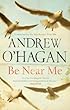
Be Near Me by Andrew O’Hagan is a beautifully written and moving book about David, a parish priest in a small Scottish parish and as I read it I gradually became aware of just how naive he is. The prologue foreshadows the problems he encounters when his mother comments that he has been through such a lot and that in her experience “nothing is ever behind anyone.” He tells her that he is looking forward to

Just working in an ordinary parish and greeting the faith of ordinary people.

What follows is a troubling story of what happened and what he did in that ordinary parish full of ordinary people. It’s a very sad and nasty tale, about prejudice, religious bigotry and it’s full of regret and despair.

Information about Andrew O’Hagan is here. I would like to read his earlier books, maybe The Missing, which is part autobiography and part looking at what happens to communities when people go missing.

That, quite coincidentally brings me on to another book I read in January:

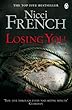
Losing You by Nicci French is a fast paced, take-your-breath-away book about Nina whose teenage daughter, Charlie goes missing. I read it a break-neck speed, switching between being completely engrossed and desperate for her to find her daughter before it’s too late and being annoyed by her attitude to the police.

It’s set on Sandling Island, off the east coast of England and the feelings of isolation and oppression fill the book. Nina is a newcomer to the island and is not really accepted as “one of us”. She struggles to get people, friends, neighbours and the police to take Charlie’s disappearance as anything serious. It’s the portrayal of the police as inept, inefficient and casual that bugged me – would that really be the case? Anyway, even if some of it was barely believable it is a real page-turner and I will be reading more of Nikki French’s books.

‘Nicci French’ is the pseudonym of wife and husband Nicci Gerard and Sean French. More information is on this website and they have a blog.