
- Terracotta Warriors

- Terracotta Warriors
Photos taken by my sister when she visited China.
Hosted by Wordless Wednesday


Photos taken by my sister when she visited China.
Hosted by Wordless Wednesday
 Kay at My Random Acts of Reading blog has given me an award that’s known as the Bald Faced Liar…whoops….”Creative Writer” award. Now I have to list up to seven things about myself, six of them lies and one absolutely true.
So, here are seven things about me. Six of them are not quite true, although they might contain some truth, and only one is absolutely true. Can you guess which one is true? I’ll reveal the answer in a few days.
I’ve seen this meme on many blogs, but if you haven’t done it and fancy having a go please consider yourself nominated.
Soon I’ll be posting another meme about me – the Kreative Writer Award – listing unknown, but all true facts about me.
 This week in the Crime Fiction Alphabet meme hosted by Kerrie at Mysteries in Paradise we’re up to the letter Q. My contribution is:
Quintin Jardine. I found his books in my local library – the one in Scotland, which is most appropriate as Quintin Jardine is Scottish. He was born in Motherwell, Lanarkshire and has homes in both Gullane, East Lothian and Trattoria La Clota, L’Escala, Spain. He has been a journalist, government information officer, political spin-doctor and media relations consultant before becoming a crime fiction writer with two series of detective novels – the Bob Skinner novels set in Edinburgh where Skinner is a Deputy Chief Constable and the Oz Blackstone mysteries, in which Oz is a movie actor trying to forget that he was ever a “private inquiry agent”.
For more biographical details and list of books see his website.
Fallen Gods is the 13th in the Bob Skinner books. It’s set in both Scotland and America.  The beginning of this book is quite confusing, which is down to me and not the author as I’ve jumped into the Bob Skinner books mid-stream as it were. It’s confusing because at the beginning of the book it appears that Bob is dead, ‘dropping in his tracks’ at his wife’s parents’ funeral. Sarah, his wife, says
His heart stopped, just like that. Makes you think, doesn’t it. There is no Superman; there is no Planet Krypton. Not even the great Deputy Chief Constable Bob Skinner was invulnerable. (page 6)
I had to double check. I’d read the blurb before I started to read Fallen Gods and that stated that Bob’s career is ‘hanging by a thread’; that his brother’s body has been found in the detritus of a flood – a brother whose existence he has kept a secret for many years; and that a valuable painting was burnt in the Royal Scottish Academy in Edinburgh. Whilst he and his team are investigating these events, his wife, Sarah is left in America with their children, recovering from the death of her parents. She finds comfort in the arms of an old college lover and then is faced with ‘a seemingly inevitable murder conviction’.
So how could Bob Skinner be dead? All was revealed as I read on and what a tangled web Quintin Jardine has woven (as Sir Walter Scott would say).
So, I have found another detective series to read. This is a complex book, with believable characters and it switches seemlessly between the crimes in Scotland and America with ease. I was never unsure where I was or who I was with and there are a lot of characters to get your head round. It kept me guessing throughout as to the culprits and is really more about the characters and their personal lives than about the crimes.
I enjoyed this book and will be reading more of Bob Skinner in the future – there are 19 in total so far.
 Today I started reading the ninth Inspector Rebus book The Hanging Garden by Ian Rankin. Rebus is investigating a suspected Nazi war criminal living in Edinburgh, and a rival gang leader to Big Ger Cafferty, Tommy Telford. Rebus has given up drinking! It’s gripping stuff.
By way of contrast I also started Poetic Lives: Shelley by Daniel Hahn. I received this book from the publishers through LibraryThings Early Reviewers programme. It’s a slim little book of biography with extracts from Shelley’s poems. This morning I read how Shelley as a shy schoolboy was bullied at Eton, where he was nicknamed ‘Mad Shelley’ and later the ‘Eton Atheist’. It’s easy reading but I’m getting irritated by Hahn’s use of the word ‘would‘ in so many sentences.
It reminded me that I still haven’t read Ann Wroe’s book Being Shelley, which I’ve had for a while now. This is not a chronological account of Shelley’s life, but is about Shelley the poet rather than Shelley the man. Ann Wroe explains:
Rather than writing the life of a man into which poetry erupts occasionally, my hope is to reconstruct the world of a poet into which earthly life keeps intruding. (page ix)
I think reading the two in tandem should be interesting.
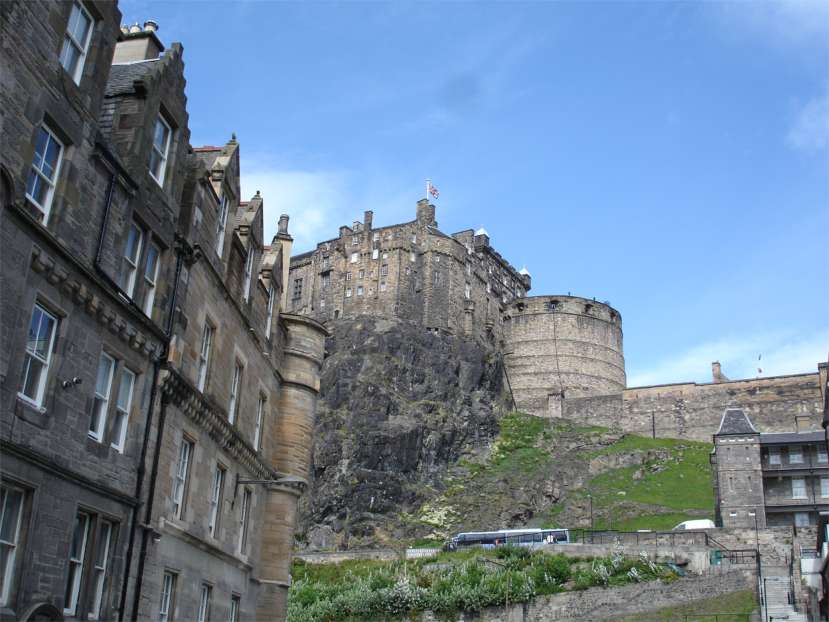
I took some of these photos from a tour bus. Our grandchildren insisted we went on the Horrible Histories tour, which was very entertaining – of course the ordinary commentary was available as well. From Waverley Bridge we went past the Scott Monument, along Princes Street, and circled round the streets until we were looking up at Edinburgh Castle towering above.
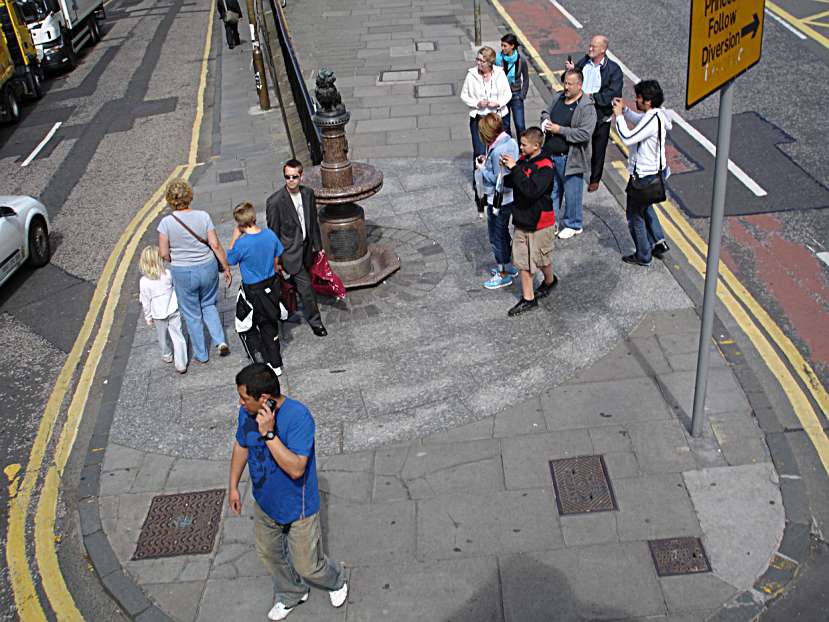
I just managed to take a photo from the bus looking down at Greyfriars Bobby as we went past.
We got off the bus at Lawnmarket.
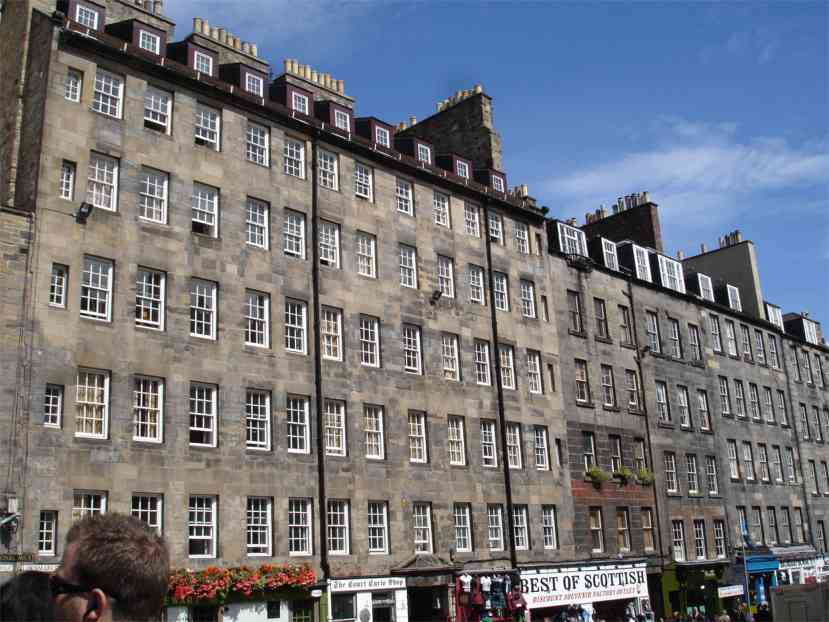
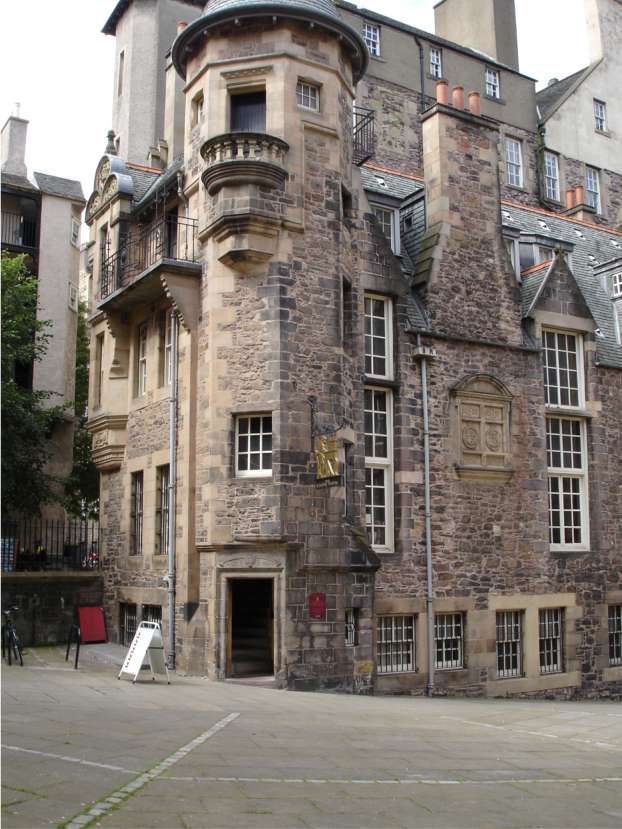
Just off Lawnmarket is Lady Stairs Close, where the Writers’ Museum is to be found. This Museum is in Lady Stair’s 17th century house. It’s a fascinating place full of things that belonged to Sir Walter Scott, Robbie Burns and Robert Lewis Stevenson. There are pictures, room displays containing Burns’s writing desk, Scott’s dining table and lots of memorabilia – including bibles, pipes and walking sticks. You can’t take photos inside but here is the outside.
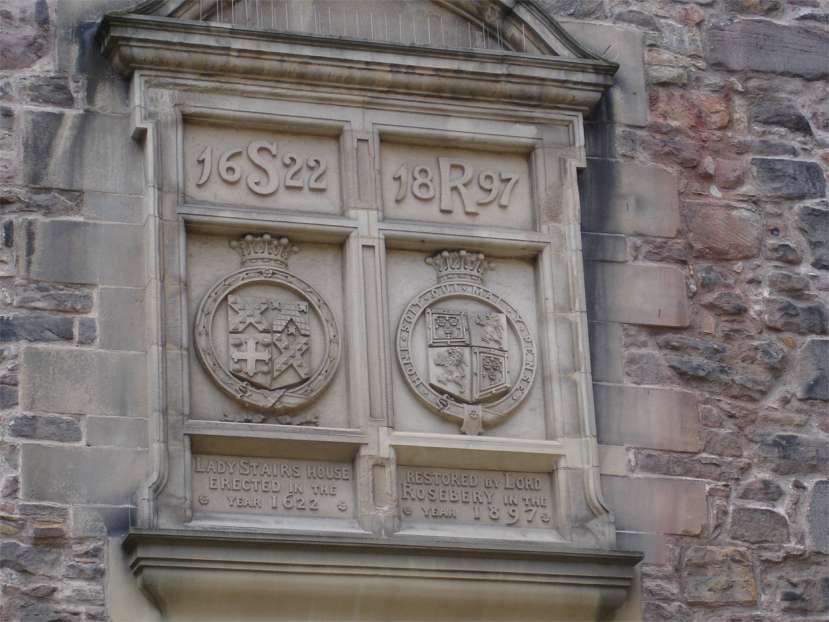
And the plaque in close up shows that the house was first built in 1622 and was restored in 1897.
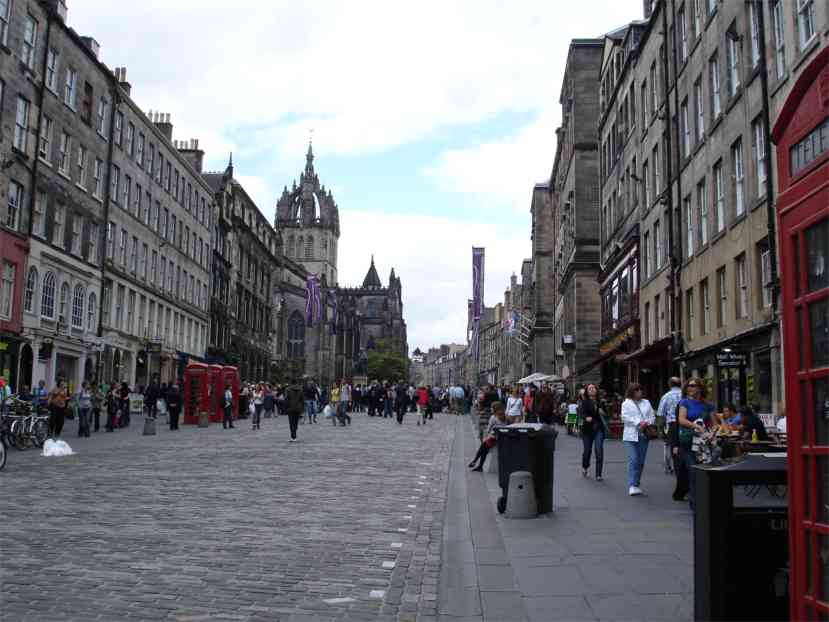
From there we walked down the Royal Mile.
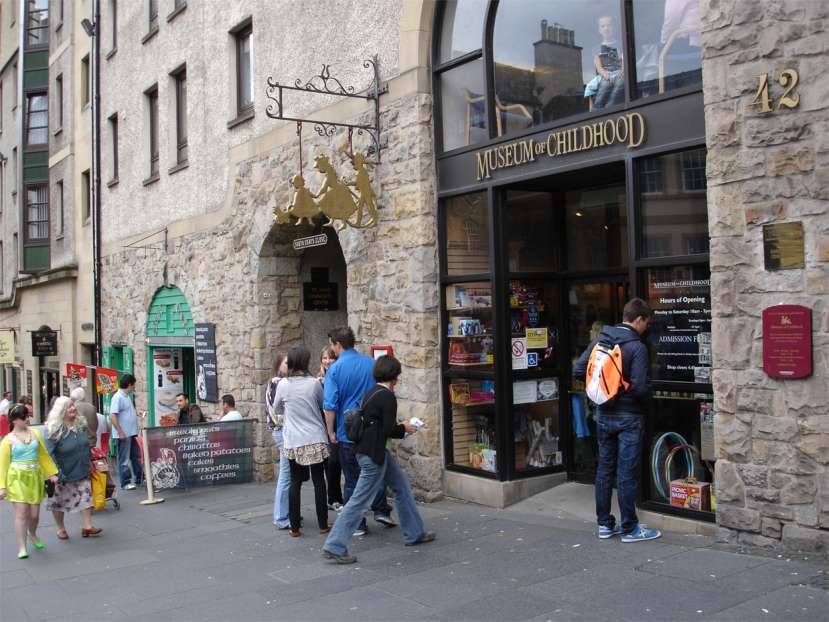
We stopped at a number of places including the Museum of Childhood, which took me right back to my own childhood. It’s full of toys and games of all sorts. I thought the display of dolls was scary – all standing to attention in glass display cases staring out at me. It reminded me of the terrifying dolls in the film, Barbarella. Much more comforting were the teddy bears and children’s books.
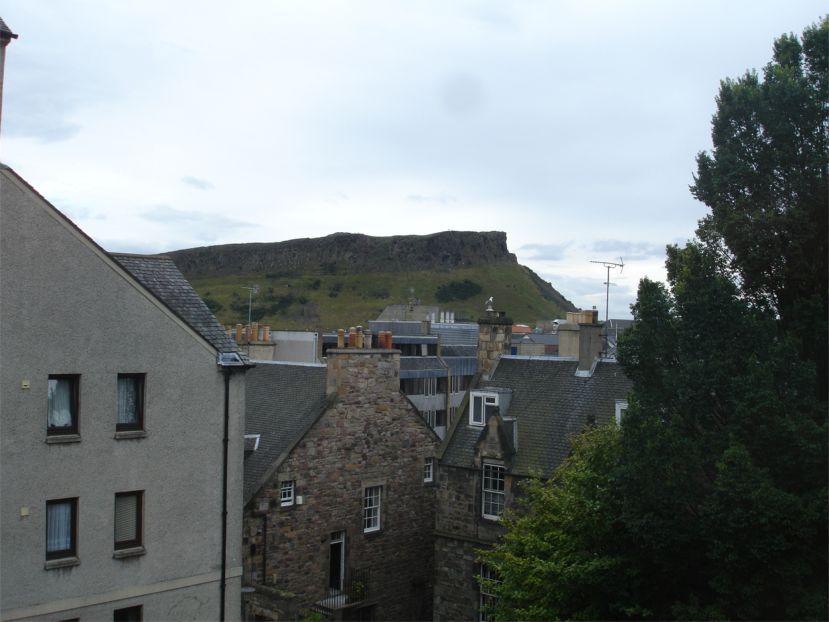
Finally here is a view of Arthur’s Seat, an extinct volcano.
 Weekend Cooking is hosted by Beth Fish Reads. It’s open to anyone who has any kind of food-related post to share: Book (novel, nonfiction) reviews, cookbook reviews, movie reviews, recipes, random thoughts, gadgets, fabulous quotations, photographs. For more information, see the welcome post.
One of my favourite cookery books is The Soup Bible and I’ve made, or adapted several of the recipes in it over the last few years. The book has sections on Light and Refreshing Soups, Rich and Creamy Soups, Winter Warming Soups, Hearty Lunch & supper Soups, On-Pot-Meal Soups and Special Occasion Soups. There are recipes from all round the world.
This week I had some asparagus in the fridge that had been there a few days – still within the use by date – so I thought I’d do something different with it. It seemed a shame to chop asparagus up and make soup with it but as it was a few days old I did just that. And it was absolutely delicious.
 To make it I chose the Asparagus Soup with Crab recipe in the Special Occasion Soups section of The Soup Bible and made it without the crab meat. It was really easy and kept the pure taste of the asparagus! This is my adaptation:
Serves 6 – 8
 If you want to do it like the recipe you need to thicken it with cornflour mixed with a little water (not the plain flour I used) after it has simmered and add half a cup of whipping cream and 6 -7 oz of white crab meat. I didn’t have the cream or the crab and it delicious without them.
 BooksPlease