
It’s not even August and already there are signs that autumn is on its way! In our garden the leaves are turning yellow.
And some have already fallen to the ground.

I’ll have to change my header photo!
An ABC Wednesday post for the letter A.
It’s not even August and already there are signs that autumn is on its way! In our garden the leaves are turning yellow.
And some have already fallen to the ground.
I’ll have to change my header photo!
An ABC Wednesday post for the letter A.
 I really enjoyed this novella by Minette Walters. Being a short mystery it is succinctly written and yet I could still imagine the characters and settings from the descriptions. The Tinder Box is aptly named – about a situation set to burst into flames at any moment.
Description from the book cover:
In the small Hampshire village of Sowerbridge, Irish labourer Patrick O’Riordan has been arrested for the brutal murder of elderly Lavinia Fanshaw and her live-in nurse, Dorothy Jenkins. As shock turns to fury, the village residents form a united front against Patrick’s parents and cousin, who report incidents of vicious threats and violence.
But friend and neighbour Siobhan Lavenham remains convinced that Patrick has fallen victim to a prejudiced investigation and, putting her own position within the bigoted community in serious jeopardy, stands firmly by his family in defence of the O’Riordan name.
Days before the trial, terrible secrets about the O’Riordans’ past are revealed to Siobhan, and the family’s only supporter is forced to question her loyalties. Could Patrick be capable of murder after all? Could his parents’ tales of attacks be devious fabrications? And if so, what other lies lurk beneath the surface of their world?
As the truth rapidly unfurls, it seems that Sowerbridge residents need to be very afraid. For beneath a cunning façade, someone’s chilling ambition is about to ignite . . .
My thoughts:
In some ways this is a theme-heavy book, dwelling as it does on prejudice, incitement to violence and vigilantism as the inhabitants of the village unite in their dislike of the O’Riordan family living in their midst. As the story unfolds it becomes clear that misunderstanding and ignorance are really the problem. I liked the way Minette Walters has structured The Tinder Box using flashbacks, moving between events that lead up to Patrick’s arrest and the aftermath.
For such a short book it is remarkably complex and layered and the ending with its alternative scenarios is excellent. I think I enjoyed it so much because it is so condensed – it made a refreshing change from the long and detailed books I’ve been reading recently.
 Kerrie’s Crime Fiction Alphabet came to the end last week, which left me wondering what were its highlights for me. Before I began I decided that I would use it to read books from my to-be-read list and in the main that is what I did.
The rules of the meme are that you have to write a blog post about crime fiction related to the letter of the week and your post MUST be related to either the first letter of a book’s title, the first letter of an author’s first name, or the first letter of the author’s surname.
I thought that I would try to stick to the authors’ names (either first or last) rather than the title and in the main that is what I did, with 21 of the letters.The letters A, P, R and S relate both to the authors’ names and to the titles.
Some were books by old favourites, such as Agatha Christie and some by new-to-me authors, such as Anne Zouroudi.
The ones I enjoyed the most (in A – Z order) are:
Here is the complete list:
My thanks go to Kerrie as I have thoroughly enjoyed reading through the Crime Fiction Alphabet and also reading what my fellow bloggers have read too – some of whom wrote about specific topics instead of sticking to the rules :) – I think they are most ingenious! Kerrie has listed a summary of the A- G posts, with the rest of the alphabet coming soon.
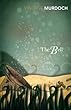 I first read The Bell years ago and it remained in my memory as an excellent book, but this time round I think my reading tastes have changed because, although I still liked it, I no longer found it so enchanting. Iris Murdoch wrote beautiful English, with detailed descriptions of the location – Imber Court, Imber Abbey and the lake and woods around them. But I just couldn’t work out the layout and that is actually relevant in this book. There was also too much detail about the thoughts and feelings of one of the characters – Michael Meade – for my liking, and yet for all the description he didn’t seem a real person, but more a mouthpiece for Murdoch’s philosophical thoughts. In fact most of the characters, with the exception of Dora, come across more as stereotypes than real people.
A lay community lives next to an enclosed order of nuns, a new bell is being installed and then the old bell, a legendary symbol of religion and magic is retrieved from the bottom of the lake. The legend of the bell is that it fell into the lake after a 14th century Bishop had cursed the Abbey when a nun was discovered to have a lover and had drowned herself. The various characters include Dora Greenfield who is staying at Imber Court whilst her husband Paul is researching the Abbey archives. Paul is thirteen years older and is an art historian. Dora had left him six months earlier because she was afraid of him and was returning for the same reason. She is a young woman, a rather silly young woman who thinks one thing and immediately says the opposite, but Paul is probably the most obnoxious character in the book – he is a manipulative bully. The other residents at Imber Court are a mixed-up bunch, there for both religious and other reasons. As the date for the installation of the new bell approaches their weaknesses begin to be exposed.
Much of the book is taken up with discussions and examining the thoughts of the characters about the relationship of goodness to power. On the surface everything appeared to Dora to be peaceful, but underneath stresses and strains are causing the community to diverge into two parties. It’s not just a matter of organisation but also of morals and there is an impending sense of evil and menace. Bearing in mind that The Bell was first published in 1958 this must have been quite a shocking book at the time – about the relationship between religion and sex and the angst and self-denial that it depicts.
For a rather more positive view of The Bell see The Senior Common Room.
We’ve had some lovely sunny, hot days recently, but today isn’t one of them.
It’s raining! It’s been raining all morning and looks set to rain for the rest of the day, so we won’t be sitting outside.

To participate in Alyce’s Saturday Snapshot meme post a photo (new or old) that you (or a friend or family member) have taken, but make sure it’s not one that you found online.
There came Death hurtling along the Boulevard in waning sepia light.
There came Death flying as a children’s cartoon on a heavy unadorned messenger’s bicycle.
There came Death unerring. Death not to be persuaded. Death-in-a-hurry. Death furiously pedalling. Death carrying a package marked *SPECIAL DELIVERY HANDLE WITH CARE* in a sturdy wire basket behind his seat.
 These are the opening lines of the Prologue, ‘Special Delivery’ in Joyce Carol Oates’s novel Blonde. The date is 3 August 1962 – the date of Marilyn Monroe’s death. It doesn’t give anything away – Marilyn’s death has been well documented even if it still remains under suspicion and speculation. Blonde tells the fictionalised story of Norma Jeane Baker, who became the beautiful ‘Fair Princess‘ of the movies.
The only difficulty I have in reading Blonde is the weight and size of the book – not ideal for reading in bed. And it has 738 pages – and I’m only on page 52.
Book Beginnings is hosted by Katy at A Few More Pages, where you can leave a link to your own post on the opening lines of a book you’re currently reading.
 BooksPlease