Saturday Snapshot: Bamburgh Castle

Last Monday we visited Bamburgh Castle on the coast in Northumberland overlooking the North Sea. It’s a dramatic sight, a huge castle extending over ¼ of a mile, built on a volcanic outcrop, 45 metres above sea level. (Click on the photos to enlarge.)

Bamburgh Castle from the carpark

Bamburgh Castle was bought by Lord Armstrong (who built Cragside) and renovated by him at the end of the 19th century. The castle still belongs to the Armstrong family, and is open to the public. It also hosts weddings and corporate events and has been used as a film location since the 1920s, featuring in films such as Ivanhoe (1952), El Cid (1961), Mary, Queen of Scots (1972), and Elizabeth (1998).

The entrance is through two gatehouse towers, which still have some of the original stonework. They were altered and added to in the 19th century.

Gatehouse Towers

From there you walk along the Battery Terrace, with its cannons facing the sea, placed there ready to defend the castle when Napoleon threatened to invade Britain.

Battery Terrace

From the Battery Terrace you can see Lindisfarne to the north and the Farne Islands to the south. Lindisfarne is just a dot on the horizon above the first cannon in the photo.

Inner Farne on the horizon

The photo below is of the Keep, which was originally built in the 12th century. It sits on a massive plinth to prevent attackers digging beneath it and setting fires to collapse it.

The Keep

And finally a view of Bamburgh Castle taken from the road from Seahouses to Bamburgh:

Bamburgh Castle taken from Seahouses

See Alyce’s blog At Home With Books for more Saturday Snapshots.

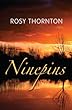
Ninepins by Rosy Thornton

I finished read Rosy Thornton’s book Ninepins a few days ago.  It’s a remarkable book about mothers and daughters, about growing up and relationships. It’s quite difficult to describe – it’s not exactly a thriller, although there is a mystery element to it and the tension  and suspense gradually build throughout the book. And it’s not exactly a romance, although there is a love story in there too. It’s about people, but there is a satisfying plot and beautiful descriptions of the locations – I learnt a lot about the Cambridgeshire Fens.

It rings true to life, with all the anguish and angst of bringing up children as Laura, a divorced single mum struggles to cope as her daughter Beth turns twelve. They live in an old tollhouse, called Ninepins – there used to be a bridge across the lode and the toll was 9d (nine pence), which over time morphed into ‘Ninepins’. To help out with her finances she rents out the self-contained pumphouse, converted from a fen drainage station, to students. Her new lodger is Willow, a 17-year-old student, with a troubled past. She has been in a care home and still needs Vince, her social worker for support. Laura is not sure what influence Willow will have on Beth, who is having difficulties making friends at her new school. When Beth gets into trouble at school, Laura becomes even more anxious and she doesn’t seem able to do right for doing wrong. Then there is Willow’s mother whose appearance on the scene brings about devastation.

This is a darker book than Rosy’s other books that I’ve read and it captures perfectly the precarious relationships between parents and children as they begin to grow up and feel independent. Just how much leeway should Laura give Beth, how much should she intervene in her life, how much should she monitor what Beth is doing are questions that Laura is trying to resolve. Willow’s and Vince’s appearance in their lives bring changes that Laura had just not considered.She knows a little about Willow’s background and what she does know bothers her immensely. It’s the relationships in this book that are the focal point as Laura, Beth and Willow come to terms with their situations. A gripping story that held my interest throughout.

  • Paperback: 320 pages
  • Publisher: Sandstone Press Ltd (16 April 2012)
  • Language English
  • ISBN-10: 1905207859
  • ISBN-13: 978-1905207855
  • Source: Author review copy
  • My Rating: 4.5/5

Monday Musing

MizB’s question this week for Musing Mondays is:

Other than working at a job, what is your biggest interruption to reading? What takes you away from your book(s)?

As I’m retired in theory I should have more time for reading. In practice, though, I don’t read more now than I did then and the things that take me away from reading are just the same as before – family, friends and hobbies, such as painting, visiting places and generally – life.

Blogging, of course, is one of those things, so I’m finishing off this post – it’s time to read!

Saturday Snapshot – our newest arrival!

We went to get the car MOT’d yesterday. Whilst we were waiting we walked down the road a little way to the Animal Rescue Kennels – just to have a look, you know. Actually we’d been thinking about going there for months, but yesterday was the day. And look who came home with us:

She’s two years old and a little timid and camera shy at the moment, but I managed to take this picture. Whitie, that’s the name she knows, so I think we’ll carry on calling her that – she comes when you call her name, is sitting where Lucy used to sit – on the computer room windowsill. Lucy died a year last January and it’s taken us this long to feel it’s right to get another cat. She’s seems to be settling quite well.

Here she is deciding whether to sit down or not – she did and she’s sitting there now as I type.

Here’s another photo – taken last night in the kitchen:

No doubt there’ll be a few more photos soon.

For more Saturday Snapshots go to Alyce’s blog At Home With Books.

Book Beginnings

Some books sit unread on my bookshelves for quite a long time before I read them. Then when I do pick them up I wonder why on earth I’ve left them so long – they look so good.

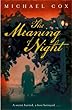
The Meaning of Night by Michael Cox is one of these many unread books of mine. I am shocked to see from my LibraryThing catalogue that I’ve had this book since August 2007, not long after I started writing this blog – no doubt I’d read about it on another book blog.

It begins:

After killing the red-haired man, I took myself off to Quinn’s for an oyster supper.

It had been surprisingly – almost laughably – easy.

The first chapter is called Exordium and a footnote explains that this means ‘an introduction to a treatise or discourse’. A second footnote tells me that ‘Quinn’s’ is a shell fishmonger and supper house at 40, Haymarket. So, not only is this a dramatic opening the first few lines tell me this is an historical murder mystery set in London, most likely to be in the Victorian period, all of which makes me want to read on.

Reading the back cover it seems that this book is following on in the tradition of Wilkie Collins and Charles Dickens, described as a ‘tale of obsession, love and revenge, played out amid London’s swirling smog’, an ‘extraordinary story of Edward Glyver, book lover, scholar and murderer.’

I think one of the reasons I haven’t read it before now is that not only is it nearly 600 pages long, my copy is printed in a small font!

Book Beginnings ButtonSee more Book Beginnings on Friday at Gilion’s blog Rose City Reader.


The Hanging Valley by Peter Robinson: a Book Review

There are 20 books in Peter Robinson’s Inspector Banks series (listed at Fantastic Fiction). I’ve read a few of them, completely out of order, but it doesn’t seem to matter too much as each one stands alone, although I suspect I’d get a better idea of Banks’s personal life if I had read them in order!
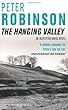
The Hanging Valley is the fourth one in the series.

Synopsis (from the back cover):

A faceless corpse is discovered in a tranquil, hidden valley below the village of Swainshead. And when Chief Inspector Alan Banks arrives, he finds that no-one is willing to talk. Banks’s frustration only grows when the identity of the body is revealed. For it seems that his latest case may be connected with an unsolved murder in the same area five years ago. Among the silent suspects are the Collier brothers, the wealthiest and most powerful family in Swainsdale. When they start use their influence to slow down the investigation, Inspector Alan Banks finds himself in a race against time…

My view:

As well as the Collier brothers, there are other suspects, including John Fletcher, a taciturn farmer, Sam Greenock and his wife Katy who own the local Bed and Breakfast guest house. There’s something not quite right about Katy, she’s obviously troubled and hiding something, and she is dominated by Sam. As I read on I thought the killer was first one character, then another and never really worked out who it was until quite near the end. I enjoyed the puzzle.

Detective Chief Inspector Alan Banks had been transferred to Eastvale from London two years earlier and is still getting to know the area. He’d moved from London because of the sheer pressure of the job and the growing confrontation between the police and citizens in the capital had got him down. Crime in Eastvale had been slack until this murder happened. And it’s complicated, the locals close ranks and Banks has to work hard to get information, first of all to discover who the victim was and why he had been killed. The trail leads him abroad to Toronto before Banks discovers the truth.

The Hanging Valley is rich in description, both of the Yorkshire Dales and of Toronto. (Peter Robinson was born in Yorkshire and now lives in Toronto.) The hanging valley sounds a beautiful spot, a small, secluded wooded valley with unusual foliage:

… the ash , alders and sycamores … seemed tinged with russet, orange and earth brown. It seemed … like a valley out of Tolkien’s ‘Lord of the Rings’.

… the valley clearly had a magical quality. It was more luxuriant than the surrounding area, its ferns and shrubs more lush and abundant, as if, Neil thought, God had blessed it with a special grace. (page 5)

All of which makes the discovery of the corpse so shocking, with its flesh literally crawling. So, I enjoyed this book on two levels – the mystery and the writing itself. I did think, though, that it could have been shorter and more concise, and some of the characters were rather indistinguishable which is why I rated it 3/5.

  • Paperback: 324 pages
  • Publisher: Pan; New edition (8 Nov 2002)
  • Language English
  • ISBN-10: 0330491644
  • ISBN-13: 978-0330491648
  • Source: I bought it