I saw this on Cathy’s blog Kittling Books who in turn found it on Margot Kinberg’s blog Confessions of a Mystery Novelist, (I can’t believe I missed it on Margot’s blog as I’m a regular reader of her excellent blog, but now I’ve had a look at Margot’s post and it was whilst I was away). A bit late in the day, but I thought I do it too!
What are you reading right now?
I usually have at least two books going at the same time, including one fiction and one non-fiction. At the moment, I’m reading The Steel Bonnets: the Story of the Anglo-Scottish Border Reivers by George MacDonald Fraser and In the Woods by Tana French, crime fiction – a police procedural/psychological thriller. I’ve also started reading After Elizabeth: the Death of Elizabeth and the coming of King James by Leanda de Lisle
Do you have any idea what you’ll read when you’re done with that?
Not really. I don’t like to plan too far ahead, but as I belong to a book club there’s always the next book for that, which is The Grass is Singing by Doris Lessing. Apart from that I’m not al all sure which book I’ll pick up next – maybe one of the next five books listed below, or not.
What 5 books have you always wanted to read but haven’t got round to?
- The Count of Monte Cristo by Alexander Dumas
- David Copperfield by Charles Dickens
- The Voyage Out by Virginia Woolf
- The Mill on the Floss by George Eliot
- Barchester Towers by Anthony Trollope
What magazines do you have in your bathroom/family room right now?
The Radio Times is the only magazine I buy regularly and now and then I buy the Leisure Painter.
What’s the worst book you’ve ever read?
There must be several, but I try to erase them from my mind and if they are so bad I don’t finish them anyway!
What book seemed really popular but you didn’t like?
I’m not keen on reading books that are over-hyped and usually wait a while before reading them. I wouldn’t say there are any I actually disliked, but I found The Time Traveler’s Wife quite disappointing.
What’s the one book you always recommend to just about everyone?
This is difficult. I always hesitate before recommending books to people, in fact I don’t do it if I don’t know the person.
What are your three favorite poems?
Pippa’s Song by Robert Browning
Not Waving but Drowning by Stevie Smith
The Road Not Taken by Robert Frost
Where do you usually get your books?
From a variety of sources, libraries, bookshops such as Barter Books for secondhand books, local shops and on-line – Amazon and secondhand booksellers such as World of Books, Bookdonors CIC etc. I also borrow books from family and friends.
Where do you usually read your books?
Mainly in bed, but really I can read anywhere, except whilst travelling because it makes me feel sick! I don’t often read outside though, it’s either too hot, too windy, too many insects or too chilly. When I was at work I used to read whilst waiting for the lift – it was so slow coming, I could read quite a lot there.
When you were little, did you have any particular reading habits?
I don’t think so. My parents used to tell me off for walking up and downstairs whilst reading – oh yes, and for reading in bed under the covers with a torch when I was supposed to be sleeping.
What’s the last thing you stayed up half the night reading because it was so good you couldn’t put it down?
I can’t do that – I just fall asleep.
Have you ever “faked” reading a book?
I don’t remember ever claiming to have read a book when I haven’t. There are books I think I’ve read but when I look at them I realise I haven’t €“ I just know the story either from a film or TV programme, just as there are books I don’t think I’ve read and then when I start reading I realise that I have!
Have you ever bought a book just because you liked the cover?
Yes, but it wasn’t just for the cover – the contents have to interest me too, but I am put off by some covers – headless women (usually on historical fiction), or lurid illustrations for example.
What was your favorite book when you were a child?
Oh dear, there were so many I just loved, different ones as I grew older. As a small child I loved Enid Blyton’s books, then the Heidi books, and Louisa May Alcott’s books. I can’t single out just one.
What book changed your life?
Pinkerton’s Sister by Peter Rushforth. The main character is Alice who is most definitely eccentric, nothing she does is what people expect of her. The book starts off: ‘The madwoman in the attic was standing at the window.’ Her neighbours think she is simple, strange and definitely mad and are outraged by what she says and does. It’s a bizarre story mainly seen through Alice’s mind which because she lives mainly in the world of books is a very strange place indeed. It’s funny, well ludicrous at times, full of literary and musical references and I got lost in it for hours. It was whilst I was trying to find out more about this book that I came across the world of book blogs – which then led me to writing my own blog.
What is your favorite passage from a book?
There are so many, but this one from To Kill a Mockingbird came to mind straight away:
€˜First of all,’ he [Atticus] said, €˜if you can learn a simple trick, Scout, you’ll get along better with all kinds of folks. You never really understand a person until you consider things from his point of view -‘
Who are your top 5 favorite authors?
I have many – the ones that come to mind right now are Hilary Mantel, Margaret Atwood, Agatha Christie, Ian Rankin, Ian McEwan, Ann Cleeves, Jane Austen and … that’s already more than five, so I’d better stop!
What book has no one heard about but should read?
I don’t like to say anyone ‘should’ read a book, but if you like 17th century British history and biography then Adrian Tinniswood’s book The Verneys of Claydon Verney: A true story of love, war and madness in seventeenth century England is the book for you. It’s based on the Verneys’ family correspondence, tens of thousands of their letters have survived and Adrian Tinniswood has made a superlative job of weaving together their family story from the family archives and placing it within the national context.
What 3 books are you an evangelist for?
I’ve recently ‘discovered’ John Steinbeck and loved his book, Cannery Row. Then there is One Fine Day by Mollie Panter-Downes and Little Boy Lost by Marghanita Laski.
What are your favorite books by a first-time author?
Standing Water by Terri Armstrong
Dissolution by C J Sansom
Quite Ugly One Morning by Chris Brookmyre
Playing with the Moon by Eliza Graham
Emotional Geology by Linda Gillard
The Crossing Places by Elly Griffiths
What is your favorite classic book?
I always used to say my favourite book is Jane Austen’s Pride and Prejudice. Last year I read To Kill a Mockingbird by Harper Lee, which is now a favourite too.
Five other notable mentions?
The Poisonwood Bible by Barbara Kingsolver
The Long Song by Andrea Levy
A Judgment in Stone by Ruth Rendell
The Season of the Witch by Natasha Mostert
Half of a Yellow Sun by Chimamanda Adichie
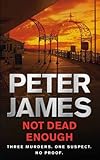 Half of them are crime fiction(*) and my Crime Fiction Pick of the Month is Not Dead Enough by Peter James. For more nominations for the Crime Fiction Pick of the Month see Kerrie’s blog – Mysteries in Paradise.
 But my all-round Best Book of the Month is a tie between Shakespeare’s Restless World by Neil MacGregor, a non-fiction book that beautifully recreates Shakespeare’s world through examining twenty objects;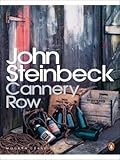
 I have had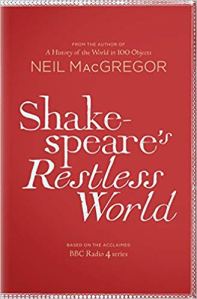
 BooksPlease