November’s Books

I read 9 books in November, all of them fiction. Two are books from my TBR shelves, one is a re-read, two are library books, three are books I’ve bought recently and one is a review copy. The links are to my posts on the books.
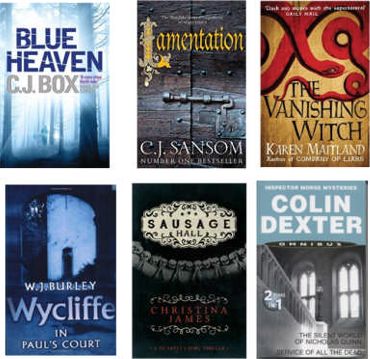
 

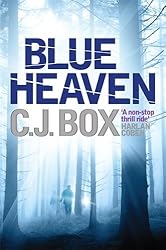
  1. Blue Heaven by C J Box – TBR. I loved it – it’s written in a style that appeals to me -straightforward storytelling, with good descriptions of locality and characters, secondly characters that are both likeable and downright nasty, but not caricatures, and finally the ending was what I hoped, and also dreaded it would be.
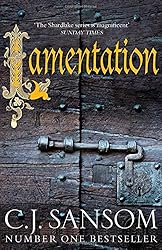
  2. Lamentation by C J Sansom – the sixth Matthew Shardlake book an ingenious crime mystery, full of suspense and tension, set in 1546, the last year of Henry VIII’s life.
  3. The Woods by Harlan Coben – see below.
  4. The Vanishing Witch by Karen Maitland – Library Book – set in Lincoln during the reign of Richard II. I liked the elements of the supernatural and suspicions of witchcraft in this book and the historical setting, but it just didn’t have the magic spark that I’d enjoyed in her other books that I’ve read.
  5. Wycliffe in Paul’s Court by W J Burley – Library Book – Wycliffe investigates two violent deaths at Paul’s Court. W J Burley was very good at creating believable people caught up in extraordinary situations. An enjoyable read.
  6. Dominion by C J Sansom – see below.
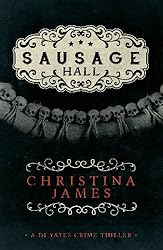
  7. Sausage Hall by Christina James – Review Book – set in the South Lincolnshire Fens, a crime mystery with a sinister undercurrent exploring the murky world of illegal immigrants, and a well researched historical element. I enjoyed it.
  8. Service of All the Dead by Colin Dexter – TBR –  a superbly constructed puzzle as Morse uncovers an intricate web of lies and deceit whilst he investigates the death of a churchwarden at St Frideswide church. Compelling reading! 
  9. Jane Eyre by Charlotte Bronte – a re-read, see below.

I’m always behind these days with reviews – so here are some brief notes about those books I haven’t reviewed:
The Woods by Harlan Coben – this was a free book on Kindle and as I hadn’t read anything by Coben I decided to see if I liked it. It”s a stand-alone mystery and I did like it. It’s fast paced, about the murder of two teenagers at a Summer Camp twenty years earlier – two other teenagers disappeared and were presumed dead. Paul Copeland, now a County Prosecutor, is asked to identify a dead body, who turns out to be one of the missing teenagers. His sister was the other missing person – is she still alive – and who was the murderer? Good characterisation and a good plot kept me guessing to the end.  A good choice.

I wasn’t too sure that I would like Sansom’s  Dominion, because I’m not very keen on alternative history, but I was pleased to find that I enjoyed it more than I thought I would. It’s set in 1952 in a Britain that had surrendered to Nazi Germany in 1940 after Dunkirk. And I finished it with relief that this nightmare scenario had never actually taken place.
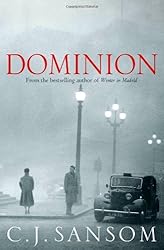
Germany and Russia are still at war, whilst in Britain an underground resistance organization headed by Winston Churchill, who is now in hiding, is alone in opposing Nazi authoritarian rule. The streets are patrolled by violent Auxiliary Police and British Jews are dragged from their homes and sent to camps awaiting transportation to the Isle of Wight on their way to gas chambers in the East. Sansom has painted a scary alternate Britain, showing how people are ground down, almost inevitably, into accepting the prospect of racial genocide and eugenic sterilisation. It sent shivers down my spine.

It is by no means a perfect book, it’s too long for example and I thought the ending was rather unconvincing, but I gave it 5 stars on Goodreads.  Maybe 5 stars is a bit generous but each time I had to stop reading I couldn’t get it out of my mind and was keen to get back to it. It’s the ‘what if’ aspect and Sansom’s account of the dangers of nationalism that made it compelling reading for me.
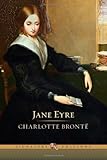
And finally Jane Eyre by Charlotte Brontë.  I first read this many years ago and have since seen TV versions of it. This time round I was struck by Jane’s independence of mind, her powers of reasoning and strength of character. It’s not just the romantic love story I read as a young teenager. The romance is still there of course, but the feminism of Charlotte Brontë expressed through Jane’s character is very evident to me now. I picked up the book as a result of visiting the Brontë Parsonage Museum at Haworth, which I intend to write about some time.

My favourite, the one that I enjoyed the most, is Blue Heaven by C J Box.
Looking Ahead

I rarely plan ahead which books I’m going to read, but as it’s 1 December tomorrow and not much reading time left in the year I thought I’d concentrate on reading from my to-be-read shelves. These are the books I think I’ll read:

Dec bks 2014

From the bottom up they are:

  • I’m currently reading Portrait in Sepia by Isabel Allende and finding it a bit of a struggle – mainly because the font is quite small and it’s difficult to see except in bright lighting – not good for reading in bed. This is historical fiction, a family epic set at the end of the nineteenth century in Chile and San Francisco.  Isabel Allende is a new-to-me author.
  • The Soul of Kindness by Elizabeth Taylor, according to the book jacket this is a study in self-deception of a young newly married woman who believes she is ‘the soul of kindness’ and yet she wrecks everyone’s life she comes in contact with. I’ve not read any of Elizabeth Taylor’s books before (the author, not the actress).
  • An Awfully Big Adventure by Beryl Bainbridge – set in 1950 this is also historical fiction. A Liverpool repertory theatre company are rehearsing its Christmas production of Peter Pan. The story centres around Stella, the assistant stage manager. I’ve enjoyed the Beryl Bainbridge books I’ve read so far, so I’m hoping this one is just as good.
  • And finally crime fiction, an Agatha Christie book because I haven’t read one of hers for a while. This is Hallowe’en Party, with Poirot and Ariadne Oliver in search of the killer of Joyce, a boastful thirteen-year-old found drowned in an apple-bobbing tub.

It remains to be seen if these are the books I’ll read in December!

Service of All the Dead by Colin Dexter

Colin Dexter 001

A question on the TV show Pointless about the novels of Colin Dexter reminded me I have a few of his books to read, Service of All the Dead being one of them – and it was one of the pointless answers too! So that gave me the push to read it.  My copy is a secondhand book – an Omnibus containing  The Silent World of Nicholas Quinn as well as Service of All the Dead.

It really is one of the most puzzling crime fiction books I’ve read – if not the most puzzling! CI Morse sums it up himself:

There are some extremely odd points in this case, Lewis – or rather there were – each of them in itself suggestive but also puzzling. They puzzled all of us, and perhaps still do to some extent, because by the time we’d finished we’d got no less than five bodies on our hands and we were never in a position to learn what any of the five could have told us. (page 295)

Morse was on holiday, bored and at a loose end, when, stepping off a bus near St Frideswide’s Church in Oxford, he saw a notice advertising a jumble sale at the church – it seemed to him pre-ordained that he should enter the church. This set in motion his fascination with the death of the churchwarden, killed in the church the previous year and his subsequent discovery of the deaths of four more people. His interest is enhanced by the attraction he feels for Ruth Rawlinson, who cleans the church.

Aided by Sergeant Lewis, he digs into the history of the churchwarden, the vicar and members of the church and uncovers an intricate web of lies and deceit. Morse acts on instinct and consequently both Lewis and myself were in the dark for a great part of this book. He proposes several motives for the murders and alternate scenarios of what had happened before untangling the complex mess. There are plenty of red herrings and twists and turns.

Even though I was lost in the plot I found the book compelling reading – it’s a superbly constructed puzzle. This is certainly not a police procedural in the normal sense – there is little account of forensic evidence for example. It is strong on character and on place. The scene of the murders is St Frideswide’s, a fictional church, possibly based a couple of Oxford churches, St Michael-by-the-North-Gate with a Saxon tower and St Mary Magdalen and it is there in the tower that Morse suffers from his great fear of heights.

Service of All the Dead was first published in 1979. I suppose I must have seen the TV version of this book, as I watched all the episodes and this one was shown in 1987 – I don’t remember it! Inevitably as I read it I could see John Thaw as Morse and Kevin Whately as Lewis.

Sausage Hall by Christina James

When the publishers of Sausage Hall emailed me offering a review copy of the book I thought it sounded interesting, although I wasn’t keen on the title – I thought it sounded a bit gimmicky and it nearly putting me off reading it.  But I’m glad it didn’t because I would have missed out on a good story, a crime mystery with a sinister undercurrent exploring the murky world of illegal immigrants, and a well researched historical element. I enjoyed it.

Sausage Hall is the third book in the DI Yates series and although I haven’t read the first two that wasn’t a problem – it stands well on its own, but I’d like to read the two earlier books. This is set in the South Lincolnshire Fens and is an intricately plotted crime mystery, uncovering a crime from the past whilst investigating a modern day murder.

Synopsis from the back cover:

Sausage Hall: home to millionaire Kevan de Vries, grandson of a Dutch immigrant farmer. De Vries has built up a huge farming and food packing empire which extends, via the banana trade, to the West Indies. But Sleazy MD, Tony Sentance, persuades de Vries to branch out into the luxury holiday trade. De Vries and wife, Joanna, take the first cruise out to explore the potentially lucrative possibilities. However, back at home, a break-in at Sausage Hall uncovers a truly gruesome historical discovery. And when a young employee of de Vries is found dead in the woods, D.I. Yates is immediately called in … 

The narrative switches between the first person present tense (Kevan) and the third person past tense, which took me a bit to get used to. Actually I thought this worked very well; even though the use of the first person present tense usually irritates me, it didn’t in this book and it gives a good insight into Kevan’s character as well as providing essential information about his background and relationships.

I particularly liked DC Juliet Armstrong, DI Tim Yates’ colleague – the two make a good combination, even though Juliet spends a good part of the book isolated in hospital with Weil’s disease, having been bitten by a rat. In fact of the two characters I thought Juliet was the most clearly defined. Maybe a second reading would help clarify Yates’ character for me, or maybe this is where not reading the two earlier books is a drawback. This is not a book you can read quickly as there are plenty of characters and several plot threads that need to be kept in my mind as you read the book.

I liked the historical elements of the plot and the way Christina James has connected the modern and historical crimes, interwoven with the history of Kevan’s home, Laurieston House, known to the locals as ‘Sausage Hall’ and the secrets of its cellar – just what is the link between Cecil Rhodes, the Victorian financier, statesman, and empire builder of British South Africa, and the Jacobs family who were the previous owners of Sausage Hall?

Added to this is the mystery of the death of a young woman found dead in the woods near the De Vries food-packing plant in Norfolk. It seems she was employed at the plant although the supervisors there deny any knowledge of her. DI York suspects she is an Eastern European illegal immigrant. And as for Tony Sentance, just what is his hold over Kevan and his wife and their son, Archie? It was only just before the end that I suspected the truth. 

Publishers’ Biographical Note: ‘C.A. James was born in Spalding and sets her novels in the evocative Fenland countryside of South Lincolnshire. She works as a bookseller, researcher and teacher. She has a lifelong fascination with crime fiction and its history. She is also a well-established non-fiction writer, under a separate name.’

There is more information about Christina James and her books on her blog The earlier DI Yates books are In the Family and Almost Love.

  • Paperback: 256 pages
  • Publisher: Salt Publishing (17 Nov 2014)
  • Language: English
  • ISBN-10: 1907773827
  • ISBN-13: 978-1907773822
  • Source: review copy from the publishers

What's In A Name 2015

The eighth annual What’s In A Name Challenge is being hosted again next year by Charlie at The Worm HoleWhat's in a name 2015

The challenge runs from January to December. During this time you choose a book to read from each of the following categories (Charlie has included examples of books you could choose in brackets):

  • A word including €˜ing’ in it (The Time Of Singing, Dancing To The Flute, Lex Trent Fighting With Fire) These examples are verbs but you can of course use other words.
  • A colour (The Red Queen, White Truffles In Winter, On Gold Mountain)
  • A familial relation (Daughter Of Smoke And Bone, Dombey And Son, My Cousin Rachel) By all means include in-laws, step, and halves.
  • A body of water (The River Of No Return, Black Lake, Beside The Sea)
  • A city (Barcelona Shadows, Shanghai Girls, Under The Tripoli Sky)
  • An animal (Black Swan Rising, The Leopard Unleashed, The Horse And His Boy)

The books may be in any form (audio, print, e-book). It is preferred that the books don’t overlap other challenges, but it’s not against the rules. Books cannot, however, overlap categories and it’s not necessary to make a list of books before hand.

I’ve checked my books and found plenty of choice for the category of books with the word ‘ing‘ in the title and a some for the other categories, but I’m not listing them here (too many) and will wait and see what I do eventually read.

For full details and the sign up post go to The Worm Hole.

Lamentation by C J Sansom

Once again I am behind myself with writing about the books I’ve read! So here are just a few thoughts about C J Sansom’s historical novel, Lamentation, the sixth Matthew Shardlake book.

I have enjoyed the earlier books in the series so I had great expectations for Lamentation and I wasn’t disappointed. It’s set in 1546, the last year of Henry VIII’s life. Shardlake, a lawyer is asked by Queen Catherine (Parr) for help in discovering who has stolen her confessional book, Lamentation of a Sinner. What I like about these books is their historical setting and the Historical Notes giving yet more background to the period and emphasising that because the sources are ‘very thin’ that inevitably this is Sansom’s own interpretation of events and clarifying that Catherine Parr’s book was not, in the real world, stolen.

The book evokes the people, the sights, smells and atmosphere of Henry’s last year and at the same time it’s an ingenious crime mystery, full of suspense and tension. It begins as Shardlake is ordered to watch the burning at the stake of Anne Askew and other heretics (a real event). I’m not good at reading horrific scenes, but I managed this one without too much mental aversion of my eyes. Along with the mystery of the missing book, Shardlake is working on the Cotterstoke dispute between rival siblings, and has problems at home with his domestic servants.

I was also very taken with Shardlake’s introduction in Lamentation to William Cecil, Mary Tudor and a young Elizabeth I. I hope Sansom has more Shardlake books in mind.