The Spy Who Came in from the Cold by John le Carré

I’ve recently read John le Carré’s biography by Adam Sisman and inevitably it made me want to read le Carré’s books. I decided to start with his third novel, The Spy Who Came in from the Cold, first published in 1963.

Blurb:

a gripping story of love and betrayal at the height of the Cold War. This Penguin Modern Classics edition includes an afterword by the author and an introduction by William Boyd, author of Any Human Heart.

Alex Leamas is tired. It’s the 1960s, he’s been out in the cold for years, spying in the shadow of the Berlin Wall for his British masters. He has seen too many good agents murdered for their troubles. Now Control wants to bring him in at last – but only after one final assignment. He must travel deep into the heart of Communist Germany and betray his country, a job that he will do with his usual cynical professionalism. But when George Smiley tries to help a young woman Leamas has befriended, Leamas’s mission may prove to be the worst thing he could ever have done. In le Carré’s breakthrough work of 1963, the spy story is reborn as a gritty and terrible tale of men who are caught up in politics beyond their imagining.

My view:

This is a dark, tense book and quite short, just 252 pages. It’s complicated and although the language le Carré uses is clear and straight forward at times I wasn’t sure just what was going on, what lay behind the scenes – just what was Leamas up to, amidst the various deceptions and subterfuges? George Smiley does appear briefly in the book, but is there throughout in that he is masterminding Leamas’ mission.

Back from Berlin where he had seen his last agent killed whilst trying to cross the Berlin Wall, Leamas is apparently no longer useful. He goes to seed whilst working out his contact in the Banking Section, transforming into a drunken wreck no longer of use to the Secret Services, left without any money or a job until he finds work as a helper in a library for Psychical Research. Here he meets Liz Gold, who then unwittingly gets drawn into Smiley’s plan.

The atmosphere throughout is of secrecy, manipulation, of human frailty and its duplicitous nature. As the German, Fiedler says for a secret agent:

… deception is first a matter of self-defence. He must protect himself not only from without, but also from within, and against the most natural of impulses; though he earns a fortune, his role may forbid him the use of a razor, though he  be erudite, it can befall him to mumble nothing but banalities; though he be an affectionate husband and father, he must under all circumstances withhold himself from those in whom he should naturally confide. (page 143)

By the end of the book Leamas is in despair as his mission seems to have failed. Liz can’t work out which side he is on and he says:

What do you think spies are: priests, saints, martyrs? They’re a squalid procession of vain fools, traitors too, yes; pansies, sadists and drunkards, people who play cowboys and Indians to brighten their rotten lives. (page 243)

I hate it; I hate it all; I’m tired. But it’s the world, it’s mankind that’s gone mad. We’re a tiny price to pay … but everywhere’s the same, people cheated and misled, whole lives thrown away, people shot and in prison, whole groups and classes of men, written off for nothing. (pages 244-5)

But then again did his mission fail? This is one of those books that I find so hard to write about without giving away too much of the plot – the introduction by William Boyd begins with this statement, ‘New readers are advised that this Introduction makes details of the plot explicit.‘ And indeed it does. I was glad I read it after reading the book, though, as it also gives an interpretation that I found helpful – in particular just what Boyd thought was meant by ‘coming in from the cold‘.

This fulfils the “Broken Object” category on the Silver Vintage Scavenger Hunt card.

My Week in Books: 27 July 2016

This Week in Books is a weekly round-up hosted by Lypsyy Lost & Found, about what I’ve been reading Now, Then & Next.

IMG_1384-0

A similar meme,  WWW Wednesday is run by Taking on a World of Words.


Now:
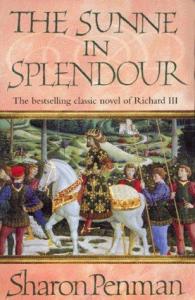
I’m reading The Sunne in Splendour, historical fiction about Richard III:

Blurb:

Richard, last-born son of the Duke of York, was seven months short of his nineteenth birthday when he bloodied himself at the battles of Barnet and Tewkesbury, earning his legendary reputation as a battle commander in the Wars of the Roses, and ending the Lancastrian line of succession.

But Richard was far more than a warrior schooled in combat. He was also a devoted brother, an ardent suitor, a patron of the arts, an indulgent father, a generous friend. Above all, he was a man of fierce loyalties, great courage and firm principles, who was ill at ease among the intrigues of Edward’s court. The very codes Richard lived by ultimately betrayed him.

But he was betrayed by history too. Leaving no heir, his reputation was at the mercy of his successor, and Henry Tudor had too much at stake to risk mercy. Thus was born the myth of King Richard III, the man who would stop at nothing to gain the throne.

Filled with the sights and sounds of battle, the customs and love of daily life, the rigours and dangers of Court politics and the touching concerns of very real men and women, The Sunne in Splendour is a richly coloured tapestry of medieval England.

Then: I’ve recently finished, The Spy Who Came In From The Cold, a spy thriller set in the Cold War period.

Blurb:

Alex Leamas is tired. It’s the 1960s, he’s been out in the cold for years, spying in the shadow of the Berlin Wall for his British masters. He has seen too many good agents murdered for their troubles. Now Control wants to bring him in at last – but only after one final assignment. He must travel deep into the heart of Communist Germany and betray his country, a job that he will do with his usual cynical professionalism. But when George Smiley tries to help a young woman Leamas has befriended, Leamas’s mission may prove to be the worst thing he could ever have done. In le Carré’s breakthrough work of 1963, the spy story is reborn as a gritty and terrible tale of men who are caught up in politics beyond their imagining.

Next: There are several books I want to read next, mainly the books on my 20 Books of Summer list, but I’ve not been doing very well with that this month and the book that’s really beckoning me right now is The Woman Who Walked Into The Sea by Mark Douglas-Hume. I reserved this at the library and after waiting weeks for it I collected it yesterday. It’s the second in his Sea Detective series. I loved the first one, The Sea Detective and hope this will be just as good.
Blurb:

Cal McGill is a unique investigator and oceanographer who uses his expertise to locate things – and sometimes people – lost or missing at sea.

His expertise could unravel the haunting mystery of why, twenty-six years ago on a remote Scottish beach, Megan Bates strode out into the cold ocean and let the waves wash her away.

Megan’s daughter, Violet Wells, was abandoned as a baby on the steps of a local hospital just hours before the mother she never knew took her own life.

As McGill is drawn into Violet’s search for the truth, he encounters a coastal community divided by obsession and grief, and united only by a conviction that its secrets should stay buried…

But I know that I’m not too good at predicting what I’ll read next, so it could be something else instead.

Dunstanburgh Castle

Dunstanburgh Castle P1020073

I think that Northumberland is one of the loveliest parts of the United Kingdom, with the Cheviot Hills and in particular the beautiful golden sands along the coast of the North Sea. It also has a large share of castles. Since we moved here we’ve visited all of the coastal castles, except that is the ruins of the castle at Dunstanburgh. It’s a spectacular ruin standing alone on the coast on an isolated headland between Embleton and Craster, looking out over the North Sea.

Last Tuesday we decided it was time for us to go there. It was a lovely hot, sunny day and we walked from the car park down the road to the little village and harbour at Craster, well known for its kippers.

Craster P1020067

From there it’s about a mile and a half walk northwards along the coast to the castle, which is owned by the National Trust (NH) and managed by English Heritage(EH). But we never actually got to the castle, because the heat defeated us and my knee, which has been a problem for a few months now, became painful so we only walked about halfway there, then turned back. I took a few photos zooming in as close as I could:

Dunstanburgh Castle P1020072

Thomas, Earl of Lancaster began building Dunstanburgh Castle in 1313. He was the wealthiest nobleman in England at the time and later took part in the barons’ rebellion against Edward II, resulting in his execution in 1322. John of Gaunt modernised it in the 1380s and later during the Wars of the Roses it became a Lancastrian stronghold, finally falling into ruin in the 16th century.

We will go there again to see more. At least we enjoyed the coastal walk and the view of the castle, despite the heat. And as always I was trying to visualise what it must have been like when it was new and how it had changed over the centuries, thinking of the battles that it had seen, of all the people who had lived and died there.

The History of Modern Britain by Andrew Marr

I’ve taken quite a long time (nearly two months) to read Andrew Marr’s The History of Modern Britain, which covers the post World War II period up to 2006, with an added introduction in the paperback edition written in 2008. This is a brief review of a very long and detailed book – too long and detailed for me to sum up meaningfully in a few paragraphs.

So, here is the blurb from the back cover:

This is an account of great political visions – and how they were defeated – and of the resilience, humour and stroppiness of the British public. From the Second World War onwards, Britain has been a country on edge: first of invasion, then of bankruptcy, then on the vulnerable front line of the Cold War, and later in the forefront of the great opening up of capital and migration now reshaping the world. This history follows all the political and economic stories, but deals too with comedy, cars, the war against homosexuals, Sixties anarchists, oil-men and punks, Margaret Thatcher’s wonderful good luck, the true heroes of British theatre, and the victory of shopping over politics.

I wanted to read this book after watching Andrew Marr’s BBC 2 series, History of Modern Britain, which was first shown in 5 episodes in 2007 –  but it was the EU Referendum that nudged me into reading it this year. Like many others, I’ve now become addicted to news and comment programmes, but my knowledge of modern history, even though, or maybe because, I’ve lived through a lot of it, is sketchy, so it was fascinating, if somewhat scary, to read about events I remembered or had half-forgotten.

It’s an obvious statement, but still true, that Britain has changed since 1945 to be almost unrecognisable today and inevitably it is still changing. This book shows how we were then and how we got to where we are today. It’s mainly a political and economic history, with short sections on social and cultural events thrown into the mix.

Despite its length and complexities it is a readable book, which doesn’t surprise me as Andrew Marr is a journalist, TV presenter and political commentator. He was born in Glasgow in 1959. He studied English at the University of Cambridge and has since enjoyed a long career in political journalism, working for the Scotsman, the Independent, the Daily Express and the Observer. From 2000 to 2005 he was the BBC’s Political Editor. He has written and presented TV documentaries on history, science and politics, and presents the weekly Andrew Marr Show on Sunday mornings on BBC1 and Start the Week on Radio 4.

  • Paperback: 672 pages
  • Publisher: Pan; Reprints edition (6 Mar. 2009)
  • Language: English
  • ISBN-10: 0330511475
  • ISBN-13: 978-0330511476
  • Source: my own copy

Reading challenges: Mount TBR Reading Challenge and Read Scotland.

Sandlands by Rosy Thornton

SandlandsSandlands is a beautiful collection of short stories that held me spellbound from start to finish. This is all the more extraordinary as I am not a great fan of short story collections. I often find that they leave me feeling that something is missing – either the storyline is not developed enough, or the characters are not convincing, or that they are just too trite or banal. In other words that they are disappointing.

Not so with Sandlands – I think this is a special collection of well written stories set in the Suffolk landscape, describing real people, and containing well- researched detail into myths and folklore, wildlife, and environmental changes that slips seamlessly into the fiction. They are just the right length for me, perfect little cameos each one complete and satisfying – that’s not to say that all the ends are neatly tied up, as some, such as Nightingale’s Return, about an Italian visiting the farm where his father had worked  as a prisoner of war, end leaving me wondering what happened next, or rather just what had happened in the past.

The individual stories are varied, some looking back to the past, some are sad leaving me with tears in my eyes, and some have a supernatural element. I loved all of them, but a few are outstanding, for example, Curlew Call in which a teenager spends time during her gap year living in an old house overlooking the the salt marshes, as a companion to Agnes, an old lady who is wheel-chair bound. She is fascinated by the landscape and the wildlife, in particular the curlews, calling out across the reed beds each evening, before she goes to sleep:

You wonder what they’re doing out there in the dark, sleepless and crying like that. And if you lie still and listen – really  listen – there’s something so pitiful about the sound, it could nearly break your heart. like someone whistling hopelessly over and over for a dog that’s lost. (pages 220 – 221)

Agnes paints, but not the usual East Anglian landscape of sky and clouds with a low horizon. I was really taken with the descriptions of her paintings, nearly all foreground, with reeds at the top and the rest of the painting taken up with the mudflats, showing the swirls and squiggles left by the tide. And the colours she’d used held my attention:

You think that mud is only grey and brown but when you look properly, the way Agnes had, you can see she’s right, and that it’s also the blackest black, and pure white, and it holds glints of red and gold and ochry yellow, and reflected blues and greens, and deep, imperial purple. (page 226)

As the story unfolds, so does the story of Agnes’ life.

And I finished reading the final story, Mackerel, with tears in my eyes when I came to the last paragraph, even though I had begun to realise what was inevitably the outcome. This is the story of a grandmother and her granddaughter, Hattie, set in a fishing village near the Suffolk sea. Ganny, as Hattie calls her has lived all her eighty nine years in the same place and is expert at handling and cooking fish.

Hattie, by way of contrast has an honours degree in marine ecology, has travelled the world, but also loves the Suffolk landscape and the world of her grandparents – the sights, smells and Ganny’s cooking, kippers, fish pie and above all the mackerel. This story is filled with images of Ganny filleting the mackerel, coating them in oatmeal to fry in butter, or to bake in greaseproof sprinkled with lemon or cider in a tight parcel. It made my mouth water reading about it.

As in Curlew Call, Ganny’s life unfolds and this story too is full of colour, this time of the sand instead of the mudflats:

This is a land of sand. The earth hereabouts is nothing but; it’s a wonder anything grows in it at all. On the common it’s a powder grey, soft as ash and lifted by the the slightest breeze, but on the roads it’s as golden yellow as any treasure island beach.

… You could almost fancy it the work of strange secret tides which rise in the night to cover the fields and lanes, then slip away before daylight to leave new spits and spars like a signature on the landscape. A land with the imprint of the sea. (page 256)

It’s impossible for me to do justice to these stories. If you like strong, atmospheric stories, stories that bring to life the world of the past, tying them to the present, stories of family life, of the natural world, of folklore and the mystery and wonder of it all then you’ll love this book as much as I did.

With grateful thanks to Rosy Thornton for sending me this lovely book to review. It’s published tomorrow. And she has also written full length novels that captivated as much as this collection – do read them. For more details see her website.

  • Paperback: 320 pages
  • Publisher: Sandstone Press Ltd (21 July 2016)
  • Language: English
  • ISBN-10: 191098504X
  • ISBN-13: 978-1910985045

First Chapter, First Paragraph

First chapterEvery Tuesday Diane at Bibliophile by the Sea hosts First Chapter First Paragraph Tuesday Intros, where you can share the first paragraph, or a few, of a book you are reading or thinking about reading soon.

I’m just about to start reading Moon Tiger by Penelope Lively. It won the Booker Prize in 1987.

It begins:

I’m writing a history of the world.’ she says. And the hands of the nurse are arrested for a moment; she looks down at this old woman, this ill old woman. ‘Well, my goodness, the nurse says. ‘That’s quite a thing to be doing, isn’t it?’ And then she becomes busy again, she heaves and tucks and smooths – ‘Upsy a bit, dear, that’s a good girl – then we’ll get you a cup of tea.’

Synopsis:

Claudia Hampton – beautiful, famous, independent, dying.

But she remains defiant to the last, telling her nurses that she will write a ‘history of the world . . . and in the process, my own’. And it is her story from a childhood just after the First World War through the Second and beyond. But Claudia’s life is entwined with others and she must allow those who knew her, loved her, the chance to speak, to put across their point of view. There is Gordon, brother and adversary; Jasper, her untrustworthy lover and father of Lisa, her cool conventional daughter; and then there is Tom, her one great love, found and lost in wartime Egypt.

What do you think?

Would you keep reading?