A – Z of TBRs: M, N and O

I’m now up to M, N, and O in my A – Z of TBRs, a series of posts in which I take a fresh look at some of my TBRs to inspire me to read more of them by the end of the year, or maybe to decide not to bother reading them after all. These TBRs are all physical books – I’ve not included e-books. Looking at my books like this is encouraging me to read more of my own books as I’ve read two of the books I’ve featured in the earlier posts.

I’m enjoying searching my shelves – finding books I’d forgotten were there (the disadvantage of shelving books behind others).

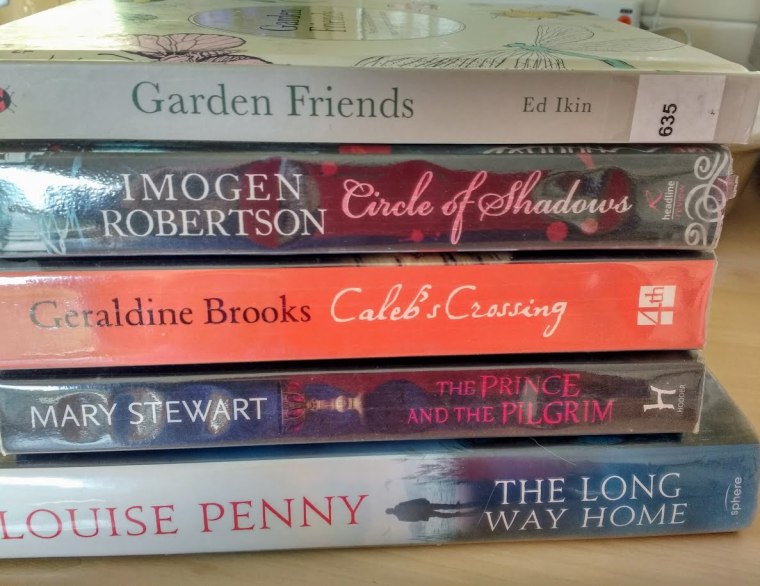
MNO bks P1020320

– is for Mercy by Jodie Picoulta book I’ve had since 2008. LibraryThing predicts that I probably won’t like this book. Two cousins are driven to extremes by the power of love, as one helps his terminally ill wife commit suicide and the other becomes involved in a passionate affair with his wife’s new assistant.

I bought this book because I’ve read and enjoyed three other books by Jodie Picoult.

According to the sworn voluntary statement of James MacDonald, his wife had been suffering from the advanced stages of cancer and had asked him to kill her. Which did not account for the raw scratches on his face, or the fact that he had traveled to a town he had never set foot in to commit the murder. Maggie had not videotaped her wishes, or even written them down and had them notarized to prove she was of sane mind – Jamie said that she hadn’t wanted it to be a production, but a simple gift.

What it boiled down to, really, was Jamie’s word. Cam’s only witness was dead. He was supposed to believe the confession of James MacDonald solely because he was a MacDonald, a member of his clan. (page 39)

N – is for Notes from an Exhibition by Patrick Gale (on my TBR shelves since 2011). LibraryThing predicts that I probably will like this book. When troubled artist Rachel Kelly dies painting obsessively in her attic studio in Penzance, her saintly husband and adult children have more than the usual mess to clear up. She leaves behind an extraordinary and acclaimed body of work – but she also leaves a legacy of secrets and emotional damage that will take months to unravel.

I haven’t read any of Patrick Gale’s books, but I was attracted to it by the blurb.

‘We are here to say goodbye to our dear Rachel, who was a regular attender since Anthony first brought her to Penzance a little over forty years ago. For those of you who have never been to a Friends’ Meeting before, this may not be the kind of funeral you’re used to. The proceedings take the form of a Quaker Meeting for Worship. This is based on silent contemplation. There are two aims in our worship: to give thanks for the life that has been lived and to help those who mourn to feel a deep and comforting sense of divine presence within us. The silence may be broken by anyone, Quaker or not, who feels moved to speak, to pray or offer up a memory of Rachel.’ (page 62)

O – is for An Officer and a Spy by Robert Harris a book I’ve only had for nearly two years. LibraryThing predicts that I probably will like this book. A recreation of a scandal that became the most famous miscarriage of justice in history, this is the story of the infamous Dreyfus affair told as a chillingly dark, hard-edged novel of conspiracy and espionage. Paris in 1895. Alfred Dreyfus, a young Jewish officer, has just been convicted of treason, sentenced to life imprisonment at Devil’s Island, and stripped of his rank in front of a baying crowd of twenty-thousand.

I bought this on the strength of the other books by Robert Harris that I’ve enjoyed. I’ve heard of the Dreyfus affair but know very little about it.

Beneath the letters is a thin manilla envelope containing a large photograph, twenty five centimetres by twenty. I recognise it immediately from Dreyfus’s court martial – a copy of the covering note, the famous bordereau, that accompanied the documents he passed to the Germans. It was the central evidence against him produced in court. Until this morning I had no idea how the Statistical Section had got its hands on it. And no wonder. I have to admire Lauth’s handiwork. Nobody looking at it could tell it had once been ripped into pieces: all the tear marks have been carefully touched out, so that it seems a whole document. (pages 40 -41)

What do you think? Do you fancy any of them? Would you ditch any of them?

First Chapter First Paragraph: the Battle for Christabel

eca8f-fistchapEvery Tuesday Diane at Bibliophile by the Sea hosts First Chapter First Paragraph Tuesday Intros to share the first paragraph sometimes two, of a book that she’s reading or is planning to read soon.

This week’s opening is from The Battle for Christabel by Margaret Forster.

book cover of The Battle for Christabel

It begins:

Today I lost the battle for Christabel. I lost the whole war (this is a war story, make no mistake). There is nothing to salvage from it, no medals, no trophies, but my God the scars, the wounds, the shell shock … If I were a man, and had this  been a man’s war, I would have been invalided out, flown from the war zone, heavily sedated, and when the plane had landed and I was put into the ambulance waiting on the tarmac, people would have wept at the pity of it and the waste of a fine young man’s life.

From the Guardian:

Forster has the essential capacity to see everyone’s point of view, whether it is the social workers who resent the upper-middle class assumptions of Christobel’s grandmother, Isobel’s lover who believes she should adopt the child, or Christabel’s foster-mother Betty … in that territory of dread and reconciliation which is the family, Forster reigns supreme.

Margaret Forster wrote 25 novels and 14 biographies, about social history, memoir, and journalism. I’ve read and enjoyed quite a few of them – they’re often about family life and  women and their role in society. This one looks quite challenging, I think.

What do you think – would you read on?

Victoria: a Life by A N Wilson

I’m reading Victoria: a Life by A N Wilson very slowly – not because it’s a difficult read or because it’s boring, because it isn’t, but simply because it’s a hardback book and very heavy and cumbersome to hold.

Victoria P1020318

As it’s taking me so long I’ve decided I need to jot down a few quotations that strike me as I’m reading rather than waiting until I’ve read the whole book.

Where I’m up to – Victoria has become Queen, set free from the constraints of her childhood and it is Lord Melbourne (Victoria’s Lord M) who prepared her for the ceremonial initiation of the Coronation and groomed her for her role as Head of State. Wilson reflects on her relationship with Melbourne and other male figures in her life thus:

The defining fact in Victoria’s personal mythology would seem to have been her marriage to Prince Albert; but there is no finished truth about a human being, and to see her as the besotted wife and grief-stricken widow of the German prince is only one truth about the Queen. She lived for eighty years, and was married for a mere quarter of that time. In many ways, we can say that we see her most clearly being herself in those platonic male friendships which were based on shared humour: with Lord Melbourne, with Disraeli and to a lesser extent with Dean Davidson and Lord Salisbury. The elements of humour and independence are present in her more mysterious relationship with John Brown. One sees her at her vigorous, independent and humorously selfish best in these friendships. The first, and in some ways the sweetest, was that with Lord M. (page 85)

When the crown was placed on Victoria’s head, all the peers and peeresses donned their coronets and after the Coronation Victoria wrote in her journal:

‘My excellent Lord Melbourne who stood very close to me throughout the ceremony was completely overcome at this moment and very much affected. He gave me such a kind (and I may say fatherly) look.’

and when the moment came to do homage,

‘he knelt down down and kissed my hand, he pressed my hand, and I grasped his with all my heart, at which he looked up with his eyes filled with tears and seemed much affected.’ (page 87)

I love these extracts from Victoria’s journal.

The Skeleton Road by Val McDermid

The Skeleton Road (Inspector Karen Pirie, #3)

The Skeleton Road by Val McDermid is the third of her DCI Karen Pirie novels. Investigating the identity of the skeleton found, with a bullet hole in its skull, on the rooftop of a crumbling, gothic building in Edinburgh takes Karen and her Historic Cases Unit into a dark world of intrigue and betrayal during the Balkan Wars in the 1990s.

It begins slowly, introducing rather a bewildering number of characters one after the other. It moves between the past and the present in Scotland, England and Croatia, told through different viewpoints, and interweaving the sequence of events in the past and the present in a way that I found rather disjointed. Dr River Wilde a forensic anthropologist, discovers that the skeleton is a male, he’d been dead between five and ten years and his dental work shows he was originally from one of the Eastern bloc countries.

It’s a complex story with several strands, including the search for war criminals through the work of two lawyers at the International Criminal Tribunal for the former Yugoslavia. Karen’s investigations take her to Oxford and then to a small village in Croatia, a place scarred by fear, where people have endured unspeakable acts of violence.

At times I thought I was reading an account of the wars and the search for justice and revenge rather than a murder mystery. Even given the traumatic events it describes I didn’t feel there was much tension in the search for the killer and I was able to figure out who it was fairly quickly. I enjoyed the sections focusing on Karen’s and her assistant DS James, ‘the Mint’ Murray’s detective work, and I liked all the details of her relationship with her partner, Phil (also a police officer, now working on a different team).  But I didn’t enjoy this as much as the first two Karen Pirie books – in fact I think the first book, The Distant Echo is by far the best.

  • Hardcover: 416 pages
  • Publisher: Little, Brown (11 Sept. 2014)
  • Language: English
  • ISBN-10: 1408704579
  • ISBN-13: 978-1408704578
  • Source: a library book
  • My rating: 3*

The Corpse in the Snowman by Nicholas Blake

A Golden Age Mystery

Publication date 2017, Ipso Books, 305p. First published as The Case of the Abominable Snowman in 1941 by Collins UK (The Crime Club)

Review copy from the publishers, Ipso Books, via NetGalley

My rating: 3 stars

I enjoyed The Corpse in the Snowman by Nicholas Blake* a vintage murder mystery with a complicated plot. There’s a death and a body hidden in a snowman that is only discovered when a thaw sets in. It is set in 1940 in an isolated country house with a closed cast of characters and an amateur detective, Nigel Strangeways, helping the police and eventually solving the mystery. There are numerous twists and turns and red herrings before the murderer is revealed.

Easterham Manor in Essex, the home of the Restorick family is cut off from the neighbouring village by snow. Strange things have been going on. On Christmas Eve the family and their guests had gathered in what was said to be a haunted room waiting to see if the ghost would appear when  Scribbles, the family cat  sprang at a corner of the room and repeatedly struck her head against the wall and turned herself into a whirling dervish.

Some weeks later Nigel Strangeways and his wife Georgia  have been invited by Georgia’s cousin, Clarissa to stay at the Manor’s Dower House to investigate the cat incident. The next morning Elizabeth Restorick is found hanged and naked in her room, a hint of a smile playing on her painted lips. Was it suicide, or a murder made to look like suicide? Nigel is convinced it was murder and finds there are plenty of suspects. Elizabeth was a drug addict – so, was she killed by the doctor who was treating her addiction, or by Will Dykes, a romantic novelist in love with Elizabeth, or her friend Miss Ainsley, described as a ‘nondescript sort of fribble‘ -a frivolous or foolish person – or by one of the family?

The title and the first chapter give away a vital element of the plot – the snowman, built by the Restorick children, twins John and Priscilla, melts to reveal a corpse hidden inside. But at this point the identity of the corpse is unknown and as I was reading the rest of the book I kept trying to work out who it could be. It wasn’t too difficult, but it did detract a little from the mystery and I didn’t enjoy it as much as his earlier book Malice in Wonderland.

*Nicholas Blake was the pseudonym of Poet Laureate Cecil Day-Lewis (1904 – 1972), one of the leading British poets of the 1930s. He began writing mysteries in 1935 to supplement his income from poetry and published his first Nigel Strangeways detective novel, A Question of Proof in 1935. The Corpse in the Snowman aka The Case of the Abominable Snowman is the 2nd in the series.

My thanks to the publishers for a review copy via NetGalley.

The TBR Book Tag 2017

I saw this tag on FictionFan’s blog and thought I’d do it too. it’s time I got to grips with my ever-expanding piles of books to read, particularly as right now I’m not at all sure how many TBRs I have.

How do you keep track of your TBR pile?

In 2007 I  began using LibraryThing to catalogue my books – it’s still not complete and I don’t always remember to add new books to it. I don’t include e-books on LibraryThing.

When I first got a Kindle I began to sort my e-books into collections but that didn’t last very long and I soon had no idea what I’d downloaded – it was like sending the books into a black hole. So, because I decided to do this tag I decided it was time I was more organised and I’ve been busy sorting out an e-book TBR collection on my Kindle.

Is your TBR mostly print or e-book?

It’s mostly print books, although my e-book collection is  growing rapidly thanks especially this year, to NetGalley. For a while I bought quite a lot of the 99p Kindle Daily Deals books and also added a number of free e-books including e-book versions of the classics.

How do you determine which book from your TBR to read next?

It’s a bit of a juggling game, trying to fit in reading books I’ve had for years, with review copies. Recently the old TBRs have been left in preference to reading new books. But often it’s down to whichever book appeals most – I like to read whatever I fancy when I fancy. I like to browse my bookshelves and sometimes just pick a book at random. And I have to fit in library books too!

A book that’s been on your TBR the longest?

It could be The Agony and the Ecstasy by Irving Stone, which I bought for 50p over 20 years (no idea exactly when or where I bought it). It’s falling to pieces now, the pages are brown and the font is so small. I did start reading it once – there’s a book mark between pages 43-43.

Agony & Ecstasy

A book you recently added to your TBR?

I recently added eight books – this is one of them, The Shadow Sister by Lucinda Riley, the third book in Lucinda Riley’s series, loosely based on the mythology of the Seven Sisters star cluster.

The Shadow Sister

Blurb:

Star D’Aplièse is at a crossroads in her life after the sudden death of her beloved father – the elusive billionaire, named Pa Salt by his six daughters, all adopted by him from the four corners of the world. He has left each of them a clue to their true heritage, but Star – the most enigmatic of the sisters – is hesitant to step out of the safety of the close relationship she shares with her sister CeCe. In desperation, she decides to follow the first clue she has been left, which leads her to an antiquarian bookshop in London, and the start of a whole new world . . .

A hundred years earlier, headstrong and independent Flora MacNichol vows she will never marry. She is happy and secure in her home in the Lake District, living close to her idol, Beatrix Potter, when machinations outside of her control lead her to London, and the home of one of Edwardian society’s most notorious players, Alice Keppel. Flora is pulled between passionate love and duty to her family, but finds herself a pawn in a game – the rules of which are only known to others, until a meeting with a mysterious gentleman unveils the answers that Flora has been searching for her whole life . . .

As Star learns more of Flora’s incredible journey, she too goes on a voyage of discovery, finally stepping out of the shadow of her sister and opening herself up to the possibility of love.

A book on your TBR strictly because of its beautiful cover?

I don’t think I’ve ever chosen a book based on its cover. Having said that I think this book cover of The Brontës by Juliet Barker is just lovely.

The Brontës

A book on your TBR that you never plan on reading?

No – but there have been books that when I’ve looked at them I’ve wondered why I wanted to read them in the first place – and I’ve decided not to read them. So, every now and then I go through the list and get rid of any that no longer appeal. Ulysses by James Joyce is on my list but I’m not sure I’ll ever get round to reading it. Ditto – Moby Dick!

As for e-books at the same time that I made a collection for my e-book TBRs I realised that I’d got into the bad habit of downloading samples and then forgetting all about them – so I’ve deleted all the samples and I’m also going through the rest of my e-books and deleting those that no longer appeal.

An unpublished book on your TBR that you’re excited for?

Ian Rankin has announced that there will be new novel featuring John Rebus in autumn 2018. The novel will be published by the Orion Publishing Group in hardback, e-book and audiobook, with a paperback to follow in 2019. There are no details yet about the book’s title or plot, but as I’ve read all his other Rebus books I’m eagerly looking forward to this next one.

A book on your TBR that everyone has read but you?

It’s probably Charles Dickens’ Oliver Twist – I know the story – it’s one of the stories that everyone knows  – but I’ve not read it yet.

Image result for Oliver Twist

A book on your TBR that everyone recommends to you?

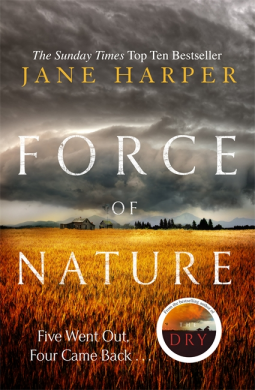
The Dry by Jane Harper – it’s had a lot of acclaim. When a book receives so much praise I’m sometimes sceptical and will avoid it for a while at least. But it sounds so good that I think I’ll read it sooner rather than later.

Blurb:

Amid the worst drought to ravage Australia in a century, it hasn’t rained in small country town Kiewarra for two years. Tensions in the community become unbearable when three members of the Hadler family are brutally murdered. Everyone thinks Luke Hadler, who committed suicide after slaughtering his wife and six-year-old son, is guilty.

Policeman Aaron Falk returns to the town of his youth for the funeral of his childhood best friend, and is unwillingly drawn into the investigation. 

The Dry

A book on your TBR that you’re dying to read?

So many, but as I have to pick just one it’s Moriarty by Anthony Horowitz as I enjoyed his earlier Sherlock Holmes book, The House of Silk.

Blurb:

Days after Holmes and Moriarty disappear into the waterfall’s churning depths, Frederick Chase, a senior investigator at New York’s infamous Pinkerton Detective Agency, arrives in Switzerland. Chase brings with him a dire warning: Moriarty’s death has left a convenient vacancy in London’s criminal underworld. There is no shortage of candidates to take his place—including one particularly fiendish criminal mastermind.

Moriarty (Sherlock Holmes, #2)

How many books are on your Goodreads TBR shelf?

My Goodreads TBR shelf is just for books I’ve read or am currently reading. I use my LibraryThing catalogue to keep track of my physical TBRs. At the moment the number stands at 320 but as I said above that might not be completely accurate. And I’m still going through my e-book TBRs weeding out the ones I don’t want to read.