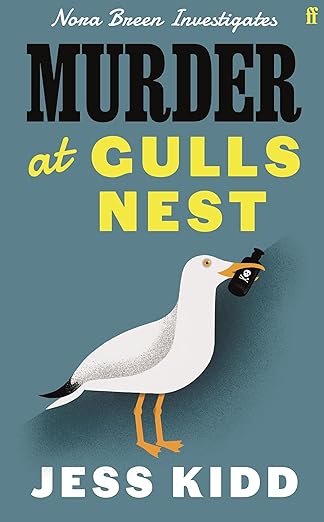
This is the second Loch Down Abbey Mystery, to be published on 13 February. Set in 1930’s Scotland the story revolves around Loch Down Abbey which has now been turned into a hotel. The Abbey is full of guests for a Highland Ball, including several uninvited members of the Inverkillen family, the Abbey’s former owners. Housekeeper Mrs MacBain thinks her biggest challenge will be finding suitable rooms for everyone and keeping the peace at cocktail hour. Until the morning after the ball, when one of the guests is discovered inside the Abbey’s library – as dead as a doornail.
This is the first in a new series – an Ali Dawson Mystery to be published on 13 February. I loved it. It’s the first in a new series. It’s not like her other books, but it’s still a murder mystery. You do need to suspend your disbelief because she heads a cold case team who investigate crimes so old, they’re frozen – or so their inside joke goes. Most people don’t know that they travel back in time to complete their research.
I do hope there are more Ali Dawson books in the pipeline. The way this one ends it looks as though there will be at least one more.
What will I read next? I’m not sure. At the moment I think it won’t be crime fiction as I fancy a change.
So it might be Greek Lessons by Han Kang, the winner of the 2024 Nobel Prize in Literature, a new-to-me author. This is a new translation by Deborah Smith and Emily Yae Won, of the 2011 novel that explores how a teacher losing his sight and a pupil losing her voice form a poetic bond. It is a short book, of just 149 pages narrated by the two unnamed characters, one a woman grieving for her mother and her son, now in the custody of her ex-husband. She is also experiencing the loss of her ability to speak. The other is a man losing his connection to place and family, as well as the loss of his eyesight. They meet when the woman attends his Ancient Greek lessons.
Set on Camino Island, popular bookseller Bruce Cable tells Mercer Mann an irresistible tale that might be her next novel. A giant resort developer is using its political muscle and deep pockets to claim ownership of a deserted island between Florida and Georgia. Only the last living inhabitant of the island, Lovely Jackson, stands in its way. What the developer doesn’t know is that the island has a remarkable history, and locals believe it is cursed . . . and the past is never the past . . .
2014, Dublin: at St Edmunds, an elite college on the outskirts of the city, twenty-year-old medical student Theo gets up one morning, leaving behind his sleeping girlfriend, Dani, and his studies – never to be seen again. With too many unanswered questions, Dani simply can’t accept Theo’s disappearance and reports him missing, even though no one else seems concerned, including Theo’s father.
Ten years later, Dani returns to the college as a history professor. With her mother suffering from severe dementia, and her past at St Edmunds still haunting her, she’s trying for a new start. But not all is as it seems behind the cloistered college walls – meanwhile, Dani is hiding secrets of her own.
The body of a local woman is found washed up on the Folkstone shoreline. Cupidi must find the missing link between a group of wild swimmers, an online dating profile and a slippery killer who feels remarkably close to home.
Natalka and Edwin are running a detective agency in Shoreham, Sussex. Despite a steady stream of minor cases, Natalka is frustrated, longing for a big juicy investigation to come the agency’s way.
Then a murder case turns up. Local writer, Melody Chambers, is found dead and her family are convinced it is murder. Edwin, a big fan of the obit pages, thinks there’s a link to the writer of Melody’s obituary who pre-deceased his subject.
Tasha and her husband Aaron are having a much-needed week away in Venice. With their two young children being cared for back home by Tasha’s older sister Alice, it’s the perfect opportunity for them to reconnect as a couple. Until they start to feel they’re being followed. Then Tasha receives a phone call to say Alice and her husband Kyle have been attacked. Alice is in intensive care, and Kyle has died.
Then Tasha receives a note: It was supposed to be you. What soon emerges are secrets buried far deeper than any of this family realise. Everyone has a history. But how far would you go to protect those you love?
Her name is Sandy. You might know her as the loving wife of Detective Superintendent Roy Grace. But there’s more to her than meets the eye. A woman with a dubious past, a complicated present and an uncertain future. Then she was gone.
Her disappearance caused a nationwide search. Even the best detective on the force couldn’t find her. They thought she was dead. Where did she go? Why did she run? What would cause a woman to leave her whole life behind and simply vanish?
A Refiner’s Fire by Donna Leon, the 33rd Commissario Guido Brunetti in which he confronts a present-day Venetian menace and the ghosts of a heroism that never was.
The Dark Wives by Ann Cleeves , Vera, Book 11, crime fiction, following on from The Rising Tide, which I loved. A young man’s body is found in the early morning light by a local dog walker in the park outside Rosebank, a home for troubled teens in the coastal village of Longwater. The victim is Josh, a staff member, who was due to work the previous night but never showed up.
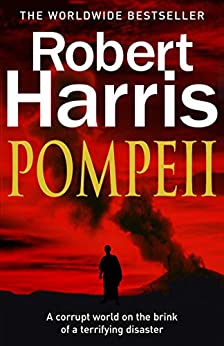
Precipice by Robert Harris, historical fiction, summer 1914, 26-year-old Venetia Stanley – aristocratic, clever, bored, reckless – is having a love affair with the Prime Minister, H. H. Asquith, a man more than twice her age.
Midnight and Blue by Ian Rankin, a John Rebus thriller. John Rebus spent his life as a detective putting Edinburgh’s most deadly criminals behind bars. Now, he’s joined them…
Have you read any of these? What did you think? Which should I read first?
I read 4 books in January, half the number I used to read. My reading has slowed down considerably over the last 2 years and I no longer write in much detail about them. But this year I’m hoping to get back to something more like normal and I’m aiming to write at least a paragraph or more about each of the books I’ve read each month.
There’s a Reason for Everything(my review) by E R Punshon 4* – I began this book in December and finished reading it in early January. It was first published in 1945 and I read the e-book published by Dean Street Press. It’s the 21st in the Bobby Owen mystery series, in which Bobby has recently been promoted from Inspector to Deputy Chief Constable of Wychshire, a complicated novel with murders, a missing painting allegedly by Vermeer, dodgy fine art dealers and an abandoned country mansion called Nonpareil.
I was perplexed for quite some time until I began to see what was behind the bewildering confusion in Punshon’s narrative. I think this is a cleverly constructed plot, with ingenious puzzles to piece together before all the answers are revealed. I was quite pleased to find out at the end that I’d worked out one of the clues correctly.
Sense and Sensibility by Jane Austen 5* – It’s about the three Dashwood sisters and their widowed mother as they leave their family estate at Norland Park after their father’s death when their half-brother John inherited the estate. This year is the 250th anniversary of Jane Austen’s birth, so this is an ideal time to reread some of her books and I’m joining Brona at This Reading Life in her Austen 2025 project to reread her books, along with the Classics Club’s Sync Read (or readalong).
I read the annotated edition, edited by David M Shapard that gives Explanations of historical context, Citations from Austen’s life, letters, and other writings, Definitions and clarifications, Literary comments and analysis, Multiple maps of England and London, An introduction, bibliography, and detailed chronology of events and More than 100 informative illustrations.
I’ll write more about this book in a later post.
Signal Moon by Kate Quinn 5* – a short story. I’m not a big fan of short stories, often finding them too short and wanting to know more. But this one is good and it fascinated me. It’s sci-fi involving a type of time-travelling, a mix of historical fiction, links to the code breakers at Bletchley Park and WW2. I loved it. It is, of course, impossible, set in two time periods, 1943 during World War 2 and 2023, but I didn’t have to work hard to believe in it. Kate Quinn’s narrative just drew me in. In 1943, Lily Baines is a Wren working for a “Y” station, picking up signals from German intelligence that were then sent to Bletchley Park for translation. Then she picks up a signal apparently from 2023 – it’s a cry for help from Matt Jackson a young US officer. It’s about an American ship that is taking heavy fire in the North Atlantic. Together Lily and Matt have to work out how to help each other: Matt to convince her that the war she’s fighting can still be won, and Lily to help him stave off the war to come.
Kate Quinn wrote this story to feature the information about the Y stations that she had discovered whilst researching Bletchley Park and hadn’t included in The Rose Code.
Keir Starmer: the Biography by Tom Baldwin 3.5* A Times Book of the Year; A Telegraph Book of the Year; A Daily Mail Book of the Year; A Waterstones Book of the Year
Dsecription from Amazon:
This authoritative – but not authorised – biography by Tom Baldwin provides answers by drawing deeply on many hours of interviews with Prime Minister himself, as well as unprecedented access to members of his family, his oldest friends and closest colleagues.Together, they tell an unexpectedly intimate story filled with feelings of grief and love that has driven him on more than any rigid ideology or loyalty to a particular faction.
The book tracks Starmer’s emergence from a troubled small town background and rebellious youth, through a storied legal career as a human rights barrister and the country’s chief prosecutor, to becoming an MP relatively late in life.Baldwin provides a vivid and compelling account of how this untypical politician then rose to be leader of his party in succession to Jeremy Corbyn, then transformed it with a ruthless rapidity that has enraged opponents from the left just as much as it has bewildered those on the right.
Above all, this is a book that should be read by anyone who wants to understand how someone who has too often been underestimated or dismissed as dull, now intends to change Britain.
My thoughts
This book was published in February 2024, five months before the General Election. I decided to watch the televised debates between him and Rishi Sunak, the then Prime Minister, and thought Starmer looked uncomfortable in most of them. All I knew about him was that he was the former Director of Public Prosecutions, and, as he often said in interviews, that growing up he lived in a pebble-dashed semi , that his ‘dad was a toolmaker‘ and his ‘mother was a nurse.’ So I hoped that Baldwin’s book would tell me more. Baldwin writes:
Starmer is a private man who has chosen to place himself in the white light of public scrutiny, while showing a determination that is itself exceptional to maintain a semblance of normality … often appearing uncomfortable at being a politician at all. (page xi)
He also describes him as ‘someone who is both extraordinary and very ordinary‘ (page xii). The biography is divided into five parts :
each of which begins by sketching a moment since he became a politician when this tension is most apparent. All of them also include descriptions of sometimes traumatic episodes that have wrenched him back to real life and away from the febrile – often fake – world of Westminster politics. (page xii).
In the first three parts he covers Starmer’s childhood and schooldays, his time as a student at Leeds University, where he was awarded a first-class law degree, and then at St Edmund Hall at Oxford University where he gained a postgraduate Bachelor of Civil Law degree. He then worked as a trainee barrister in London, eventually transitioning from a human rights lawyer into the country’s chief prosecutor. The fourth part describes how he became an MP, a member of the shadow cabinet and Leader of the Labour Party. The fifth part examines the leadership, before assessing what kind of prime minister he would make.
One friend said:
He’ll just turn up at the pub and be a totally normal and genuinely good bloke. But his public persona is very different, I almost don’t recognise him when I see him on TV.
And another said:
There is this enormous gap between Keir the human being and Keir the politician. At Jonny [Cooper]’s funeral, I saw the real one letting himself go – in the best way – to share his grief with his friends. But, when I watched him on TV at the party conference, he had seemed to be almost a different person, holding back and distant, almost wooden compared to the generous, humorous and empathetic man I’ve known for twenty years. (page 323)
It seems to me that he is a conscientious person who believes in working hard and playing hard. He is resilient and driven. He believes in fairness and social justice, putting the country before the party, a serious, clever man, who wants to get things done and change the country for the better.
It’s time again for Six Degrees of Separation, a monthly link-up hosted by Kate atBooks Are My Favourite and Best. Each month a book is chosen as a starting point and linked to six other books to form a chain. A book doesn’t need to be connected to all the other books on the list, only to the one next to it in the chain.
This month we start with Dangerous Liaisons by Pierre Choderlos de Laclos first published in 1782 as Les Liaisons Dangereuses. I read this many years ago when I was taking an Open University course and I’ve not reviewed this on my blog. It’s an epistolary novel, told through the letters written by different characters to one another. I loved it. The Goodreads summary describes it as a:
novel of moral and emotional depravity is a disturbing and ultimately damning portrayal of a decadent society. Aristocrats and ex-lovers Marquise de Merteuil and Vicomte de Valmont embark on a sophisticated game of seduction and manipulation to bring amusement to their jaded lives. While Merteuil challenges Valmont to seduce an innocent convent girl, he is also occupied with the conquest of a virtuous married woman. Eventually their human pawns respond, and the consequences prove to be more serious—and deadly—than the players could have ever predicted.
My first link is Lady Susan by Jane Austen, which see wrote between 1794 and 1795, adding a conclusion in 1805, but not published until James Edward Austen-Leigh, her nephew, published it in his Memoir of Jane Austen in 1871.
Lady Susan is about Lady Susan Vernon, told in a series of letters, just like Laclos’s Les Liaisons Dangereuses. Both have manipulative and evil characters without any moral scruples, who delight in their power to seduce others. It’s the story of an unscrupulous widow who plans to force her daughter into a marriage against her wishes. Lady Susan is an attractive and entertaining and totally wicked character, who nevertheless almost manages to fool people for some of the time at least. She is also trying to captivate her sister-in-law’s brother, whilst still holding on to the affections of a previous lover.
My second link is also a book of letters, but real letters, not fictional ones – Jane Austen’s Letters edited by Deirdre Le Faye, First published in 1932 in this edition Le Faye has added new material that has come to light since 1932, and reordered the letters into their correct chronological sequence. She provided new biographical, topographical and general indexes, annotation, and information on watermarks, postmarks and other physical details of the manuscripts. This gives a unique insight into the daily life of the novelist both intimate and gossipy, observant and informative. The letters bring Jane’s family and friends to life, as well as her surroundings and contemporary events. This is one of my TBRs, but I have dipped into it and read some of the letters.
For my third link I’m staying with Jane Austen with The Genius of Jane Austen: Her Love of Theatre and Why She Is a Hit in Hollywood by Paula Byrne, a radical look at Jane Austen as you’ve never seen her – as a lover of farce, comic theatre and juvenilia. It also looks at stage adaptations of Austen’s novels (including one called Miss Elizabeth Bennet by A. A. Milne) to modern classics, including the BBC Pride and Prejudice and Persuasion, Emma Thompson’s Sense and Sensibility, and Clueless, adapted from Emma.
This book explores Jane Austen’s love of the theatre — she acted in amateur productions, frequently attended the theatre, and even scripted several early works in play form. Austen’s letters show, says Byrne, that she was steeped in theatre and that was a keen theatregoer, watching actors like Dora Jordan.
My fourth link is the theatre and Dora Jordan in Mrs Jordan’s Profession by Claire Tomalin, the biography of Dora Jordan who was acclaimed as the greatest comic actress of her day. Dora and the third son of George III, William, the Duke of Clarence , who, although not legally married, lived together as Mr and Mrs Bland. She was known as ‘Mrs Jordan’, although there was never a Mr Jordan. She made her stage debut in 1777 at the age of 15 and her first Drury Lane appearance in 1785. The two met and she became his mistress in 1790. The book is packed with information, brilliantly bringing the late 18th and early 19th centuries to life as she tells the story of Dora and her relationship with the Duke of Clarence, later King William IV.
My fifth link is to George III in Alan Bennett’s The Madness of King George. This play premiered on 28 November 1991 and was made into a film in 1994. The introduction to the screenplay includes Bennett’s production diary, notes comparing his stage and screen versions, and the political background to the Court of George III. Also included are a selection of stills from the film. I’ve seen the 1994 film with Nigel Hawthorne as King George and Helen Mirren as Queen Charlotte, which I thought was excellent, but have not read the the book or the play itself.
My final link takes me back to Jane Austen’s books and also to Paula Byrne’s book The Genius of Jane Austen and the theatre. It’s Mansfield Park, which I read about 10 years ago. Fanny Price, as a child of 10 goes to live with her wealthy aunt and uncle, Sir Thomas and Lady Bertram at Mansfield Park. The younger members of the family, convert the library into a theatre and stage a risqué play called Lover’s Vows. I’ll be rereading Mansfield Park later on to refresh my memory and consider what it reveals about Jane Austen’s own views of the theatre in the light of Paula Byrne’s book.
The links in my chain are epistolary novels, Jane Austen’s letters and books, the theatre, and George III, using fiction and nonfiction.
What is in your chain, I wonder?
Next month (March 1, 2025), we’ll start with the 2023 Booker Prize winner, Prophet Song by Paul Lynch.
Who are some new authors that you want to read from in 2025
Top 5 Tuesday was created by Shanah at Bionic Book Worm, and it is now being hosted by Meeghan at Meeghan Reads. For details of all of the latest prompts for January to March, see Meeghan’s post here.
Today the topic is 5 authors I want to try in 2025. Who are some new authors that you want to read from in 2025? These books are from my TBRs.
I was really excited to read Schindler’s List when I bought it as I’d recently watched the film, Schindler’s List for a second time and was very moved by it – it had me in tears. It was first published as Schindler’s Ark. It recreates the story of Oskar Schindler, a member of the Nazi party, who risked his life to protect Jews in Nazi-occupied Poland. He rescued more than a thousand Jews from the death camps.
The Agony and the Ecstasyby Irving Stone is a book I’ve been longing to read for years. I’ve had it since 2007. It’s a biographical novel about Michelangelo. The copy I had was impossible to read as it was falling apart so I bought a new copy – but it’s still sitting waiting to be read. Why? Well because I have so many other books I really want to read.
Another book I’ve had since 2007, still waiting to be read for the same reason is 1599: A Year in the Life of William Shakespeare by James Shapiro. 1599 was the year the Globe Theatre was built and that Shakespeare wrote Julius Caesar, Henry V, As You Like It and Hamlet. it’s full of detail, not just about Shakespeare, his plays and the theatre, but also about the events of his life and times!
Version 1.0.0
The Water Horse by Julia Gregson, a book I’ve had since 2009. It’s historical fiction based on the true story of a young Welsh woman, Jane Evans, a Welsh woman who in 1853 ran off with Welsh cattle drovers and volunteered as a nurse with Florence Nightingale in the Crimea. Catherine Carreg has grown up a tomboy, spending her days racing her ponies with Deio, the drover’s son, in a small Welsh village. But Catherine is consumed by a longing to escape the monotony of village life and, with Deio’s help, runs away to London.
Alone in the unfamiliar bustle of the city, Catherine finds a position in a rest home for sick governesses in Harley Street, run by Miss Florence Nightingale. Then, as the nation is gripped by reports of the war in the Crimea, Catherine volunteers as a nurse – and her life changes beyond all recognition.
Jeremy Hutchinson’s Case Histories by Thomas Grant – I bought this in February 2020 after watching the BBC series,The Trial of Christine Keeler, the story of the Profumo affair in 1962 as seen from her perspective. Hutchinson was Keeler’s defence barrister.
Born in 1915 into the fringes of the Bloomsbury Group, Jeremy Hutchinson went on to become the greatest criminal barrister of the 1960s, ’70s and ’80s. The cases of that period changed society for ever and Hutchinson’s role in them was second to none. In Case Histories, Jeremy Hutchinson’s most remarkable trials are examined, each one providing a fascinating look into Britain’s post-war social, political and cultural history.
It’s Saturday and time for Stacking the Shelves, hosted by Marlene at Reading Realityand the details are on her blog, as well as a huge amount of book reviews. Why not visit her blog if you haven’t already found it? The gorgeous graphic is also used courtesy of the site.
The idea is to share the books you are adding to your shelves, may they be physical or virtual. This means you can include books you buy in physical stores or online, books you borrow from friends or the library, review books, gifts and of course e-books!
These are all e-books I’ve either bought or acquired for free from Amazon since the beginning of this year:
The Woman In Blue: The Dr Ruth Galloway Mysteries 8 by Elly Griffiths. Somehow I missed reading this book when it first came out in 2016, so when I saw it was 99p on Amazon I bought it. It’s book 8 out of 15 in the series. When Ruth’s friend Cathbad* sees a vision of the Virgin Mary, in a white gown and blue cloak, in Walsingham’s graveyard, he takes it in his stride. Walsingham has strong connections to Mary, and Cathbad is a druid after all; visions come with the job. But when the body of a woman in a blue dressing-gown is found dead the next day in a nearby ditch, it is clear that a horrible crime has been committed, and DCI Nelson and his team are called in for what is now a murder investigation.
*I’ve read most of this series. Cathbad is one of my favourite characters.
Greek Lessons by Han Kang, the winner of the 2024 Nobel Prize in Literature, a new-to-me author. This is a new translation by Deborah Smith and Emily Yae Won, of the 2011 novel that explores how a teacher losing his sight and a pupil losing her voice form a poetic bond. It is a short book, of just 149 pages narrated by the two unnamed characters, one a woman grieving for her mother and her son, now in the custody of her ex-husband. She is also experiencing the loss of her ability to speak. The other is a man losing his connection to place and family, as well as the loss of his eyesight. They meet when the woman attends his Ancient Greek lessons.
Eleven Numbers, a short story by Lee Child. Nathan Tyler is an unassuming professor at a middling American university with a rather obscure specialty in mathematics—in short, a nobody from nowhere. So why is the White House calling? Summoned to Washington, DC, for a top-secret briefing, Nathan discovers that he’s the key to a massive foreign intelligence breakthrough. Reading between the lines of a cryptic series of equations, he could open a door straight into the heart of the Kremlin and change the global balance of power forever. All he has to do is get to a meeting with the renowned Russian mathematician who created it. But when Nathan crashes headlong into a dangerous new game, the odds against him suddenly look a lot steeper.
Genius Gut: 10 New Gut-Brain Hacks to Revolutionise Your Energy, Mood, and Brainpower by Emily Leeming. Microbiome scientist and registered dietitian Dr Emily Leeming explains the ground-breaking evidence on the relationship between food and mood, unveiling the powerful gut-brain connection…and exciting new links to your gut bacteria. I downloaded the sample before deciding to buy this book and think it looks very interesting and easy to read for a non-scientist like me. I never thought much about my gut until I had bowel cancer eighteen months ago!
The Fake Wife by Sharon Bolton. I’ve a lot of her books and have enjoyed them all, so this is one I’m really looking forward to reading. It’s described as an absolutely gripping psychological thriller with jaw-dropping twists. Olive Anderson is dining alone at a hotel when a glamourous stranger joins her table, pretending to be her wife. What starts as a thrilling game quickly turns into something dangerous. But as much as the fake wife has her secrets, Olive just might have more . . .