First Chapter First Paragraph: I Found You by Lisa Jewell

Every Tuesday First Chapter, First Paragraph/Intros is hosted by Vicky of I’d Rather Be at the Beach sharing the first paragraph or two of a book she’s reading or plans to read soon.

This week I’m featuring I Found You by Lisa Jewell, one of the books I’m currently reading.

I Found You


Alice Lake lives in a house by the sea. It is a tiny house, a coastguard’s cottage, built over three hundred years ago for people much smaller than her. The ceilings slope and bulge and her fourteen-year old son needs to bow his head to get through the front door. They were all so little when she moved them here from London six years ago. Jasmine was ten. Kai was eight. And Romaine the baby was just four months old. She hadn’t imagined that one day she’d have a gangling child of almost six feet. She hadn’t imagined they’d ever outgrow this place

Blurb (Amazon)

Everyone has secrets. What if you can’t remember yours?

‘How long have you been sitting out here?’
‘I got here yesterday.’
‘Where did you come from?’
‘I have no idea.’

Lily has only been married for three weeks. When her new husband fails to come home from work one night, she is left stranded in a new country where she knows no one.

Alice finds a man on the beach outside her house. He has no name, no jacket, no idea what he is doing there. Against her better judgement, she invites him into her home.

But who is he, and how can she trust a man who has lost his memory?

~~~

 I enjoyed Lisa Jewell’s Watching You so much that I decided to look out for more of her books, so when I saw this in the library I borrowed it. I’m enjoying it so far.

What do you think? Would you keep reading?

The Colour of Murder by Julian Symons

The Colour of Murder (British Library Crime Classics)

Poisoned Pen Press|5 February 2019 |224 pages|e-book |Review copy|4*

This edition of The Colour of Murder, published in association with the British Library, has an introduction by Martin Edwards. It was first published in 1957 by Collins. It won the prize for the best crime novel of that year awarded by the Crime Writers’ Association. I came fresh to this novel, knowing little about the plot and nothing at all about its author, Julian Symons*, so I was pleasantly surprised by how much I enjoyed it.

The Colour of Murder is a cleverly written, very readable mystery, with a focus on the psychological aspects of crime. It reflects the society and racial attitudes of its time. Written in two parts – the first is a statement to a psychiatrist, Dr Max Andreadis, written in the first person, from John Wilkins, accused of a murder on the beach at Brighton. The second part, which is written in the third person, describes John’s subsequent trial.

John is an unreliable narrator and not a very attractive character. He works in the Complaints Department in large Oxford store, a job with responsibility, but poor pay and suffers from blackouts after which he declares he can’t remember what he did. Are they brought on by his drinking, or not? He has an over-possessive mother and a dull and dutiful wife May, who doesn’t get on with his mother. When he meets Sheila in the local library he finds her beautiful and irresistible. He becomes infatuated with her, but May insists she loves him and won’t countenance a divorce. Sheila is not attracted to him but she leads him on and John believes she returns his love. So when she announces she is engaged to Bill he is devastated.  At the end of the first part of the book I was left wondering who he had killed – was it May or Sheila, or Bill? That mystery is quickly cleared up in the second part with John’s trial- but I’m not revealing it now either – that would spoil the story.

By the end of the book I still wasn’t clear about the murder. Was John the murderer, was he insane or was he responsible for his actions? Or was he innocent and if so who was the murderer? What really happened? This is a book that kept me guessing right to the very end. The characters are well drawn, although maybe veering into stereotypes in John’s mother and uncle. The account of the trial is excellent, with the introduction of additional and credible witnesses giving their accounts of John’s character and actions.

*Symons’s full name was Julian Gustave Symons, born in 1912. He was a poet, biographer  (including biographies of Charles Dickens and Thomas Carlyle) and a criminologist as well as a novelist and critic. He was a post-war President of the Detection Club from 1976 to 1985, and wrote several crime fiction and detective novels, short stories and in Bloody Murder (US title Mortal Consequences) a history of the detective story.  In 1982 he was named as Grand Master of the Mystery Writers of America – an honour accorded to only three other English writers before him: Graham Greene, Eric Ambler and Daphne Du Maurier. He died in 1994.

My thanks to the publishers, Poisoned Pen Press, for my review copy via NetGalley.

Challenges:

Cold Earth by Ann Cleeves

Cold Earth is the seventh book in Ann Cleeves’ bestselling Shetland series

Cold Earth (Shetland Island, #7)

Blurb:

In the dark days of a Shetland winter, torrential rain triggers a landslide that crosses the main Lerwick-Sumburgh road and sweeps down to the sea.

At the burial of his old friend Magnus Tait, Jimmy Perez watches the flood of mud and peaty water smash through a croft house in its path. Everyone thinks the croft is uninhabited, but in the wreckage he finds the body of a dark-haired woman wearing a red silk dress. In his mind, she shares his Mediterranean ancestry and soon he becomes obsessed with tracing her identity.

Then it emerges that she was already dead before the landslide hit the house. Perez knows he must find out who she was, and how she died.

My thoughts:

I loved the first 6 books in the Shetland series and Cold Earth is no exception. It works on all levels – a murder mystery to solve, with beautiful descriptions of the landscape, conveying a real sense of place, convincing characters with realistic dialogue, a well paced plot and above all a writing style that doesn’t intrude on the story, but leads you to keep on turning the pages from the beginning to the end. I featured this book in this My Friday post, quoting the opening sentence and a teaser from page 56.

The dead woman’s identity puzzles everyone on the island, although one person must know who she is as among the things found in the debris left in the croft is an unsigned letter addressed to Alis saying what a joy it is to welcome her back to the island.  Perez felt her exotic appearance and black hair and eyes could indicate that like him she was of Spanish descent. He and Sandy Wilson, his sergeant are joined by Chief Inspector Willow Reeves (originally from the Hebrides) from the Inverness team to head up the investigation. Perez is both troubled and distracted by her, but realises just how much he wants her to be in Shetland with him running the investigation.

As usual Perez works very much on his own, but Sandy is gaining more confidence in his detecting skills and helped by Perez he makes a valuable contribution, as they eventually discover the identity of the dead woman, why she was on the island and why she was killed.

If you haven’t read any of the Shetland books, but have seen the TV series, you’ll notice that there are some significant changes – notably in the characters of Cassie, Fran’s daughter who is still a child in the books but has grown up in the TV stories, and the relationship between her father, Duncan Hunter and Perez. And Douglas Henshall, who plays the part of Perez, is not physically like Jimmy Perez – Perez has long dark hair with Spanish ancestry in his blood, whereas Douglas Henshall is a redheaded Scot.

  • Format: Kindle Edition
  • File Size: 2376 KB
  • Print Length: 401 pages
  • Page Numbers Source ISBN: 1447278216
  • Publisher: Macmillan; Main Market edition (6 Oct. 2016)
  • Source: I bought it
  • My Rating: 4*

The Shetland Series – the books read well as stand-alones, but I think it’s better to read them in order as you can then follow the development of the main characters.:

Challenges:

First Chapter First Paragraph: The Colour of Murder by Julian Symons

Every Tuesday First Chapter, First Paragraph/Intros is hosted by Vicky of I’d Rather Be at the Beach sharing the first paragraph or two of a book she’s reading or plans to read soon.

This week I’m featuring The Colour of Murder by Julian Symons, one of the books I’m currently reading. It was originally published in 1957 and is one of the British Library Crime Classics reprints. In his introduction Martin Edwards states it was one of the most acclaimed British crime novels of the 1950s. It focuses on the psychological make-up of  man accused of murder.

The Colour of Murder (British Library Crime Classics)

John Wilkins’s Statement to Dr. Max Andreadis, Consulting Psychiatrist

It all began one day in April when I went round to change a library book. At least, that is the time when it seemed to me to begin, though I know you people trace things a lot farther back, and I’d like to say that I don’t believe in all that. Whatever a man does, he’s got to take responsibility for his own actions, that’s what I believe. I don’t see how the world can run any other way. I have to say that, even though I know it may be against me.

Blurb (Amazon)

John Wilkins meets a beautiful, irresistible girl, and his world is turned upside down. Looking at his wife, and thinking of the girl, everything turns red before his eyes – the colour of murder.

But did he really commit the heinous crime he was accused of? Told innovatively in two parts: the psychiatric assessment of Wilkins and the trial for suspected murder on the Brighton seafront, Symons’ award-winning mystery tantalizes the reader with glimpses of the elusive truth and makes a daring exploration of the nature of justice itself.

~~~

 I haven’t read anything by Symons before, but I’m enjoying this one so far.

What do you think? Would you keep reading?

The Murder of My Aunt by Richard Hull

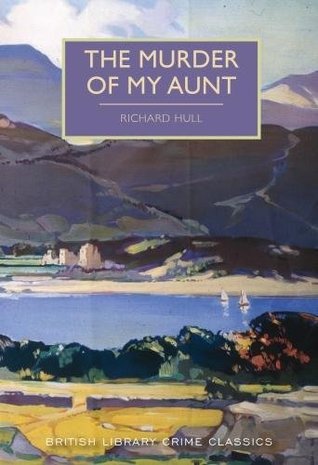
The Murder of My Aunt Poisoned Pen Press|4 September 2018 |227 pages|e-book |Review copy|5* This edition, published in association with the British Library, has an introduction by Martin Edwards. It was first published in 1934 by Hamish Hamilton. It was Richard Hull’s first novel. His real name was Richard Henry Sampson (1896 – 1973) and up until 1934 he had worked as a chartered accountant. With the success of The Murder of My Aunt he devoted himself to writing. The Murder of My Aunt is one of the best of the classic crime fiction novels from the Golden Age that I’ve read. On the face of it has a straightforward plot as Edward Powell, the narrator for most of the book, plots to murder his Aunt Mildred. They live in a house called Brynmawr on the outskirts of the Welsh town of Llwll. Mildred is his guardian, his parents having died in mysterious circumstances when Edward was very young. He detests living in Lwll and he also detests his aunt. It’s a contest of wills as Mildred finds Edward a great trial, she sees all his faults – he is selfish, self-centred, vain and lazy and foppishly effeminate – and she constantly nags him to change his ways, or she will ‘have to take action’. Edward, though decides that he will take action, thinking his life would be so much better without Mildred and he sets out to find a way to arrange her death so that no suspicion will fall on him. He makes copious notes of various methods and the steps he plans to take and that’s more difficult than he expected as his attempts keep failing. But it’s the writing that lifts this book from the ordinary to an original and funny murder mystery and, whilst not laugh-out-loud funny, I thought it was brilliant. It’s witty and ironic from the start as Edward pontificates on the pronunciation of the word ‘Lwll’.  Neither Edward nor Mildred come across as caricatures, but as real people, both of them with their own faults. Edward is just so insufferably awful that I felt on Mildred’s side in their battle of wits, even though she shows him up in front of the whole village – and after all she had brought him up. Once I started to read The Murder of My Aunt I was captivated and I had to read it quickly, anxious to find out if Edward did manage to kill his aunt. It makes very entertaining reading and I loved the ending, which took me by surprise and I thought was so clever – definitely a 5* read for me! Now I’m looking forward to reading more of  Richard Hull’s books and have Excellent Intentions lined up to read soon. My thanks to the publishers, Poisoned Pen Press, for my review copy via NetGalley. This is qualifies for the Mount TBR Challenge and for the Calendar of Crime Challenge for March in the category of a book in which money/fortune/inheritance has a major role.

Six Degrees of Separation: from Fight Club to The Word is Murder

I love doing Six Degrees of Separation, a monthly link-up hosted by Kate at Books Are My Favourite and Best. Each month a book is chosen as a starting point and linked to six other books to form a chain. A book doesn’t need to be connected to all the other books on the list, only to the one next to it in the chain.
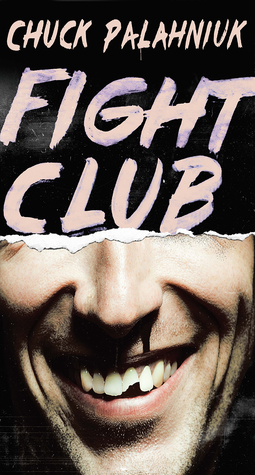
Fight Club

This month the chain begins with Fight Club by Chuck Palahniuk, a book I haven’t read but it’s about a club where men meet in the basement of bars and can fight ‘as long as they have to’.

The Friday Night Knitting Club

So I’m moving away from a club where men meet and fight to a club where women meet to exchange knitting tips, jokes, and their deepest secrets. It’s The Friday Night Knitting Club by Kate Jacobs. I haven’t read this book either. It seems as though they didn’t do much knitting so maybe there was more ‘natter’ than ‘knitting’. It sounds a bit too angst ridden for me and probably no more appealing than a fight club.
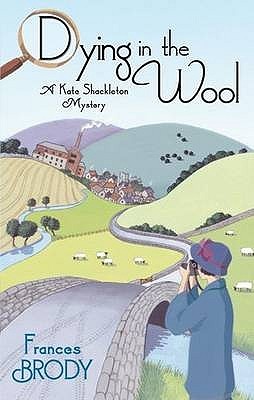
Dying In the Wool (Kate Shackleton, #1)

So, in a complete change of genre I’m moving on to crime fiction and my next link is to another use of wool in Dying in the Wool the first of Frances Brody’s Kate Shackleton Mysteries, crime fiction set in Yorkshire in 1922, with flashbacks to 1916.  It’s a post World War 1 crime novel, along the lines of Jacqueline Winspear’s Maisie Dobbs and Carola Dunn’s Daisy Dalrymple books, with an independent female amateur detective. Kate investigates the disappearance of mill owner Joshua Braithwaite who went missing after apparently trying to commit suicide.

Gallows View, the first Inspector Banks book by Peter Robinson, is also set in Yorkshire, where Alice Matlock, an old woman, living on her own, is found dead in her ransacked house in Gallows View, a row of old terraced  cottages. One of the suspects for her murder is a Peeping Tom who is targeting young, blonde women, following them as they leave the pub and then watching as they undress for bed.

A Good Hanging

There is also a Peeping Tom in Tit for Tat, one of the stories in Ian Rankin’s collection of short stories, A Good Hanging. Rebus investigates a fire in a tenement in Edinburgh where John Brodie lives after a woman in a tenement opposite reported a Peeping Tom had been spying on her, aiming his binoculars towards her flat. He claims he was ‘bird-watching’.

When Will There Be Good News? (Jackson Brodie, #3)

KateAtkinson has written four books about another character called Brodie – Jackson Brodie. My favourite of these books is the third one – When Will There Be Good News? It’s set mainly in Edinburgh where Brodie, along with Detective Chief Inspector Louise Monroe, is involved in the search for a missing woman. It has the most complicated plot, with many twists and interlinking sub-plots (some with convenient coincidences) and I loved it.

The Word Is Murder

Brodie is an ex-policeman and now a private investigator, as is  Daniel Hawthorne in The Word is Murder by Anthony Horowitz. This is a very clever and different type of murder mystery in which the author plays the part of himself helping Hawthorne to solve the murder of Diana Cowper who was killed on the same day that she had made arrangements for her funeral. I was totally unable to solve the mystery, the clues were all there, but I was so involved in sorting out what was real and what wasn’t and enjoying the puzzle that I completely missed them.

This month my chain has travelled from America to the United Kingdom, connected by clubs, wool, settings in Yorkshire, Peeping Toms, characters called Brodie and ex-policemen turned private investigators.

Next month (2 March) the chain will start with The Arsonist by Chloe Hooper.