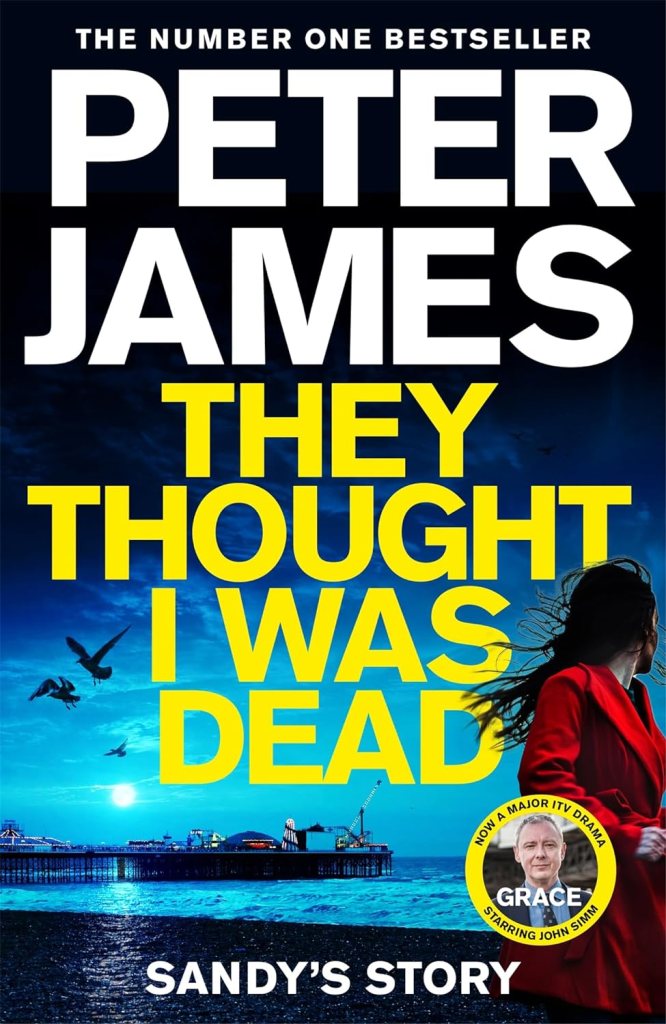
West with Giraffes by Lynda Rutledge

Lake Union Publishing| 2001| 346 pages| e-book| I bought it| 5*

Description on Amazon:

An emotional, rousing novel inspired by the incredible true story of two giraffes who made headlines and won the hearts of Depression-era America.

“Few true friends have I known and two were giraffes…”

Woodrow Wilson Nickel, age 105, feels his life ebbing away. But when he learns giraffes are going extinct, he finds himself recalling the unforgettable experience he cannot take to his grave.

It’s 1938. The Great Depression lingers. Hitler is threatening Europe, and world-weary Americans long for wonder. They find it in two giraffes who miraculously survive a hurricane while crossing the Atlantic. What follows is a twelve-day road trip in a custom truck to deliver Southern California’s first giraffes to the San Diego Zoo. Behind the wheel is the young Dust Bowl rowdy Woodrow. Inspired by true events, the tale weaves real-life figures with fictional ones, including the world’s first female zoo director, a crusty old man with a past, a young female photographer with a secret, and assorted reprobates as spotty as the giraffes.

Part adventure, part historical saga, and part coming-of-age love story, West with Giraffes explores what it means to be changed by the grace of animals, the kindness of strangers, the passing of time, and a story told before it’s too late.

My thoughts:

I read West with Giraffes by Lynda Rutledge in September this year but didn’t get round to writing about it then. I don’t think I need to add anything to the description shown above other than to say that I loved this story. I didn’t really expect to like it as much as I did – that took me by surprise. It has a colourful cast of characters, all fictional apart from the owner of the San Diego Zoo, Mrs Belle Benchley, a remarkable woman. In the Historical Notes at the end of the book she’s described as ‘an early glass-ceiling breaker‘. She began working at the zoo in 1925 as a civil servant bookkeeper, and working her way through a number of different roles eventually becoming known in the late 1930s as ‘the only female zoo director in the world‘. She believed that the only way people would care about wild animals was to meet them.

Not knowing much about American history I found the Historical Notes very helpful, particularly those about the Great Hurricane of 1938, the most destructive storm to strike New England in recorded history until 2012’s Hurricane Sandy. The journey the giraffes took was primarily the Lee Highway, the more southern, of the transcontinental routes at the time, designed to be a southern counterpart to the northern Lincoln Highway. The author’s website is fascinating giving lots of information about the book, photos from newspaper articles and details about her writing process.

It conjures up a vivid picture of America in 1938 during the Great Depression, the Dust Bowl, hobo cards, nomadic workers taking jobs where they could, desperate Hooverville dwellers in shanty towns, sundown town racism, and circus animal cruelty. But of course, it is the giraffes that are the two main characters. It is a remarkable book and if you like historical fiction based on fact, books about travel and an exciting story I think you’d enjoy it too.

Six Degrees of Separation from Seascraper to

This is a monthly link-up hosted by Kate at Books Are My Favourite and Best. On the first Saturday of every month, a book is chosen as a starting point and linked to six other books to form a chain. Readers and bloggers are invited to join in by creating their own ‘chain’ leading from the selected book.

Books can be linked in obvious ways – for example, books by the same authors, from the same era or genre, or books with similar themes or settings. Or, you may choose to link them in more personal ways: books you read on the same holiday, books given to you by a particular friend, books that remind you of a particular time in your life, or books you read for an online challenge.

A book doesn’t need to be connected to all the other books on the list, only to the ones next to them in the chain.
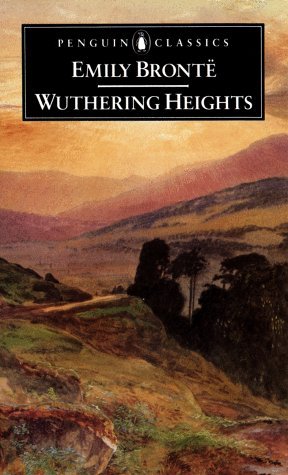
This month we are starting with a novella – Seascraper by Benjamin Wood, a book I haven’t read.

Going off the book cover of a gloomy seaside scene, with the sun barely visible through the grey mist this I think this cannot be a cheerful seaside story and the description on Amazon adds to that impression. It describes it as ‘the story of a young man hemmed in by his circumstances, striving to achieve fulfilment far beyond the world he knows.’

Usually I try to vary my links, but this month I decided to make this chain with all my links having the word sea in the title, beginning with The Sea, The Sea by Iris Murdoch, another book that does not have a happy picture of life by the sea. In it Charles Appleby an ageing actor, moves to a house by the sea and slowly ruins his life and of those around him. The sea is itself a character, sometimes calm and peaceful and at other times raging and storm swept, full of monsters and high drama. I read it many years ago when I had time off work with the flu and I remember being drawn feverishly into the narrative.

The next book in my chain is also a book about how dangerous the sea can be. It’s The Sea Change by Joanna Rossiter as a tsunami sweeps through Kanyakumari, in Southern India separating Alice from her new husband, James and in danger of drowning, she desperately searches for him. The story is a dual time novel told alternately by Alice and Violet, her mother. After the dramatic opening scenes it then moves immediately to Imber in 1971 as Violet returns to Imber and recalls how they were forced to leave, clinging to Imber ‘as if it were a lost soul.

The power of the sea is evident in The Old Man and the Sea by Ernest Hemingway. The sea in this book is deep and treacherous.This is the story of an old Cuban fisherman and his supreme ordeal: a relentless, agonizing battle with a giant marlin far out in the Gulf Stream.

The next book in my chain is The Sea Detective by Mark Douglas-Home. Cal McGill is an oceanographer, who uses his knowledge of the tides, wind speeds and data on ocean currents to track human bodies and sea-borne objects. Megan Bates, had last been seen walking into the sea. Her body had never been found and it had been assumed after her bag and hat had drifted ashore that she had drowned herself.

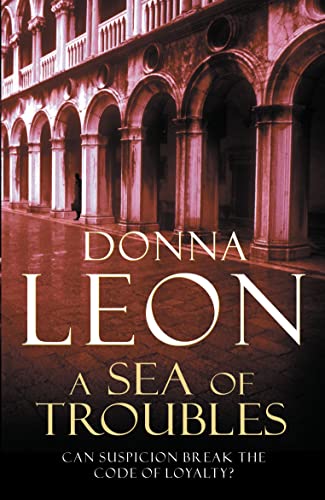
A Sea of Troubles by Donna Leon is about the deaths of two fishermen off the island of Pellestrina, south of the Lido on the Venetian lagoon, when their boat suddenly exploded. Fishing is the primary source of income on Pellestrina and alongside the inner side of the thin peninsular are scores of vongolari, the clam fishing boats. Leon also highlights the pollution and the overfishing of clams that is destroying the clam beds.

I’m completing my chain with In the Heart of the Sea The Epic True Story That Inspired Moby Dick by Nathaniel Philbrick, a nonfiction book, the incredible story of the wreck of the whaleship Essex in 1820 in the South Pacific. It was repeatedly rammed and sunk by an eighty-ton bull sperm whale. I haven’t read this book yet; it’s one of my TBRs. It’s full of detail about whales and the Nantucket whalers. It’s described as ‘lmpeccably researched and beautifully told, the book delivers the ultimate portrait of man against nature, drawing on a remarkable range of archival and modern sources, including a long-lost account by the ship’s cabin boy.’

Next month (January 3, 2026) is a wildcard to begin the year. Start with the book you finished this month’s chain with (or, if you didn’t participate in December, begin with the last book you read).

Throwback Thursday: The Postscript Murders by Elly Griffiths

Today I’m linking up with Davida @ The Chocolate Lady’s Book Review Blog for Throwback Thursday. It takes place on the Thursday before the first Saturday of every month (i.e., the Thursday before the monthly #6Degrees post). The idea is to highlight one of your previously published book reviews and then link back to Davida’s blog.

I first reviewed The Postscript Murders on December 9, 2020.

My review begins:

I enjoyed Elly Griffiths’ first DS Harbinder Kaur book, The Stranger Diaries, so I was keen to read the second book, The Postscript Murders. It’s very different, in a much lighter style and I think Elly Griffiths was enjoying herself writing this poking fun at crime fiction writers and the book world, with book bloggers and a literary festival. I really enjoyed it. It’s very readable, cleverly plotted, with interesting and well defined characters

Click here to read my full review

A Legacy of Secrets by Lulu Taylor

Pan Macmillan| 4 December 2025| 445 pages| e-book| Review copy| 3*

Description:

Is the truth a legacy worth inheriting?

Flick Templeton seems to have it all: money, a renowned family name, brains and talent. But her wealth and status seem an obstacle to the real love she longs for. Guided by passion, she seeks her soulmate while finding her own path – but will the legendary family curse of tragedy and loss always thwart her?

Etta, Flick’s daughter, inherits her own share of the family blessings along with its darkness. Growing up, she is pulled between caring for her mother and finding her own identity. As Etta unravels the threads of Flick’s secrets, she starts to learn the truth about who she really is . . .

But can Flick and Etta ever break truly free from the shadows of a painful past, and the curse that seems to hang over every generation of their family?

This is the first book I’ve read by Lulu Taylor, so I wasn’t sure I would enjoy it. But when I had an invitation from Pan Macmillan to read this book I thought I’d read it, based on the blurb.

Once I’d started reading it I found it gripping and compelling, but I also found that it’s full of emotion, from ecstasy to the depths of despair about a dysfunctional family, with some truly awful characters.They believe their family is cursed. It’s a dramatic family saga, verging on melodrama, high on romance, intermingled with mystery and intrigue. It’s also very long encompassing three generations, over different time lines. I did find the structure of the plot rather muddled, so it’s definitely a book you have to read carefully to keep track of the characters over the years from 1952 to 1992.

The main character is ‘little girl lost‘ Flick (Felicity) Templeton, the daughter of the fabulously rich and glamorous, Gloria, who is so unbelievably selfish, self-centred, and controlling, a perfectly horrible person. The novel begins in 1952 with Brinsley and Flick’s eighteenth birthday party to celebrate their coming-of-age, when Brinsley would take possession of Caundle Court. This puzzled me as in 1952 the date when a young person became an adult was 21 and it was not until 1969 that it was lowered to 18. I know this book is fiction, but this is so incorrect that it made me wonder if I wanted to carry on reading. Nevertheless I did because a mystery always intrigues me. However, as I read on it soon became clear what the secret was and it wasn’t too hard to work it out well before it was revealed, over 400 pages later. I had been tempted to jump to the end to see if I was right but because I received this book via NetGalley to review I thought it was only fair to read the whole book.

Despite my misgivings I did find enough that I liked to give A Legacy of Secrets 3 stars. I enjoyed the details of life in the 1950s when Flick went to a finishing school in Oxford and her brother went to Magdalen College to read history. I liked Flick’s daughter a lot, and determination to uncover the family’s secrets. I also liked the descriptions of all the locations and the interaction between the characters showing how misunderstandings arise and the difficulties of mother/daughter relationships. I could feel the heartbreak and sadness as the characters experience all the setbacks that are thrown at them. It’s a complex and emotional book, one that I liked rather than loved.

Top Ten Tuesday: Books Set in the 1950s

Top Ten Tuesday is a weekly meme created by The Broke and the Bookish and now hosted by Jana at That Artsy Reader Girl. For the rules see her blog

Today the topic is a Freebie and I’ve chosen books Books Set in the 1950s.

Murder at Gulls Nest by Jess Kidd. The first in a sparkling new 1950s seaside mystery series, featuring sharp-eyed former nun Nora Breen.

After thirty years in a convent, Nora Breen has thrown off her habit and set her sights on the seaside town of Gore-on-Sea. Why there? Why now? Instinct tells her it’s better not to reveal her reasons straight away. She takes a room at Gulls Nest guest house and settles in to watch and listen.

I enjoyed this. It’s quirky with some odd characters. At times it feels like a cosy crime mystery, but it’s also rather dark and foreboding, whereas at other times there’s some humour and also a hint of a romance. The setting is good in a fictional 1950s British seaside town.

 Fludd by Hilary Mantel. I enjoyed this immensely – partly about religion and superstition, but also a fantasy, a fairy tale, told with wit and humour and with brilliant characterisation. It’s one of her earlier novels, set in Fetherhoughton, a drab, dreary town somewhere in a magical, half-real 1950s north England, a preserve of ignorance and superstition. The story centres on Fludd, a young priest who comes to the Church of St Thomas Aquinas to help Father Angwin, a cynical priest who has lost his faith. The Bishop, a modern man, is concerned about Father Angwin and wants to bring him and the Catholic community up to date – so the statues in the church have to go. This has a most disturbing effect on all concerned – not just the church and Father Angwin, but also the the nuns in the convent, and the school, both under the stern eye of Mother Perpetua.

An Air That Kills by Andrew Taylor, the first book in his Lydmouth crime series. The setting is Lydmouth, a small market town on the Welsh/English border in the early 1950s, just after the end of the Second World War. It begins as journalist, Jill Francis arrives to stay with her friends, Philip and Charlotte in Lydmouth, to recover from a bad experience.  Also new to the town is Inspector Richard Thornhill, who is finding it difficult to adjust to working in the local police force. Workmen digging out a drain discover a wooden box containing baby’s bones, an old brooch and some scraps of yellowed newspaper. When Major Harcutt, the local historian is consulted he found that there could be a connection to an old murder trial. 

Vengeance by Benjamin Black (a pseudonym used by John Banville), number five in Black’s Quirke Mysteries series set in Ireland in the 1950s. It begins with a suicide, that of Victor Delahaye, a business man who takes his boat out to sea and shoots himself. He had taken his partner’s son, Davy Clancy out to sea with him. The Delahayes and Clancys are interviewed – Mona Delahaye, the dead man’s young and very beautiful wife; James and Jonas Delahaye, his identical twin sons; Marguerite his sister; Jack Clancy, his ambitious, womanizing partner and Sylvia, Jack’s long-suffering wife. Then there is a second death. Why did Victor kill himself and who is the murderer, wreaking vengeance on the families?

The setting is excellent, both in location and time, with the characters wreathed in cigarette smoke, and having to find public telephones for example. 

 Death Has Deep Roots: a Second World War Mystery by Michael Gilbert. Set in 1950 it’s a mix of courtroom drama, spy novel and an adventure thriller. Victoria Lamartine, a hotel worker, and an ex-French Resistance fighter is on trial for the murder of Major Eric Thoseby, her supposed lover, and alleged father of her dead child. She is the obvious suspect – she was found standing over Thoseby’s dead body in his room at the Family Hotel in Soho, a room that was only accessed by one staircase – making this a variation on a locked room murder mystery. It was written not long after the end of the Second World War and it conveys a vivid impression of what life was like in both France and England, with memories of the war still fresh on people’s minds.

An Awfully Big Adventure, a semi-autobiographical novel set in 1950, based on Beryl Bainbridge’s own experience as an assistant stage manager in a Liverpool. A Liverpool repertory theatre company are rehearsing its Christmas production of Peter Pan. The story centres around Stella, the assistant stage manager. On the face of it this is a straight forward story of the theatre company but underneath it’s packed with emotion, pathos and drama. And it’s firmly grounded in a grim post-war 1950s England, food rationing still in operation and bombed buildings still in ruins overgrown with weeds.

Hickory Dickory Dock by Agatha Christie, a Poirot mystery, first published in 1955. It’s set in a crowded London house, owned by Mrs Nicolstis, a Greek and full of a mixed group of young students from a variety of backgrounds and cultures – from America, West Africa and India as well as an assortment from the British Isles.Items have gone missing and then one of the students commits suicide – or is it murder? And more deaths follow.

Agatha Christie reveals contemporary attitudes (1950s) to race and politics, as the characters’ prejudices come out in their discussions. There are some interesting reflections on crime and the psychology of behaviour. 

Fresh from the Country by Miss Read, set in the 1950s, this is a stand-alone novel telling the story of Anna Lacey, a newly qualified teacher, as she spends her first year teaching in Elm Hill, a new suburb in London. It highlights the differences between life in the country and the suburbs, which transported me back to the 1950s, when children were taught in large classes and the pace of life was slower than today. It was a bit disconcerting to read that Anna enjoyed smoking, but then the dangers of cigarettes were not emphasised in those days and many people did smoke.

The Blood Card by Elly Griffiths, the third book in the DI Stephens and Max Mephisto series. Known as the ‘Magic Men’ they had been part of a top-secret espionage unit during the War. This book captures the atmosphere of 1953 – a time of great change and optimism. Britain is looking forward with eager anticipation to the new Queen’s coronation. The newspapers and newsreels are full of it and more than half the homes in the country have bought a television in order to watch the coronation live- it was the first British coronation to be broadcast on television, a momentous occasion. But there are fears that an anarchist group is plotting to disrupt the coronation.

I enjoyed the insight into the history of television as Max is sceptical about performing magic on TV thinking the ‘smug grey box’ will be the death of the days of music hall, that magic tricks needed to be performed on stage not in close up with a camera over his shoulder. But he is persuaded to take part in a new show after the coronation.

Dean Street December 2025

DeanStreetDecember is hosted by Liz @ Adventures in reading, running and working from homeDean Street Press is the indie publisher devoted to finding and republishing good fiction and non-fiction. Read from DSP, review the book(s) you’ve read and link them up on the post on Liz’s blog.

I have eight books to choose from:

  1. Arrest the Bishop? by Winifred Peck
  2. The Crow’s Inn Tragedy by Annie Haynes
  3. The Draycott Murder Mystery by Molly Thynne
  4. Evenfield by Rachel Ferguson
  5. A Harp in Lowndes Square by Rachel Ferguson
  6. A House on the Rhine by Francis Faviell
  7. The Other Side of the Moon: David Niven by Sheridon Morley
  8. Thalia by Francis Faviell