Six Degrees of Separation: from The Dry to The Song of Troy

I love doing Six Degrees of Separation, a monthly link-up hosted by Kate at Books Are My Favourite and Best. Each month a book is chosen as a starting point and linked to six other books to form a chain. A book doesn’t need to be connected to all the other books on the list, only to the one next to it in the chain. But for this chain the books are all connected in that they are all books on my TBR shelves.
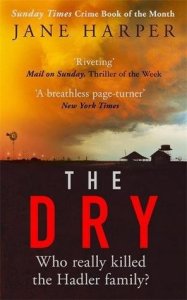
The Dry

This month the chain begins with The Dry by Jane Harper, crime fiction set in a small country town in Australia, where the Hadler family were brutally murdered. I have had this book on my TBR shelves for quite some time now and I really want to read it as I loved Force of Nature and The Lost Man. I was thinking of linking to one of these books but decided to go for another book, one that I bought on the same day as The Dry. It’s Longbourn by Jo Baker, a story about the Bennet’s servants in a re-imagining of Jane Austen’s Pride and Prejudice.

Another book that is a re-imagining is Rebecca’s Tale by Sally Beauman, a companion novel to Daphne du Maurier’s Rebecca. It is set 20 years after the death of Rebecca and the burning of Manderley. I’m hoping I’ll  love it as much as I loved Rebecca and Hitchcock’s 1940 film of the book. Sally Beauman was a journalist before she became an author. She wrote Rebecca’s Tale after writing an article about the work of Daphne du Maurier in The New Yorker magazine.

My next link is through the author’s first name – Sally – to  another author called Sally,  Sally Gunning and her book, The Widow’s War. It’s historical fiction set in Cape Cod, Massachusetts during the years prior to the War of Independence. After Lyddie Berry’s husband of 20 years dies in a whaling accident she has to fight a ‘war’ for control of her own destiny. Under the laws of the colony widows had the use of only one third of their husbands’ real estate, and did not inherit the ownership.

A different type of war is the subject of Small Wars by Sadie Jones. This is historical fiction set in  Cyprus in the 1950s as the EOKA terrorists are fighting for independence from Britain and union with Greece.

Another book set on an island is The Island by Victoria Hislop.  Alexis Fielding discovers the story of her mother’s family on the island of Spinalonga, a tiny, deserted island off the coast of Crete – Greece’s former leper colony.  Victoria Hislop was also a journalist before she became an author.

As was Colleen McCullough, the author of numerous books including the Masters of Rome series. So, my final link is to one of her books – The Song of Troy in  which she recounts the tale of Helen and Paris, sparking the Trojan War. Colleen McCullough was also an Australian author so it links back to the first book, The Dry by Jane Harper, also an Australian author, who I’m delighted to see was also a journalist before becoming an author!

In addition to all the books being TBRs, four of the authors were journalists before becoming authors and two are Australian authors.

The chain moves through time from the present day back to late classical Antiquity, beginning in Australia and passing through England, America, Cyprus, Crete to Anatolia in modern Turkey.

Next month (June 1, 2019), the chain will begin with the winner of the 2019 Wellcome Prize, Murmur by Will Eaves.
My Friday Post: Iris and Ruby by Rosie Thomas

Book Beginnings Button

Every Friday Book Beginnings on Friday is hosted by Gillion at Rose City Reader where you can share the first sentence (or so) of the book you are reading, along with your initial thoughts about the sentence, impressions of the book, or anything else the opener inspires.

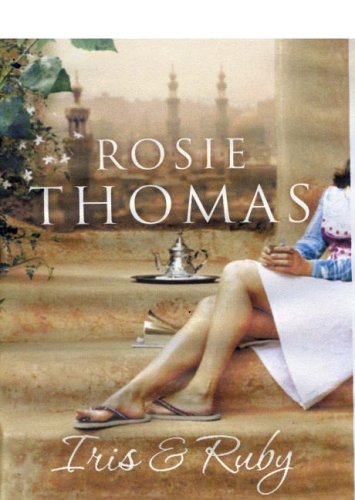
This week I’ve been looking at some of my TBRs deciding which one to read next and came across Iris and Ruby by Rosie Thomas. It’s been on my shelves a long time – 12 years – it really is time I read it!

Iris and Ruby

I remember.

And even as I say the words aloud in the silent room and hear the whisper dying away in the shadows of the house, I realise it’s not true.

Also every Friday there is The Friday 56, hosted by Freda at Freda’s Voice.

30879-friday2b56These are the rules:

  1. Grab a book, any book.
  2. Turn to page 56, or 56% on your eReader. If you have to improvise, that is okay.
  3. Find any sentence (or a few, just don’t spoil it) that grabs you.
  4. Post it.
  5. Add the URL to your post in the link on Freda’s most recent Friday 56 post.

Page 56:

‘I remember the Blitz. the beginning of it anyway. Then I came out here, to Cairo, to work.’

‘ Did you? How come?’

‘That’s the beginning of another long story.’

Blurb:

The unexpected arrival of her wilful teenage granddaughter, Ruby, brings life and disorder to 82-year-old Iris Black’s old house in Cairo. Ruby, driven away from England by her fraught relationship with her own mother, is seeking refuge with the grandmother she hasn’t seen for years.

An unlikely bond develops as Ruby helps Iris document her fading memories of the glittering, cosmopolitan Cairo of World War Two, and of her one true love – the enigmatic Captain Xan Molyneux – whom she lost to the ravages of war.

This lost love shaped Iris’s past – and will affect Ruby’s future in ways they could not have imagined…

~~~

What do you think? Would you keep reading?

The Broken Mirror by Jonathan Coe

A fable for all ages about a mirror which reflects an alternative world

The Broken Mirror

Unbound|November 2017|81 pages|Library book|4*

The Broken Mirror was first published in Italian in 2012. It is a collaboration between novelist Jonathan Coe and Chiara Coccorese, an Italian artist, and is described as ‘a political parable for children, a contemporary fairy tale for adults, and a fable for all ages.. It’s published by Unbound, a publishing house funded directly by readers  

The hardback book is lovely to hold and the coloured illustrations are beautiful. It tells the story of Claire, a little girl of eight, who finds a fragment of a broken mirror in a rubbish dump behind her house. This is no ordinary mirror, as what she sees reflected in it is a beautiful world so unlike the real world around her. It’s a world full of colour, where her house is transformed into a castle, just like the sandcastle she had built at the beach on holiday – a fairy tale world, so much more exciting and magical than the real world. As Claire’s father remarks, Claire lives in a dream world.

By the time Claire reaches her teens she doesn’t look in the mirror as often. But she is dissatisfied with her life and, seeing her home town being spoilt by property developers and how badly immigrants are treated, she begins to look into it more and more, where she sees a better way of life. Then Claire meets other people who also have a fragment of broken mirror  – she is not alone with her dreams of a better world.

It is well written and I enjoyed reading it. Coe shows a society in crisis and how it might be improved. It’s a simple story, simply told but presenting important issues, ending with the possibility of a better future.

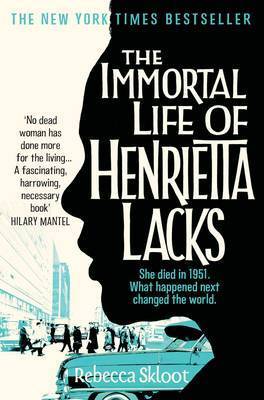
The Immortal Life of Henrietta Lacks by Rebecca Skloot

Immortal life of HL

Pan|First Paperback Edition edition (1 Jan. 2011)|431 pages|5*

The Immortal Life of Henrietta Lacks by Rebecca Skloot is an outstanding book! It took her more than ten years to research and write and has won numerous awards and been made into a film starring Oprah Winfrey as Deborah Lacks, Renee Elise Goldsberry as Henrietta Lacks, and Rose Byrne as Rebecca Skloot.

I found it all fascinating, but harrowing to read in parts, from all the details of Henrietta’s life, how she was treated for cervical cancer in 1951, when she was just 30, to her death nine months later.  During her diagnosis and surgery cancer cells taken from her tumour were cultured and amazingly those cells multiplied, doubling every twenty four hours. They became known as HeLa cells (pronounced hee-lah) and have formed the basis for much medical research and drug development ever since. It is also a history of the diagnosis and treatment of cancer and considers the ethical issues around ownership of her cells and the distress, anger and confusion this caused her family. It raises many issues not just regarding ethics, but also regarding science, race and class.

Cancer treatment in 1951 with radium was brutal, but what made it worse was that Henrietta was a black woman, living in near-poverty in Baltimore. Black oral history from at least the 1800s tells of kidnapping black people for research and there were disturbing truths behind the stories – doctors did test drugs on slaves and carried out operations to develop surgical techniques. In 1951 Henrietta was treated at Johns Hopkins Hospital, a hospital built for the benefit of Baltimore’s poor, but black residents suspected it had been ‘built in a poor black neighborhood  for the benefit of scientists – to give them easy access to potential research subjects.’ (page 190)

The Lacks family were poor and they misunderstood what was happening. They became fearful and distressed, and some of them were aggressive when they realised with horror that Henrietta still lived on in a way they couldn’t understand. They had no health insurance and received no financial benefit from the research done on the HeLa cells. Rebecca Skloot’s investigation reveals the mental anguish they went through and her account is so very moving. In particular her times with Henrietta’s daughter, Deborah are heart breaking as she records the terrible struggles Deborah had to overcome. It was only years later that Deborah understood that it was her mother’s cancer cells that were still ‘alive’ and not her own normal cells.

‘So we don’t have the thing that made her cells grow forever?’ Deborah asked. Christoph shook his head. ‘Now you tell me after all these years!’ Deborah yelled. ‘Thank God, cause I was wonderin.’

She pointed at a cell on the screen that looked longer than the others. ‘This one is cancer, right? And the rest are her normal ones?’

‘Actually, HeLa is all just cancer,’ Christoph said.

‘Wait a minute,’ she said,’you mean none of our mother’s regular cells still livin? Just her cancer cells?’

‘That’s right.’

‘Oh! See, and all this time I thought my mother regular cells still livin!’ (page 302)

Rebecca Skloot based her book on an impressive amount of research  – archival documents, scientific and historical research, including legal documents and medical records. She also used Deborah’s personal journals as well as conducting more than a thousand hours of interviews with Henrietta’s family and friends, and lawyers, ethicists, scientists and journalists who have written about the Lacks family.

This is not a dry scientific account – although there is a lot of scientific detail in the book (not all of which I’m sure I fully understood). It is a remarkable and personal record of the Lacks family that comes to life through dialogue, by adopting the language with which each person spoke and wrote. She explains that where she wrote in the first person using Deborah’s voice she was quoting what she said, only edited for length and occasionally clarity. It is brilliantly written, giving me much to think over – one of the most moving books of non-fiction I’ve read!


The Island by Ragnar Jónasson

Nordic Noir – dark, chilling and utterly gripping

The Island (Hidden Iceland #2)

Penguin UK Michael Joseph|4 April 2019|313 pages|Review copy|5*

I was delighted to receive a review copy of  The Island by Ragnar Jónasson from the publishers.  

This is my first book by Ragnar Jónasson. I discovered after I’d read it that it’s the second in his Hidden Iceland series – but I had no difficulty reading it as a standalone novel. It begins with a Prologue that indicates that the main story has elements of horror as well as mystery. It’s unsettling and sinister.

Four friends visit the isolated island of Elliðaey off the coast of Iceland, ten years after the murder of a fifth friend, Katla, but only three of them return. One of them, Klara, fell to her death from a cliff – but did she jump or was she pushed? Detective Inspector Hulda Hermannsdóttir is sent to investigate. She realises that there are similarities with the death of Katla. A suspect had been charged, but had committed suicide before the verdict was announced and the case had been closed. But are the two murders connected, even though they are ten years apart?

Hulda is an interesting character, with a back story that is only partly revealed in this book. Her name means ‘hidden woman‘. The first book in the series dealt with her later life, with this second book going back in time to her earlier life. In The Island she lives alone, her mother having recently died and there is a mystery about her father. She only knows that he was an American soldier and part of the novel records her search for him. It’s a police procedural, so Hulda’s somewhat fractious relationships with her colleagues also form part of the story.

The narrative also switches between the deaths of the two young women ten years apart, told from the various characters’ perspectives. They present an intricate mystery that Hulda gradually unravels, sifting through the lies that the suspects tell her. It’s not a fast-paced novel, but it is full of suspense and foreboding, set against the beautiful and dramatic Icelandic landscape. One by one I suspected each character, unsure who to believe. I loved it!

My thanks to the publishers, Penguin UK Michael Joseph for my review copy via NetGalley.

A Snapshot of Murder by Frances Brody

A Snapshot of Murder (Kate Shackleton #10)


Crooked Lane Books |19 April 2019|Print length 339 pages|e-book review copy|3*

Blurb (Amazon):

Yorkshire, 1928. Indomitable sleuth Kate Shackleton is taking a well-deserved break from her detective work and indulging in her other passion: photography. When her local Photographic Society proposes an outing, Kate jumps at the chance to visit Haworth and Stanbury, in the heart of Brontë country, the setting for Wuthering Heights.

But when an obnoxious member of their party is murdered, the group is thrown into disarray. Is the murderer amongst them, or did the loud-mouthed Tobias have more enemies than they might have imagined?

Armed with her wit and wiles, and of course her trusty camera, it’s up to Kate to crack the case, and get that perfect shot too . . .

A Snapshot of Murder by  Francis Brody is the 10th in her Kate Shackleton series. I’ve read three of her earlier books and I have to say that I didn’t enjoy this one as much. I think, though, that the setting is excellent, particularly in Haworth when the Bronte Parsonage Museum was opened in 1928. But I was disappointed to find that the murder could have taken place anywhere – it no connection to the Brontes, or to the opening of the Museum, apart from the fact that the murderer took advantage of being in a crowd of people and managed to slip away unnoticed. 

I like Kate Shackleton – she’s a competent private investigator, but the murder mystery was too easy to solve. It began well but it was obvious who was going to end up dead and although there are several suspects, it soon became obvious who the culprit was and my interest waned. And any sympathy I had for the murderer had just disappeared by the end of the book.

My thanks to the publishers, Crooked Lane Books for my review copy via NetGalley.