My Friday Post: The Greatcoat by Helen Dunmore

Book Beginnings Button

Every Friday Book Beginnings on Friday is hosted by Gillion at Rose City Reader where you can share the first sentence (or so) of the book you are reading, along with your initial thoughts about the sentence, impressions of the book, or anything else the opener inspires.

Greatcoat

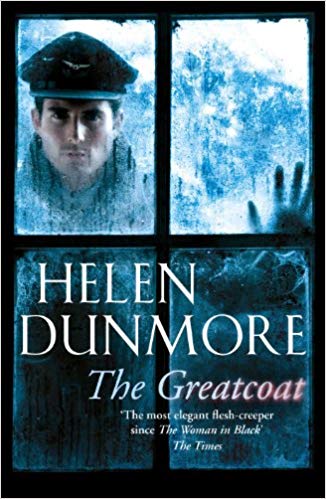
The library van visit was on Tuesday this week and The Greatcoat by Helen Dunmore caught my eye because ever since I read her last book, Birdcage Walk I have been wanting to read more of her books. 

The description on the back cover:

It is the winter of 1952, and Isabel Carey  is struggling to adjust to the realities of married life in Yorkshire.

Isolated and lonely, she is also intensely cold. And her husband – a doctor – is rarely at home. And then one night, she discovers an old RAF greatcoat in the back of a cupboard. She puts it on for warmth – and is startled by a knock at her window.

Outside is a young man. A pilot. And he wants to come in …

Chapter One

1952

Isabel sat back on her heels and watched flames spring up in the grate. They were pale and there was no heat in them. She was cold, she was tired, her back ached and her eyes stung – from the smoke of course. But at least the fire was lit.

Also every Friday there is The Friday 56, hosted by Freda at Freda’s Voice.

30879-friday2b56These are the rules:

  1. Grab a book, any book.
  2. Turn to page 56, or 56% on your eReader. If you have to improvise, that is okay.
  3. Find any sentence (or a few, just don’t spoil it) that grabs you.
  4. Post it.
  5. Add the URL to your post in the link on Freda’s most recent Friday 56 post.


Pages 55-56:

There was a man outside the window. She saw the pallor of his face first, as it seemed to bob against the glass, too high up to belong to a man who had his feet on the ground.

I want to know more – do you too?

Mary Barton by Elizabeth Gaskell

Mary Barton Gaskell

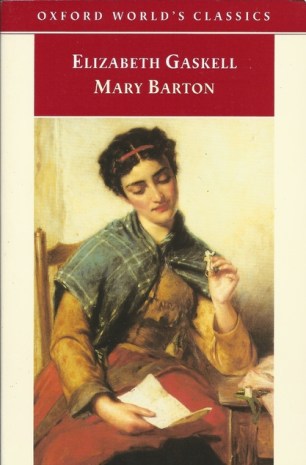
Mary Barton: A Tale of Manchester Life by Elizabeth Gaskell was my Classics Club Spin book for September and October. It was her first novel, published in two volumes in 1848, bringing her to the attention of Charles Dickens who was looking for contributors to his new periodical Household Words. It’s the third book of hers that I have read. It is a long book and begins slowly, developing the characters and building up to the main story.

It covers the years 1837 to 1842, a time that saw the growth of trade unions and of Chartism, of industrial city expansion and a time of extreme economic depression. The structure of society and social attitudes were changing with the growth of materialism and class antagonism. As people moved away from the countryside and into Manchester to work in the cotton mills, the city grew from 75,000 in 1800 to 400,000 in 1848 when Mary Barton was published, creating great wealth for the mill owners whilst the mill workers were housed in horrendous slums.

Mary Barton is the story of ordinary working people struggling with the rapid social change and terrible working and living conditions. Mary is the daughter of John Barton, a mill worker and trade unionist. John is a hard worker, but he is determined that she should never work in a factory, so she works as an apprentice to a dressmaker and milliner. She is flattered by the attentions of Henry Carson, a mill owner’s son and believes he will marry he and that she will live in luxury and she spurns Jem Wilson, her childhood friend, only later realising that it is him she loves.

However, work for the factory dries up and it closes down. The workers are desperate and John becomes an active trade unionist and a Chartist. (Gaskell gives a detailed picture of the Chartist Movement and their demands for political reform.) Eventually he turns to opium to relieve his situation. Things go from bad to worse – Henry is murdered and suspicion falls on Jem. Mary realises the mistakes she had made and that it is Jem that she loves, and when her efforts to prove his innocence lead her to suspect the real culprit, she is left with a terrible dilemma.

I have only just touched the surface of this novel and there are many strands that I have left out. There is a mystery surrounding the disappearance of Mary’s Aunt Esther, the story of Mary’s friend Margaret, who is slowly going blind, and her grandfather, Job, Jem’s mother and his Aunt Alice country women who came to Manchester to work, a factory fire and the illnesses and diseases that were endemic at the time, amongst others. It is a touch melodramatic in parts and does include quite lengthy rhetorical passages and commentary in Gaskell’s own voice as narrator. But on the whole her style is clear and detailed giving a sense of reality. It is a powerful novel, a love story, as well as a tragedy, presenting a moving picture of the lives of working people in the middle of the nineteenth century.

3.5*

As well as being my Classics Club Spin book, Mary Barton is also one of my TBRs so it qualifies for Bev’s Mount TBR Reading Challenge.

Top Ten Tuesday: Books That Give Off Autumn Vibes

top-ten-tuesday-new

Top Ten Tuesday is a weekly meme created by The Broke and the Bookish and now hosted by Jana at That Artsy Reader Girl. For the rules see her blog.

This week’s topic: November 5: Books That Give Off Autumn Vibes (Autumn scenes/colors on the cover, autumn atmosphere, etc.)

Here are 10 books displaying autumnal colours. I’ve read all of them except for Thinking on My Feet. The links go to my posts when I’ve written about the book, and to Goodreads when I haven’t.

  1. Autumn by Ali Smith -A book I found it both poignant and cutting in its look at modern life. It’s main focus is the relationship between Daniel and Elisabeth, who first met when Elisabeth was a child and moved into the house next door to Daniel’s.
  2. Painting as a Pastime by Winston Churchill – The cover shows Churchill’s painting of his home, Chartwell. Churchill was forty when he first started to paint.
  3. Confusion by Elizabeth Jane Howard – the third novel about the Cazalet family, set in the dark, middle days of World War II to May 8, 1945, VE Day.
  4. Thinking on My Feet by Kate Humble – this tells the story of Kate’s walking year – shining a light on the benefits of this simple activity. I have a copy of this but haven’t read it yet.
  5. The Lake District Murder by John Bude – a Golden Age Mystery. The cover, reproduced from a travel poster of the 1920s, shows a small steamer boat sailing on Ullswater, surrounded by the hills and mountains of the Lake District.
  6. Broken Ground by Val McDermid – I’m currently reading this Karen Pirie murder mystery set in the Highlands. A body is found in a bog.
  7. The Crow Trap by Ann Cleeves – the first Vera book, set in the North Pennines,  a very intricate and clever plot, with plenty of red herrings.
  8. Ninepins by Rosy Thornton – a book about mothers and daughters, not exactly a thriller, although there is a mystery element to it and not exactly a romance, either, although there is also a love story.
  9. The Woodlanders by Thomas Hardy – the story of Grace, who has been educated out of her social class, returning to the woodlands.
  10. The Wild Road by Gabriel King – an epic tale of adventure and danger, of heroism against insurmountable odds, and of love and comradeship among extraordinary animals who must brave The Wild Road . . .


Nonfiction November: Week 2 – Book Pairing

nonficnov 19

I’m taking part in Nonfiction November 2019 again this year. It was one of my favourite events last year – this year it will run from Oct 28 to Nov 30. Each Monday a link-up for the week’s topic will be posted at the host’s blog for you to link your posts throughout the week.

This week’s topic is: 

Week 2: (Nov. 4 to 8) – Book Pairing (host: Sarah @ Sarah’s Book Shelves). This week, pair up a nonfiction book with a fiction title. It can be a ‘If you loved this book, read this!’or just two titles that you think would go well together. Maybe it’s a historical novel and you’d like to get the real history by reading a nonfiction version of the story. 

I’ve recently read a couple of newly published historical novels that I think go well together with nonfiction books about the same subjects:

First, The Vanished Bride by Bella Ellis, a novel I loved, pairing it with  Juliet Barker’s biography of the Brontë family, The Brontës

When I first came across The Vanished Bride I wasn’t at all sure I wanted to read it, as I’m never very keen on books about famous authors solving crimes. However, the Brontë sisters books have been amongst my favourites for years and I was curious find out what this book was all about. ‘Bella Ellis’ is the Brontë inspired pen name for the author Rowan Coleman, who has been a Brontë devotee for most of her life.

It is historical fiction set in 1845 about Charlotte, Emily and Anne and their brother, Branwell and how the sisters became ‘detectors’, or amateur sleuths as they investigate the disappearance of a young woman from Chester Grange, just across the moors from the Brontë Parsonage – which is, of course purely fiction. But it is not all pure fiction – in the Author’s Note Bella Ellis explains that it is based on biological facts or inspired by them.

Reading The Vanished Bride has inspired me to get back to reading the new edition of  The Brontës, Juliet Barker’s biography of the family.  I began reading (and never finished) it a few years ago. It is the result of 11 years’ research in archives throughout the world.  It contains a wealth of information, is illustrated and has copious notes and an index.

Juliet Barker is an internationally recognised expert on the Brontës and from 1983 to 1989 she was curator and librarian of the Brontë Parsonage Museum. Her qualifications are impeccable – she was educated at Bradford Girls’ Grammar School and St Anne’s College, Oxford, where she gained her doctorate in medieval history. In 1999 she was awarded an honorary Doctorate of Letters by the University of Bradford, and in 2001 she was elected a Fellow of the Royal Society of Literature. For more information see her website.

Then I thought of these two books –  A Single Thread by Tracy Chevalier, a novel published this year and Singled Out by Virginia Nicholson published in 2007.

Both are about ‘Surplus Women‘ – nearly three-quarters of a million soldiers were killed during World War One, many of them unmarried young men, leaving a generation of women who had believed marriage to be their birthright without prospective husbands. 

A Single Thread focuses on one young woman, Violet whose fiancé, Laurence was killed in the First World War. Determined to be independent she leaves her mother and moves to Winchester, where she joins the Winchester Cathedral Broderers, a group of women dedicated to embroidering hassocks and cushions for the seats and benches. The difficulties of being independent are brought home to her as she struggles on her wages as a typist to pay for her lodgings, laundry and coal, let alone feed herself. And then her mother is admitted to hospital and she has to decide whether to return home to look after her.

Tracy Chevalier writes novels on a variety of subjects, carrying out meticulous research for each one. In this book she lists a number of the many resources she used, including details of Louisa Pesel’s embroidery work as well as the history of Winchester Cathedral, bell-ringing, 1930s women and life in Britain in the 1930s .

Singled Out, in contrast, is nonfiction, telling individual stories of how these ‘surplus women‘ coped with enforced spinsterhood. Tracing their fates, Virginia Nicholson shows how the single woman of the inter-war years had to depend on herself and, in doing so, helped change society. These women harboured harrowing secret sadness, yearning for the closeness of marriage and children. Beginning in 1919 the book traces their experiences across the next two decades as they faced life alone, looking at how they survived economically, emotionally and sexually. There is a note on the sources she used and a select bibliography, plus photographs and an index.

Virginia Nicholson’s father was the art historian and writer Quentin Bell, acclaimed for his biography of his aunt Virginia Woolf and her mother Anne Olivier Bell edited the five volumes of Virginia Woolf’s Diaries. In June 2019 she was elected a Fellow of the Royal Society of Literature. The citation quoted Carmen Callil: “Virginia Nicholson is the outstanding recorder of British lives in the twentieth century.” For more information about see her website.

I have enjoyed looking at these pairs of books. Which books would you choose to compare?
The Marches by Rory Stewart

Marches

Vintage|September 2017|368 pages|Paperback|4*

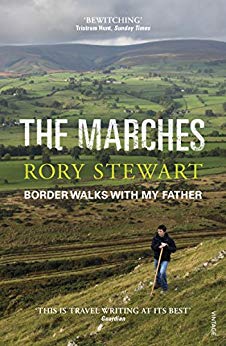
I enjoyed reading The Marches: Border Walks With My Father by Rory Stewart. He’s been in the news here recently, having stood for leadership of the Conservative Party, and has now formally stood down from Parliament to run as an independent candidate for Mayor of London.

But none of that has anything to do with why I wanted to read his book. It’s because of the subject – walking in the borderlands between England and Scotland, in the place where I live. And it’s not just about walking – he also muses on history, memory and landscape, all topics that interest me immensely.

Blurb:

His father Brian taught Rory Stewart how to walk, and walked with him on journeys from Iran to Malaysia. Now they have chosen to do their final walk together along ‘the Marches’ – the frontier that divides their two countries, Scotland and England.

On their six-hundred-mile, thirty-day journey – with Rory on foot, and his father ‘ambushing’ him by car – the pair relive Scottish dances, reflect on Burmese honey-bears, and on the loss of human presence in the British landscape.
Travelling across mountain ridges and through housing estates they uncover a forgotten country crushed between England and Scotland: the Middleland. They discover unsettling modern lives, lodged in an ancient place, as their odyssey develops into a history of the British nationhood, a chronicle of contemporary Britain and an exuberant encounter between a father and a son.

And as the journey deepens, and the end approaches, Brian and Rory fight to match, step by step, modern voices, nationalisms and contemporary settlements to the natural beauty of the Marches, and a fierce absorption in tradition in their own unconventional lives.

My thoughts:

This is a book of three parts – Book One: The Wall about Rory Stewart’s walk along Hadrian’s Wall in 2011, with his father, then aged 89 – his father walking for the first hour or so each day. They had intended to walk the full length of the Wall, from east to west, but after they reached the fort at Bewcastle they decided to abandon their plan (his father having reached his limits) and drive back to his father’s house, Broich, near Crieff in Perthshire. He writes about the Wall, the Roman occupation of the area, his father’s career, about nationality and clans, and reminisces about his childhood and his time in Afghanistan.

Book Two: Middleland, in which he describes his walk from coast to coast, a distance of about 400 miles, taking him 26 days, walking alone from his cottage in Cumbria to the Solway Firth, then crossing and re-crossing the modern border (established in the 13th century) to Berwick-upon-Tweed and then back to Broich.

I got a bit lost in his descriptions of the route, not knowing some the places along the way. But there are maps of his route that helped me follow where he went. He describes the landscape, the geology, sheep farming and land use, the people he met, their history  and language and much, much more.

Book Three: The General Danced on the Lawn about his father, who died at the age of 93, before this book was finished. The whole book is permeated with his love and respect for his father, but this last section is all about Brian Stewart.

At the end of the Marches is a Chronology which I found very interesting, defining The Middleland before AD100 up to the present days. The Middleland is a term invented by Brian Stewart:

The geographical centre of the island of Britain. An upland landscape, whose core is the Lake District, the Peninnes, the Cheviots and the Scottish Borders, but whose fringes extend to the Humber in the south and the firths of Forth and Clyde in the north. A land naturally unified by geography and culture for two thousand years, but repeatedly divided by political frontiers. (page 339)

Six Degrees of Separation: from Alice’s Adventures in Wonderland to Strong Poison

I love doing Six Degrees of Separation, a monthly link-up hosted by Kate at Books Are My Favourite and Best. Each month a book is chosen as a starting point and linked to six other books to form a chain. A book doesn’t need to be connected to all the other books on the list, only to the one next to it in the chain.

Alice Carroll

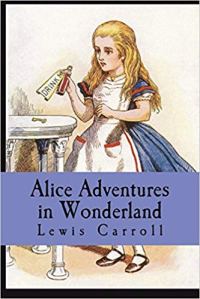
This month the chain begins with Alice’s Adventures in Wonderland by Lewis Carroll– a book I read as a child and loved. 

I was tempted to make my first link to Through the Looking Glass, Carroll’s follow-up book, or another of the books I loved as a child, but instead I chose:

Malice in wonderland

Malice in Wonderland by Nicholas Blake. In this Golden Age mystery Wonderland is a holiday camp, set on a cliff top overlooking the sea and there are several allusions to Lewis Carroll’s Alice’s Adventures in Wonderland. The train to Wonderland plunges into a tunnel, just as Alice falls down a rabbit hole and finds herself in Wonderland. And there is a prankster in the camp, the self-styled ‘Mad Hatter’, who is playing nasty and cruel practical jokes on the holiday makers. One of the visitors is Paul Perry, a young man who calls himself a scientist, who is there taking notes for the Mass Observation project.

Our Longest days

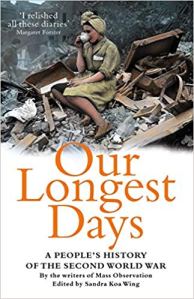
Mass Observation is my second link.  In August 1939, with war approaching, the Organisation asked its panel to keep diaries to record their daily lives and selections from fifteen of these diaries are included in Our Longest Days: A People’s History of the Second World War edited by Sandra Koa Wing.  

Testament of youth

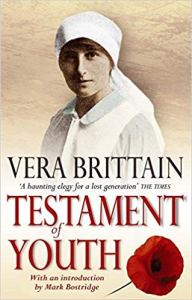
Diaries provide the next link – Testament of Youth by Vera Brittain is based on her diaries, telling of her life up to 1925, concentrating on the World War One years. Vera was a VAD (Voluntary Aid Detachment) during the war, nursing casualties both in Britain and France.

AC Autobiography

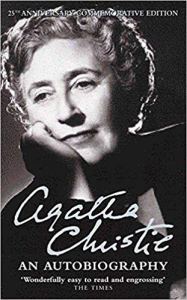
Agatha Christie was also a VAD member during World War One. In 1917 she worked in a hospital dispensary in Torquay and studied to take her Apothecaries Hall examination so she could dispense for a medical officer or a chemist. In her Autobiography she wrote that it was whilst she was working in the dispensary that she first thought of writing a detective story. Surrounded by poisons she decided it should be about a murder by poisoning.

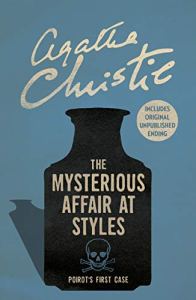
Mysterious Affair at Styles

So my fifth link is to the first detective story she wrote The Mysterious Affair at Styles. It is set during the First World War I at Styles Court, a country house in Essex, owned by the very wealthy Mrs Inglethorp, who dies from strychnine poisoning. Captain Hastings enlists the help of Poirot, who is living in the village of Styles St Mary with other Belgian refugees, to investigate the matter.

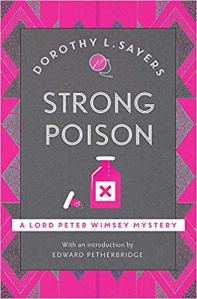
Strong Poison

And my final link is Strong Poison by Dorothy L Sayers. Lord Peter Wimsey, the aristocratic amateur detective, and Harriet Vane, a crime fiction writer, first met in this murder mystery. Harriet is on trial for the murder of her former lover, Philip Boyes, who died from arsenic poisoning. Wimsey, attending the trial, is convinced she is innocent and sets out to prove it … and falls in love with her. 

My chain is linked by books about Wonderland, the Mass Observation project, diaries VADs and poison. It passes from fantasy land through the World War One years, and back into the world of fiction. It includes crime fiction and non-fiction.

Next month (December 7, 2019), we’ll begin with Jane Austen’s unfinished manuscript, Sanditon.