My Friday Post: Yesterday’s Papers by Martin Edwards

Book Beginnings Button

Every Friday Book Beginnings on Friday is hosted by Gillion at Rose City Reader where you can share the first sentence (or so) of the book you are reading, along with your initial thoughts about the sentence, impressions of the book, or anything else the opener inspires.
yesterdays papers 1


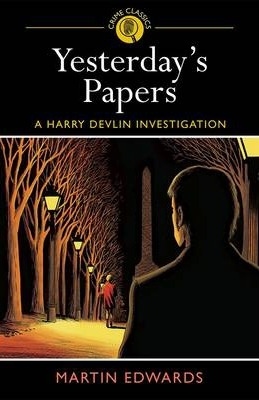
Yesterday’s Papers by Martin Edwards is one of my TBRs.

I killed her many years ago.

I like the cover of my paperback, published by Arcturus Crime Classics.

Also every Friday there is The Friday 56, hosted by Freda at Freda’s Voice.
30879-friday2b56These are the rules:

  1. Grab a book, any book.
  2. Turn to page 56, or 56% on your eReader. If you have to improvise, that is okay.
  3. Find any sentence (or a few, just don’t spoil it) that grabs you.
  4. Post it.
  5. Add the URL to your post in the link on Freda’s most recent Friday 56 post.

Page 56:

Jeannie dubbed the case Watergate: the papers loved it and made the tag their own. She had once been a disco queen and when she organised a Jive for Justice at Empire Hall, it sold out and made national headlines. A tabloid paper bought exclusive rights to her story and portrayed her as a modern Joan of Arc.

Blurb

On Leap Year Day in 1964, an attractive teenager called Carole Jeffries was strangled in a Liverpool park. The killing caused a sensation: Carole came from a prominent political family and her pop musician boyfriend was a leading exponent of the Mersey Sound. When a neighbour confessed to the crime, the case was closed. Now, more than thirty years later, Ernest Miller, an amateur criminologist, seeks to persuade lawyer Harry Devlin that the true culprit escaped scot free. Although he suspects Miller’s motives, Harry has a thirst for justice and begins to delve into the past. But when another death occurs, it becomes clear that someone wants old secrets to remain buried – at any price…

~~~ 

This is the fourth Harry Devlin book, although I haven’t read any of the earlier books, so plenty to look forward to. I’ve read all of Martin Edwards’ Lake District books and loved them.
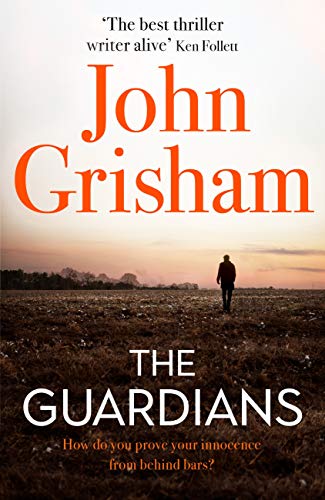
The Guardians by John Grisham

The guardians

From the inside flap:

He was framed for murder.
Now he needs a miracle.

22 years ago Quincy Miller was sentenced to life without parole. He was accused of killing Keith Russo, a lawyer in a small Florida town. But there were no reliable witnesses and little motive. Just the fact that Russo had botched Quincy’s divorce case, that Quincy was black in a largely all-white town and that a blood-splattered torch was found in the boot of Quincy’s car. A torch he swore was planted. A torch that was conveniently destroyed in a fire just before his trial.

The lack of evidence made no difference to judge or jury. In the eyes of the law Quincy was guilty and, no matter how often he protested his innocence, his punishment was life in prison.

Finally, after 22 years, comes Quincy’s one and only chance of freedom. An innocence lawyer and minister, Cullen Post, takes on his case. Post has exonerated eight men in the last ten years. He intends to make Quincy the next.

But there were powerful and ruthless people behind Russo’s murder. They prefer that an innocent man dies in jail rather than one of them. There’s one way to guarantee that. They killed one lawyer 22 years ago, and they’ll kill another without a second thought.

My thoughts:

Years ago I read as many John Grisham books that I could find – I loved them. So I was delighted to find that The Guardians, his latest book is really good too, even though it is written in the present tense. I often find that style irritating but in this case I was gripped by the story and the tense didn’t trouble me in the slightest.

The book is based on a real story and a real person, which gives it a really authentic feel. Guardian Ministries is based Centurion Ministries founded by James McCluskey, working to prove the innocence of convicted criminals, convinced of their innocence. The narrator, Cullen Post, a lawyer who is also a priest, is working on behalf of several prisoners. The book opens dramatically as Duke Russell is having his last meal before being executed. But the main part of the story is centred on Quincy Miller who maintains he was framed for the murder of lawyer Keith Russo and has been in prison for 22 years.

The only small criticism I have is that at first several minor characters are introduced which muddied the waters a little but once I got further into the book it became clear that there were major miscarriages of justice that Post was investigating, as he concentrates on Quincy’s case. It’s an easy read but packed with detail, a lot of it quite shocking. I enjoyed it immensely, especially learning about the US legal system.

  • Hardcover: 384 pages
  • Publisher: Hodder & Stoughton; 01 edition (15 Oct. 2019)
  • Language: English
  • ISBN-10: 1473684439
  • ISBN-13: 978-1473684430
  • Source: I bought the book

My rating: 4*


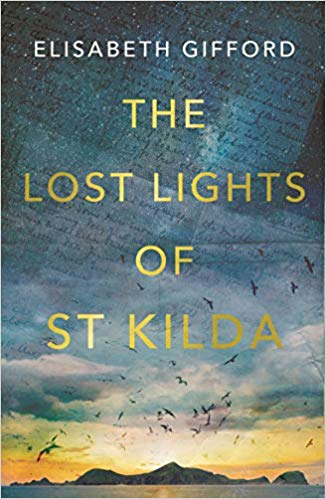
The Lost Lights of St Kilda by Elisabeth Gifford

the lost lights of st kilda

Atlantic Books Corvus| 05 Mar 2020| 288p| Review copy| 3*

Synopsis

1927: When Fred Lawson takes a summer job on St Kilda, little does he realise that he has joined the last community to ever live on that beautiful, isolated island. Only three years later, St Kilda will be evacuated, the islanders near dead from starvation. But for Fred, memories of that summer – and the island woman, Chrissie, with whom he falls in love – will never leave him.

1940: Fred has been captured behind enemy lines in France and finds himself in a prisoner-of-war camp. Beaten and exhausted, his thoughts return to the island of his youth and the woman he loved and lost. When Fred makes his daring escape, prompting a desperate journey across occupied territory, he is sustained by one thought only: finding his way back to Chrissie.

The Lost Lights of St Kilda is a sweeping love story that crosses oceans and decades. It is a moving and deeply vivid portrait of two lovers, a desolate island and the extraordinary power of hope in the face of darkness.

For those unaware, St Kilda is a Scottish island in the Atlantic Ocean which had been continuously inhabited from the Bronze Age up until 1930 when the island was evacuated due to an irretrievable population crash and the logistical difficulty of getting necessary supplies to an island essentially cut off during the Winter.

My thoughts:

The Lost Lights of St Kilda is historical fiction set mainly in two time periods, 1927 and the 1940s, following the story of Chrissy, a native of the island and Fred and Archie, visiting students from Cambridge University. At first I wasn’t really involved in the plot which is basically a romance, the story of a love triangle complete with all the misunderstandings and anguish that involved. I found it rather predictable, But the highlights of the book for me are the descriptions of St Kilda, its history, the importance to the islanders of the bird life, and their isolation and the poverty they endured. The account of the island’s evacuation is particularly moving.

After a slow start, the book picks up pace and I became more involved in the story. It’s a book of two halves really – the story of the last years of life on St Kilda and a war story. It’s very well researched and Elisabeth Gifford explains in her acknowledgements that the characters are loosely based on the people who lived on St Kilda whilst remaining fictional, although some of the characters featuring in the chapters about Fred’s wartime experience are based on real people. She lists the books she used for her research – books about the island, about Atlantic seabirds and journals and biographies of soldiers who were captured during the Second World War  and their escapes, all of which brought her novel to life for me.

My thanks to the publishers for my review copy via NetGalley.

Bookshelf Travelling for Insane Times

Judith at Reader in the Wilderness hosts this meme – Bookshelf Travelling for Insane Times.  I am enjoying this meme, looking round my actual bookshelves and re-discovering books I’ve read or am looking forward to reading. The idea is to share your bookshelves with other bloggers. Any aspect you like:

1. Home.
2. Books in the home.
3. Touring books in the home.
4. Books organized or not organized on shelves, in bookcases, in stacks, or heaped in a helter-skelter fashion on any surface, including the floor, the top of the piano, etc.
5. Talking about books and reading experiences from the past, present, or future.

Whatever you fancy as long as you have fun basically.

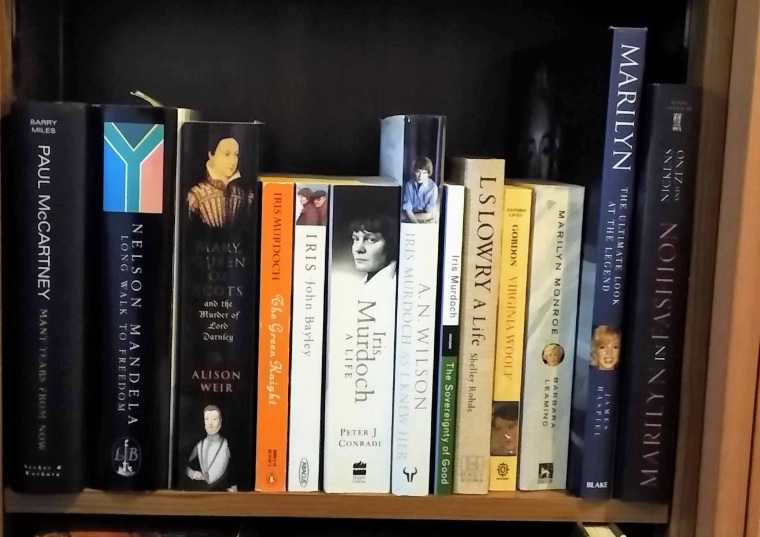
This week I’m showing more biographies and an autobiography. This is the shelf below the one I featured in this post a few weeks ago. 

img_20200514_070759538

The books on this shelf are all books I’ve had for a long time but I have only read some of them – those marked with an *. From the left (as you look at the screen) they are:

Paul McCartney: Many Years from Now by Barry Miles, based on hundreds of hours of exclusive interviews undertaken over five years and on access to McCartney’s own archives.

Next to that is Long Walk to Freedom: the Autobiography of Nelson Mandela. I have read part of this long and detailed book.

Then comes Mary Queen of Scots and the Murder of Lord Darnley by Alison Weir. I have started this book, the first of two I have about Mary (the other is by Antonia Fraser).

After that is David Starkey’s biography of *Elizabeth: Apprenticeship. This is an account of her life from her birth in 1533 to her accession to the throne in 1558. I read this many years ago and thoroughly enjoyed it.

Next is The Sovereignty of Good by Irish Murdoch. I’ve read several of her novels, but this is book of philosophy, a collection of three papers on the nature of goodness. I have not got round to actually reading it yet.

But I have read the next three books – *Iris: a Memoir of Iris Murdoch by John Bayley, *Iris: A Life by Peter J Conradi, and *Iris Murdoch As I Knew Her by A N Wilson. Bayley’s book is inevitably partly autobiographical as it is about their marriage and about living with Alzheimer’s. It is one of the most moving books I’ve read. I read these before I began blogging and really can’t remember much about the Conradi and Wilson biographies. I remember more about Bayley’s book, maybe because I watched the film, Iris, a film that had me and most of the audience at the cinema in tears.

I’ve also read *L S Lowry: a Life by Shelley Rohde. Lowry is one of my favourite artists, well known for his urban paintings of industrial towns and ‘matchstick men’, but his work covers a wide range of themes and subjects, from landscapes and seascapes to portraits.

I bought *Shakespeare the Biography by Peter Ackroyd in Stratford-upon-Avon some years ago after going to the theatre there. I’ve several of Shakespeare’s plays and seen productions at the Barbican in London and at the Stratford. Structured mainly around the plays, this biography places Shakespeare within his own time and place, whether it is Stratford or London or travelling around the countryside with the touring companies of players.

I haven’t read the next four books on the shelf, yet. They are Virginia Woolf: A Writer’s Life by Lyndall Gordon. I bought this because I’ve read some of Woolf’s books and wanted to know more about her.

And then there are three books about Marilyn Monroe, none of which I’ve read. First Marilyn Monroe– a biography by Barbara Leeming, It looks remarkably comprehensive, with lots of photos. Then there is Marilyn: the Ultimate Look at the Legend by James Haspiel, a memoir of James Haspiel’s eight year friendship with the Marilyn Monroe, and Marilyn in Fashion: the Enduring influence of Marilyn Monro by Christopher Nickens and George Zeno, full of even more photos.

Looking Good Dead by Peter James

looking good dead

I’ve read a few books by Peter James, but only three of his Roy Grace books, Simply Dead, the first book in the series, Not Dead Enough, the third one and now Looking Good Dead, the second book (and one of my TBRs).

Synopsis from Fantastic Fiction

Tom Bryce did what any decent person would do. But within hours of picking up the CD that had been left behind on the train seat next him, and attempting to return it to its owner, he is the sole witness to a vicious murder. Then his young family are threatened with their lives if he goes to the police. But supported by his wife, Kellie, he bravely makes a statement, to the murder enquiry team headed by Detective Superintendent Roy Grace, a man with demons of his own – including his missing wife – to contend with. And from that moment, the killing of the Bryce family becomes a mere formality – and a grisly attraction. Kellie and Tom’s deaths have already been posted on the internet. You can log on and see them on a website. They are looking good dead. ‘Destined for the bestsellers’ – “Independent on Sunday”. ‘A terrific tale of greed, seduction and betrayal’ – “Daily Telegraph”.

My thoughts:

It really is necessary to read these books in order because although each one is a complete murder mystery, they tell the continuing story of Roy Grace’s personal life and the mystery of his missing wife, Sandy. She had disappeared eight years earlier than the events described in the first book and had never been found. When all the usual sources had failed to find her he had turned to psychics and mediums for help, which he does again in this case.

As I wrote in my WWW Wednesday this book is set in Brighton and Peter James describes the setting in detail which slows the action down somewhat, but apart from that it’s fast paced. Tom is on a disastrous course as soon as he puts the CD into into his computer in an attempt to identify the man who left it on the train. The CD directs him to a site where he witnesses a murder and then he and his family also become targets for the killer and the tension immediately rises and culminates in the most terrifying scenes by the end of the book. I raced through it, trying not to visualise the gruesome details and impatient whenever the action moved away from the murder mystery, keen to find out whether Tom and his family would survive.

  • Format: Kindle Edition
  • File Size: 2117 KB
  • Print Length: 428 pages
  • Publisher: Pan; New Edit/Cover edition (4 Sept. 2008)
  • My Rating: 3.5*
  • Source: I bought it

The 16th book in this series, Find Them Dead will be published in July.

WWW Wednesday: 13 May 2020

IMG_1384-0

I’m writing this on my husband’s iPad, which is much easier for me than on my PC, especially with predictive text – less painful for my hand. I am feeling much happier!

WWW Wednesday is run by Taking on a World of Words.

The Three Ws are:

 What are you currently reading?
What did you recently finish reading?
What do you think you’ll read next?

Currently reading:

Recently I’ve been picking up book after book finding it difficult to settle on just one or two. These are some of the books that I’ve got on the go at the moment:


The Mirror and the Light
by Hilary Mantel, the final book in Hilary Mantel’s Thomas Cromwell trilogy about the boy from Putney who climbed his way up to become Lord Cromwell, Secretary to King Henry VIII. It is heavy, weighing in at 2lbs 13ozs with almost 900 pages and as my wrist and hand are still so painful I’ve had to put this on one side.

So then I tried an ebook, one of my NetGalley books, The Lost Lights of St Kilda by Elizabeth Gifford, described a ‘a sweeping love story that crosses oceans and decades. It is a moving and deeply vivid portrait of two lovers, a desolate island and the extraordinary power of hope in the face of darkness.’ I’ve read about a third of it and it isn’t appealing to me much at the moment and so the book I’ve settled on right now is:

The Guardians by John Grisham, a hardback book that isn’t as heavy to hold as The Mirror and the Light. An innocence lawyer and minister, Cullen Post, takes on Quincy Miller’s case. He’s been in prison for 22 years for the murder of Keith Russo, a lawyer in a small Florida town.

Recently Finished: 

looking good dead

Looking Good Dead by Peter James. This is one of my TBRs, the second book in the Detective Superintendent Roy Grace series and can easily be read as a stand alone. It’s dark murder mystery and it is gory in parts, although not too gory if you read it quickly. It’s set in Brighton and Peter James describes the setting in detail which slows the action down somewhat, but apart from that it’s fast paced about a man who puts himself and his family in great danger after he picked up a CD that another passenger had left on the train – it’s a snuff movie – enough said.

Reading Next:

I just don’t know. It might be another Roy Grace book, Deadman’s Footsteps, or one of my NetGalley books, maybe The Deep by Alma Katsu, a story with a supernatural twist set on the Titanic, or A Thousand Moons by Sebastian Barry, which is a follow up to Days Without End, a book I loved.  Set after the end of the American Civil War it tells the story of Union soldiers, Thomas McNulty and John Cole, who have ‘adopted’ a young Indian girl.

What do you think – which one would you read next?