Top Ten Tuesday is a weekly meme created by The Broke and the Bookish and now hosted by Jana at That Artsy Reader Girl. For the rules see her blog
The topic today is a Genre freebie (Pick any genre you’d like and build a list around it. You can even narrow the topic if you’d like, such as: thrillers with unreliable narrators, fantasy romance with fae characters, or historical romance with suspense elements.)
I decided to list ten of my favourite historical fiction books:
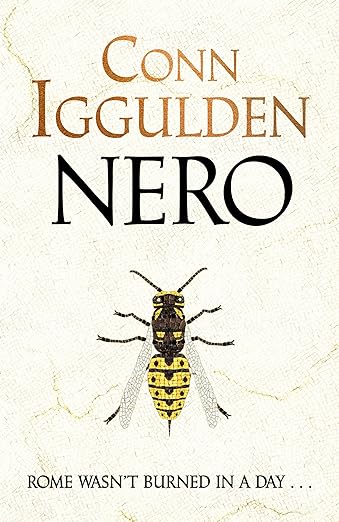
Nero by Conn Iggulden. Ancient Rome (beginning in AD37)
It’s time again for Six Degrees of Separation, a monthly link-up hosted by Kate atBooks Are My Favourite and Best. Each month a book is chosen as a starting point and linked to six other books to form a chain. A book doesn’t need to be connected to all the other books on the list, only to the one next to it in the chain.
This month we start with The Safekeep by Yael Van Der Wouden, the Women’s Prize Winner for Fiction 2025. This is Amazon’s description:
It is fifteen years after the Second World War, and Isabel has built herself a solitary life of discipline and strict routine in her late mother’s country home, with not a fork or a word out of place. But all is upended when her brother Louis delivers his graceless new girlfriend, Eva, at Isabel’s doorstep – as a guest, there to stay for the season…
In the sweltering heat of summer, Isabel’s desperate need for control reaches boiling point. What happens between the two women leads to a revelation which threatens to unravel all she has ever known.
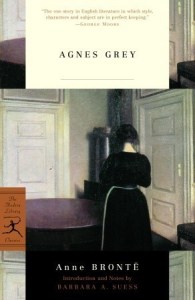
First link: I really didn’t know how to start this chain, until I remembered that the cover of Agnes Grey by Anne Bronte also has doors, although they are closed doors as opposed to the open doors on The Safekeep. This is a novel about a young woman, a governess and her experiences working for two families in Victorian England. Agnes is the younger daughter of an impoverished clergyman. Her parents had married against her mother’s family’s wishes and when their fortune was wrecked Agnes determines to help out by working as a governess. It gives a very clear picture of the life of a governess, with all its loneliness, frustrations, insecurities and depressions.
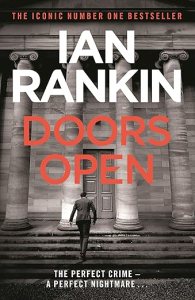
I am staying with doors for the second link, although they are not shown not on the cover, but in the title, with Doors Open by Ian Rankin. This was the first Rankin book wrote after he retired John Rebus in Exit Music. It’s about an art heist – planned by Mike Mackenzie, a self-made man, rich and bored with life, Robert Gissing, the head of Edinburgh’s College of Art and Allan Crickshank a banker with a passion for art that he cannot afford to buy on his salary. Between them they devise a plan to steal some of the most valuable paintings from the National Gallery of Scotland on the day that buildings normally closed to the public throw open their doors and invite them in.
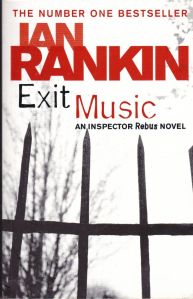
My Third link is Exit Music by Ian Rankin, the 17th Inspector Rebus novel. The Crime Thriller Award for Author of the Year 2008 was awarded to Ian Rankin for this book. It marked the end of an era as Rebus came to the end of his career. At the beginning of this book Rebus is 10 days from his retirement and is anxious to tie up all the loose ends in his current cases, trying to get DS Siobhan Clarke interested in them. So when the body of the dissident Russian poet Alexander Todorov is found dead this is Rebus’s last case. He throws himself into the investigation, desperate to take his mind off the end of his career.
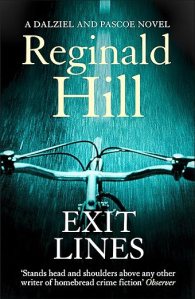
Which brings me rather obviously to my fourth linkExit Lines by Reginald Hill, a Dalziel and Pascoe murder mystery. In this one there are three elderly victims who all died violently one cold and storm-racked November night. A drunken Dalziel is a suspect in one as it seems he was driving the car that hit an elderly cyclist. The plot is intricate, with each separate case being linked together. I thought it was an excellent crime fiction novel which kept me guessing until the end.
My Fifth link is also about a murder that took place during a stormy night. It’s The Redemption of Alexander Seaton by Shona MacLean. Alexander Seaton is a schoolteacher in Banff. It’s set in 17th century Scotland, mainly in the town of Banff, where on a stormy night Patrick Davidson, the local apothecary’s assistant collapses in the street. The next morning he is found dead in the school house of Alexander Seaton, a failed minister, now a schoolteacher
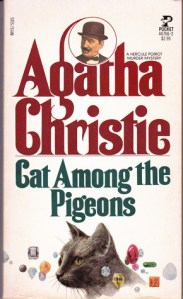
My sixth link is about another schoolteacher, this time a headmistress, Miss Bulstrode in Agatha Christie’s novel Cat Among the Pigeons. She is the head of an exclusive and expensive girls’ school, Meadowbank, in England, said to be based on her daughter Rosalind’s school. Like Miss Brodie, Miss Bulstrode has built a reputation for excellence. But disaster strikes when two of the teachers, Miss Springer, the new Games Mistress and the History and German teacher, Miss Vansittart are murdered. Rather late in the day Hercules Poirot is called in to investigate their deaths.
My chain is mostly made up of two of my favourite genres, historical fiction and crime fiction. It went from a governess to a headmistress with murder mysteries in between. What is in your chain?
Simon & Schuster UK| 3 July 2025| 432 pages| e-book| Review copy| 5*
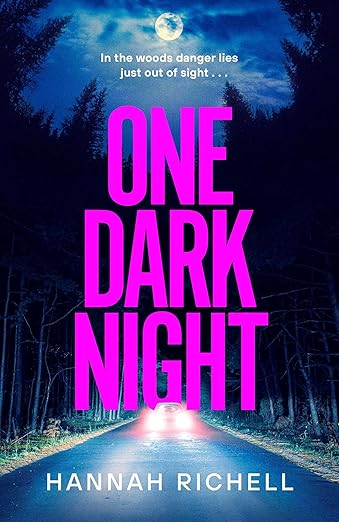
ELLIE When the body of a young woman is discovered in the woods the morning after Halloween, arranged with ritualistic precision, teenager Ellie has more reason than most to be afraid …
RACHEL As both Ellie’s mum and the local school counsellor, Rachel, must grapple with the terror gripping the community, a tough job that’s made even harder when she realises her daughter is keeping secrets …
BEN Police detective Ben Chase is desperate to solve the murder, but with his daughter Ellie struggling and the noose circling ever tighter, can he catch the killer before they strike again?
My thoughts:
I requested One Dark Night by Hannah Richell from NetGalley because I thought I’d like it when I read the blurb. And I was right! I haven’t read any of Richell’s books before but I’m certainly going to try some of her six earlier novels, all of them stand-alone stories. On her website she describes her work as suspenseful novels about families and friends tangled in secrets and lies. I’m drawn to buildings that creak with stories, to landscapes that shape the characters moving through them, and to the rich and often complex relationships between mothers, daughters and sisters.
One Dark Night is her sixth book, which she says is inspired by a real-life stretch of woodland and an old stone folly near where I currently live, supposedly one of the most haunted spots in England. Yes, it is very creepy.
I loved the spooky, tense atmosphere and as soon as I started reading it I knew I was going to enjoy this book. The settings are vividly described, the characters come across as real people, and the plot is amazing, multi- layered, with plenty of suspects for the murder and numerous twists and turns to throw me off the scent. For quite a while you don’t even know the name of the victim, who was found in the woods, called ‘Sally in the Wood’. It’s a police procedural centred on Ellie, a pupil at the private school, where her mother Rachel works as the school counsellor and her father, Ben, a detective sergeant who is on the investigation team. Ellie is struggling, having just started at the school and also because her parents are newly divorced.
In the Acknowledgements the author explains that the novel is loosely inspired by the place and stories of Sally in the Wood and the nearby stone folly, but the surroundings are drawn purely from her imagination. She had the idea for the novel after her daughter took part in a Girl Guides night hike to the stone folly above the spooky wood.
I found more information about the origins of the road, Sally in the Wood, on the Wiltshire & Swindon History Centre. The road forms a curved section of the A363 road on the Somerset-Wiltshire border that cuts through dense woodland near Bath – a perfect place to set a murder mystery. There are a few explanations for the name – one being that a girl called Sally was murdered in the woods or imprisoned in nearby Brown’s Folly, or that she was an actual road accident victim. It has a reputation of being an eerie place, where ‘no birds sing’, so you never know…
I loved it, one of the best books I’ve read so far this year!
Top 5 Tuesday was created by Shanah at Bionic Book Worm, and it is now being hosted by Meeghan at Meeghan Reads. You can see the Top 5 Tuesday topics for the whole of 2025 here.
Today the topic is Books with a Direction in the Title. I’ve chosen books with north, south, east, up and down in their titles:
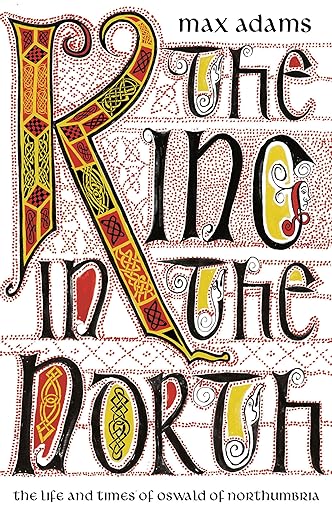
The King in the North by Max Adams – Oswald of Northumbria was the first great English monarch, yet today this legendary figure is all but forgotten. In this panoramic portrait of Dark Age Britain, archaeologist and biographer Max Adams returns the king in the North to his rightful place in history.
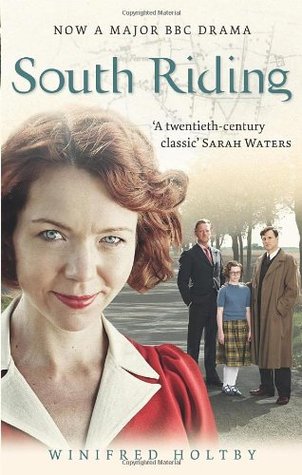
South Riding by Winifred Holtby – portraying life in the 1930s, one of the main characters is Sarah Burton, the new headmistress of Kiplington High School for Girls, a fiercely passionate and dedicated teacher.
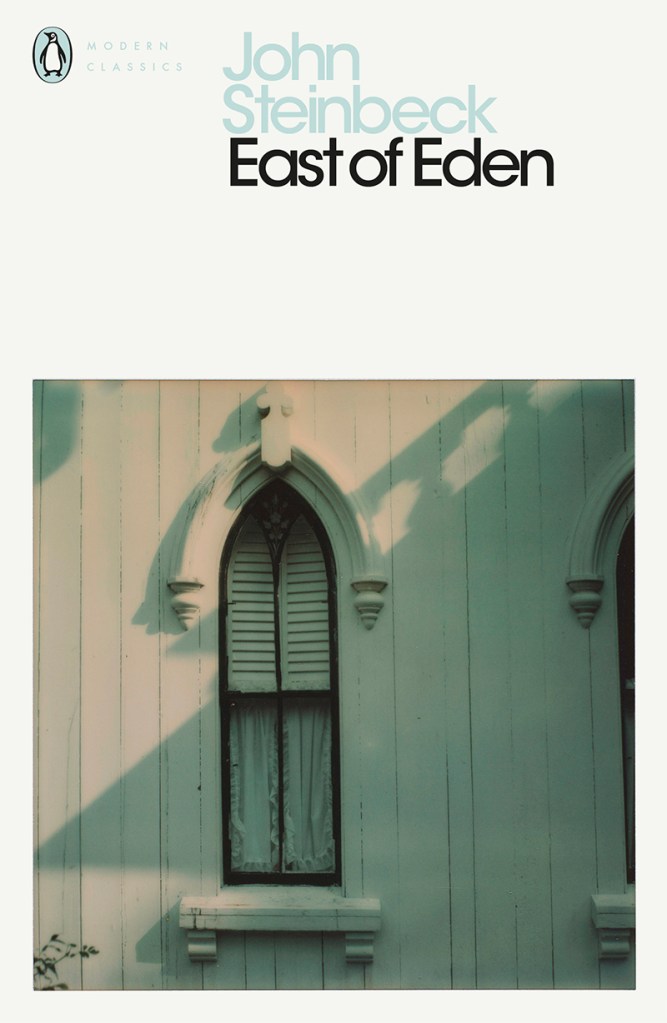
East of Eden by John Steinbeck – the story of two families—the Trasks and the Hamiltons—whose generations helplessly re-enact the fall of Adam and Eve and the poisonous rivalry of Cain and Abel.
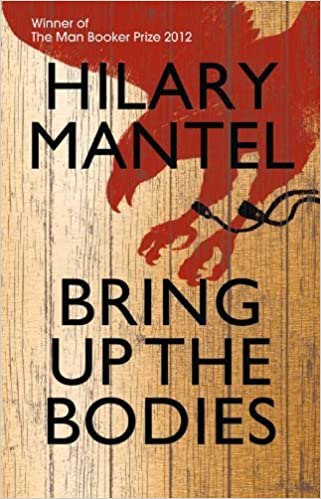
Bring Up the Bodies by Hilary Mantel – the sequel to Wolf Hall. It’s 1535, Thomas Cromwell is Chief Minister to Henry VIII, Anne Boleyn is the king’s new wife. But she has failed to give the king an heir and Henry falls for plain Jane Seymour. Cromwell must find a solution that will satisfy Henry, safeguard the nation and secure his own career. But neither minister nor king will emerge unscathed from the bloody theatre of Anne’s final days.
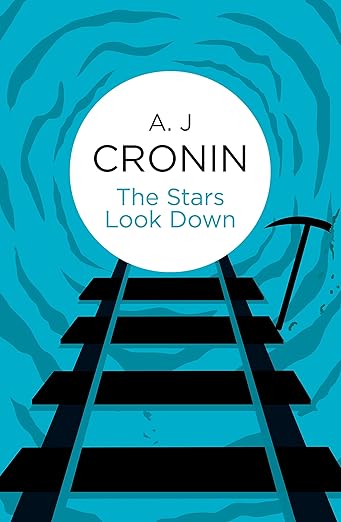
The Stars Look Down by A J Cronin – a family saga chronicling the lives of a number of interconnected families over a period of thirty years.The story starts in 1903 in a North Country mining town, Sleescale, as its inhabitants experienced social and political upheaval. It ends in 1933. It highlights the terrible conditions in the coal mines, the lack of workers’ rights and the need for change in the relationship between the coal miners and the mine owners.
Jo who used to blog The Book Jotter is not running Six in Six again this year. The idea is to summarise the first six months of reading, sorting the books into six categories – you can choose from the ones Jo suggested or come up with your own. Or if you want to do a shorter version, then just post something about six books you have read in the first six months of 2025.
Although Jo is no longer blogging I think it’s a good way to look back over the last six months’ reading and so I thought I’d do it again this year.
As I’ve been reading less than usual this year (33 books in the first six months) I’ve had to use some of the books in more than one category. And as I’ve been reviewing less I haven’t written posts about all the books. The links take you to my posts on the books, and some are just short posts, not reviews. Books I haven’t reviewed are linked to Amazon.
Every Friday Book Beginnings on Friday is hosted by Gillion at Rose City Readerwhere you can share the first sentence (or so) of the book you are reading. You can also share from a book you want to highlight just because it caught your fancy.
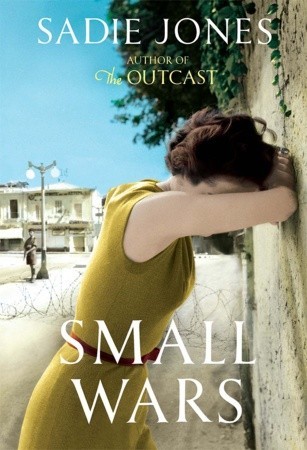
Small Wars by Sadie Jones is historical fiction set mainly in Cyprus in the late 1950s where Major Hal Treherne and his wife Clara and their baby daughters are stationed during the ‘enosis’ (union with Greece) uprising. I’ve read about two thirds of it so far and it is good.
The book begins with a Prologue at Sandhurst in July 1946.
An English rain was falling onto the instruments of the band, onto their olive green uniforms and the uniforms of the cadets as they marched. The quiet rain lay in drops on the umbrellas of the families watching, on the men’s felt hats and the women’s gloved hands; it dampened the grey and green countryside around them and put beads of water onto everything.
The Royal Military Academy Sandhurst (RMAS) is where all officers in the British Army are trained to take on the responsibility of leading their soldiers. The main character is Hal Treherne and this opening chapter is about his passing out parade after he completed his basic training as an officer.
Also every Friday there is The Friday 56, hosted by Freda at Freda’s Voice, but she is taking a break and Anne at My Head is Full of Books has taken on hosting duties in her absence. You grab a book and turn to page 56 (or 56% of an eBook), find one or more interesting sentences (no spoilers), and post them.
Page 56 is in Part Two, which is set in Limassol, Cyprus ten years later in 1956 during the Emergency. Hal has been promoted to a major.
‘It was a sharp sudden valley and it wasn’t fanciful to consider it sinister, with the slithering hard stones and earth that went steeply downward. For most of the day it would be in shadow. Hal had seen the gradients on the map, but was still surprised by the extremity of the land and that anyone would choose to build a farm there, so deep.
Description from Amazon UK:
Hal Treherne is a soldier on the brink of a brilliant career. Impatient to see action, his other commitment in life is to his beloved wife, Clara, and when Hal is transferred to Cyprus she and their twin daughters join him. But the island is in the heat of the emergency; the British are defending the colony against Cypriots – schoolboys and armed guerillas alike – battling for union with Greece.
Clara shares Hal’s sense of duty and honour; she knows she must settle down, make the best of things, smile. But action changes Hal, and the atrocities he is drawn into take him not only further from Clara but himself, too; a betrayal that is only the first step down a dark path.
It was longlisted for the Orange Prize for Fiction in 2010. The Orange Prize for Fiction, now known as the Women’s Prize for Fiction is an annual award that recognizes the best novel written in English by a woman, regardless of nationality.





 BooksPlease