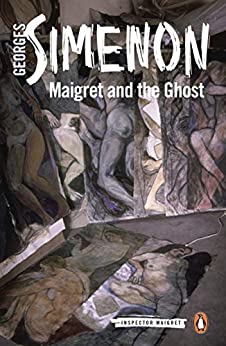
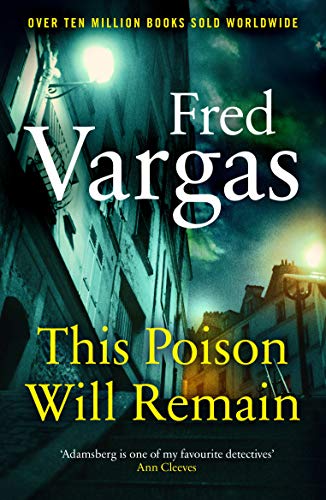
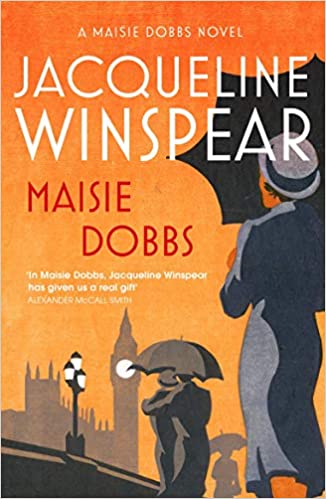
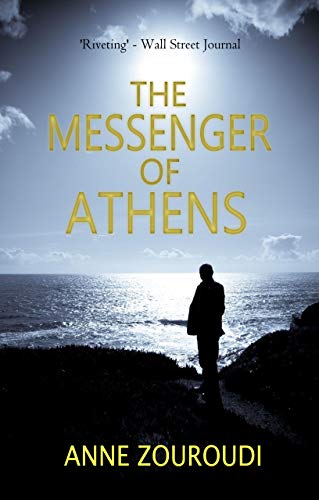
R.eaders I.mbibing P.eril (R.I.P.) is all about reading Mystery, Suspense, Thriller, Dark Fantasy, Gothic, Horror or Supernatural books. This year there are no rules – just read the books during September and October. You can join in with others if you have Instagram or on Twitter, where you can follow the event @perilreaders and if you post, use the tag #ripxv.
Here is a list of some of the choices I have on my TBR. I shan’t read all of these but I like to think I’ll read at least one or two of them – but if other books appeal to me I could very well read them instead.
It’s time again for Six Degrees of Separation, a monthly link-up hosted by Kate atBooks Are My Favourite and Best. Each month a book is chosen as a starting point and linked to six other books to form a chain. A book doesn’t need to be connected to all the other books on the list, only to the one next to it in the chain.
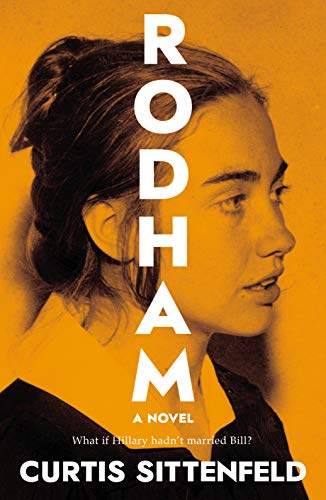
The chain begins this month with Rodham by Curtis Sittenfeld, a partly fictional account of Hillary Clinton’s life, imagining what would have happened if she hadn’t married Bill Clinton. As I’m not keen on fictionalising a real person’s life, especially when that person is still alive, this book doesn’t appeal to me. I don’t much like ‘what if …’ novels either.
I’d rather read a biography or an autobiography.
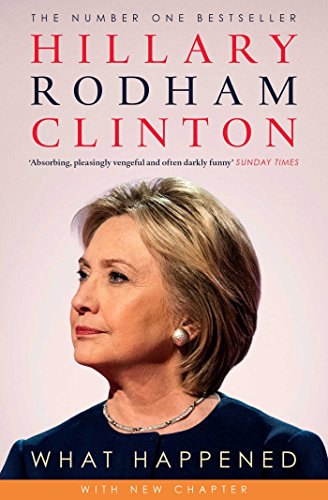
And as it happens I do have Hillary Rodham Clinton’s book, What Happened, in which she reveals what she was thinking and feeling during one of the most controversial and unpredictable presidential elections in history. I haven’t read it yet.
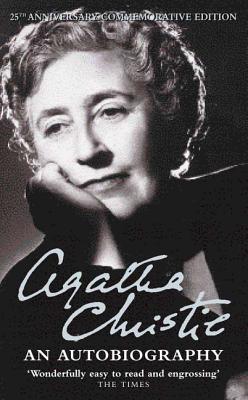
But I have read the next book in my chain. It’s another autobiography – Agatha Christie’s, simply called An Autobiography.
As well as being a record of her life as she remembered it and wanted to relate it, it’s also full of her thoughts on life and writing. She wrote quite a lot about her writing methods, writing criticism, hearing your own voice, economy in wording, writing detective stories, adapting plays and writing them herself, and about the joy of creation.
The one book that satisfied Agatha Christie completely is not one of her detective books but one she wrote under the name of Mary Westmacott – Absent in the Spring. I loved this novel and I was thoroughly absorbed in the story of Joan Scudamore who was stranded in the desert, after visiting her daughter in Baghdad. It is a complex and in-depth character study, with a growing sense of tension.
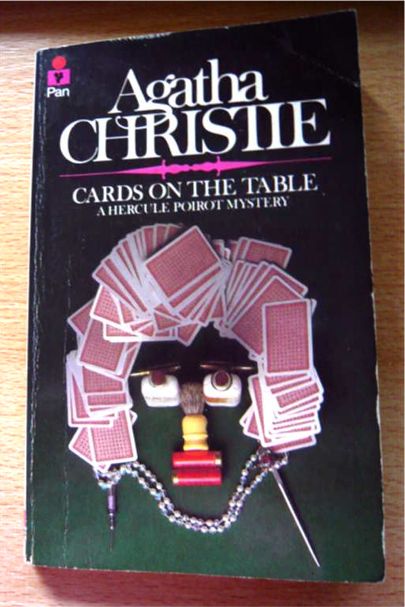
But of course what she is most famous for are her crime fiction novels. Cards on the Table is one of my favourites. Mr Shaitana is murdered whilst his guests are playing bridge. Two games were set up – one made up of the four people he considered were murderers and the other in a separate room made up of the four detectives or investigators of crime, including Hercule Poirot. Poirot, of course was the only one who worked out who the murderer was.
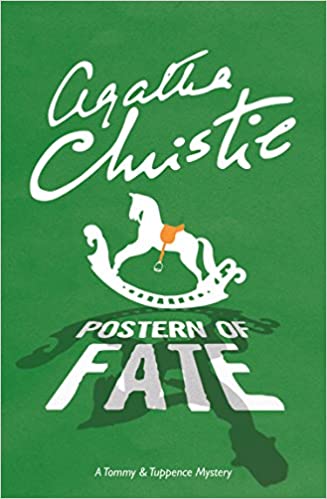
Agatha Christie was writing her books right up until her eighties when she wrote her last novel, Postern of Fate. It was published in 1973, and it’s rambling and repetitive, with very little in the way of mystery. It’s the fourth of the Tommy and Tuppence Beresford mysteries and it begins with the ageing couple, now retired and living in a new home. Tuppence is bemoaning the fact that they have so many books and there isn’t enough room to shelve them. She reminisces about the books she/Agatha had read as a child. If you haven’t read any of Agatha Christie’s books please don’t start with this one. It’s not one of her best!
Which brings me to the last book in my chain with one of Agatha’s/Tuppence’s favourites – Kidnapped by Robert Louis Stevenson, which was also one of my favourites when I read it at school.
On a stormy night off the coast of Scotland, young David Balfour faces his most terrifying test yet. He’s been double-crossed by his wicked uncle, tricked into a sea voyage and sold into slavery. When the dashing Alan Breck Stewart comes aboard, he finds a brave friend at least, and the pair fight back against their treacherous, black-hearted shipmates. But then the ship hits a reef, it’s every man for himself, and David must battle against the raging sea itself!
My chain is not very varied this month! Beginning with a fictional biography I moved on to a couple of real autobiographies which lead me to one of my favourite genres – crime fiction – with three of Agatha Christie’s novels, finishing the chain with one of her favourite childhood books.
Next month (October 3, 2020), we’ll start with The Turn of the Screw by Henry James.
Every Friday Book Beginnings on Friday is hosted by Gillion at Rose City Readerwhere you can share the first sentence (or so) of the book you are reading. You can also share from a book you want to highlight just because it caught your fancy.
If Ronnie Wilson had known, as he woke up, that in a couple of hours he would be dead, he would have planned his day, somewhat differently.
Also every Friday there is The Friday 56, hosted by Freda at Freda’s Voice. *Grab a book, any book. *Turn to Page 56 or 56% on your ereader . If you have to improvise, that is okay. *Find a snippet, short and sweet, but no spoilers!
These are the rules:
Grab a book, any book.
Turn to page 56, or 56% on your eReader. If you have to improvise, that is okay.
Find any sentence (or a few, just don’t spoil it) that grabs you.
Post it.
Add the URL to your post in the link on Freda’s most recent Friday 56 post.
Grab a book, any book.
Turn to page 56, or 56% on your eReader. If you have to improvise, that is okay.
Find any sentence (or a few, just don’t spoil it) that grabs you.
Post it.
Add the URL to your post in the link on Freda’s most recent Friday 56 post.
Page 56:
And another part of his brain was telling him that while one plane hitting the Twin Towers was an accident, two was something else.
Dead Man’s Footsteps is the fourth Roy Grace novel, a fast paced police procedural. There’s a woman in hiding, a skeleton discovered in a storm drain, a man believed to have died in the 9/11 disaster, and a body found in the boot of a car submerged in a river in Australia. And there is the continuing story about Sandy, Grace’s wife, who had disappeared 9 years earlier.
Our garden is visited by many birds and each year we’ve enjoyed watching them on the bird feeders. House martins have nested in the gable ends of the house and given us splendid aerial displays. Pheasants are regular visitors, Other birds have also made nests, some in bird boxes and this year we got a new blue tit box – one with a camera and waited to see whether it would be occupied.
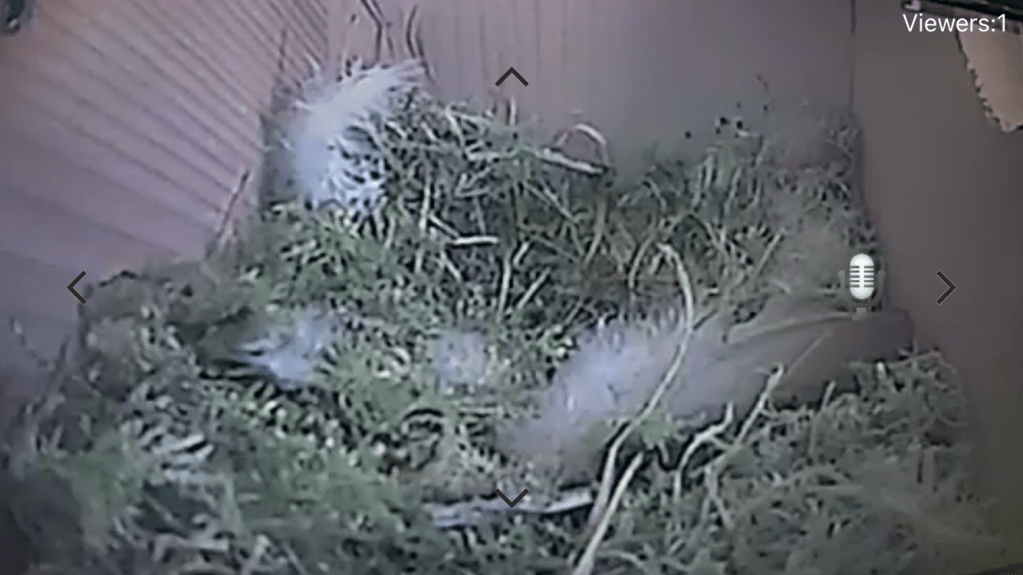
We were lucky, as one blue tit spotted it and she started to occupy it, flying in and out and pecking the edges of the hole. For a while she was on her own. She spent quite a lot of time knocking with her beak on the walls of the box and then a male came flying in and joined her hopping around the box to inspect it. They looked so funny as their feet skidded on the smooth floor of the box, but then they began to bring in bits of plant material, scattering it around, then re-arranging it haphazardly. And then they removed all of it and I thought they’d decided to go elsewhere – but no, they came back and more material appeared and then they took it all out. This went on for a while.
I wondered if this was normal and decided I needed to find out more about their nesting habits. After checking several bird websites, I found this little book – Blue Tits in My Nest Box by David Gains, a mine of information.
And I was relieved to read that this was exactly what the blue tits in his bird box did too. I breathed a sigh of relief and waited to see what would happen next. It’s the female that does most of the nest building And she kept on bringing in more plant material and feathers, tossing it all around, then sitting in the middle of the mass, holding out her wings and shuffling round and round, she made a hollow with her body.
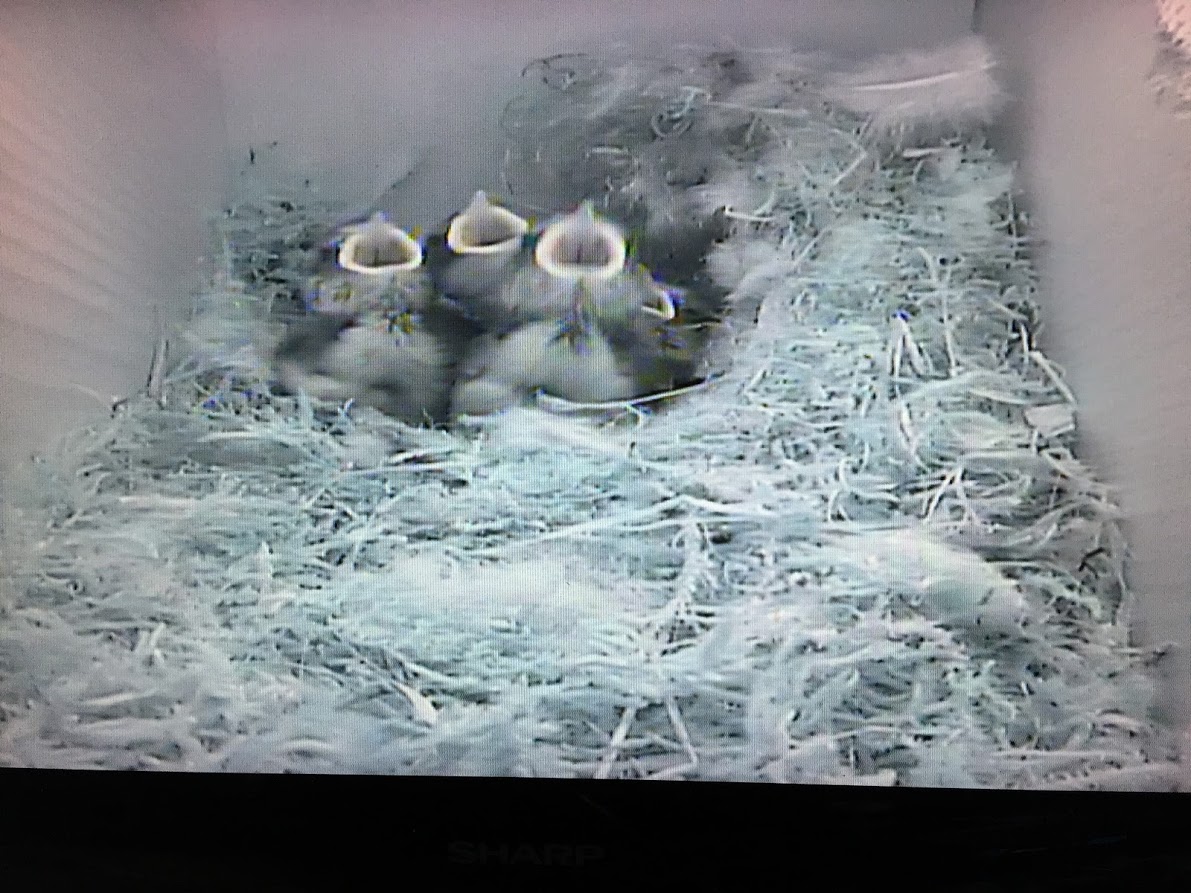
This doesn’t look like the nests you see on TV wildlife programmes, but eventually she was satisfied with it and laid her eggs. We were so excited as one by one five little featherless chicks hatched. Sadly one of them died and we had to remove it from the nest. In the photo below you can see their open mouths as they waved the heads around when the adult birds came in to feed them. The fourth bird was smaller than the others – you can just see its little mouth behind the others. I’m sure it didn’t get as much as the others as they jumped on top of it to get fed!
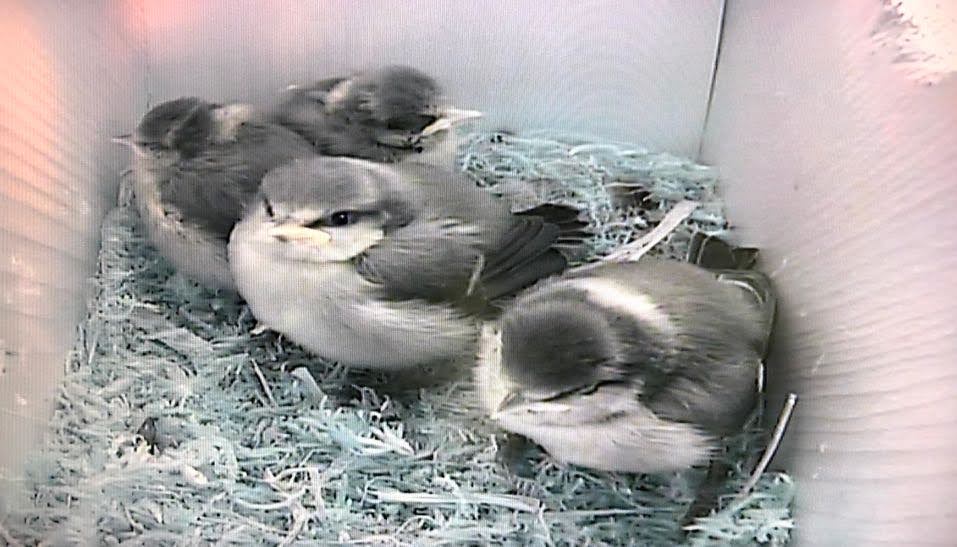
As they got bigger they began to flatten the nest, jumping up and down, trying out their wings. Eventually the day came when one by one they left the nest until there was just the smallest one left. It kept trying to jump up to the hole and I didn’t think it was big enough to survive outside, but it made it. And we next saw them in the garden on the bird feeders and trees, fluttering their wings and opening their beaks as the parents continued to feed them.
I began writing this post earlier this year when the blue tits were hatching and never finished it. I spent so much time watching what was going on in the nest I got so behind with everything. It was fascinating.
At the beginning of the summer I joined Cathy’s 20 Books of Summer Challenge which ran from June 1st until September 1st, 2020.
I revised my original my list on 19 July because after reading six of the books on my original list I began reading The Luminaries by Eleanor Catton, a book that was NOT on my original list and I realised that as it has 853 pages there was no way I could read the rest of the books before 1 September.
Although I read 20 books during the period, only 13 of them are books from my list – they are:


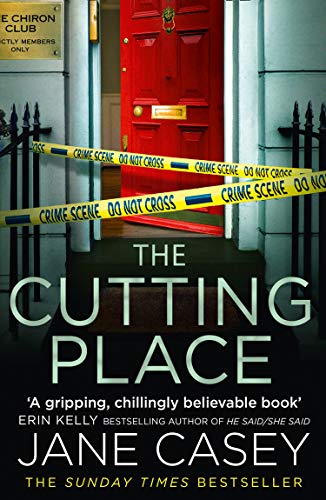

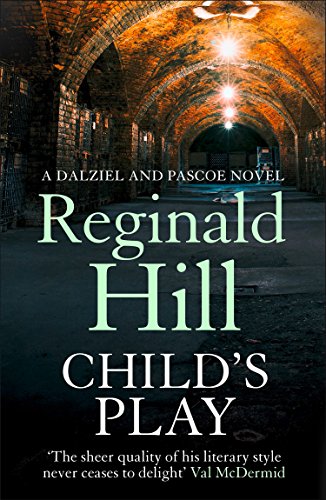
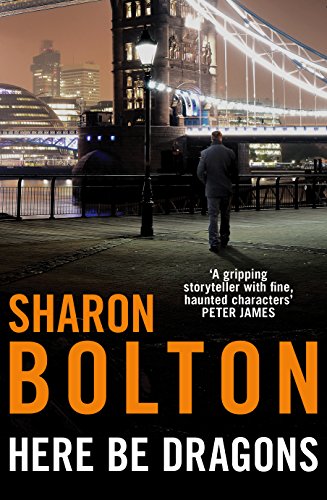
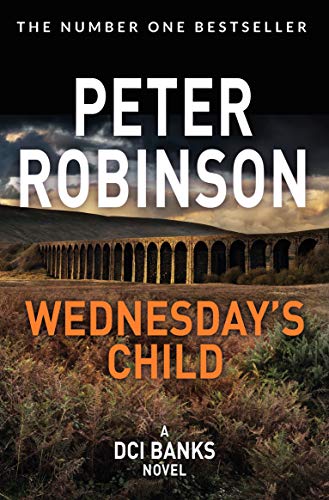




 BooksPlease