Girl in the Walls by A J Gnuse

Fourth Estate | 18 March 2021 |323 pages | Kindle review copy via NetGalley/ 4*

Description:

She doesn’t exist. She can’t exist.

‘A uniquely gothic tale about grief, belonging and hiding in plain sight’ Jess Kidd, author of Things in Jars

Those who live in the walls must adjust, must twist themselves around in their home,
stretching themselves until they’re as thin as air. Not everyone can do what they can.
But soon enough, they can’t help themselves. Signs of their presence remain in a house.
Eventually, every hidden thing is found.’

Elise knows every inch of the house. She knows which boards will creak. She knows where the gaps are in the walls. She knows which parts can take her in, hide her away. It’s home, after all. The home her parents made for her. And home is where you stay, no matter what.

Eddie calls the same house his home. Eddie is almost a teenager now. He must no longer believe in the girl he sometimes sees from the corner of his eye. He needs her to disappear. But when his older brother senses her, too, they are faced with a question: how do they get rid of someone they aren’t sure even exists?

And, if they cast her out, what other threats might they invite in?

My thoughts:

Set in south Louisiana, Girl in the Walls wasn’t quite what I expected from the book description, but I did enjoy its sense of strangeness and ‘the other’. It’s set in an old house that’s full of strange creaks and scary noises as though someone or some thing is creeping around. It’s a house like no other that I know or have read about. It’s a balloon frame house – that is a house with a timber frame within its outer walls, so there are spaces between the inner and outer walls, beneath the floor and in the attic. Spaces where a young person can crawl and exist. So, Elise is not a ghost but a real eleven year old girl, who lives in these spaces, only coming out when the Masons, the family who live in the house, are asleep or out of the house. And she manages to keep her presence in the house a secret, at least for a while.

Elise is an orphan and has returned to her family home, having escaped from the foster care system. At first, Eddie, the younger son, is the only one of the Masons who senses her presence, feeling that he is being watched and almost catching glimpses of Elise out of the corner of his eye. Eventually his older brother, Marshall too feels that there is some one else in the house, raiding the pantry, taking things and moving things and they decide they have to do something about it. First of all they can’t believe she is actually real and fear what they will find. Elise fears that they will find her.

Their fear is intense as the story takes a terrifying turn, and to make matters worse it is the hurricane season. From a slow start it builds up to a intense nightmare scenario. I think that to say much more would spoil the plot. The characterisation is good, the house is integral to the plot and the setting is brilliantly described. But you do have to suspend your disbelief to enjoy this book – I did!

This is a story about loss, and grief, about safety and security, intermingled with the strange beauty of the landscape and the fears and hopes we all experience. I loved the references to Norse mythology and legends that Elise reads about – Odin, the One-Eyed and how he became the wisest of the gods and about his sons, Thor and Loki.

A J Gnuse explains at the end of the book that he was inspired to write this story after talking to a friend about the strange noises his friend had heard in his apartment and remembered that he had spent much of his childhood in an old creaky house wondering whether someone was sneaking around at night, feeling scared and vulnerable. The house in the book is based on his parents’ house in South Louisiana, where he grew up, where the sea levels are rising as the coast is eroding and the coast is hit by hurricanes,

I wasn’t surprised that he lists Charles Dickens as one of the authors who have influenced his work – there is one particular character in his book who I haven’t mentioned, the monstrous villain who is larger than life and very scary, who wouldn’t have been out of place in a Dickens’ novel. He also lists other authors including, Daphne du Maurier and the Bronte sisters whose descriptive writing captured the eerie beauty of an old house.

Girl in the Walls is described as a ‘gothic’ tale. Gnuse explains that he has been influenced by the literary tradition of the Southern Gothic novel – which is largely unknown to me – referring to writers like Flannery O’Connor – describing its ‘uniquely Gothic sense of the strangeness of decay, of the past latched onto people like vines grown around their legs.‘ I think I need to find out more about this genre of fiction.

My thanks to the publishers and to NetGalley for my advance review copy.

Top Ten Tuesday: Books On My Spring 2021 TBR

Top Ten Tuesday is a weekly meme created by The Broke and the Bookish and now hosted by Jana at That Artsy Reader Girl. For the rules see her blog.

The theme this week is: Books On My Spring 2021 TBR. Some of these books are physical books, others are e-books. They are just the tip of my TBR mountain and when the time comes to start a new book it might be one of these – or anyone of my other TBRs, but I hope I do get round to reading at least some of these books this spring.

First the physical books:

The Prophecy by S J Parris (library book) – historical fiction, 1583 – the second in her Giordano Bruno series set in the reign of Elizabeth I. Bruno was a monk, poet, scientist, and magician on the run from the Roman Inquisition on charges of heresy for his belief that the Earth orbits the sun and that the universe is infinite. Elizabeth’s throne is in peril, threatened by Mary Stuart’s supporters scheme to usurp the rightful monarch.

The Light Between Oceans by M L Stedman, set on a lighthouse keeper’s island, where the Indian Ocean washes into the Great Southern Ocean. A boat washes up on the shore of the island. It holds a dead man – and a crying baby. The only two islanders, Tom and his wife Izzy, are about to make a devastating decision.

Star of the Sea by Joseph O’Connor – historical fiction set in 1847 when the Star of the Sea sets sail from Ireland bound for New York. On board are hundreds of fleeing refugees, among them are a maid with a devastating secret, the bankrupt Lord Merridith and his family, and a murderer hungry for vengeance. It has the look of a Victorian novel but was first published in 2004.

Death in Berlin by M M Kaye – crime fiction set in war-scarred Berlin in the early 1950s. Miranda is on the night train when she discovers a dead body. Years ago I read The Far Pavilions and it is only in recent years that I discovered she wrote the Death in … series. This is the 2nd book in the series first published in 1955.

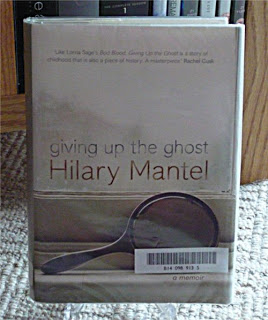
The Mirror and the Light by Hilary Mantel – the final book in her Wolf Hall trilogy. I bought this when it was published last year and started it just before the first lockdown. But for a variety of reasons I put it to one side for ‘a while‘, where it has stayed! So I’m determined to read it this year. I loved the first two books – this one traces the final years of Thomas Cromwell, the boy from nowhere who climbed to the heights of power under Henry VIII, before he fell.

Next the e-books:

The Lantern Men by Elly Griffiths – the 12th Dr Ruth Galloway Mystery, Everything has changed for Dr Ruth Galloway. She has a new job, home and partner, and is no longer North Norfolk police’s resident forensic archaeologist. That is, until convicted murderer Ivor March offers to make DCI Nelson a deal. Nelson was always sure that March killed more women than he was charged with. Now March confirms this, and offers to show Nelson where the other bodies are buried – but only if Ruth will do the digging.

The Queen’s Gambit by Walter Tevis – set in 1950s/60s America this is a novel about chess. Orphan, Beth Harmon, addicted to tranquillisers, becomes a top chess player, competing for the US Open championship at the age of 16. There is a Netflix mini series of the book – we’ve watched the first episode, which made me want to read the book.

The Driftwood Girls by Mark Douglas-Home, the 4th Sea Detective book, with investigator Cal McGill who uses his knowledge of tides, winds and currents to solve mysteries. In this book when Flora Tolmie disappears her twin sister Kate asks Cal for help to discover what has happened to her and also to look into the disappearance of their mother,Christina, who had vanished without trace from northern France, 23 years earlier.

Three Hours by Rosamund Lipton – set in rural Somerset in the middle of a blizzard, where a school is under siege. Pupils and teachers have barricaded themselves inside the school and the headmaster lies wounded in the library, Outside, a police psychiatrist must identify the gunmen, while parents gather desperate for news.

Mountains of the Mind: a Fascination by Robert Macfarlane, an investigation into our emotional and imaginative responses to mountains and how these have changed over the last few centuries. He describes his own climbing experiences, inspired by reading The Fight for Everest when he was twelve. It won the 2003 Guardian First Book Award, the 2004 Somerset Maugham Award and the 2004 Sunday Times Young Writer of the Year Award and has been filmed by the BBC.

My Friday Post: The Salt Path by Raynor Winn

Every Friday Book Beginnings on Friday is hosted by Gillion at Rose City Reader where you can share the first sentence (or so) of the book you are reading. You can also share from a book you want to highlight just because it caught your fancy.

This week I’m featuring a book I’m about to start. It’s The Salt Path by Raynor Winn. It was her first book and it was shortlisted for the 2018 Costa Biography Award and the Wainwright Prize. I want to read it because it’s a true story about a couple, Raynor and Moth, her husband who is terminally ill, who had lost their home and their business. Faced with this terrible situation they decided to buy a tent and walk the Salt Path, the south-west coastal path, from Minehead in Somerset to Poole in Dorset, via Devon and Cornwall.

There’s a sound to breaking waves when they are close, a sound like nothing else. The background roar is unmistakable, overlaid by the swash of the landing wave and then the sucking noise of the backwash as it retreats.

Also every Friday there is The Friday 56, hosted by Freda at Freda’s Voice. *Grab a book, any book. *Turn to Page 56 or 56% on your  ereader . If you have to improvise, that is okay. *Find a snippet, short and sweet, but no spoilers!

  1. Grab a book, any book.
  2. Turn to page 56, or 56% on your eReader. If you have to improvise, that is okay.
  3. Find any sentence (or a few, just don’t spoil it) that grabs you.
  4. Post it.
  5. Add the URL to your post in the link on Freda’s most recent Friday 56 post.

Page 56:

The first time I saw Moth across the sixth-form college canteen I was eighteen. He was wearing a white collarless shirt as he dipped a Mars bar in a cup of tea. I was mesmerised.

Since travelling the South West Coastal Path, Raynor Winn became a regular long-distance walker and writes about nature, homelessness and wild camping. She lives in Cornwall. Her second book, The Wild Silence, is her follow-up book. I bought The Salt Path in 2018 and was keen to read it, but so many other books intervened, and it was only when I saw Raynor Winn on Kate Humble’s Coastal Walks programme on the South West Coastal Path that I remembered about her book.

Additions to My TBRs

I am missing going to an actual bookshop, but I have been book shopping online. These are all books I’ve bought this year:

  1. The Sun Sister by Lucinda Riley – the sixth book in Lucinda Riley’s series, The Seven Sisters, which tells the story of adopted sisters and is inspired by the mythology of the famous star cluster. This one is about Electra D’Aplièse, who seems to have it all: as one of the world’s top models, she is beautiful, rich and famous.
  2. Infinite by Brian Freeman – my Kindle First choice in February, a thriller about parallel universes.
  3. The Radium Girls by Kate Moore – the true story about dial-painters, girls and women who painted the numbers on clocks, watches and other instruments using radium-infused luminous paint in the 1920s and 1930s. The girls shone brightly in the dark, covered head to toe in dust from the paint.
  4. Brideshead Revisited by Evelyn Waugh – the story of Charles Ryder’s infatuation with the Marchmains and the rapidly-disappearing world of privilege they inhabit. This is a book I’ve wondered about reading for years, so when I saw it was 99p on Kindle I bought it.
  5. Virginia Wolf: a Biography: 1882-1912 (vol 1) by Quentin Bell. Reading Woolf’s Orlando recently made me want to know more about her, so I bought this secondhand copy of her biography from AbeBooks.
  6. The Pembrokshire Murders by Steve Wilkins and Jonathan Hill -the true story of a brutal murderer and the detectives who worked the cold case for six years in order to bring him to justice. I bought this after watching the ITV mini series in January.

Now, the questions are –

Which one to read first?
Or should I read one of my older TBRs first?
What do you do?
And how do you decide which book to read next?

Can’t-Wait Wednesday: The Pact by Sharon Bolton

Can’t-Wait Wednesday is a weekly meme hosted by Wishful Endings, to spotlight and discuss the books we’re excited about that we have yet to read. Generally they’re books that have yet to be released.

Sharon Bolton is one of my favourite authors, so I’m delighted to see that she has a new book waiting to be published: The Pact: Release date 27 May 2021

Description

A dark and compulsive thriller about secrets, privilege and revenge.

A golden summer, and six talented friends are looking forward to the brightest of futures – until a daredevil game goes horribly wrong, and a woman and two children are killed.

18-year-old Megan takes the blame, leaving the others free to get on with their lives. In return, they each agree to a ‘favour’, payable on her release from prison.

Twenty years later Megan is free.
Let the games begin . . .

What upcoming release are you eagerly anticipating?

Two Chief Inspector Macdonald Books by E C R Lorac

E C R Lorac was a pen name of Edith Caroline Rivett (1894-1958) who was a prolific writer of crime fiction from the 1930s to the 1950s, and a member of the prestigious Detection Club. She formed her pseudonym by using her initials and for the surname, the first part of her middle name spelled backwards. She also wrote under the name of Carol Carnac.

I’ve read just a few of her Chief Inspector Robert Macdonald books., written under the name E C R Lorac – Bats in the Belfry (1937) , Fell Murder (1944), Murder by Matchlight (1945) and Fire in the Thatch (1946).

And recently I’ve read two more : Checkmate to Murder, first published in 1944 and Murder in the Mill Race, first published in 1952. These have been recently re-published by the British Library as part of the British Library Crime Classics, with introductions by Martin Edwards.

On a dismally foggy night in Hampstead, London, a curious party has gathered in an artist’s studio to weather the wartime blackout. A civil servant and a government scientist match wits in a game of chess, while Bruce Manaton paints the portrait of his characterful sitter, bedecked in Cardinal’s robes at the other end of the room. In the kitchen, Rosanne Manaton prepares tea for the charlady of Mr. Folliner, the secretive miser next door.

When the brutal murder of ‘Old Mr. F’ is discovered by his Canadian infantryman nephew, it’s not long before Inspector Macdonald of Scotland Yard is called to the scene to take the young soldier away. But even at first glance the case looks far from black-and-white. Faced with a bevy of perplexing alibis and suspicious circumstances, Macdonald and the C.I.D. set to work separating the players from the pawns to shed light on this toppling of a lonely king in the dead of night.

What I found fascinating in this book is the insight into what life was like in wartime London, complete with the London fog and the details of the blackout and although the Blitz was over there were still plenty of bangs and noise so that a gunshot wasn’t easily heard. The setting in a large studio that opens the book is a quiet scene as Bruce paints his sitter dressed as Cardinal Richelieu and two friends play a game of chess. Roseanne, Bruce’s sister is busy in the kitchen cooking their supper.Their evening is disrupted when a Special Constable bursts in with a young soldier in tow, claiming that he had killed his great-uncle in the next door building. This turns out to be more complicated than it first seemed. Even with just a limited number of suspects I couldn’t didn’t work out who the murderer was, nor how the murder had been committed. Macdonald explains it all at the end, having worked out ‘a reconstruction of the possibilities.’

~~~

When Dr Raymond Ferens moves to a practice at Milham in the Moor in North Devon, he and his wife are enchanted with the beautiful hilltop village lying so close to moor and sky. At first they see only its charm, but soon they begin to uncover its secrets – envy, hatred and malice.

Everyone says that Sister Monica, warden of a children’s home, is a saint – but is she? A few months after the Ferens’ arrival her body is found drowned in the mill race. Chief Inspector Macdonald faces one of his most difficult cases in a village determined not to betray its dark secrets to a stranger.

One of the things I think that Lorac excelled in was her settings. Each one is described so that you can easily picture the scenery and the landscape. And that is important in this book as Sister Monica drowned in the mill race, the stream leading into the water mill. She sets out through Macdonald exactly how that could have happened. She also conveys the atmosphere and the social interactions of an isolated village in Devon in the years just after the end of the Second World War. On the surface this is an idyllic village, but it is just like any other community, with a cross-section of personalities, and a mix of neighbourliness and an undercurrent of envy, hatred and malice. Sister Monica, a formidable woman, revered by some, is in charge of a children’s home, which she rules with a rod of iron and knows everything about everybody. Others regard her with caution, as the bailiff, Sanderson tells Anne Ferens, the doctor’s wife:

She is one of those people who can not only lie plausibly and with conviction, but she can tell a lie to your face without batting an eyelid, knowing that you know it’s a lie, and it’s very hard to bowl her out. (page 34)

But the village close ranks when she is found dead in the mill race and it is hard for Macdonald and Detective Inspector Reeeve to get the villagers to open up and and talk about what she was really like. It appears to be suicide, but is it?