Book Beginnings & The Friday 56: The Lantern Men by Elly Griffiths

Every Friday Book Beginnings on Friday is hosted by Gillion at Rose City Reader where you can share the first sentence (or so) of the book you are reading. You can also share from a book you want to highlight just because it caught your fancy.

I’ve been looking through my TBR books on my Kindle and came across The Lantern Men by Elly Griffiths, the 12th in her Ruth Galloway series. I’ve read most of the series, so, I think I’ll read this next.
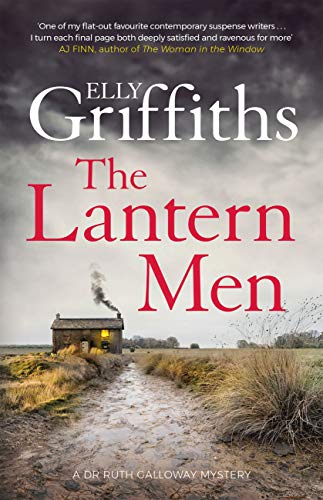
It begins with a Prologue:

10 July 2007

She has been walking for a long time. It’s funny but she hadn’t thought that there was so much space in England.

Also every Friday there is The Friday 56, hosted by Freda at Freda’s Voice. *Grab a book, any book. *Turn to Page 56 or 56% on your  ereader . If you have to improvise, that is okay. *Find a snippet, short and sweet, but no spoilers!
These are the rules:

  1. Grab a book, any book.
  2. Turn to page 56, or 56% on your eReader. If you have to improvise, that is okay.
  3. Find any sentence (or a few, just don’t spoil it) that grabs you.
  4. Post it.
  5. Add the URL to your post in the link on Freda’s most recent Friday 56 post.

Page 56:

It’s a note, scrawled on a folded piece of lined A4 paper.

‘If you want to know more about Ivor March meet me at The Hanged Man on Newnham Rd tonite at 7.30. Ask for John.’

Blurb:

Everything has changed for Dr Ruth Galloway.

She has a new job, home and partner, and is no longer North Norfolk police’s resident forensic archaeologist. That is, until convicted murderer Ivor March offers to make DCI Nelson a deal. Nelson was always sure that March killed more women than he was charged with. Now March confirms this, and offers to show Nelson where the other bodies are buried – but only if Ruth will do the digging.

Curious, but wary, Ruth agrees. March tells Ruth that he killed four more women and that their bodies are buried near a village bordering the fens, said to be haunted by the Lantern Men, mysterious figures holding lights that lure travellers to their deaths.

Is Ivor March himself a lantern man, luring Ruth back to Norfolk? What is his plan, and why is she so crucial to it? And are the killings really over?

Of course, now I want to know more. Do you?

Books I Wish I Could Read Again for the First Time

These are all books I loved and that transported me to a different time and place. I would love to experience the same magic and pleasure I had when I first read them. They include murder mystery novels that I would love to read again without knowing the identity of the murderer. Some of them I read many years ago before I began this blog and I’ve linked those to Goodreads (marked with an *), the others I’ve read more recently are linked to my reviews.

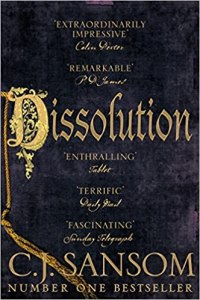
*Dissolution by C J Sansom – the first book in his Shardlake series. It is 1537 and Thomas Cromwell has ordered that all monasteries should be dissolved. Cromwell’s Comissioner is found dead, his head severed from his body. Dr Shardlake is sent to uncover the truth behind what has happened. His investigation forces him to question everything that he himself believes. I’ve read each one of the following books in the series as they were published – 7 books in total.

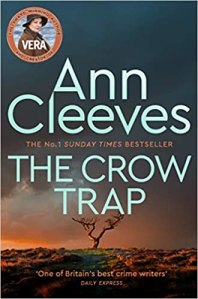
The Crow Trap by Ann Cleeves – the first book in her Vera Stanhope series. It has a very intricate and clever plot, with plenty of red herrings subtly masking the important clues. Vera is a great character and even though I do like Brenda Blethyn’s portrayal of her in the TV series, I prefer her as she is in the books –  a large woman in her fifties, who looks like a bag lady!

*Rebecca by Daphne du Maurier – with its memorable first line ‘Last night I dreamt I went to Manderley again . . .‘ I first read this when I was a young teenager, this is the haunting story of a young girl consumed by love and the struggle to find her identity. She is never named in the book. It’s one of those book where I was totally immersed in the story, lost in the plot.

Blood Harvest by Sharon Bolton – a modern Gothic tale about the Fletchers who have just moved into a new house, but someone seems to be trying to drive them away – at first with silly pranks but then with threats that become increasingly dangerous. It’s full of tension, terror and suspense and I was in several minds before the end as to what it was all about.

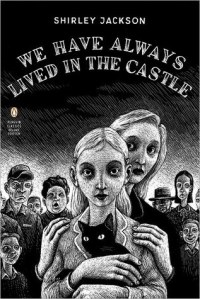
We Have Always Lived in the Castle by Shirley Jackson, a weirdly wonderful book, that sent shivers down my spine. The narrator is Merricat. She lives with her sister, Constance in a grand house, away from the village, behind locked gates, feared and hated by the villagers. Merricat is an obsessive-compulsive, both she and Constance have rituals that they have to perform in an attempt to control their fears. Four members of the family have died in mysterious circumstances. Just what did happen is only gradually revealed and Merricat is a most unreliable narrator. 

Atonement by Ian McEwan – It begins on a hot day in the summer of 1935 when Briony, then aged thirteen witnesses an event between her older sister Cecelia and her childhood friend Robbie that changed all three of their lives. Briony’s imagination takes over providing her with a version of events that may or may not be right. The film of the book is mostly faithful to the book, with minor alterations, except for the ending.

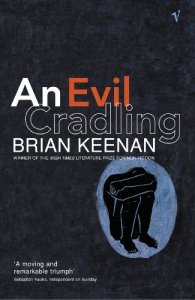
*An Evil Cradling by Brian Keenan – I read this sometime after 1995 and thought it was one of the most remarkable books I’ve ever read. It’s Keenan’s account of his captivity in Beirut by fundamentalist Shi’ite militiamen for four and a half years.

*The Name of the Rose by Umberto Eco – historical fiction set in 1327. Benedictines in a wealthy Italian abbey are suspected of heresy, and Brother William of Baskerville arrives to investigate. He collects evidence, deciphers secret symbols and coded manuscripts, and digs into the eerie labyrinth of the abbey, where “the most interesting things happen at night.”

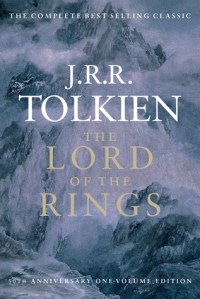
*The Lord of the Rings by J R R R Tolkien – I first read this when I was at school and have since read it a few times, but would love to read it now for the first time. It’s a fantasy epic that tells of the quest undertaken by Frodo and the Fellowship of the Ring: Gandalf the Wizard; the hobbits Merry, Pippin, and Sam; Gimli the Dwarf; Legolas the Elf; Boromir of Gondor; and a tall, mysterious stranger called Strider.

Murder on the Orient Express by Agatha Christie – which one of the passengers in the Athens to Paris coach on the Orient Express killed the millionaire Simon Ratchett? None of them appear to have a motive for killing Ratchett or to have any connection with him or each other. It would be great to read it not knowing the answer.

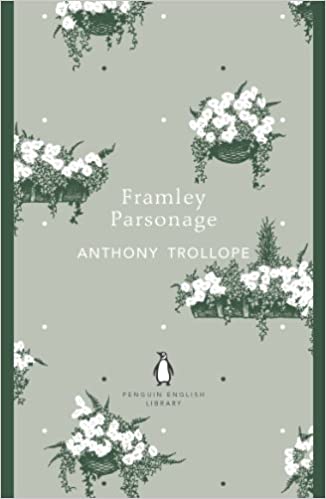
Framley Parsonage by Anthony Trollope

Framley Parsonage is my current Classics Club spin book. Although I read my previous spin book, Little Dorrit , I didn’t write a post about it. So, I decided to make an early start with Framley Parsonage to make sure I finished it before the 22nd August deadline – which I did!

Synopsis – Goodreads

A brilliant depiction of social climbing and scandal, Framley Parsonage tells the story of Mark Robarts, a young clergyman with ambitions beyond his small country parish of Framley. In a naive attempt to mix in influential circles, he makes a financial deal with the disreputable local Member of Parliament, but is instead brought to the brink of shame and ruin.

One of Trollope’s most enduringly popular novels, Framley Parsonage is an evocative portrayal of country life in nineteenth-century England, told with great compassion, humour and an acute insight into human nature. 

It is the fourth book in Anthony Trollope’s series, the Chronicles of Barsetshire, first published in serial form in the Cornhill Magazine in 1860, then in book form in 1861.

This is a long book – 688 pages in the Penguin classics edition – and begins slowly. It took me a while to settle into reading it and to sort out who all the characters are and how they relate to each other, There are several plot lines – there’s the clergyman Mark Robarts, the Vicar of Framley, and his attempts to climb up the church hierarchy. Mark through naivety, is bamboozled by Nathaniel Sowerby, a member of parliament. He guarantees a three-month bill of Sowerby’s for £400 (making Mark liable if Sowerby does not pay a £400 debt within that time) and then a further bill for £500. This does not go well for Mark!

Another plot line is that relating to Mark’s sister, Lucy and her on/off romance with Lord Lufton, much to the disapproval of his mother, Lady Lufton. Mark and Lord Lufton were childhood friends and Lady Lufton is Mark’s patroness, which causes problems all round, especially as she would much prefer her son to marry Griselda Grantley, the daughter of Doctor Theophilus Grantly, the Archdeacon of Barchester. There’s also a subplot involving Mrs Grantly and Mrs Proudie, Bishop Proudie’s wife, and their rivalry over their daughters’ marriages. There’s another marriage in the offing, that of the outspoken heiress, Martha Dunstable, to Doctor Thorne, the eponymous hero of the preceding novel in the series, Doctor Thorne.

Framley Parsonage is full of lifelike and interesting characters engaged in their everyday life and inevitable class inequalities and power struggles, described with a fair amount of wit and humour. Interspersed between the plotlines Trollope introduces several sections of political commentary on the Parliamentary shenanigans of the day, which I have to admit were less interesting to me. But it seems that not much has changed in the way the political parties carried on both in parliament and in their relationship with the press. The next book in the series is The Small House at Arlington, which I expect I’ll eventually get round to reading.

Book Beginnings & The Friday 56: The Miniaturist by Jessie Burton

Every Friday Book Beginnings on Friday is hosted by Gillion at Rose City Reader where you can share the first sentence (or so) of the book you are reading. You can also share from a book you want to highlight just because it caught your fancy.

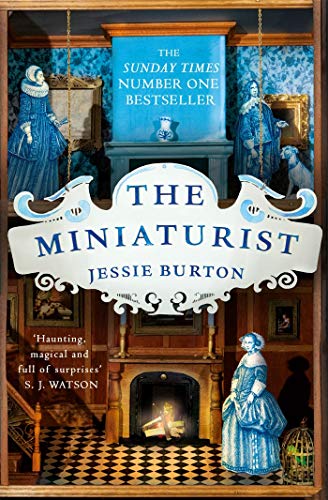
Today I’m featuring The Miniaturist by Jessie Burton. It’s set in Amsterdam in 1686/7. Nella Oortman marries a rich merchant, but life in her new home is unfulfilled. Even her cabinet house brings a mystery to the secretive world she has entered as the lifelike miniatures somehow start eerily foreshadowing her fate.

I watched the TV series a few years ago and thought I’d like to read the book – just getting round to reading it!

The Old Church, Amsterdam: Tuesday 14th January 1687

The funeral was supposed to be a quiet affair, for the deceased had no friends. But words are like water in Amsterdam, they flood your ears and set the rot, and the church’s east corner is crowded.

Also every Friday there is The Friday 56, hosted by Freda at Freda’s Voice. *Grab a book, any book. *Turn to Page 56 or 56% on your  ereader . If you have to improvise, that is okay. *Find a snippet, short and sweet, but no spoilers!

  1. Grab a book, any book.
  2. Turn to page 56, or 56% on your eReader. If you have to improvise, that is okay.
  3. Find any sentence (or a few, just don’t spoil it) that grabs you.
  4. Post it.
  5. Add the URL to your post in the link on Freda’s most recent Friday 56 post.

Page 56:

In daylight, it now seems ridiculous, but the rules of this house are written in water. I must either sink or swim, Nella thinks. Her bruise, day-old, like a small splash of wine, truly hurts when she presses it.

I was struck by the use of water imagery in both these extracts.

A Line to Kill by Anthony Horowitz

Random House UK, Cornerstone Digital| 19 August 2021| 368 pages| Review copy| 4*

Synopsis:

There has never been a murder on Alderney.

It’s a tiny island, just three miles long and a mile and a half wide. The perfect location for a brand new literary festival. Private Investigator Daniel Hawthorne has been invited to talk about his new book. The writer, Anthony Horowitz, travels with him.

Very soon they discover that not all is as it should be. Alderney is in turmoil over a planned power line that will cut through it, desecrating a war cemetery and turning neighbour against neighbour.

The visiting authors – including a blind medium, a French performance poet and a celebrity chef – seem to be harbouring any number of unpleasant secrets. When the festival’s wealthy sponsor is found brutally killed, Alderney goes into lockdown and Hawthorne knows that he doesn’t have to look too far for suspects.

There’s no escape. The killer is still on the island. And there’s about to be a second death…

A Line to Kill is the third in Anthony Horowitz’s Hawthorne and Horowitz Mystery series. I have read the earlier books, The Word is Murder and The Sentence is Death and I think it really it best if you read these books in order to fully understand the main characters and their relationship. Daniel Hawthorne, an ex-policeman, is now a private investigator, who the police call in to help with their more complicated cases. Anthony Horowitz himself plays a major role as one of the main characters, recruited by Hawthorne to write a book about him and the cases he investigates and he’d agreed to a three-book contract with Hawthorne.

This third book is about the third case they investigate. I loved the setting on the island of Alderney where the literary festival is being held. I enjoyed the interplay between Hawthorne and the fictional Horowitz, a somewhat difficult relationship as Hawthorne is particularly secretive about his personal life and about the reason he left the police force. In a way he is a Sherlock Holmes type of character keeping Horowitz very much in the dark about what he thinks about the identity of the murder. He is not an easy person to like, single minded with a somewhat superior air about him, but he does get results.

Like the two earlier books this is a complicated murder mystery, with a type of ‘locked room’ puzzle to be solved. As you would expect it is full of red herrings and multiple twists and turns. I was soon totally immersed in this fascinating novel. The characters are fully formed, all with secrets they want to keep hidden and clues are all there, but so well hidden that I was once again totally bemused by it all.

The fictional Horowitz is by now, thoroughly intrigued by Hawthorne himself – just what is he keeping hidden about himself, why did he really leave the police force? Will the writer Horowitz reveal the secret is his next book – if there is to be one? I do hope so.

Thank you to Anthony Horowitz, Random House and NetGalley for an ARC of A Line to Kill.

Top Five Tueday: Book Covers with Plants

Top Five Tuesday was originally created by Shanah @ Bionic Book Worm, but is now hosted by Meeghan @ Meeghan Reads. To participate, link your post back to Meeghan’s blog or leave a comment on her weekly post.

This is my first attempt at a Top Five Tuesday post. This week it’s about books with plants on their covers, so here are mine. I’ve read all of them except for one.

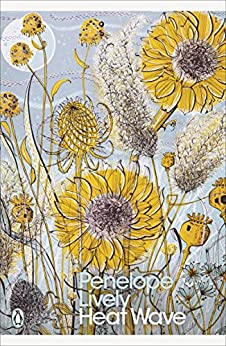
Heat Wave by Penelope Lively, with its cover full of summer flowers, reflecting the long hot summer in the English countryside.

Blurb:

Pauline is spending the summer at World’s End, a cottage somewhere in the middle of England. This year the adjoining cottage is occupied by her daughter Teresa and baby grandson Luke; and, of course, Maurice, the man Teresa married. As the hot months unfold, Maurice grows ever more involved in the book he is writing – and with his female copy editor – and Pauline can only watch in dismay and anger as her daughter repeats her own mistakes in love. The heat and tension will lead to a violent, startling climax.

In Heat Wave, Penelope Lively gives us a moving portrayal of a fragile family damaged and defined by adultery, and the lengths to which a mother will go to protect the ones she loves.

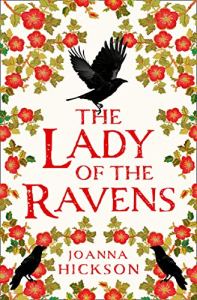
The Lady of the Ravens by Joanna Hickson – a striking cover for this historical fiction about the early years of Henry VII’s reign.

Blurb:

My baptismal name may be Giovanna but here in my mother’s adopted country I have become plain Joan; I am not pink-cheeked and golden-haired like the beauties they admire. I have olive skin and dark features – black brows over ebony eyes and hair the colour of a raven’s wing…

When Joan Vaux is sent to live in the shadow of the Tower of London, she must learn to navigate the treacherous waters of this new England under the Tudors. Like the ravens, Joan must use her eyes and her senses, if Henry and his new dynasty are to prosper and thrive. 

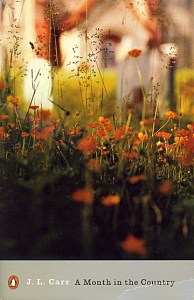
A Month in the Country by J L Carr. I loved this quiet novel, in which not a lot happens and yet so much happens as Tom describes the events of that summer month in the country. And it has a gorgeous cover too!

Blurb:

A damaged survivor of the First World War, Tom Birkin finds refuge in the quiet village church of Oxgodby where he is to spend the summer uncovering a huge medieval wall-painting. Immersed in the peace and beauty of the countryside and the unchanging rhythms of village life he experiences a sense of renewal and belief in the future. Now an old man, Birkin looks back on the idyllic summer of 1920, remembering a vanished place of blissful calm, untouched by change, a precious moment he has carried with him through the disappointments of the years. Adapted into a film starring Colin Firth, Natasha Richardson and Kenneth Branagh, A Month in the Country traces the slow revival of the primeval rhythms of life so cruelly disorientated by the Great War.

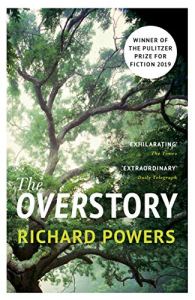
The Overstory by Richard Powers. This was recommended to me by a friend and I bought this last year but I still haven’t read it yet. I love its cover.

Blurb:

An artist inherits a hundred years of photographic portraits, all of the same doomed American chestnut. A hard-partying undergraduate in the late 1980s electrocutes herself, dies, and is sent back into life by creatures of air and light. A hearing- and speech-impaired scientist discovers that trees are communicating with one another. An Air Force crewmember in the Vietnam War is shot out of the sky, then saved by falling into a banyan.

This is the story of these and five other strangers, each summoned in different ways by the natural world, who are brought together in a last stand to save it from catastrophe.

The Way Through the Woods by Colin Dexter – an Inspector Morse book. An atmospheric cover for this mystery that Morse solves from crossword type clues, with plenty of twists and turns and vivid descriptions of the scenery and locations.

Blurb:

They called her the Swedish Maiden – the beautiful young tourist who disappeared on a hot summer’s day somewhere in North Oxford. Twelve months later the case remained unsolved – pending further developments.

On holiday in Lyme Regis, Chief Inspector Morse is startled to read a tantalizing article in The Times about the missing woman. An article which lures him back to Wytham Woods near Oxford . . . and straight into the most extraordinary murder investigation of his career.