Thin Air by Michelle Paver

I read Thin Air: A Ghost Story by Michelle Paver in the summer, but it’s a good choice to read for Halloween. I didn’t find it as scary as Dark Matter, but even so it is very atmospheric and chilling – in more ways than one. The setting is Kangchenjunga in the Himalayas as a group of five men set out to climb the mountain in 1935.
Kanchenjunga, the third highest mountain in the world, had claimed many lives and no one had reached the summit. Held to be a sacred mountain, it is one of the most dangerous mountains in the world – believed to be the haunt of demons and evil spirits. An unsuccessful attempt had been made in 1907, led by Edmund Lyell, when only two men had returned. The group in 1935, led by Major Cotterell, attempted to follow the 1907 route up the south-west face.

Their story is narrated by medic, Dr. Stephen Pearce, accompanying his older brother, Kits. The brothers have always been rivals and this continues as they make their way up the mountain. Things start to go wrong almost straight away and Stephen is full of foreboding. He fears someone is following them and when he finds a rucksack left behind by the earlier climbers he fears he is loosing his mind. Under the most extreme weather conditions, the constant fear of an avalanche and the increasing effects of mountain sickness Stephen’s paranoia rises. More horrors keep piling on.

It’s not a long book, 240 pages, and almost half of it describes the mountain itself and the route the climbers took to get to the start of the climb and setting up their base camp. So it is only in the later part where the terror hinted at before sets in. The isolation, a sense of ‘otherness’, the extreme cold and the immense scale of the mountain with its towering pinnacles, deep crevasses, and above all the silence dominates. Were Stephen’s experiences the result of being at a high altitude, were they hallucinations – or was what he saw really there? I was never sure and that was part of the horror.

Thin Air is based on real events, although the 1907 and 1935 expeditions described in it are fictional. But the setting is real, the characterisation is excellent as is the feel of the 1930s, with its class snobbery, and racism and above all the creeping sense of dread that pervades the whole book.

Top Ten Tuesday: Books On My Autumn 2020 TBR

The topic this week is Books On My Autumn 2020 TBR. I’ve stopped trying to plan what I’ll read next because what usually happens is that I’ll read anything except the books I’ve planned to read. So this is a list of books that I’ll read sometime soon … maybe. It includes books I own and review books from NetGalley.

  • Child’s Play by Reginald Hill – the 9th Dalziel and Pascoe mystery.
  • The Last Bus to Woodstock by Colin Dexter – the 1st Inspector Morse book.
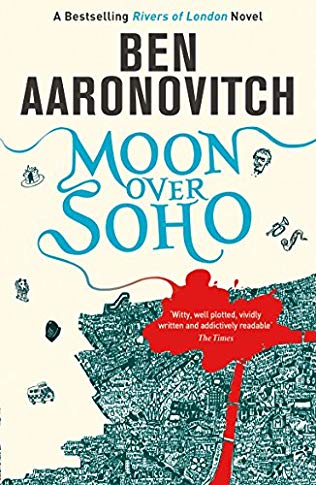
  • Moon Over Soho by Ben Aaronovitch – the 2nd Rivers of London novel.
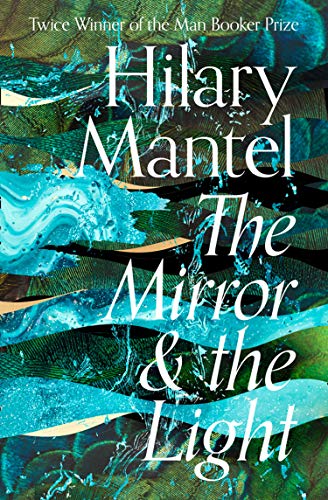
  • The Mirror and the Light by Hilary Mantel – book 3 of the Wolf Hall trilogy. I did start to read this book earlier in the year, but I’ll probably have to start it again.
  • The Haunting of H G Wells by Robert Masello – to be published 1 October 2020 – my choice from the First Reads selection this month, a novel mixing fact and fiction.
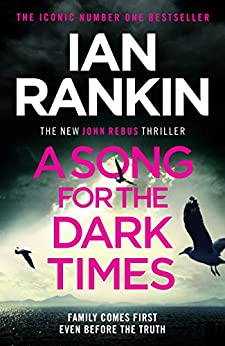
  • A Song for the Dark Times by Ian Rankin – to be published 1 October 2020, the 23rd Rebus book – a ‘must read’book for me.
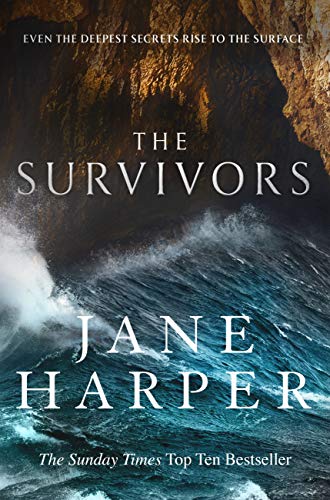
  • The Survivors by Jane Harper – a standalone crime fiction novel, published today 22 September 2020. I’ve just finished read her first book, The Dry, so I’m very keen to read this one soon.
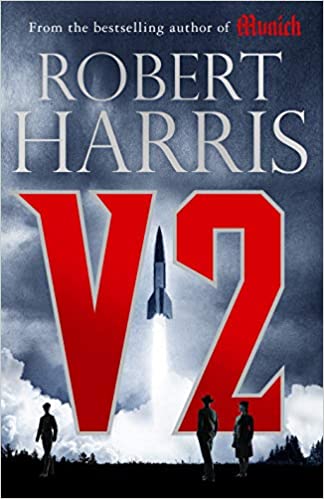
  • V2 by Robert Harris – a Second World War thriller.a blend of fact and fiction.
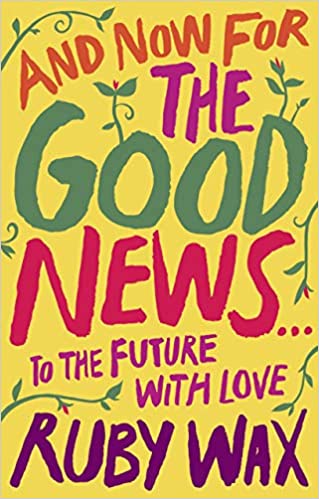
  • And Now for the Good News by Ruby Wax – this is the book I really must read soon – we all need some good news!
  • The Postscript Murders by Elly Griffiths – to be published 1 October 2020 – a literary murder mystery.

Top Ten Tuesday: Recent Additions to My TBRs

Top Ten Tuesday is a weekly meme created by The Broke and the Bookish and now hosted by Jana at That Artsy Reader Girl. For the rules see her blog. This week’s topic is Books I’ve Added to my TBR and Forgotten Why, but instead I’ve listed ten of the e-books I’ve added to my TBRs since the lockdown.

They are:

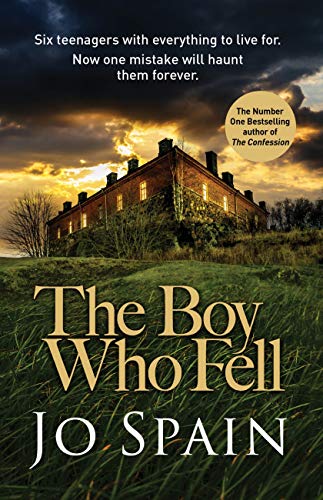
  • The Boy Who Fell by Jo Spain – An Inspector Tom Reynolds Mystery Book 5. Jo Spain is one of my favourite crime fiction writers. In this one Tom investigates the death of Luke Connolly who was found in the garden of an abandoned house.
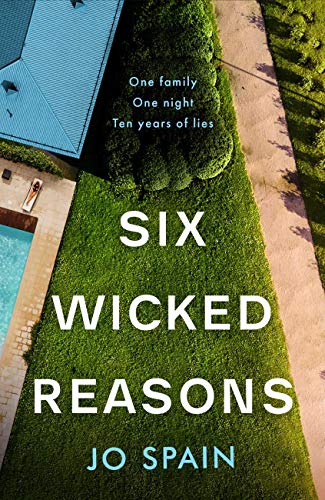
  • Six Wicked Reasons by Jo Spain – a standalone book, crime fiction, a thriller set in Wexford and Spanish Cove in Ireland about a dysfunctional family.
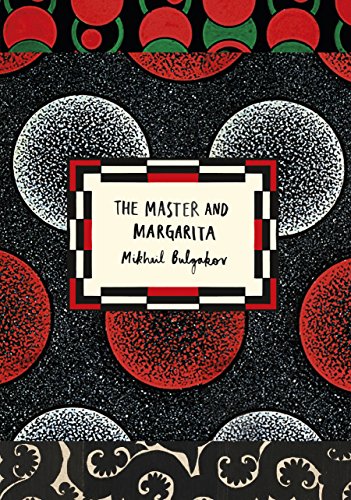
  • The Master and Margarita by Mikhail Bulgakov – a powerful picture of Stalin’s regime in this allegorical classic. I’ve seen favourable reviews on other blogs.
  • The Godfather by Mario Puzo – a story of the Mafia and the Corleone family. I’ve seen the film and want to read the book to see how it compares.
  • A Gentleman in Moscow by Amor Towles – another book other bloggers recommend. It’s historical fiction about a man who is sentenced to permanent house arrest in the luxurious Metropol Hotel in Moscow. 
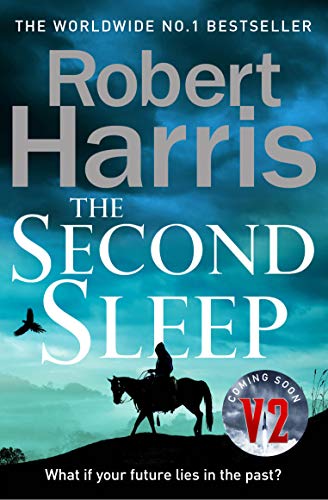
  • The Second Sleep by Robert Harris – another favourite author. 1468. A young priest, Christopher Fairfax, arrives in a remote Exmoor village to conduct the funeral of his predecessor.
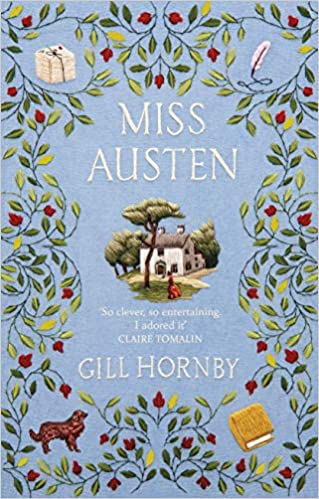
  • Miss Austen by Gill Hornby historical fiction that delves into why Cassandra burned a treasure trove of letters written by her sister, Jane Austen – an act of destruction that has troubled academics for centuries.
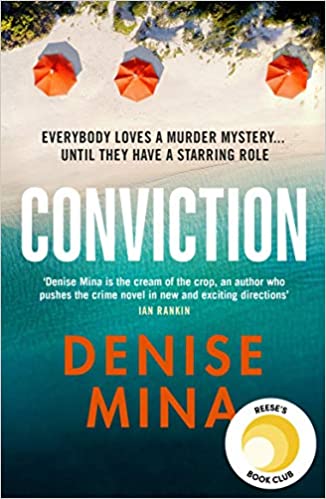
  • Conviction by Denise Mina – crime fiction, about a woman listening to a true crime podcast when she realises she knows the victim and is convinced she knows what really happened.
  • Blood Orange by Harriet Tyce – Obsession, revenge, lust and murder play out on the pages as a female barrister tries to hold her life together while her personality tries to tear it apart.
  • An Air That Kills by Andrew Taylor – the first book in the Lydmouth series. I’ve read this one already – here’s my post.

Catching Up

I’ve found that this lockdown period has affected my blogging as I haven’t been writing about the books I’ve read recently. I’ve been doing posts that don’t really need much concentration – lists of books, book beginnings and so on. So now I have a few books that I’ve read but not reviewed. Here’s what I thought about two of them. These are just brief reviews – more like notes really.

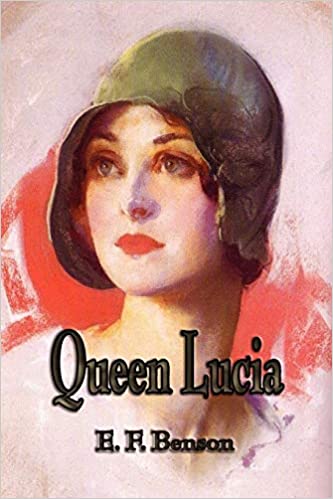
Queen Lucia

Queen Lucia has been on my radar for years ever since I began blogging and I bought a copy several years ago. When I saw that Simon and Karen were hosting the 1920 Club I realised it would be ideal as it was first published in 1920. However, time got the better of me and I finished reading it too late to add it the 1920 Book Club – but better late than never. 

I know other bloggers love E F Benson’s Mapp and Lucia books, but they have never really appealed to me. I don’t read many comic novels. But I did enjoy it more than I thought I would, although I think his style of writing is an acquired taste, using satire, irony, exaggerations and ridicule to expose people’s stupidities or vices – not my usual genre of books.  However, it is easy reading and it took my mind off the horrors of the coronavirus whilst I was reading. It is a book of its time and definitely not PC by today’s standards.

Queen Lucia is actually Mrs Emmeline Lucas, who presides over the residents of the village of Riseholme as its self-appointed queen. She is a most unlikeable character, totally self-centred and manipulative, aided by her friend, George Pillson who worships her. But as the events described in the novel unfold he rebels and works to undermine her. I disliked her pretentious tastes and her lust for power. She irritated me immensely with her baby talk, her pretence that she can speak Italian and her methods of riding roughshod over everyone. A rather more sympathetic character is Daisy Quantock, who introduces a mysterious Indian guru to the village before Lucia managed to present him as her protege.

The whole book has an artificial and silly feel about it but about half way through I found I was just going with the flow as I really  wanted to know what happened next. There are five more Mapp and Lucia novels, and as I’ve found an e-book containing all six for just 49p – Make Way for Lucia, I shall probably read more of them sometime.

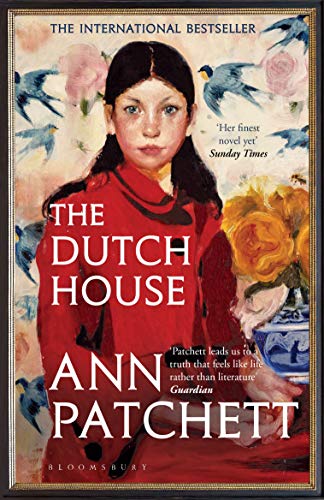
The Dutch House

I decided to read The Dutch House by Ann Patchett as so many other bloggers have written glowing reviews, but I wasn’t as keen on it as others. Its about a dysfunctional family.  The Conroys, Danny, Maeve and their mother, Elna and father, Cyril  who lived in the Dutch House, but when Danny was just three his mother left home.  Cyril remarried, and his second wife, Andrea, the mother of two young girls, was the epitome of the  wicked stepmother. When their father dies he leaves the Dutch House, to Andrea.  She shows her true  colours and insists Danny and Maeve have to move out of their home. The house itself is described in detail. It was built by a Dutch couple called VanHoebeek in 1922 when it was in the open country just outside Philadelphia and their presence is still a strong influence on  the Conroy family.

The novel moves backwards and forwards in time, from 1946 to the present, and at times I was not sure what happened when (probably my lack of concentration caused my confusion). Danny and Maeve are both obsessed with the house, to the detriment of their own lives. Their mother, Elna meanwhile had a totally different reaction to the house, never liking it and I was intrigued about her – what made her leave her children – and I was suspicious about that had happened to her and even if she was she still alive. The pain her children felt when she left to be replaced by a wicked stepmother is immense. But it is the loss of their inheritance rather than the loss of their mother, that has left them with bitterness, and anger.

I thought the book began well, but somewhere in the middle and definitely towards the end I did get rather bored with the story, so much so that I was relieved to finish it. It was not just such a good choice of book for me – or maybe it was the wrong time for me to read it.

Top Ten Tuesday: Books On My Spring 2020 TBR

top-ten-tuesday-new

Top Ten Tuesday is a weekly meme created by The Broke and the Bookish and now hosted by Jana at That Artsy Reader Girl. For the rules see her blog.

This week’s topic is Books On My Spring 2020 TBR. Some of these books have been on my shelves unread for a long time, some are new additions and others are e-books from NetGalley. These are just the tip of the iceberg and when the time comes to start a new book it might be one of these – or any of the other TBRs on shelves.

First the physical books

Spring 20 tbr

Deadheads by Reginald Hill, the 7th Dalziel and Pascoe novel. Patrick Alderman’s Great Aunt Florence collapsed into her rose bed leaving him Rosemont House with its splendid gardens. But was it murder?

Edwin: High King of Britain by Edoardo Albert, book 1 of 3 in the Northumbrian Thrones series. Historical fiction set in the 7th century-  Edwin, the deposed king of Northumbria, seeks refuge at the court of King Raedwald of East Anglia. But Raedwald is urged to kill his guest by Aethelfrith, Edwin’s usurper.

Sirens by Joseph Knox, the first Detective Aidan Waits thriller, set in Manchester. I’ve read books two and three, so it’s about time I read the first. It’s described on the back cover as a powerhouse of noir by Val McDermid.

The next two books are historical nonfiction:

As I’m currently reading Hilary Mantel’s third book in her Thomas Cromwell trilogy, it reminded me that I haven’t read historian, Tracy Borman’s biography of him – Thomas Cromwell: the untold story of Henry VIII’s most faithful servant.

Peterloo: the English Uprising by Robert Poole, about the ‘Peterloo massacre’ in St Peter’s field, Manchester on 16th August 1819 when armed cavalry attacked a peaceful rally of some 50,000 pro-democracy reformers. This is described on the back cover as a landmark event in the development of democracy in Britain – the bloodiest political event of the nineteenth century on English soil.

Next e-books

The Last Protector by Andrew Taylor, book 4 in his James Marwood & Cat Lovett series, historical crime fiction set in Restoration England. I loved the first three books, so I have high hopes that I’ll love this one too. It will be published on 2 April.

The Lost Lights of St Kilda by Elisabeth Gifford, historical fiction, a love story that crosses oceans and decades. It’s set on a Scottish island in 1927 and in worn-torn France in 1940.

Fresh Water for Flowers by Valérie Perrin and translated from the French by Hildegarde Serle, to be published in June. A funny, moving, intimately told story of Violette, the caretaker of a cemetery who believes obstinately in happiness.

The Measure of Malice: Scientific Detection Stories edited by Martin Edwards. A collection of classic mystery stories using scientific methods of detection.

The Deep by Alma Katsu, historical fiction set on the Titanic and its sister ship The Britannic. It’s a sinister tale of the occult. Anna Hebbley was a passenger on the Titanic who survived the 1912 disaster and four years later was a nurse on the Britannic, refitted as a hospital ship.

Stone Cold Heart by Caz Frear

Stone Cold Heart

2*

Stone Cold Heart is Caz Frear’s second novel and I’m sorry to say that I didn’t get on with it very well. However, I’m in the minority as there are lots of 4 and 5 star reviews on Amazon and Goodreads. My copy is a NetGalley copy that I’ve had far too long – I did start reading it when I first downloaded it but soon realised that it would be better if I read her debut novel, Sweet Little Lies first. These are police procedurals written in the first person present tense narrated by DC Cat Kinsella who is part of the Murder Investigation Team 4, and her personal life is a major part of both books.

Naomi Lockhart, a young Australian woman was murdered and at first it looked as though her flatmate had killed her. The night before she was murdered Naomi had been at a party held by her employer, Kirstie Connor and her husband, Marcus. Also at the party were Joseph Madden and his meek wife, Rachel, Marcus’ sister. Joseph is an emotionally abusive narcissist, who manages the local coffee shop and when suspicion then falls on him and he is arrested he claims that Rachel is setting him up. And so begins a most convoluted and tangled tale about Joseph and the rest of his family, filled with secrets and lies, most of which are complete red herrings.  

Alongside the murder mystery, the book follows the story of DC Cat Kinsella’s family and the mystery surrounding Maryanne Doyle that was told in Sweet Little Lies – you really do need to read that book first to understand what is going on in her family life in this book. Cat is a conflicted character to say the least and although other readers have found her a warm and likeable character I found her one of the most irritating fictional detectives in crime fiction. She is full of guilt and angst about her family, in particular about her father and her brother. She is keeping the identity of her boyfriend a secret from everybody – if you’ve read Sweet Little Lies you’ll know why, otherwise you’ll be as mystified as her family and police colleagues are.

I found the secrets surrounding Cat’s family the most interesting part of the book, more so than the investigation into Naomi’s murder. The Murder Investigation Team all get on well together, but their continuing team meetings in which they endlessly consider all the possible theories about the murder and what happened, although interesting at first soon became tedious – far too much hypothesising. The book just dragged on and on. And then there is the ending – except it’s just the murder mystery that ends as it looks as though there is still more to come about Cat Kinsella. If you like long detective stories, full of twists and turns, lots of red herrings and dubious and unreliable characters who withhold evidence you may like it more than I did.

Amazon UK link
Amazon US link

My thanks to the publishers, Zaffre, for a review copy via NetGalley.

Reading challenges: Mount TBR challenge and Calendar of Crime – the main action takes place in November.