Top Ten Tuesday: Books On My Summer 2021 To Read List

Top Ten Tuesday is a weekly meme created by The Broke and the Bookish and now hosted by Jana at That Artsy Reader Girl. For the rules see her blog. The topic this week is Books On My Summer 2021 To Read List.

Some of these books are ones that have been on my shelves for ages and some are more recent additions from NetGalley.

The Mouse Trap and Selected Plays by Agatha Christie – the world’s longest running play, plus three other thrillers adapted from the novels (which I have read) – And Then There Were None, The Hollow and Appointment with Death. I haven’t seen The Mouse Trap, and doubt I ever will, so the next best thing is to read it.

Set in an manor house a number of people are isolated from the outside world by a blizzard and faced with the reality that one of them is a killer.

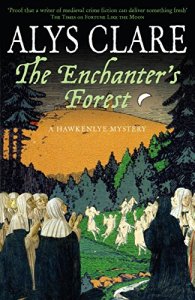
The Enchanter’s Forest by Alys Clare – historical fiction set in Midsummer 1195. A ruthlessly ambitious man has fallen deeply into debt, his desperate situation made even more difficult by the contribution he has had to pay towards King Richard’s ransom. To make matters worse the beautiful wife he tricked into marriage has tired of him and her mother hates his guts.

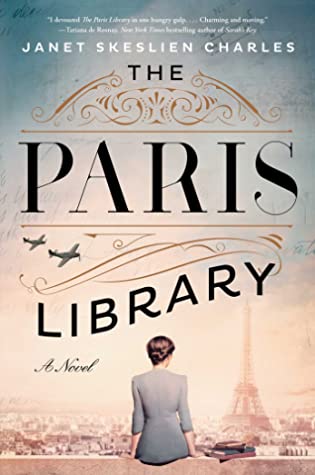
The Paris Library by Janet Skeslien Charles set in Paris in 1939. Odile Souchet is obsessed with books, and her new job at the American Library in Paris is a dream come true. When war is declared, the Library is determined to remain open. But then the Nazis invade Paris, and everything changes.

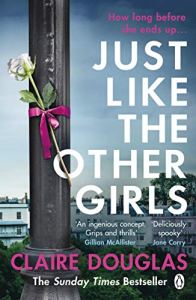
Just Like the Other Girls by Claire Douglas – standalone psychological thriller. Una Richardson’s heart is broken after the death of her mother. Seeking a place to heal, she responds to an advertisement and steps into the rich, comforting world of Elspeth McKenzie. But Elspeth’s home is not as safe as it seems.

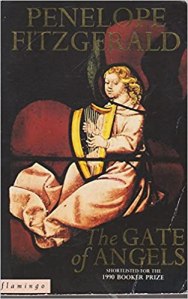
The Gate of Angels by Penelope Fitzgerald – In 1912, rational Fred Fairly, one of Cambridge’s best and brightest, crashes his bike and wakes up in bed with a stranger – fellow casualty Daisy Saunders, a charming, pretty, generous working-class nurse. So begins a series of complications – not only of the heart but also of the head – as Fred and Daisy take up each other’s education and turn each other’s philosophies upside down. 

The House on Bellevue Gardens by Rachel Hore – Bellevue Gardens is a tranquil London square, tucked away behind a busy street. You might pass it without knowing it’s there. Here, through the imposing front door of Number 11, is a place of peace, of sanctuary and of secrets. It is home to Leonie; once a model in the sixties, she came to the house to escape a destructive marriage and now, out of gratitude, she opens her house to others in need.

The Girl Who Died by Ragnar Jónasson –

After her father’s tragic suicide, Una is desperate to get away from Reykjavik. So when an advert appears for a teaching position in a remote, northern Icelandic village, she seizes her chance. But with unfriendly residents, bleak weather and a population of just ten, it is far from what Una knows. And then, just before midwinter, a young girl from the village is found dead. Now there are only nine villagers left. And Una fears that one of them has blood on their hands . . .

The Music Shop by Rachel Joyce – 1988. Frank owns a music shop. It is jam-packed with records of every speed, size and genre. Classical, jazz, punk – as long as it’s vinyl he sells it. Day after day Frank finds his customers the music they need. Then into his life walks Ilse Brauchmann. Ilse asks Frank to teach her about music. His instinct is to turn and run. And yet he is drawn to this strangely still, mysterious woman with her pea-green coat and her eyes as black as vinyl. But Ilse is not what she seems. And Frank has old wounds that threaten to re-open and a past he will never leave behind …

True Crime Story by Joseph Knox – a standalone murder mystery told as a true crime story. In the early hours of Saturday 17 December 2011, Zoe Nolan, a nineteen-year-old Manchester University student, walked out of a party taking place in the shared accommodation where she had been living for three months.

She was never seen again. Seven years after her disappearance, struggling writer Evelyn Mitchell finds herself drawn into the mystery. Through interviews with Zoe’s closest friends and family, she begins piecing together what really happened in 2011. .

The Silence Between Breaths by Cath Staincliffe passengers boarding the 10.35 train from Manchester Piccadilly to London Euston are bound for work, reunions, holidays and new starts, with no idea that the journey is about to change their lives for ever, as one of the passengers, sitting in the middle of the carriage is Saheel, carrying a deadly rucksack . . .

In the aftermath, amidst the destruction and desolation, new bonds are formed, new friendships made… and we find hope in the most unlikely of places and among the most unlikely people.

Back to Barter Books!

On Tuesday I went Barter Books in Alnwick (this is a secondhand bookshop where you can ‘swap’ books for credit that you can then use to get more books from the Barter Books shelves). The last time I went there was in January 2020. Since the pandemic began I’ve only been out to a few places and not been around many people at all, so I was a bit nervous.

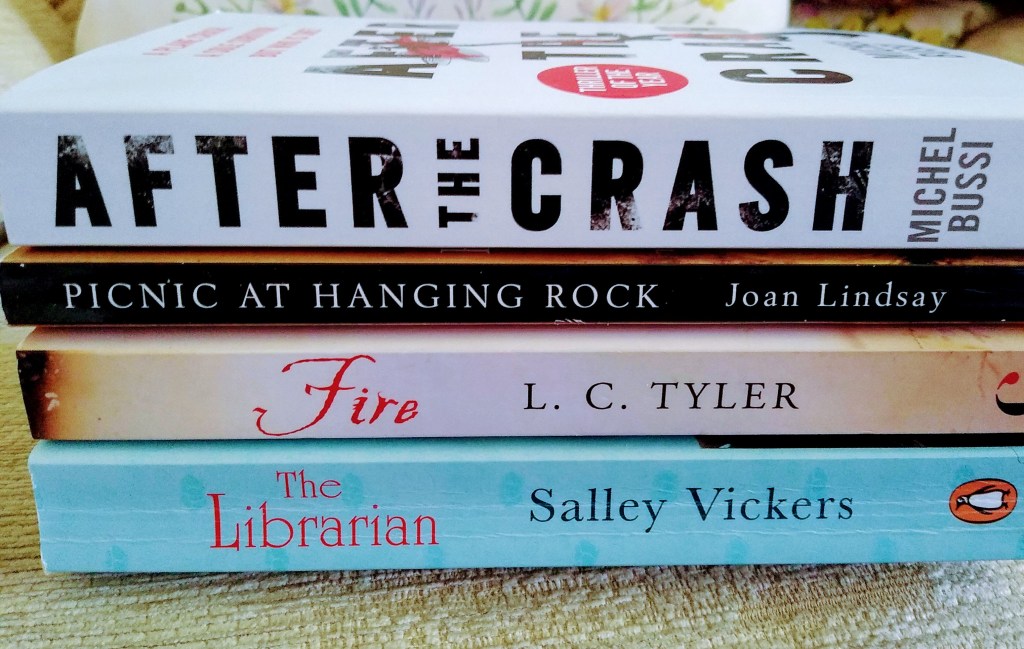
These are the books I got (the descriptions are from Amazon):

After the Crash by Michel Bussi – because I’d enjoyed reading Time is a Killer by Bussi a couple of years ago.

On the night of 22 December 1980, a plane crashes on the Franco-Swiss border and is engulfed in flames. 168 out of 169 passengers are killed instantly. The miraculous sole survivor is a three-month-old baby girl. Two families, one rich, the other poor, step forward to claim her, sparking an investigation that will last for almost two decades. Is she Lyse-Rose or Emilie?

Eighteen years later, having failed to discover the truth, private detective Crédule Grand-Duc plans to take his own life, but not before placing an account of his investigation in the girl’s hands. But, as he sits at his desk about to pull the trigger, he uncovers a secret that changes everything – then is killed before he can breathe a word of it to anyone . . .

Picnic at Hanging Rock by Joan Lindsay – this has been on my wishlist for years!

It was a cloudless summer day in the year nineteen hundred.

Everyone at Appleyard College for Young Ladies agreed it was just right for a picnic at Hanging Rock. After lunch, a group of three of the girls climbed into the blaze of the afternoon sun, pressing on through the scrub into the shadows of Hanging Rock. Further, higher, till at last they disappeared.

They never returned.

Whether Picnic at Hanging Rock is fact or fiction the reader must decide for themselves.

Fire by L C Tyler – I’ve never read any of his books. I chose it because I like historical fiction and I’m interested in the Restoration period, having read Andrew Taylor’s Marwood and Lovett series also set in the same period. Fire is the fourth book in the John Grey Historical Mystery series.

1666. London has been destroyed by fire and its citizens are looking for somebody, preferable foreign, to blame. Only the royal Court, with its strong Catholic sympathies, is trying to dampen down the post-conflaguration hysteria. Then, inconveniently, a Frenchman admits to having started it together with an accomplice, whom he says he has subsequently killed.

John Grey is tasked by Secretary of State, Lord Arlington, with proving conclusively that the self-confessed fire-raiser is lying. Though Grey agrees with Arlington that the Frenchman must be mad, he is increasingly perplexed at how much he knows. And a body has been discovered that appears in every way to match the description of the dead accomplice.

Grey’s investigations take him and his companion, Lady Pole, into the dangerous and still smoking ruins of the old City. And somebody out there – somebody at the very centre of power in England – would prefer it if they didn’t live long enough to conclude their work…

The Librarian by Salley Vickers – I’ve read a few of Salley Vickers’ books and enjoyed them, especially  Miss Garnet’s Angel and Mr Golightly’s Holiday, which I read before I began this blog.

In 1958, Sylvia Blackwell, fresh from one of the new post-war Library Schools, takes up a job as children’s librarian in a run down library in the market town of East Mole.

Her mission is to fire the enthusiasm of the children of East Mole for reading. But her love affair with the local married GP, and her befriending of his precious daughter, her neighbour’s son and her landlady’s neglected grandchild, ignite the prejudices of the town, threatening her job and the very existence of the library with dramatic consequences for them all.

The Librarian is a moving testament to the joy of reading and the power of books to change and inspire us all.

There was a queue outside when I got there as entry to the bookshop is limited to a maximum of about sixty people at a time to ensure enough space for social distancing. Although I was pleased to be able to go to Barter Books again, there were too many people there for me, especially around the counter and the crime fiction bookcases near the counter. So I didn’t linger and went to back of the main hall, which is the largest room in the shop where there were only a few people browsing the shelves. Even so I felt nervous, so once I’d found four books I decided it was time for me to leave. I’ve never been comfortable in crowds, even before the pandemic.

New Additions at BooksPlease

I’ve been lucky with some of the 99p e-books on offer on Amazon recently and bought three books, well five actually as one is a trilogy.

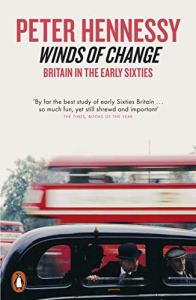
First a nonfiction book, Winds of Change: Britain in the Early Sixties by historian, Peter Hennessy. The centre of the book is 1963 – the year of the Profumo Crisis, the Great Train Robbery, the satire boom, de Gaulle’s veto of Britain’s first application to join the EEC, the fall of Macmillan and the unexpected succession to the premiership of Alec Douglas-Home. Then, in 1964, the battle of what Hennessy calls the tweedy aristocrat and the tweedy meritocrat – Harold Wilson, who would end 13 years of Conservative rule and usher in a new era. It’s the final book in Hennessy’s Post War trilogy.

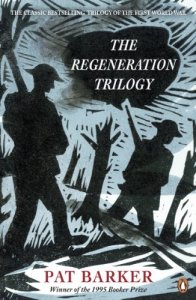
Then three novels – all historical fiction: The Regeneration Trilogy: Regeneration; The Eye in the Door; The Ghost Road by Pat Barker, three novels set during the First World War. I already had the third book, but hadn’t read it because I wanted to read the trilogy in order. It tells the story of three men, shell-shocked soldiers, who were sent back to the front. It’s based on the experiences of poets, Siegfried Sassoon and Wifred Owen who met at Craiglockhart Hospital near Edinburgh.

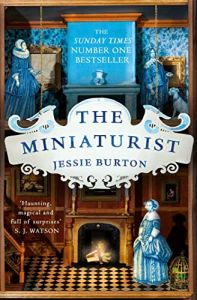
The Miniaturist by Jessie Burton – A few years ago I borrowed this book from the library but had to return it unread. Later on I watched the TV series and thought I’d like to read the book. So, when it was on offer for 99p I bought it. It’s set in Amsterdam in 1686. Nella Oortman marries a rich merchant, but life in her new home is unfulfilled. Even her cabinet house brings a mystery to the secretive world she has entered as the lifelike miniatures somehow start eerily foreshadowing her fate.

This last book is my choice this month from Amazon First Reads free books:

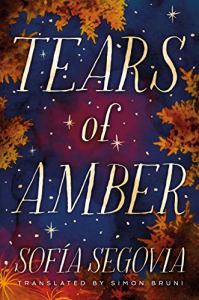
Tears of Amber by Sofía Segovia – a novel set during the Second World War in East Prussia between 1938 and 1947. In her author’s note Sofia Segovia says her novel was inspired by the story of Ilse and Arno Schipper, who established a factory in Monterrey, Mexico, her home town. It is a mix of fact and fiction. Publication date 1 May 2021. I have started reading and it’s looking good so far.

My Friday Post: The Lieutenant by Kate Grenville

Every Friday Book Beginnings on Friday is hosted by Gillion at Rose City Reader where you can share the first sentence (or so) of the book you are reading. You can also share from a book you want to highlight just because it caught your fancy.

I’m currently reading A Room Made of Leaves by Elizabeth Grenville, her latest book, and have nearly finished it. I love her books and as I’ve nearly finished it I was wondering which book to read next and remembered I have one of her earlier books, The Lieutenant still waiting to be read. To my surprise when I opened it this morning I found that it is another book about one of the characters in A Room Made of Leaves. That character is William Dawes, a real person, a soldier in the first days of the Colony of New South Wales.

The Lieutenant  is about Daniel Rooke, based on real events in William Dawes’ life, using his notebooks in which he recorded his conversations with a young girl, Patyegarang, (also in A Room Made of Leaves), in his efforts to learn the language of the indigenous people of Sydney. It is a novel that stays close to the historical events. 

It begins:

Daniel Rooke was quiet, moody, a man of few words. He had no memories other than of being an outsider.

Also every Friday there is The Friday 56, hosted by Freda at Freda’s Voice. *Grab a book, any book. *Turn to Page 56 or 56% on your  ereader . If you have to improvise, that is okay. *Find a snippet, short and sweet, but no spoilers!

  1. Grab a book, any book.
  2. Turn to page 56, or 56% on your eReader. If you have to improvise, that is okay.
  3. Find any sentence (or a few, just don’t spoil it) that grabs you.
  4. Post it.
  5. Add the URL to your post in the link on Freda’s most recent Friday 56 post.

Page 56:

It seemed that the natives did not like the surgeon’s music any more than they had enjoyed his performance with the pistol. Their faces were stony. After a minute they took the two pieces of shield and disappeared into the woods.

Book description:

1788 Daniel Rooke sets out on a journey that will change the course of his life. As a lieutenant in the First Fleet, he lands on the wild and unknown shores of New South Wales. There he sets up an observatory to chart the stars. But this country will prove far more revelatory than the skies above.

Based on real events, The Lieutenant tells the unforgettable story of Rooke’s connection to an Aboriginal child – a remarkable friendship that resonates across the oceans and the centuries.

We Are Not In The World by Conor O’Callaghan

Transworld Publishers| 18 February 2021 |272 pages | Kindle review copy via NetGalley/ 2*

Heartbroken after a long, painful love affair, a man drives a haulage lorry from England to France. Travelling with him is a secret passenger – his daughter. Twenty-something, unkempt, off the rails.

With a week on the road together, father and daughter must restore themselves and each other, and repair a relationship that is at once fiercely loving and deeply scarred.

As they journey south, down the motorways, through the service stations, a devastating picture reveals itself: a story of grief, of shame, and of love in all its complex, dark and glorious manifestations.

My thoughts:

A strange, confusing and depressing book that I read as though I was in fog, never really getting to grips with the plot. It meanders and drifts through the characters, shifting between the past, the near past and the present, and from place to place, as Paddy drives the lorry from England down to the south of France. I was often not sure what was happening, when or where it was happening and to whom it was happening. It’s a stream of consciousness, as the various characters move in and out of focus.

There were times when I wondered why I was reading this, it was like a dream where the scenes move randomly through a number of sequences, and you wake up with that fearful feeling that something dreadful has been going on inside your head that was disturbing, and unsettling. There’s a sense of timelessness and of detachment from the day to day reality – they are not in the world. And yet I was compelled to read on, if only just to get to the end and see if my suspicions about what had actually happened were right. They were, although there is a little twist at the very end that I hadn’t expected.

The fairy tale of Oisin, a tale Paddy tells his daughter, interests me. Oisin was a warrior who fell in love with a fairy named Niamh. He takes her home to Tir na nOg, where they will stay forever young, but he can never return home. After three years he is homesick and returns on a magic horse, on the condition that he has to stay on the horse on pain of death. But three hundred years have actually gone by, not three, and everyone he knew is dead. He meets an old man who knew his father and moving to help him he slips off the horse, touches the ground and dies in an instant. He repeats this story several times to his daughter as they travel through France. It links with Tir na nOg, the name of his family home, now neglected and empty after his mother’s death three years earlier.

This is not an easy read, as you have to concentrate on all the different strands. Paddy’s life is a complete mess, he has lost everything: his family, his home and his sense of belonging. He looks back at the broken relationships with his parents, his brother, ex-wife, daughter, and ex-lover. It’s told in fragments and you have to read between the lines to understand it. I didn’t enjoy the book, and found it difficult to follow. It is too vague, and as soon as I thought I’d begun to understand it, it drifted away into obscurity. and I was left floundering.

My thanks to the publishers and to NetGalley for my advance review copy.

  • ASINB08119RXD6
  • Publisher : Transworld Digital (18 Feb. 2021)
  • Language : English
  • Print length : 264 pages
  • Page numbers source ISBN : 0857526855
  • Source: Review copy
  • My rating: 2*

The Salt Path by Raynor Winn

Just days after Raynor learns that Moth, her husband of 32 years, is terminally ill, their home is taken away and they lose their livelihood. With nothing left and little time, they make the brave and impulsive decision to walk the 630 miles of the sea-swept South West Coast Path, from Somerset to Dorset, via Devon and Cornwall.

Carrying only the essentials for survival on their backs, they live wild in the ancient, weathered landscape of cliffs, sea and sky. Yet through every step, every encounter and every test along the way, their walk becomes a remarkable journey.

The Salt Path is an honest and life-affirming true story of coming to terms with grief and the healing power of the natural world. Ultimately, it is a portrayal of home, and how it can be lost, rebuilt and rediscovered in the most unexpected ways
.

I first wrote a short post about The Salt Path in this post. I bought the book in 2018 and was keen to read it, but so many other books intervened, and it was only when I saw Raynor Winn on Kate Humble’s Coastal Walks programme on the South West Coastal Path that I remembered about her book.

Raynor and Moth Winn, a couple in their 50s, were homeless, with no means of income except for £48 pounds a week. They had lost their home, business and livelihood, after investing in one of a friend’s companies that had failed. They found out that they were liable to make payments towards the debts of the company, were taken to court and ended up losing not only their savings but also their farm and home.

Despite finding out that Moth has a rare terminal illness, they decided to walk the South Coast Path. He had been diagnosed with corticobasal degeneration (CBD), a brain disease for which there is no cure or treatment apart from pain killers and physiotherapy. The consultant told him that he shouldn’t tire himself, or walk too far and to take care on the stairs. Their decision to walk the Path and camp wild seemed to me both brave and foolhardy and I read this book with absolute amazement that they could take themselves away from medical care and set off, almost totally unprepared and not fit enough to walk 630 miles along a coast path.

At first it was really difficult as Moth struggled with pain and exhaustion, and it horrified me that he could carry on in that condition. They had reached the Valley of Rocks in north Devon, when he sat down on the rocks. He felt he was eighty and was so tired that he hurt everywhere:

Can’t tell if I’m half asleep, or wide awake. It’s like my head’s in fog and I’m walking through treacle. This is the most bollockingly stupid thing we’ve ever done. I want to lie down.(page 58)

He had been taking Pregabalin to ease the nerve pain and had been told not to just stop taking them because of the immense list of withdrawal symptoms. But that is what he had done – they had left his supplies behind them, ready to put in the rucksack, but had forgotten them. Fortunately after a while the pain lessened, he felt much better and his head was clearer. The walking had helped!

They had little to live on, their diet involved lots of rice and noodles, supplemented with wine gums and foraging for blackberries, mushrooms and dandelions. They took it at their own pace, following Paddy Dillon’s Walking Guide of the trail from Minehead on the Somerset coast right round Devon and Cornwall to Poole in Dorset, stopping to pick up their money and buy supplies along the route. But as winter was on the way when they reached Lantic Bay and Pencarrow Head they decided to take up a friend’s offer to stay with her for the winter free of rent if they could help with her building and on her farm.

However, once they stopped walking, Moth’s stiffness and his neurological pain increased and he struggled to move. He seemed to be deteriorating so quickly without the Pregabalin. But they were determined to finish the walk and completed it the next year. Once more, as they walked Moth’s condition improved. He didn’t understand how, thinking it may have ‘something to do with heavy endurance exercise‘, causing some sort of reaction that that they didn’t understand. He didn’t know how it worked but he just felt great.

Living with a death sentence, having no idea when it will be enacted, is to straddle a void. Every word or gesture, every breath of wind or drop of rain matters to a painful degree. For now we had moved outside of that. Moth was on death row, but he’d been granted the right to appeal. He knew CBD hadn’t miraculously disappeared, but somehow, for a while, it was held at bay.(page 243)

The Salt Path is not a book about walking the South Coast Path because you love walking, nor because you want the challenge of walking 630 miles, nor because you love wild camping. And it is not just about about the beauty of the surroundings and the experience of being close to nature (although that is there in Ray Winn’s beautiful descriptive writing). It is about the determination to live life, about overcoming pain and hardship, and the healing power of nature. It is about homelessness and the different reactions and attitudes of the people they met when they told them they were homeless. Some were hostile, some recoiled in horror and moved away as though they were social pariahs. Others were sympathetic and generous.

In this post I have concentrated on Moth’s health, because that is what struck me most as I was reading the book. But there is so much more in it than that. It’s one of the most remarkable books that I have read. I admired their determination and persistence in the face of all the difficulties and obstacles they met, but it is definitely not something I could ever undertake. It both fascinated and appalled me.

After I read The Salt Path I wondered how Ray and Moth are now and came across this article in The Herald, dated 20 September 2020, in which Raynor Winn looks back over these life-changing and challenging events. At lot has happened since then and the story of that is in her second book, The Wild Silence. You can follow Raynor on Twitter @raynor_winn.

  • Publisher : Michael Joseph; 1st edition (3 Sept. 2020)
  • Language : English
  • File size : 3148 KB
  • X-Ray : Enabled
  • Word Wise : Enabled
  • Print length : 280 pages
  • My Rating: 4*