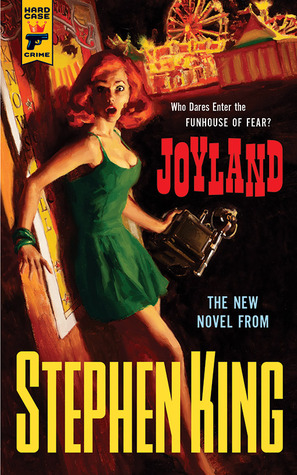
I’m so glad I read Joyland by Stephen King – it’s so good.
I nearly didn’t buy it, put off by the cover (you should never judge a book by its cover!) and by the publishers, Hard Case Crime – it was the word ‘hard‘ that really made me pause, especially when I looked at their site and saw they publish ‘the best in hardboiled crime fiction‘. Not being quite sure just what ‘hard boiled crime fiction‘ is, I looked it up. This is Encyclopedia Britannica’s definition:
Hard-boiled fiction, a tough, unsentimental style of American crime writing that brought a new tone of earthy realism or naturalism to the field of detective fiction. Hard-boiled fiction used graphic sex and violence, vivid but often sordid urban backgrounds, and fast-paced, slangy dialogue.
Not my sort of book, at all! But it’s by Stephen King and I like his books, so I did buy it. It’s not ‘hard boiled fiction‘ as defined above. The only way it fits that definition is that there is a lot of slang in it – ‘carny’ slang, which King explains in his Author’s Note is what he calls in this book ‘the Talk‘. It is ‘carnival lingo, an argot both rich and humorous’. So not ‘hard boiled’ at all!
Joyland is a ghost story, a love story, a story of loss and heartbreak. It’s also a murder mystery and utterly compelling to read.
It’s narrated by Devin Jones, looking back forty years at the time he was a student, suffering from a broken heart, as his girlfriend had just rejected him and he spent a summer working at Joyland, in North Carolina, an amusement park with ‘a little of the old-time carny flavor‘.
Along with various rides, ‘Happy Hounds’, and a palm-reader, there is the Horror House, a ‘spook’ house which is said to be haunted by the ghost of Linda Gray, whose boyfriend cut her throat in the Horror House. The boyfriend had not been found and it appears he may be a serial killer as there had been four other similar murders in Georgia and the Carolinas.
It’s also a story of friendship, of Tom and Erin, of children with the ‘sight’, a young boy in a wheelchair and his mother, and Dev’s search for the killer.
I loved the setting of the funfair, Dev’s nostalgia for his youth, his sensitivity, and the images the story evokes – it’s not just the story but the way King tells his tale, with just a touch of horror and the supernatural.
Who knows – maybe I should read some more of Hard Case Crime’s publications!
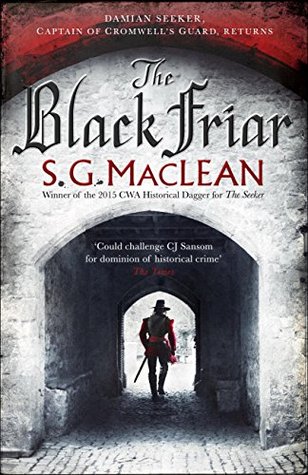
The Black Friar by S G MacLean is one of those books that has the power to transport me to another time and place. I was totally absorbed, convinced I was back in England in the 17th century.
It is the second book in the Damian Seeker series, historical crime fiction set in 1655 during the Interregnum under Oliver Cromwell, the Lord Protector. Damian Seeker, Captain of Cromwell’s Guard, works for Thurloe, Cromwell’s Chief Secretary and spy master, in charge of the security of the regime. It’s a complex mystery, particularly as there are various factions and religious sects plotting rebellion against Cromwell.
A body, presumed by his black robe to be that of a Dominican friar, is found bricked up in a wall in Blackfriars, once a monastery and now a derelict building gradually falling into the River Fleet. But this was no friar, as Seeker recognised him as Carter Blyth one of Thurloe’s undercover agents, who had been working in the Netherlands, observing the Royalists colluding with foreign powers. As far as Seeker knew he had been killed in Delft three months earlier. Seeker’s task is to find why he had been killed and who killed him. He discovers that Blyth under Thurloe’s orders had in fact infiltrated a group of Fifth Monarchists who wanted to overthrow Cromwell and had been living with the Crowe family, members of the group, under the name of Gideon Fell.
It’s a complicated and intricate tale as Seeker, helped by Nathaniel Crowe, tries to discover what Blyth had been doing, and what trail he was following. There are missing children, whose whereabouts Blyth had been investigating, and plots to overthrow Cromwell as well as plots to reinstate Charles Stuart as King.
Although The Black Friar is the second book in the series, (the first is The Seeker, which I haven’t read) I think it works well as a stand-alone book. The characterisation is strong and I particularly like Damian Seeker, a man both respected and feared, and a man to trust.
I also like the way S G MacLean has based her book on solid historical research (she has an M.A. and Ph.D. in History from the University of Aberdeen) and weaves real historical figures into the story, such as the poet John Milton, now an old blind man, the Secretary of Foreign Tongues and the diarist Samuel Pepys, an Exchequer clerk, who though very personable was ‘prone to drink and some lewdness.’ It all brings to life the atmosphere and tenor of the 1650s. I loved it.
My thanks to Netgalley and Quercus books for my copy of this book. It is due to be published on 6 October.
Agatha Christie is one of my favourite authors. I first began reading her books when I was in my teens but it was in 2008 when Kerrie at Mysteries in Paradise launched the Agatha Christie Reading Challenge that I began to read my way through all her books. There are 66 mystery and detective novels and numerous collections of short stories. In February of this year I completed my reading of her 66 mystery and detective novels and some but not all of her short stories.
The Short Stories
There is some confusion over how many short stories Agatha Christie wrote. The Agatha Christie website records that she wrote 150 stories, whereas Wikipedia records that she wrote 153 short stories, published in 14 collections in the UK and in the US. By my reckoning she wrote 157 short stories, published in a number of collections, but I may have included duplications as some stories were published under different names in the US Collections. I’m hoping that as I read the stories the actual number will become clear. For my list of her short stories see my Agatha Christie Short Stories Page.
But whatever the real total may be there can be no doubt that it is an impressive collection of stories originally published in several magazines and then in a number of collections. They do vary in quality, some are very short, almost skeletal, with the puzzle element given greater emphasis than characterisation.The first collection of her short stories, Poirot Investigates was published in 1924, when Agatha Christie was 34.
As today’s topic in this Blogathon is dedicated to anything about or by Agatha Christie not related either to Poirot or Miss Marple this post is about one collection of short stories:
The Mysterious Mr Quin
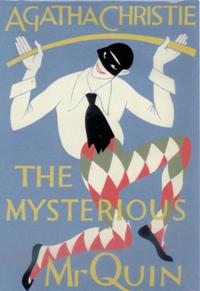
The Mysterious Mr Quin First Edition Cover
This was first published in 1930 featuring Mr Harley Quin and Mr Satterthwaite. This is my favourite of her collections, containing some of her very best short stories.
In her Autobiography Agatha Christie said these stories were her favourites too. The stories were not written as a series, but one at a time at intervals of three or four months or longer and were first published in magazines. They are set in the 1920s and have a paranormal element to them, as well as a touch of romance. I found them all most entertaining.
In the Foreword she describes Mr Quin as:
… a figure invisible except when he chose, not quite human, yet concerned with the affairs of human beings and particularly of lovers. He is also the advocate for the dead.
Mr Satterthwaite, who was in his sixties, a little man, with an elf-like face, is Mr Quin’s friend:
Mr Satterthwaite, the gossip, the looker-on at life, the little man who without ever touching the depths of joy and sorrow himself, recognizes drama when he sees it, and is conscious that he has a part to play.
The titles are
1. The Coming of Mr. Quin
2. The Shadow on the Glass
3. At the “Bells and Motley”
4. The Sign in the Sky
5. The Soul of the Croupier
6. The Man from the Sea
7. The Voice in the Dark
8. The Face of Helen
9. The Dead Harlequin
10. The Bird with the Broken Wing
11. The World’s End
12. Harlequin’s Lane
In the opening story, The Coming of Mr Quin, Mr Satterthwaite first meets him on New Year’s Eve, at a house party when talk had turned to the suicide of Mr Capel, the man who had originally owned the house. The enigmatic Mr Quin, a tall, slender man, appears in the doorway. The light shining through the stained glass above the door makes it appear that he is dressed in every colour of the rainbow but when he moves the effect fades and Mr Satterthwaite can see that he is dressed conventionally. Whenever he appears in the stories, some trick of the light initially produces the same effect. Mr Quin subtly steers Mr Satterthwaite into discovering the truth behind Mr Capel’s suicide.
In the following eleven stories Harley Quin always appears unexpectedly and suddenly, and then just as suddenly disappears, having influenced Mr Satterthwaite to change people’s lives, and solve mysteries by producing clues and asking pointed questions, making the solution obvious. He is, without doubt, the most mysterious and unusual character in all of Agatha Christie’s books.
One of my favourite stories is The Man From The Sea. Mr Satterthwaite, who is a wealthy man, althought the source of his wealth is not revealed, is on a Mediterranean island. Walking along the cliffs he meets Anthony Cosden, about to leap to his death. He’d been planning to do so the previous evening but had been prevented when he’d met someone else at the edge of the cliff – a mysterious man in fancy dress, ‘ a kind of Harlequin rig‘. Anthony reveals he only had six months to live and doesn’t want a lingering end and in any case he has no one in the world belonging to him – if only he had a son …
Mr Satterthwaite next meets a woman in black in the quiet garden of what seems to be an empty house. The woman asks him if he would like to see inside the house and clearly needs someone to talk to, someone to hear the tragic story of her life. It’s a touching story of remorse and the desire to make amends.
Mr Quin’s role in this and in other stories is to help Mr Satterthwaite to see beneath the surface, to see things in a different light. At the end he takes his leave, and all Mr Satterthwaite see is his friend walking towards the edge of the cliff.
The final story, Harlequin’s Lane is another bittersweet tale of lost love and fate and rather eerie. Mr Satterthwaite goes to visit a married couple, the Denmans, who live at Ashmead, on Harlequin’s Lane. Mrs Denman is a Russian refugee whom John Denman had married after escaping Russia on the outbreak of the revolution.
They are out when he arrives and he takes a walk down the Lane, wondering about its name and was not surprised when he meets his elusive friend, Harley Quin, who tells him the Lane belongs to him; it’s a Lovers’ Lane. It ends at waste ground covered with a rubbish heap where they meet Molly who is to be Pierrette in the masquerade the Denmans have planned for the weekend. A car accident interrupts the arrangments injuring some of the dancers, until Mr Satterthwaite intervenes, but still tragedy strikes. Mr Quin, seems to have cast a magical air of unreality over Mr Satterthwaite:
Mr Satterthwaite quailed. Mr Quin seemed to have loomed to enormous proportions … Mr Satterthwaite had a vista of something at once menacing and terrifying … Joy, Sorrow, Despair.
And his comfortable little soul shrank back appalled.
Truly a mystifying collection of stories. I enjoyed it immensely.
It’s time for the annual R. (eaders) I. (mbibing) P. (eril) event, hosted by Carl at Stainless Steel Droppings, taking place between September 1st and October 31st.
(Much thanks to Hugo Award winning artist Abigail Larson for the use of her art)
This event involves reading books from these categories: Mystery, Suspense, Thriller, Dark Fantasy, Gothic, Horror, Supernatural or other closely-related fields. Reviews, while not required, may be posted on Carl’s blog.
I shall be attempting:
Peril the First: Read at least four books, any length, that you feel fit (the very broad definitions) of R.I.P. literature. I have plenty of Mystery, Suspense, Thriller and Gothic books on my shelves and Kindle to choose from, including these four:
The Girl in a Swing by Richard Adams
The Taxidermist’s Daughter by Kate Mosse
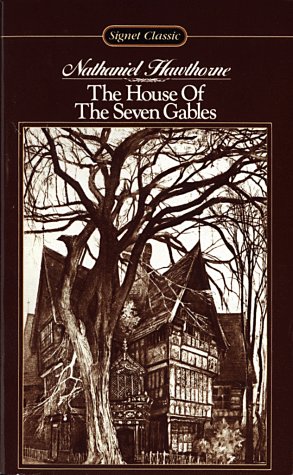
The House of the Seven Gables by Nathaniel Hawthorne
This year (the 10th anniversary) the annual R.I.P event was hosted by Andi and Heather of The Estella Society. It ran from September 1st to October 31st.
It involved reading books that fitted into one or more of the following categories:
Mystery
Suspense
Thriller
Dark Fantasy
Gothic
Horror
Supernatural
There are several levels, depending on how many books you read. I initially thought I’d aim low with just one book. But I actually read eight, more than enough for –
Just two were from my initial list and the others just turned up, as it were! I still have these books I want to read/reread:
The Wasp Factory by Iain Banks
A Song of Stone by Iain Banks
Poirot Investigates by Agatha Christie
Northanger Abbey by Jane Austen ‘“ I read this so many years ago that it will be like reading it for the first time. It was one of the set books at school and I don’t think I appreciated it then.
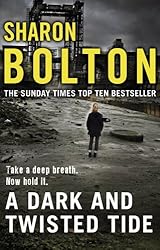
I finished reading A Dark and Twisted Tide, the 4th in the Lacey Flint series, at the end of September, but never got round to writing about it, so now this is just a mini review.
Synopsis from the back cover:
Police Constable Lacey Flint thins she’s safe. Living on the river, swimming in the river, she’s never been happier. It can’t last. Because Lacey has secrets. And when the first body floats, it’s only a matter of time before her fragile life falls apart. And the river is the last place she should be ..,
This is such a terrifying novel, particularly if like me, you have a fear of drowning. No longer a detective, Lacey is now a police constable with the Metropolitan Police’s Marine Unit on the River Thames, living on a houseboat (actually a vintage sailing yacht) in Deptford Creek and wanting a quieter and safer life whilst trying to recover from the terrifying events of her last cases. Unlike me, Lacey loves swimming and is perfectly at home in water, so much so that she wild-swims in the Thames as often as tide and conditions allow, loving it so much that she feels she has become part of the river. But even she experiences the terror of being drawn down into the water ‘within a frantic gasp of drowning‘.
A Dark and Twisted Tide is a multi-layered book, told from different characters’ perspectives, complex and chilling as it weaves its way through murders, people trafficking, a mysterious character called ‘the swimmer’, more details about Lacey’s background and the ongoing saga of her relationship with Mark Joesbury. It’s a grim tale with a great sense of foreboding and mystery – a book I read far too quickly, making me think at some point I’ll read it again more slowly as I’m sure there’s a lot I missed. An excellent read for RIP X!






 BooksPlease