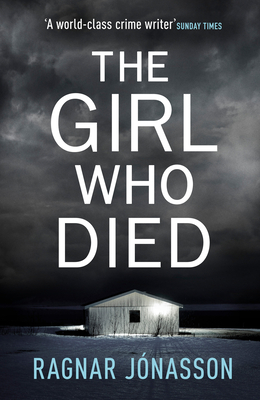
The Girl Who Died by Ragnar Jonasson, translated from the Icelandic by Victoria Cribb

Penguin| 3 June 2021| 328 pages| Review Copy| 3*

‘TEACHER WANTED AT THE EDGE OF THE WORLD . . .’

After the loss of her father, Una sees a chance to escape Reykjavík to tutor two girls in the tiny village of Skálar – population just ten – on Iceland’s storm-battered north coast.

But city life hasn’t prepared her for the unforgiving weather nor inhospitable village life. Worse, the creaky old house where she lives is playing on her already fragile mind when she’s convinced she hears the ghostly sound of singing.

Then, at midwinter, a young girl is found dead.

And one of the villagers must have blood on their hands . . .

The Girl Who Died is Icelandic noir, a mix of horror and psychological thriller, with a strong sense of place. Skálar is a close-knit community that doesn’t welcome newcomers, keeping its secrets well hidden. The only person who welcomes Una, to the village is Salka, the mother of Edda, one of the two girls Una is to teach. But even her welcome is short lived.

When Una arrived she had the feeling that it was like being a folk tale, an ominous supernatural tale set in a vague shifting world where nothing was solid or real, almost like a ghost town. The feeling grows stronger when she sees a little girl with long, pale hair in the window of Salka’s house – but Salka tells her that Edda was in bed. Later she discovers that the ghost of a young girl who had died fifty years earlier was said to haunt the house.

The supernatural elements of the story and the dark brooding atmosphere add to the mystery, but it is not quite as creepy or chilling as I’d thought it would be, mainly because of the slow plodding pace. Also I’m in two minds about Una as I really didn’t find her a very interesting character. And I began to care less and less about what was happening to her. Overall I found it a bit disappointing, and I found the ending puzzling.

However, the Author’s Note is interesting. Jonasson explains that Skálar is a real place. But it was abandoned in the mid 1950s, so the setting is real, but the buildings and the characters are fictitious. However, he has tried to give an accurate representation of the history of Skálar that describes in the book. He has also used the folk tales in Sigfús Sigfússon’s collections of Icelandic tales and legends.

My thanks to the publishers for a review copy via NetGalley.
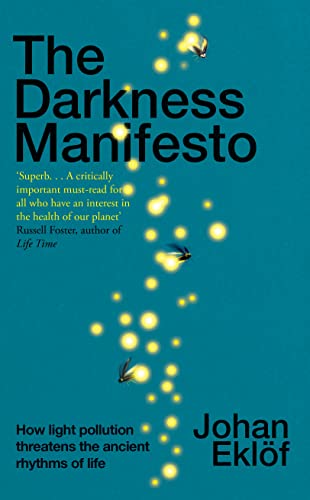
The Darkness Manifesto by Johan Eklöf, translated by Elizabeth DeNoma

Virgin| 3 Novmber 2022| 205 pages| Review Copy| 3.5*

How much light is too much light? The Darkness Manifesto urges us to cherish natural darkness for the sake of the environment, our own wellbeing, and all life on earth.

The world’s flora and fauna have evolved to operate in the natural cycle of day and night. But constant illumination has made light pollution a major issue. From space, our planet glows brightly, 24/7. By extending our day, we have forced out the inhabitants of the night and disrupted the circadian rhythms necessary to sustain all living things. Our cities’ streetlamps and neon signs are altering entire ecosystems.

Johan Eklöf encourages us to appreciate natural darkness and its unique benefits. He also writes passionately about the domino effect of damage we inflict by keeping the lights on: insects failing to reproduce; birds blinded and bewildered; bats starving as they wait in vain for insects that only come out in the dark. And humans can find that our hormones, weight and mental well-being are all impacted.

Johan Eklöf, PhD, is a Swedish bat scientist and writer, most known for his work on microbat vision and more recently, light pollution. He lives in the west of Sweden, where he works as a conservationist and copywriter. The Darkness Manifesto is his first book to be translated into English.

~~~

Until I read The Darkness Manifesto: How Light Pollution Threatens the Ancient Rhythms of Life all I knew about light pollution was its effect on the night sky, how artificial light impairs our view of the sky, the stars and the planets. But I hadn’t realised just how much it adversely affects our environment, wildlife and our own health. This book is full of fascinating facts about the impact that darkness and the night have on all living creatures, including ourselves.

Artificial lighting today makes up a tenth of our total energy usage but most of it is of little benefit to us, spilling out into the sky. Animals cannot distinguish between artificial light and natural daylight which means their circadian rhythms are disrupted, sending body clocks awry, disrupting our sleep.

There is, of course, the need for safety and security, and Eklöf cites several examples of places around the world that have projects that promote darkness, and have established light pollution laws, such as France where there are regulations to limit how much light, and what kind of light, can be emitted into the atmosphere. The light needs to be adapted to suit the needs of both animals and humans.

Eklöf ends his book with his Darkness Manifesto, urging us to become aware of the darkness, to protect and preserve it individually by turning off lights when not in a room, and letting your garden rest in darkness at night; to discover nocturnal life; to observe the different phases of twilight and how the sun gives way to the moon and stars; and to learn more about the darkness and its importance for the survival of animals and plants. He also asks us to inform local authorities about the dangers of light pollution. To my mind the current energy crisis is another reason to reduce our use of lighting and electricity.

My thanks to the publishers for a review copy via NetGalley.
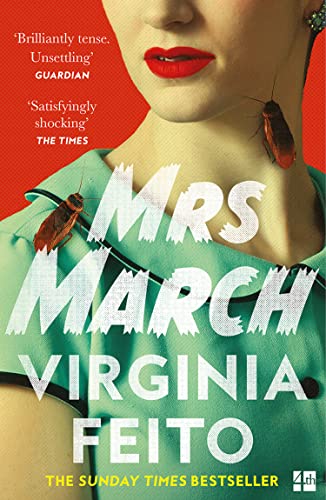
Mrs March by Virginia Feito

4th Estate| May 2022| 305 pages| Review Copy| 3*

I was invited to read Mrs March by the publishers 4th Estate publishers via NetGalley on the publication of the paperback edition in May 2022. It was first published in August 2021.

Publishers’ summary:

George March’s latest novel is a smash hit. None could be prouder than Mrs. March, his dutiful wife, who revels in his accolades and relishes the lifestyle and status his success brings.

A creature of routine and decorum, Mrs. March lives an exquisitely controlled existence on the Upper East Side. Every morning begins the same way, with a visit to her favourite patisserie to buy a loaf of
olive bread, but her latest trip proves to be her last when she suffers an indignity from which she may never recover: an assumption by the shopkeeper that the protagonist in George March’s new book –
a pathetic sex worker, more a figure of derision than desire – is based on Mrs. March.

One casual remark robs Mrs. March not only of her beloved olive bread but of the belief that she knew everything about her husband – and herself – sending her on an increasingly paranoid journey, one
that starts within the pages of a book but may very well uncover both a killer and the long-buried secrets of Mrs. March’s past.

A razor-sharp exploration of the fragility of identity and the smothering weight of expectations, Mrs. March heralds the arrival of a wicked and wonderful new voice.

My thoughts:

I liked the synopsis which is why I read Mrs March. I thought it sounded like a book I would enjoy. But I am in two minds about this book, because although I can see why it has received such a lot of praise and 5 star reviews I really did not enjoy reading it. It is a remarkable character study, taking the reader right inside Mrs March’s head as she descends into paranoia and madness. The whole book is seen solely from her perspective, which makes it the most uncomfortable experience – but that is down to the brilliance of Feito’s writing.

It begins well and I was immediately reminded of Mrs Dalloway and also of the unnamed wife in Rebecca and I wondered if her real name would be revealed. Throughout the book she is called ‘Mrs March’ even when referring to her as a child. It’s as if she is only a person identified by her marital status. Her life seems to have no meaning other than being married to Mr March. There really is very little evidence for Mrs March’s belief that her husband has based the character of a prostitute in his book on her. But her conviction that this is how he sees her is devastating to her. It’s as though her whole existence is threatened.

It’s been a while since I finished reading it as I’ve been wondering what to write about it. There is so much in it to take in and whilst my reading is mostly for enjoyment I don’t think I can dismiss a book simply because I didn’t ‘enjoy’ it. But neither can I ignore that fact. How can you ‘like’ the portrayal of the breakdown of a personality, or a person? It’s beautifully written, but so tragic. I couldn’t like any of the characters, but they got under my skin as I read and I wanted it to end differently – of course, it couldn’t.

My thanks to the publishers for a review copy via NetGalley.
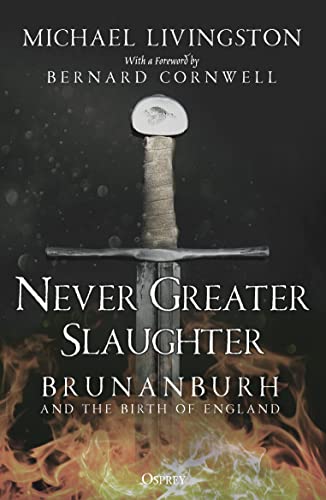
Never Greater Slaughter by Michael Livingston

Osprey Publishing| May 2021| 241 pages| e-book Review Copy| 3.5*

I had heard of the Battle of Brunanburh before I read Never Greater Slaughter by Michael Livingston, but my knowledge was limited to the fact that this had taken place in 937 between Æthelstan, King of England, King Alfred’s grandson, and an alliance led by Anlaf, a Viking chieftain, other chieftains and Constantine King of the Scots, in which Æthelstan was victorious. So I was very keen to find out more.

Synopsis from Amazon:

Late in AD 937, four armies met in a place called Brunanburh. On one side stood the shield-wall of the expanding kingdom of the Anglo-Saxons. On the other side stood a remarkable alliance of rival kings – at least two from across the sea – who’d come together to destroy them once and for all. The stakes were no less than the survival of the dream that would become England. The armies were massive. The violence, when it began, was enough to shock a violent age. Brunanburh may not today have the fame of Hastings, Crécy or Agincourt, but those later battles, fought for England, would not exist were it not for the blood spilled this day. Generations later it was still called, quite simply, the ‘great battle’. But for centuries, its location has been lost.

The title is taken from the poem in the Anglo-Saxon Chronicle describing the battle thus:

Never greater slaughter Was there on this island, never as many Folk felled before this By the Swords edges.

The location of the battle has been lost. Historians, archaeologists, linguists and other researchers have studied the little evidence that remains about the battle and put forward ideas about that location. In this book Livingston concludes that the only ‘certain pieces of information about the field at Brunanburgh – the place-names by which it was known in the immediate years afterwards – unquestionably point us to blood being shed in the mid-Wirral.’ (location 76%)

It seems to me that this is a very thorough and detailed book describing the battle and the various theories about its location. But not only that Livingston sets out his definition of history and its limitations. For example he says that whilst some facts will be known, a great many through the passage of time are lost, and some are facts that people have chosen to record to suit their own needs – their own bias in other words – or are simply not true.

Then Livingston describes what is known about the period leading up to the battle, describes the battle itself, and, having stated his objections to other possible locations, explains the reasons he concludes the location is in the Wirral, which seems convincing to me.

I found this a well researched and fascinating book that gave me a much better understanding of the period.

My thanks to the publishers for a review copy via NetGalley.
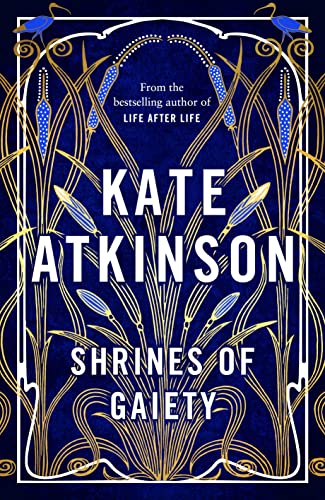
Shrines of Gaiety by Kate Atkinson

Random House UK| 27 September 2022| 440 pages| e-book Review Copy| 2.5*

Synopsis from Amazon

1926, and in a country still recovering from the Great War, London has become the focus for a delirious new nightlife. In the clubs of Soho, peers of the realm rub shoulders with starlets, foreign dignitaries with gangsters, and girls sell dances for a shilling a time.

At the heart of this glittering world is notorious Nellie Coker, ruthless but also ambitious to advance her six children, including the enigmatic eldest, Niven whose character has been forged in the crucible of the Somme. But success breeds enemies, and Nellie’s empire faces threats from without and within. For beneath the dazzle of Soho’s gaiety, there is a dark underbelly, a world in which it is all too easy to become lost.

With her unique Dickensian flair, Kate Atkinson brings together a glittering cast of characters in a truly mesmeric novel that captures the uncertainty and mutability of life; of a world in which nothing is quite as it seems.

My thoughts:

Kate Atkinson is one of my favourite authors, so I was expecting to enjoy Shrines of Gaiety. But it took me a while to settle into this book and for quite a while I wasn’t at all sure that I wanted to carry on reading. But I persevered and finished it, because I wanted to find out what happened.

The novel begins just before the General Strike in May 1926. What I liked about it is that it does give a good idea of life in the 1920s, the atmosphere and attitudes after the First World War. There’s the nightlife, the new nightclubs, gangsters, corrupt police, and missing girls, drugs, drinking, crime and murder. The ‘dark belly’ of Soho’s underworld was very dark indeed and the gaiety superficial.

However, my problem with it was I found it confusing, with several plot lines and lots of characters, in lots of different locations, and at different times, and the narration jumps around between all of them. I had to keep backtracking to work out who was who and how they interacted. It was hard work! And some of it was boring, with quite a lot of padding, making the book as a whole far too long. It’s a sprawling story that could probably have been better spread between two or even three books.

In her Author’s Note Atkinson explains that inspiration for her novel came from the life and times of Kate Meyrick, who for many years was the queen of Soho’s clubland. Many of the details for the novel are taken from her autobiography, Secrets of the 43 Club and Atkinson also cites Barbara Cartland’s autobiography, We Danced All Night and several other works as sources for the novel. But although based on fact and including real people this is very much a work of fiction and she lists several details that she has invented.

Shrines of Gaiety has all the ingredients I love in a novel, but for me it didn’t hold my interest. Sometimes timing is everything and this may be just a case of the wrong book at the wrong time for me.

My thanks to Random House for an ARC via NetGalley.

True Crime Story by Joseph Knox

Transworld Digital| 17 Jun. 2021| 433 pages| e-book Review copy| 2.5* rounded up to 3*

Synopsis:

What happens to those girls who go missing? What happens to the Zoe Nolans of the world?’

In the early hours of Saturday 17 December 2011, Zoe Nolan, a nineteen-year-old Manchester University student, walked out of a party taking place in the shared accommodation where she had been living for three months.

She was never seen again.

Seven years after her disappearance, struggling writer Evelyn Mitchell finds herself drawn into the mystery. Through interviews with Zoe’s closest friends and family, she begins piecing together what really happened in 2011. But where some versions of events overlap, aligning perfectly with one another, others stand in stark contrast, giving rise to troubling inconsistencies.

Shaken by revelations of Zoe’s secret life, and stalked by a figure from the shadows, Evelyn turns to crime writer Joseph Knox to help make sense of a case where everyone has something to hide.

Zoe Nolan may be missing presumed dead, but her story is only just beginning

True Crime Story is Joseph Knox’s fourth novel, his first standalone. Previously I’ve read two of his Detective Aidan Waits novels, The Smiling Man and The Sleepwalker, which I loved – they’re both brilliant, dark and violent urban noir novels. They’re also amongst the most complicated books that I’ve ever read. So my expectations for True Crime Story were very high, but, I’m sorry to say, I was disappointed. In fact I almost abandoned it several times, until about the 50% mark when I realised that I had to read on because I wanted to know what had happened to Zoe.

Despite the title this is not a nonfiction true crime story, nor a mix of fact and fiction, it is a novel and it includes the author, Joseph Knox, as one of its characters. It has a story within the story – made up of emails to and from Knox and another writer (fictional) Evelyn Mitchell. Evelyn is writing a book about the disappearance of a student at Manchester University, Zoe Nolan. Her book is a collection of the interviews she carried out with Zoe’s family and friends seven years after Zoe’s disappearance, which she sends to Joseph Knox as she collates them, and asks for his advice.

Initially I found this rather confusing but I gradually worked out their relationships and characters, although it is repetitive and reads as a long session of interviews about the same events as seen through each character’s perspective. For me, this makes it fragmentary and in parts disjointed, slows down the action, and lessens the tension and suspense even as the facts about the mystery emerge, including what happens to Evelyn herself.

However, many other readers love this book, so I am in the minority. It has had rave reviews and was short listed for this year’s Theakston Old Peculiar Crime Fiction Novel of the Year, an award that celebrates excellence, originality, and the very best in crime fiction from UK and Irish authors. You may enjoy it more than I did!

My thanks to the publishers Transworld Digital for a review copy via NetGalley.