The North Yorks Moors

October and November have been unusual months as we’ve been away a couple of times – in October we went to the  the North Yorks Moors and at the beginning of November we were in the Lake District, where amazingly we had such beautiful sunny weather, cold but sunny with a brilliant blue sky.

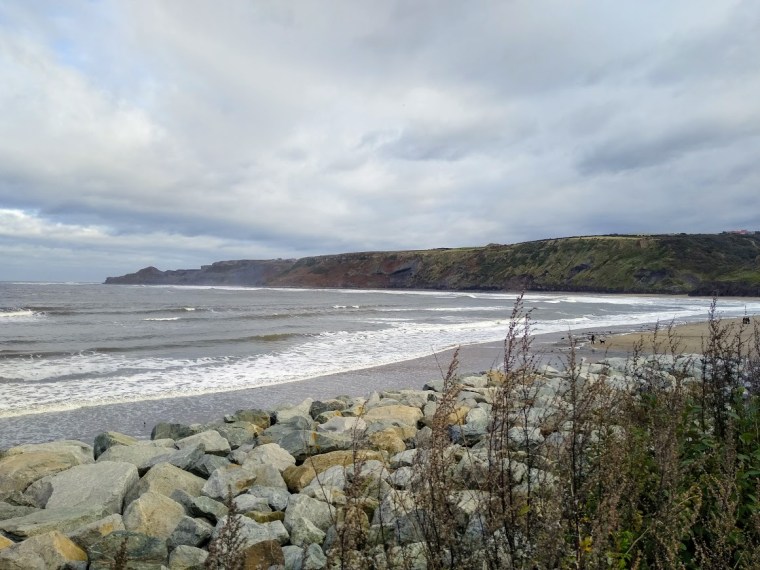
Here are a few photos of some of the places we visited whilst staying in an isolated converted barn on the North Yorks Moors. Runswick Bay, and Robin Hood’s Bay are on the east coast near Whitby Abbey. 
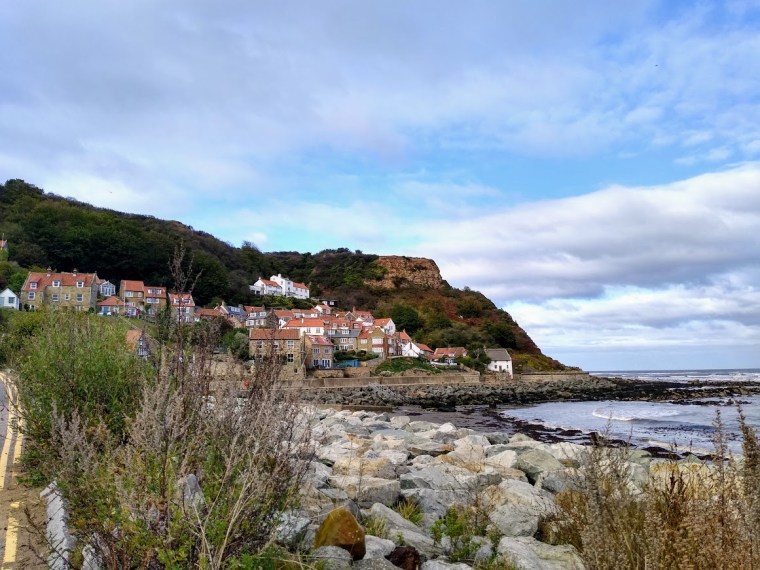
Runswick Bay IMG_20191002_155100773_HDR
Runswick Bay

There a few red-roofed houses and cottages clinging to the cliff at Runswick Bay looking down on a long arc of beach. As the east coast is eroding the village is steadily creeping closer to the shore. The AA Mini Guide book – North Yorks Moors records that the village of Runswick, one of the ‘lost’ villages of Yorkshire’s coast, fell into the sea in 1682. The whitewashed house on the headland was the coastguard cottage.

Runswick Bay IMG_20191002_154946600
Runswick Bay

Robin Hood’s Bay is further down the coast. It’s a little fishing village, with a long, steep access road down to the bay, a long stretch of sandy beach with a rocky foreshore.
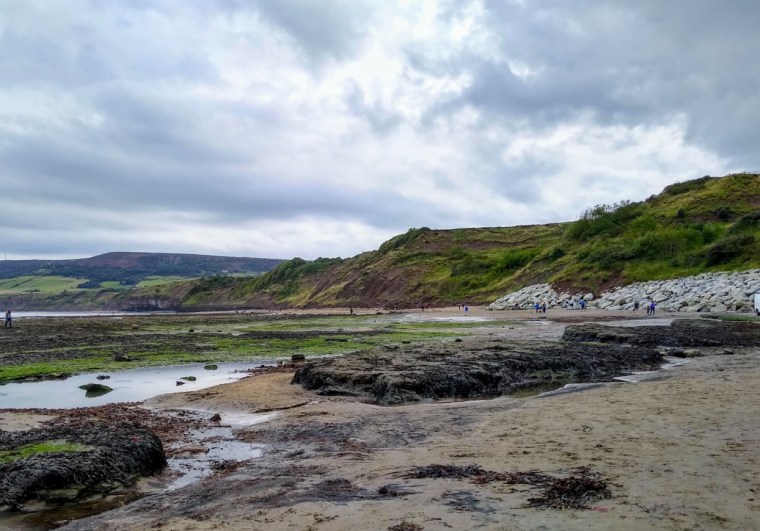
Robin Hood's Bay IMG_20190930_144925574_HDR
Robin Hood’s Bay

The tide comes in very quickly and we had to dash back to avoid being caught. I did get my feet a bit wet though.
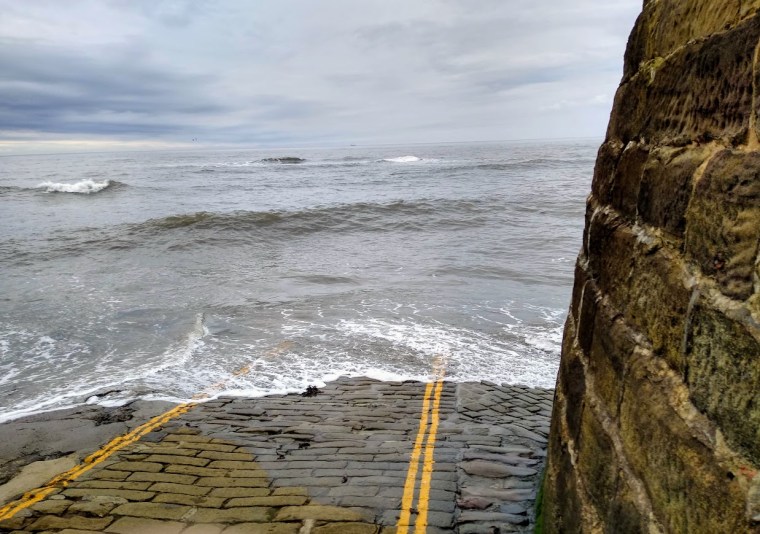
Robin Hood's Bay incoming tide
Robin Hood’s Bay – the tide nearly caught me.

We had a quick look at Whitby Abbey and Whitby itself, but really need to go back to see it properly.
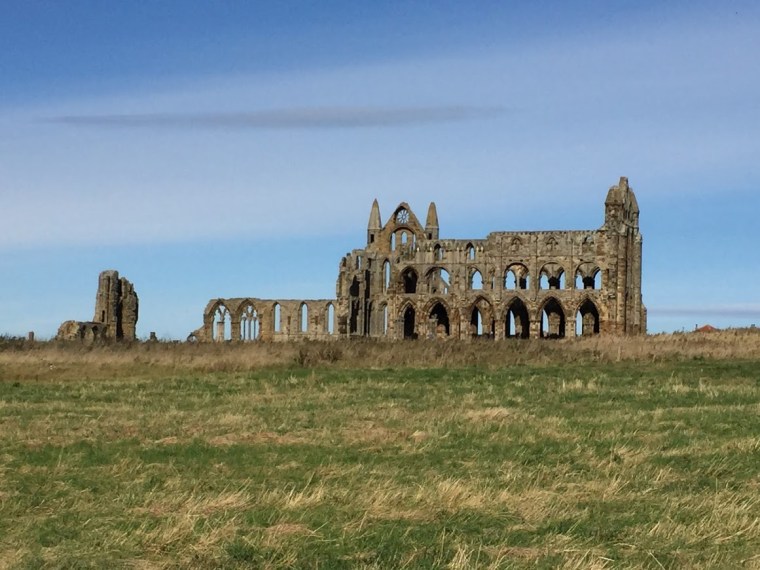
Whitby Abbey IMG_2899
Whitby Abbey

On the way home we stopped at the Angel of the North at Gateshead. I’d seen the Angel of the North from the A1, but we had never stopped to see it up close. It was created by Sir Anthony Gormley. Completed in 1998, it is a steel sculpture of an angel, 20 metres tall, with wings measuring 54 metres across. It is immense – the person walking up to the sculpture gives some idea of just how enormous it is.
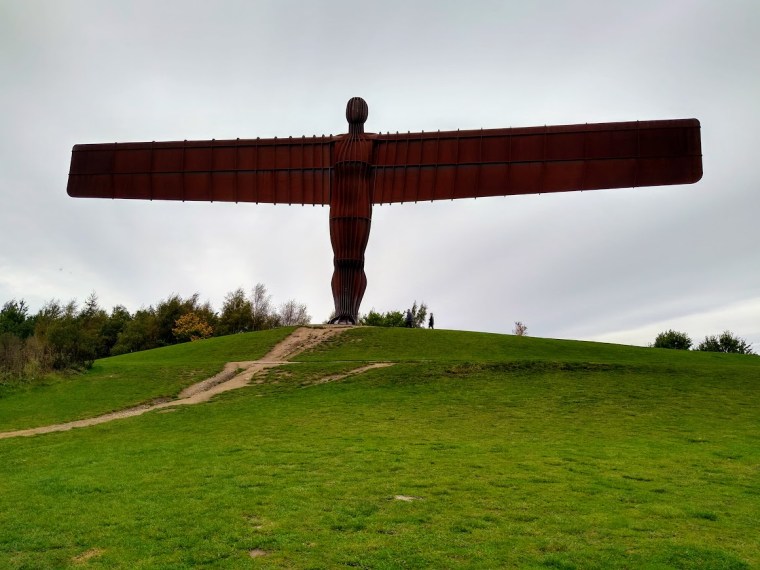
Angel of the North IMG_20191003_132615303_HDR
Angel of the North, Gateshead

I zoomed in to have a look at its head.
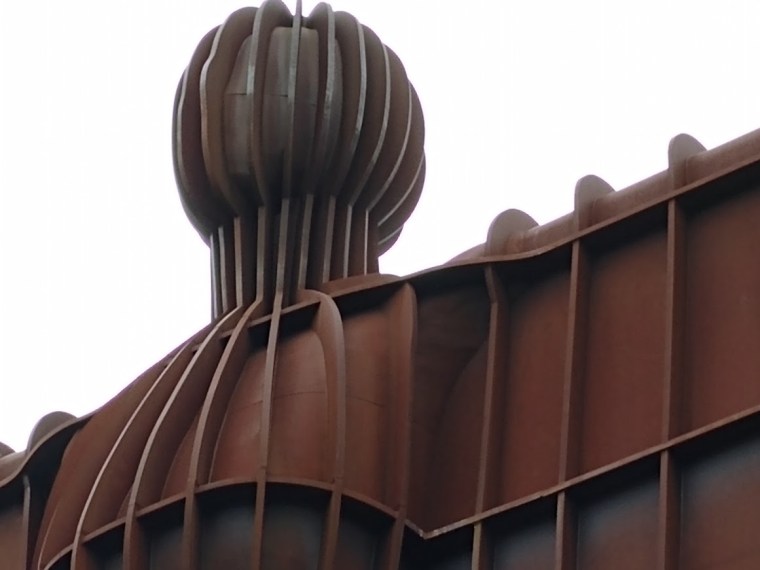
Angel of the North close up

Of course, all this holidaying and travelling around has meant I am now so very behind with writing about the books I read!

Dunstanburgh Castle

Dunstanburgh Castle P1020073

I think that Northumberland is one of the loveliest parts of the United Kingdom, with the Cheviot Hills and in particular the beautiful golden sands along the coast of the North Sea. It also has a large share of castles. Since we moved here we’ve visited all of the coastal castles, except that is the ruins of the castle at Dunstanburgh. It’s a spectacular ruin standing alone on the coast on an isolated headland between Embleton and Craster, looking out over the North Sea.

Last Tuesday we decided it was time for us to go there. It was a lovely hot, sunny day and we walked from the car park down the road to the little village and harbour at Craster, well known for its kippers.

Craster P1020067

From there it’s about a mile and a half walk northwards along the coast to the castle, which is owned by the National Trust (NH) and managed by English Heritage(EH). But we never actually got to the castle, because the heat defeated us and my knee, which has been a problem for a few months now, became painful so we only walked about halfway there, then turned back. I took a few photos zooming in as close as I could:

Dunstanburgh Castle P1020072

Thomas, Earl of Lancaster began building Dunstanburgh Castle in 1313. He was the wealthiest nobleman in England at the time and later took part in the barons’ rebellion against Edward II, resulting in his execution in 1322. John of Gaunt modernised it in the 1380s and later during the Wars of the Roses it became a Lancastrian stronghold, finally falling into ruin in the 16th century.

We will go there again to see more. At least we enjoyed the coastal walk and the view of the castle, despite the heat. And as always I was trying to visualise what it must have been like when it was new and how it had changed over the centuries, thinking of the battles that it had seen, of all the people who had lived and died there.

Heidi’s Cat- Log

H & computerHi, I’m Heidi and Margaret has asked me to fill in for her on her blog as she is busy reading books, rather than writing about them and has lots of other things to do as well. So here I am – looking at the computer screen wondering where to start …
Maybe I should start at the beginning – well when I first came to live with Margaret and David. They rescued me and at first I was very scared and kept trying to hide in boxes, behind furniture and even on the top of wardrobes and tall cupboards.

Now I’m very much at home and love living here. There are lots of nice things and best of all lots of mice in the garden. Mice are Nice, but M & D don’t think so – they say Do Not Bring Mice Into the House – that’s not a Good Thing to do. I don’t really agree. It’s great fun to bring them in and let them run around whilst I stalk them and play with them. Sometimes they won’t play and go very still – and then I can eat them – they’re very tasty.

M & D had a lot of trouble with Mice in the House before I came. They got under the floors and nibble at the lagging on the water pipes and even gnawed the pipes and made holes. The water came out, which no doubt the Mice liked – but then the boiler stopped working and M & D had no hot water and no nice warm radiators.

The other thing that I like is watching the birds. They are like Mice but have Wings and Fly so that I can’t catch them (I have actually caught a few, but not for a very long time). Anyway D has very kindly put some birdseed on the windowsill outside and I can see them eating. It’s fascinating – see this video D did:

That’s enough for today. Maybe Margaret will let me write more Cat-Logs sometime and I can tell you some more.

She says this cat-post is just right for Saturday Snapshots run by Melinda  – you can see more on her blog  West Metro Mommy Reads. 

A Walk in the Woods

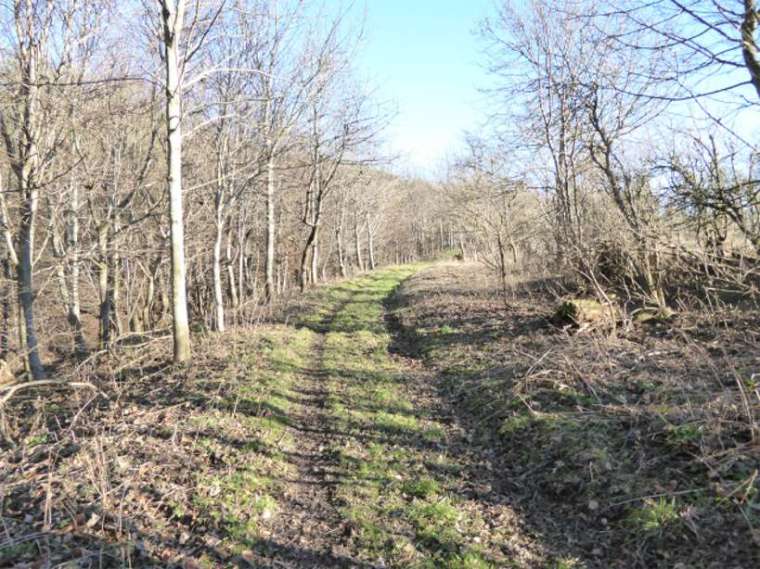
One day last week we went for a walk. I  was a bright, but cold day and just an ordinary woodland footpath in winter

Footpath P1010397

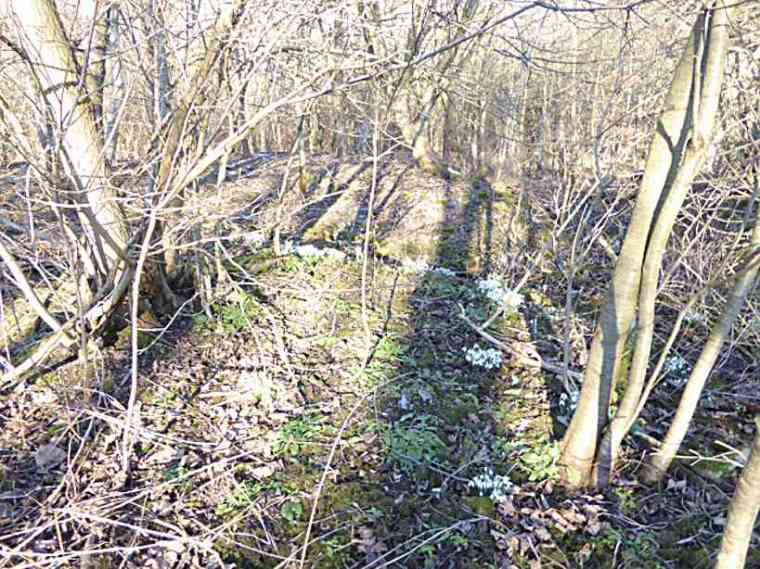
bare trees and snowdrops in flower:

Snowdrops P1010395

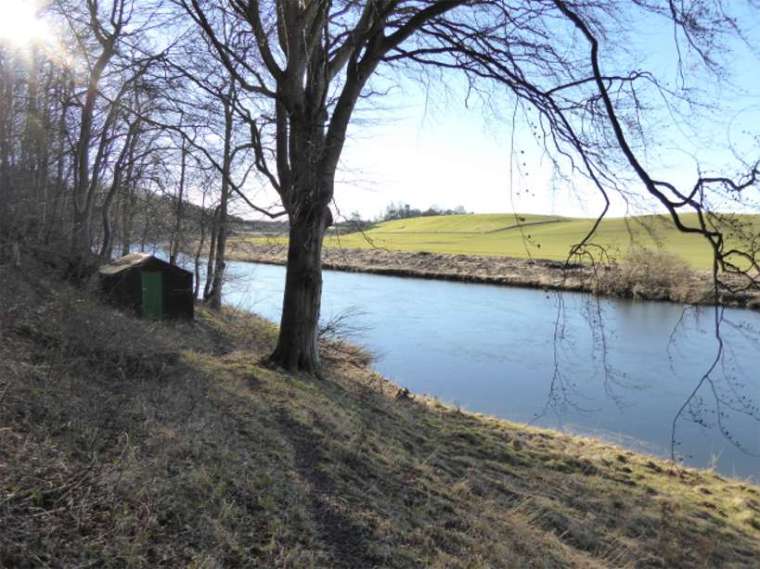
There was no breeze as we went down to the river:

River & hut P1010399

There’s a little hut on the riverside, now unused and peering through the window we could see it was half full of dead leaves.

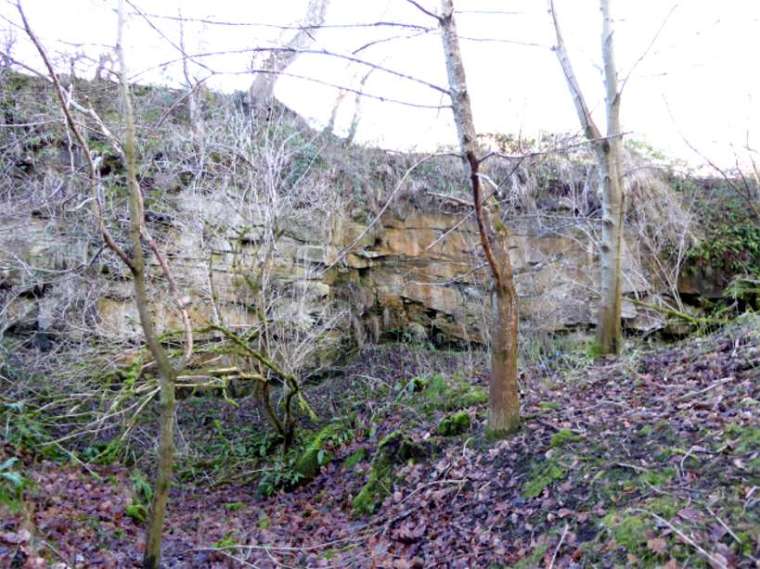
We carried on through the woodland walking away from the river into a disused little quarry:

Quarry P1010407

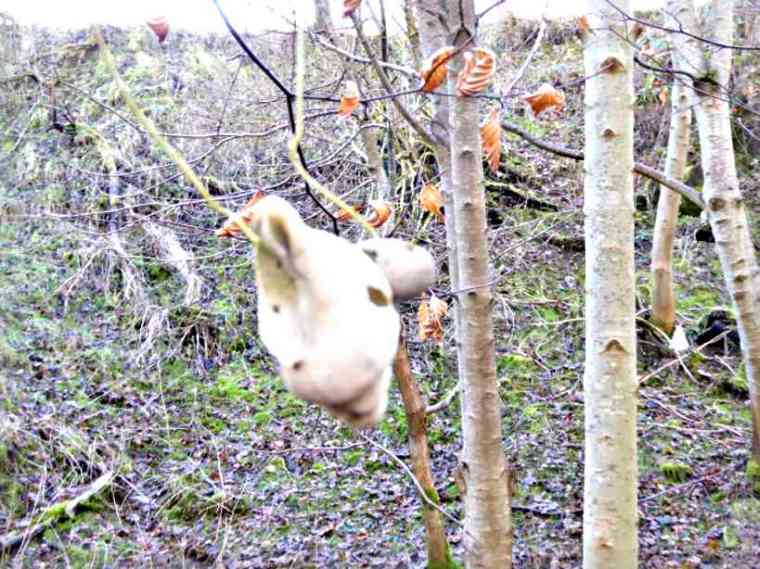
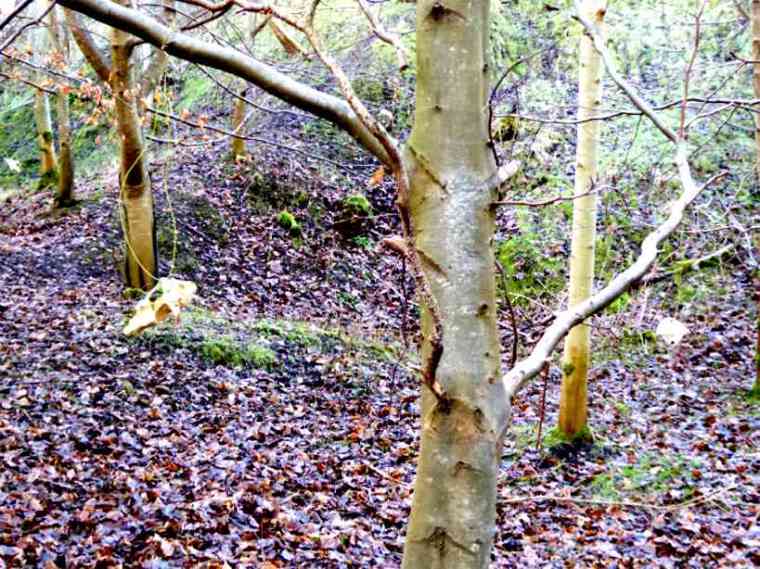
and then we came across some strange objects hanging from the bare trees.

Shells and stones:

Shell P1010410

bones (little fish?):

bones P1010408

and then on one side of a tree a toy scarecrow:

Scarecrow P1010412

and on the other a totem:

Totem P1010414

Now I’m wondering – what is it all about? What’s the story?

The Lake District – Honister Pass

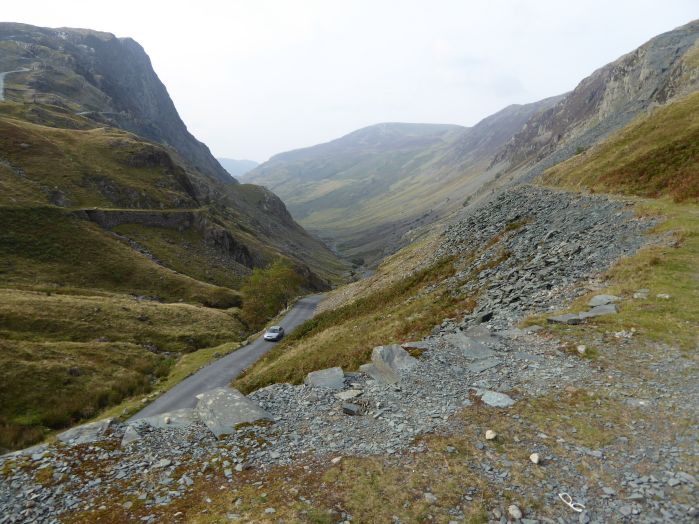
Honister Pass P1010084

Whilst we were staying in the Lake District a few weeks ago we drove through the Honister Pass, one of the highest passes in Cumbria. It connects the Buttermere Valley with the eastern end of Borrowdale Valley. There is a slate mine but we didn’t have time to take a tour – just enough time for a quick drink and a look around.

Honister Slate Mine entrance
Honister Sky High Cafe P1010069
Honister Sky High Cafe

The little stone garden is most unusual:

Honister - stone garden
Honister – stone garden
Honister - stone garden
Honister – stone garden

and they fly the flag in the cafe:

Honister Sky High Cafe

as well as in words on this slate at the entrance:

Fly the Flag
Fly the Flag

For more Saturday Snapshots see Melinda’s blog West Metro Mommy Reads.

The Lake District: Ullswater

The shore of Ullswater is famous as the place that inspired Wordsworth to write his poem ‘I wandered lonely as a cloud‘, after a lakeshore walk in 1802, and it’s also where Donald Campbell broke the world water speed record on 23 July 1955 in the jet powered Bluebird K7. The lake is a ribbon lake formed after the last ice age, sculpted by three separate glaciers.

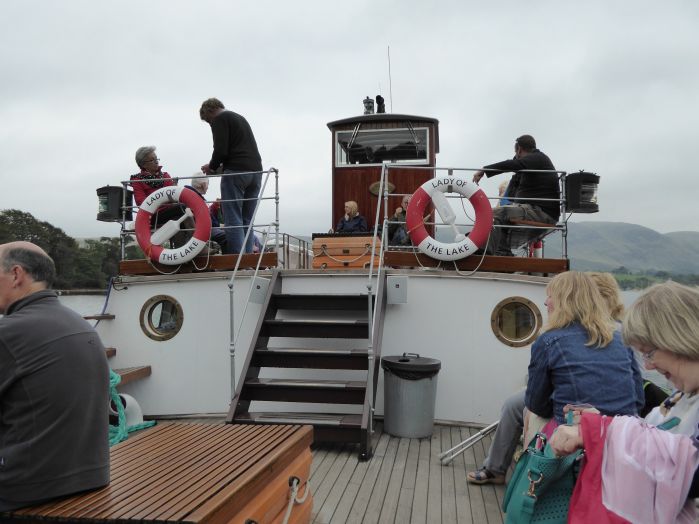
There were no speed boats on the lake, they’re banned now, and the season for daffodils was over on the dull, cloudy morning when we went on a ‘steamer’ on Ullswater, during our recent holiday in the Lake District. The Ullswater ‘Steamers’ have been sailing on the lake since 1859 and the oldest boat currently still in use is the Lady of the Lake, built in 1877, believed to be the oldest working passenger vessel in the world. It was in steam until the 1930s and it was the boat we boarded for our trip down the length of the lake and back again.

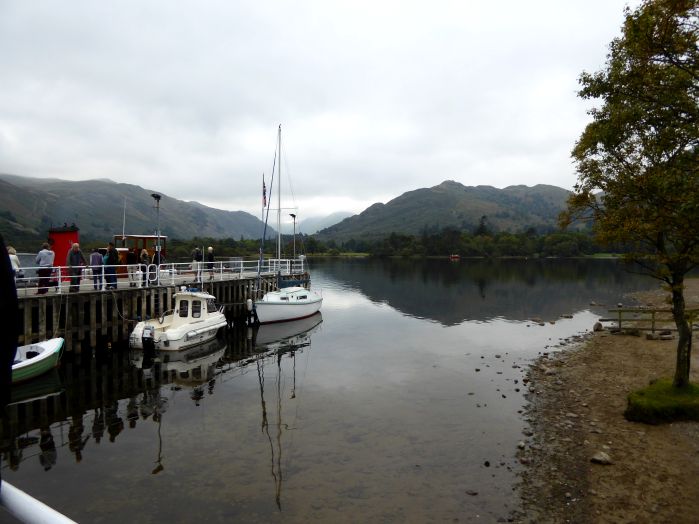
waitig for the boat P1010096
Waiting for the boat at Glenridding Pier

Lady of the Lake P1010111

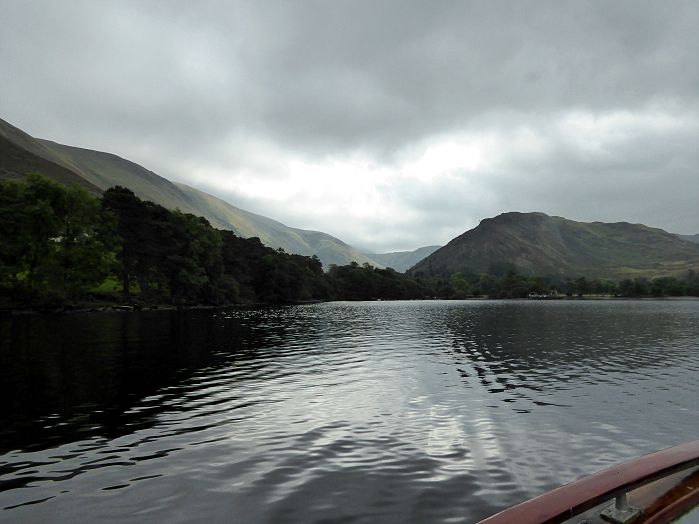
Even though the weather wasn’t very good it wasn’t raining and we had a pleasant trip with views of both sides of the lake and the mountains .

Norfolk Island, Ullswater P1010103
Norfolk Island, Ullswater

return journey P1010120

return journey P1010120
Ullswater

For more Saturday Snapshots see Melinda’s blog West Metro Mommy Reads.