Novellas in November: Translation Week: Pietr the Latvian by Georges Simenon, Translated by David Bellos

This week’s  Novellas in November is Translation Week and I’ve chosen Georges Simenon’s Pietr the Latvian, translated by David Bellos (165 pages). It is officially the first Maigret book, although it was originally published in instalments in the magazine Ric et Rac between July and October 1930.

Rating: 3 out of 5.

Jules Maigret is a Detective Chief Inspector of the Flying Squad in Paris and we get a really detailed description of him – he was a broad heavy man, aged forty-five:

His clothes were well cut and made of fairly light worsted. He shaved every day and looked after his hands.

But his frame was proletarian. He was a big bony man. Iron muscles shaped his jacket sleeves and quickly wore through new trousers.

He had a way of imposing himself just by standing there. His assertive presence had often irked many of his own colleagues.

It was something more than self-confidence but less than pride. He would turn up and stand like a rock with his feet wide apart. On that rock all would shatter, whether Maigret moved forward or stayed exactly where he was.

His pipe was nailed to his jawbone. (page 21)

He has received messages that Pietr the Latvian, an international criminal, is en route by train from the Netherlands to Paris. He has a description of Pietr and went immediately to the Gare du Nord to intercept him. But on spotting him he had to let him go because a man had been murdered on the train – and that man also matched Pietr’s description. From that point on. I became increasingly confused. Who is Pietr the Latvian? Was he the man who got off the train or the man who was murdered?

There are many characters and for quite a lot of the book I struggled to work out who was who. Maigret spends his time going from place to place and interviewing many people and I really had little idea of what was going on. The question of identity plays a major part. Pietr was thought to be the head of a major international ring mainly involved in fraud, counterfeit money and forged documents and his known associates seem to be mainly British and American. The setting in the 1930s is a mix of glamorous hotels and bars in Paris, seedy back streets, and the seaside town of Fécamp in Normandy. The book does feel dated now along with the anti-antisemitism some of the characters voiced.

If you haven’t read any of the Maigret books I suggest you start with one of the later books, which are much better. What I liked about it is that it establishes Maigret’s character and appearance right from the beginning. He feels like a real person with solidity and presence. He’s also tough, carrying on chasing around after Pietr even after he’s been shot. I think it’s an interesting story, in which a lot happens and even if I was mystified at first it did become clearer as I read on and I was pleased to find that I had worked out Pietr’s identity before it was revealed.

Pietr the Latvian is included in the Inspector Maigret Omnibus 1. The four titles are Pietr the Latvian, The Hanged Man of Saint-Pholien, The Carter of ‘La Providence’, The Grand Banks Café.

Previously I’ve read:

and

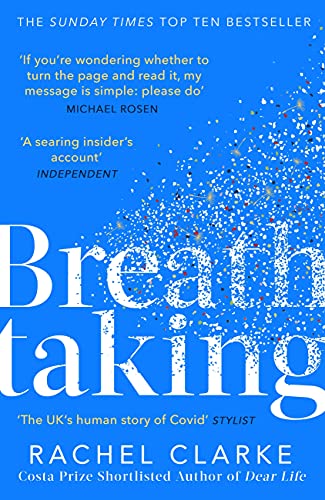
Short Nonfiction: Breathtaking by Rachel Clarke

Little, Brown Book Group| 26 January 2021| 154 pages| 4*

Novellas in November is hosted by Cathy and Rebecca. This week the focus is on short nonfiction.

I’ve watched TV programmes about Covid-19, seeing what it was like in a number of hospitals as the virus took hold in the UK, so a lot of the information in Rachel Clarke’s book, Breathtaking: Inside the NHS in a Time of Pandemic wasn’t new to me. But, I wanted to read this book to get an inside perspective on what it was like working in the NHS during the pandemic.

There have been so many fears that the NHS would be overwhelmed and reports criticising the way the government has dealt with the situation – and this is still the case now as winter approaches and the number of daily confirmed cases of coronavirus is still high, whilst hospital waiting lists for non-Covid-19 treatment remain high. Add to this there are now reports that doctors are saying that casualty departments are on the ‘edge of a precipice’, leading to dangerous levels of handover delays with patients forced to wait in ambulances for up to 11 hours outside hospitals. On TV I’ve seen the enormous queues of ambulances outside hospitals waiting to admit patients!

Rachel Clarke is a palliative care doctor and her book recounts her experiences during the first four months of 2020, when she worked on the Covid-19 wards in the Oxford University Hospitals system. Taken from her diary that she kept at the time it has an immediacy as she records her insomnia, her fears for her family and also the tremendous resilience, courage and empathy that she and the rest of the hospital staff had.

She tells the now familiar story about the PPE shortages, the lack of funding they experienced and criticises the government for their failure to act quickly enough – which I echo. Although it is a grim account, as I expected, it is also uplifting to know the care they took of their patients and the attentiveness to their patients’ needs despite the fact that many of the staff were not trained in intensive care and had never dealt with anything like this before.The way they had to prioritise patients is shocking, but I suppose inevitable given the lack of resources and staff.

She found that being a pandemic doctor was revelatory:

The crisis has undeniably revealed sweeping truths about social and economic inequalities, class divisions, global interconnectedness and the fact that our society’s most vital key workers were, and remain, among the lowest paid and the least empowered. Historians will dissect the issues for years to come. My revelations were about people. I learned from ward to ward, from bedside to bedside, paying meticulous attention to one human being and then another. I discovered how to distinguish what we absolutely cannot do without from what is really in the end, superfluous. (page 18)

This book is a snapshot, written at the time:

It depicts life and death, hope, fear, medicine at its most impotent and also at its finest, the courage of patients in enormous adversity, the stress of being torn between helping those patients and endangering your spouse and children, the long, fretful nights ruminating over whether the PPE you wear fits the science or the size of the government stockpile. I needed, I think, to take a stand with my pen and simply say: I was there. I have seen it, from the inside. I know what it was like. Here, with all its flaws and its inherent subjectivity, is my testimony. Make of it what you will. (pages 18-19)

Breathtaking records the compassion and kindness of numerous people, and pays tribute to both NHS staff and volunteers in dealing with such a distressing and immensely horrific situation.

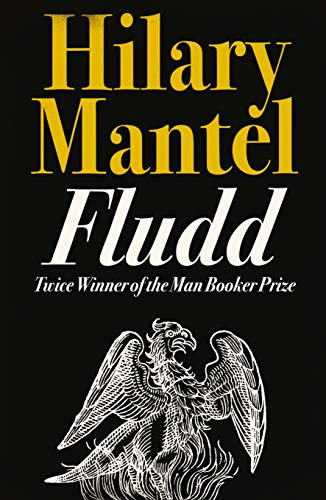
Contemporary Novellas: Fludd by Hilary Mantel

A dark fable of lost faith and awakening love amidst the moors

5*

Novellas in November began this week, hosted by Cathy and Rebecca. Each week they will take it in turns to host a “buddy read” of a featured book they hope you will join in reading – see their blogs for details.

The definition of a novella is loose – it’s based on word count rather than number of pages – but they suggest aiming for 150 pages or under, with a firm upper limit of 200 pages. The prompt for this week is contemporary fiction, defined as post 1980 and hosted by Cathy,

My choice this week is Fludd by Hilary Mantel, first published in 1989 by Viking. My copy, published in 2010 by Fourth Estate, has 181 pages followed by additional features at the end, including an About the Author section, and an interview with Hilary Mantel.

Description:

Fetherhoughton is a drab, dreary town somewhere in a magical, half-real 1950s north England, a preserve of ignorance and superstition protected against the advance of reason by its impenetrable moor-fogs. Father Angwin, the town’s cynical priest, has lost his faith, and wants nothing more than to be left alone. Sister Philomena strains against the monotony of convent life and the pettiness of her fellow nuns. The rest of the town goes about their lives in a haze, a never-ending procession of grim, grey days stretching ahead of them.

Yet all of that is about to change. A strange visitor appears one stormy night, bringing with him the hint, the taste of something entirely new, something unknown. But who is Fludd? An angel come to shake the Fetherhoughtonians from their stupor, to reawaken Father Angwin’s faith, to show Philomena the nature of love? Or is he the devil himself, a shadowy wanderer of the darkest places in the human heart?

Full of dry wit, compassionate characterisations and cutting insight, Fludd is a brilliant gem of a book, and one of Hilary Mantel’s most original works.

My thoughts:

It is 1956, set in the north of England in the fictional village of Fetherhoughton, which is loosely based on the village where Mantel grew up. She was brought up as a Catholic and the idea for the story came from a conversation with her mother about her childhood. When she was around four the Bishop decreed that all the statues in the church were to be removed which annoyed the parishioners and she heard the adults talking about what to do with the statues. One suggestion was to bury them. Her mother also told her about a young priest, who everyone liked, and who disappeared. It was assumed that there was a girl involved. The two events combined in her mind and came out as this novel.

Mantel clarifies in a Note before the story begins that the church in Fludd bears some resemblance, but not much to the Roman Catholic Church in the real world. Fludd was a real person (1574 – 1637), a physician, scholar and alchemist and she adds that

In alchemy, everything has a literal and factual description, and in addition a description that is symbolic and fantastical.

This sets the scene for what follows – there is a mystery that lies beyond the visible world, miraculous things appear to happen and very ordinary things appear miraculous. There is a hint of the supernatural.

The story centres on Fludd, a young priest who comes to the Church of St Thomas Aquinas to help Father Angwin, a cynical priest who has lost his faith. The Bishop, a modern man, is concerned about Father Angwin and wants to bring him and the Catholic community up to date – so the statues in the church have to go. This has a most disturbing effect on all concerned – not just the church and Father Angwin, but also the the nuns in the convent, and the school, both under the stern eye of Mother Perpetua.

Fludd, himself is something of a mystery. When he eats the food disappears, but he is not seen eating. When he pours out whisky for Father Anwin the bottle always remains full. Strange things happen, a wart disappears from one character’s face and finds its way to another’s, one character apparently spontaneously combusts, another disappears and there’s a tobacconist who may or may not be the devil. The real question is just who is Fludd?

I enjoyed it all immensely – partly about religion and superstition, but also a fantasy, a fairy tale, told with wit and humour with brilliant characterisation.

Novellas in November: Novellas I’ve Read in Earlier Years

This is the first week of Novellas in November, hosted by Bookish Beck and Cathy at 746 Books, and like Susan and Annabelle, I’m looking back at some of the novellas I’ve previously read.

Tamburlaine Must Die by Louise Welsh – set in May 1593, it’s a tense, dramatic story of the last days of Christopher Marlowe, playwright, poet and spy. Accused of heresy and atheism, his death is a mystery, although conjecture and rumours abound. Louise Welsh has used several sources in writing this novella and it has an immediacy, that drew me in to the late Elizabethan world. It conveys the claustrophobic atmosphere of danger surrounding Marlowe; who can he trust, and who is behind the pseudonym of ‘Tamburlaine’, who posted a libellous handbill referencing Marlowe’s plays? He has just three days to find the murderous Tamburlaine, a killer escaped from the pages of his most violent play, Tamburlaine.

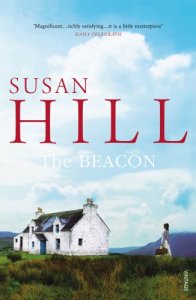
The Beacon by Susan Hill – a compelling story, drawing a picture of a family, four children and their parents living in the Beacon, an old North Country farmhouse. It’s also full of tension, of unspoken feelings and emotions as each child, Colin, May, Frank and Berenice grow up and leave home. Except that May came back after a year at university in London, unable to cope with ‘the terrors’ that began to assail her.  As the years pass, May is left at home caring for her widowed mother, after she suffered a stroke. It’s a powerful book about truth and memory, about the ordinary everyday outer lives we  live and the inner turmoil and tensions within us. It’s also about what we make of our lives, how we express ourselves and about how other people see us.

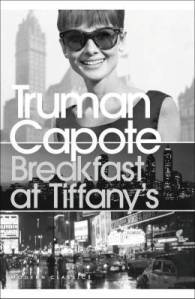
Breakfast at Tiffany’s by Truman Capote is a quick read and very entertaining. The narrator is not named, although Holly Golightly calls him ‘Fred’ after her brother. He’s a writer and at the beginning of the book he is reminiscing about Holly with Joe Bell, who ran a bar around the corner on Lexington Avenue. They hadn’t seen or heard from Holly  for over two years. She used to live in the apartment below Fred’s in a brownstone in the East Seventies in New York. Her past is almost as unknown as her present whereabouts. Holly is a free spirit, charming and carefree, but craves attention. She has a cat, plays the guitar and likes to live as though she’s about to leave – all her belongings still in suitcases and crates – and has a great many friends who she entertains with numerous parties. But her life is really a mystery and not all is as it appears on the surface, longing for something wonderful to happen.

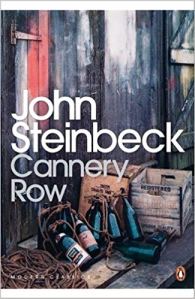
Cannery Row by John Steinbeck – I love this book. Steinbeck’s style is perfect for me, I could see Cannery Row itself, a strip of Monterey’s Ocean View Avenue, where the Monterey sardines were caught and canned or reduced to oil or fishmeal, along with all the characters – no, it was more than that -I was there in the thick of it, transported in my mind, whilst I was reading and even afterwards as I thought about the novel. There is humour and tragedy, meanness and generosity, life and death all within Cannery Row‘s 148 pages, full of fascinating characters including a group of down and outs, lead by Mack, the shop keeper, Lee Chong, who also owns the Palace Flophouse where he lets Mack and the boys live, Dora, a woman with flaming red hair, the madam who runs the Bear Flag Restaurant, Doc who lives and works at the Western Biological Laboratory and Henri the painter who is building and never finishing a boat.

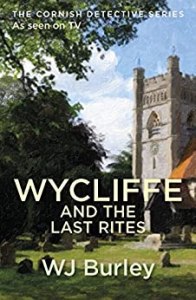
Wycliffe and the Last Rites by W J Burley – set in Cornwall a bizarre murder shakes the village of Moresk. Arriving at church on Easter morning the vicar discovers the body of a woman sprawled across the chancel steps. To add to the horror, the church is filled with the discordant sound of an organ chord, the notes apparently chosen at random and wedged down.Detective Chief Superintendent Wycliffe’s problem in finding the murderer is that all the possible leads pointed to a limited range of possible suspects but none of them matched his specification for the criminal. It seemed he had to believe the impossible. It’s a tightly plotted book, concisely and precisely written and I enjoyed it very much

Novellas in November 2021

I’m glad to see that Cathy of 746 Books and Rebecca of BookishBeck are once again co-hosting Novellas in November as a month-long challenge with four weekly prompts. Each week they will take it in turns to host a “buddy read” of a featured book they hope we will join in reading.

They suggest 150–200 pages as the upper limit for a novella, and post-1980 as a definition of “contemporary.”

1–7 November: Contemporary fiction (Cathy)

Open Water by Caleb Azumah Nelson – including a giveaway of a signed copy!

8–14 November: Short nonfiction (Rebecca)

The Story of My Life by Helen Keller (free to download here from Project Gutenberg. Note: only the first 85 pages constitute her memoir; the rest is letters and supplementary material.)

15–21 November: Literature in translation (Cathy)

Territory of Light by Yuko Tsushima

22–28 November: Short classics (Rebecca)

Ethan Frome by Edith Wharton (free to download here from Project Gutenberg)

~~~

I enjoyed taking part last year so I’m looking forward to this year’s event. I read Ethan Frome in 2014 and loved it, so I think I’ll re-read it. Many years ago (I can’t remember when) I read a biography of Helen Keller, or it may even have been her autobiography, so I’ll have a look at that too. I also have several novellas on my TBR shelves to choose from.

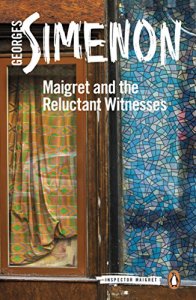
Maigret and the Reluctant Witnesses by Georges Simenon

This week the theme for Novellas in November is Literature in Translation and I’ve chosen Maigret and the Reluctant Visitors by Georges Simenon translated from the French by William Hobson, a novella of 172 pages.

This is the 53rd Inspector Maigret book, originally published in 1955.

It is November and Maigret, nearing retirement, is in a melancholy, nostalgic mood. He has been called out to the home of the Lauchaume family where Léonard, the eldest son has been shot dead. The name Lachaume brings back memories of his childhood in the countryside where the village grocer sold Lachaume Biscuits. But the family is now in dire straits, living in a large house on the Quai de la Gare, Ivry and their biscuit factory is failing. Their house was once an impressive three storey building but is now in a state of decay, cold and damp. The rest of the Lachaume family, his younger brother Armand, Paulette Armand’s wife and his elderly parents, are not only reluctant to talk to the police, they don’t appear to be grieving.

It looks initially that the murder may have been part of a burglary, although only a wallet is missing, but Maigret is suspicious right from the start. His attempts to question the family are held up by their lawyer and also by the Examining Magistrate, Angelot who insists on taking charge of the case. But he makes headway when he visits Véronique Lachaume, Léonard’s estranged sister and eventually Paulette reluctantly talks to him.

The book as a whole has a nostalgic feel, the sense that the world is changing – the Lachaume family has been left behind. Their business has only been kept afloat by the money from the sons’ wives, but they are still proud and reluctant to face the true facts of their situation. Maigret, too, is beginning to realise that his world is changing. for one thing he is getting older, the new magistrates are the younger generation bringing in new methods and he is aware that he only has two years left before his retirement. However, he solves the case mainly through his own intuition, and so he casts off his melancholy.

I’ve now read several of the Maigret books totally out of order, so now I’ve decided it’s time I read the first book, Pietr the Latvian first published in 1931.