The Bone Chests by Cat Jarman

A history of the making of England as a nation, told through six bone chests, stored for over a thousand years in Winchester Cathedral.
William Collins| 14 September 2023| 400 pages| Review copy| 4*

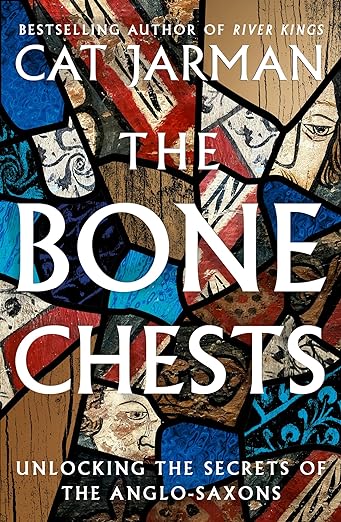
The front cover shows a section of the Great West Window of Winchester Cathedral, made up of mosaics created after 1660 from the glass that had been smashed during the Civil War in 1642. I think it is just beautiful.

Description:

In December 1642, during the Civil War, Parliamentarian troops stormed the magnificent cathedral, intent on destruction. Reaching the presbytery, its beating heart, the soldiers searched out ten beautifully decorated wooden chests resting high up on the stone screens.

Those chests contained some of England’s most venerated, ancient remains: the bones of eight kings, including William Rufus and Cnut the Great – the only Scandinavian king to rule England and a North Sea empire; three bishops ; and a formidable queen, Emma of Normandy. These remains belong to the very people who witnessed and orchestrated the creation of the kingdom of Wessex in the seventh century, who lived through the creation of England as a unified country in response to the Viking threat, and who were part and parcel of the Norman conquest.

On that day, the soldiers smashed several chests to the ground, using the bones as missiles to shatter the cathedral’s stained glass windows. Afterwards, the clergy scrambled to collect the scattered remains.

In 2012, the six remaining chests were reopened. Using the latest scientific methods, a team of forensic archaeologists attempted to identify the contents: they discovered an elaborate jumble of bones, including the remains of two forgotten princes. In The Bone Chests, Cat Jarman builds on this evidence to untangle the stories of the people within. It is an extraordinary and sometimes tragic tale, and one of transformation. Why these bones? Why there? Can we ever really identify them? In a palimpsest narrative that runs through more than a millennium of British history, it tells the story of both the seekers and the sought, of those who protected the bones and those who spurned them; and of the methods used to investigate.

My knowledge of the Anglo-Saxons from school history lessons is very basic – little more than Alfred the Great on the run from the Vikings and letting the cakes burn, and King Canute, sitting in his throne placed at the water’s edge and trying unsuccessfully to forbid the waves from advancing and wetting his feet.

So I was looking forward to learning more in The Bone Chests: Unlocking the Secrets of the Anglo-Saxons. In her Author’s Note Cat Jarman clarifies that her intention with this book is to tell the stories of the chests, and of the tumultuous times that they and the people interred in them, lived through. She has concentrated on the south and south-west of England to consider why Wessex and Winchester took on such significance in the history of England in the early medieval period. So, the main emphasis in this book is on the history, on the kings and politics of the period rather than on the forensic archaeology and the modern scientific techniques.

Having said that there is enough about the use of DNA and isotopic analysis of teeth to investigate the diet and origins of the owners of the bones for me as a non scientist to understand. I found it all fascinating even though in places I was left wondering what century I was in, having moved from the 11th to the 21st century (when Richard III’s remains were discovered under a Leicester car park), via various Viking raids and the 17th century. At times I had to keep reminding myself which chest was being described.

The mortuary, or bone chests, themselves, are most interesting and I would love to visit Winchester Cathedral to see them for myself. There are six chests, painted wooden caskets which are displayed high on stone screen walls on either side of the high altar area. The bones are the remains of many kings and bishops who were originally buried in the Anglo-Saxon cathedral known as Old Minster, north of the present cathedral.

Jarman describes the chests in, vaguely, chronological order and has relied on the Mortuary Chests Project, a research project led by archaeologists from Bristol University in collaboration with Winchester Cathedral that began in 2012. She is not involved in the Project but has incorporated details of the team’s partial results released in May 2019 in her book.

The book is very detailed and well researched and I learned so much, bringing the medieval period to life as I read. I had never heard of Queen Emma and the details about her life stand out for me. She was the daughter of Richard I, Duke of Normandy, wife of two Anglo- Saxon kings – Æthelred the Unready and Cnut (Canute) – and the mother of Edward the Confessor and Harthacnut of Denmark. She was given the name Ælfgifu and in 1017 she married Cnut. I was fascinated to read that the Project team has put together a set of bones that they confidently determine to be a female that could be the body of Emma. (See – details of an exhibition at Winchester Cathedral, Kings and Scribes: the birth of a nation. This includes a 3D model of the female skeleton thought to be Queen Emma).

The last section of the book is made up of Notes of the sources used, an extensive Bibliography, and an Index. There is also a List of Illustrations; the illustrations were not included in my review copy.

Many thanks to the publishers for a review copy via NetGalley.

Dr Cat Jarman is a bioarchaeologist and field archaeologist specialising in the Viking Age, Viking women, and Rapa Nui. She uses forensic techniques like isotope analysis, carbon dating, and DNA analysis on human remains to untangle the experiences of past people from broader historical narratives. Dr Jarman has contributed to numerous TV documentaries as both an on-screen expert and historical consultant, including programmes for the BBC, Channel 4, History, Discovery, and more.

Elizabeth Macarthur by Michelle Scott Tucker

In 1788 a young gentlewoman raised in the vicarage of an English village married a handsome, haughty and penniless army officer. In any Austen novel that would be the end of the story, but for the real-life woman who became an Australian farming entrepreneur, it was just the beginning.

John Macarthur took credit for establishing the Australian wool industry and would feature on the two-dollar note, but it was practical Elizabeth who managed their holdings—while dealing with the results of John’s manias: duels, quarrels, court cases, a military coup, long absences overseas, grandiose construction projects and, finally, his descent into certified insanity.

Michelle Scott Tucker shines a light on an often-overlooked aspect of Australia’s history in this fascinating story of a remarkable woman.

My thoughts

Two years ago I read A Room Made of Leaves by Kate Grenville, historical fiction telling the story of Elizabeth and John Macarthur, who settled in Australia at the end of the eighteenth century, which made me keen to find out more about them. In particular it was the epigraph ‘ Believe not too quickly‘, which is a quotation from one of Elizabeth’s letters, that highlighted for me that A Room Made of Leaves is a work of fiction. And then I came across Michelle Scott Tucker’s biography: Elizabeth Macarthur: A Life at the Edge of the World and I was delighted to see that Kate Grenville references this book as the standard biography in her Acknowledgements. So I bought a copy.

Elizabeth was born on 14 August 1766 in Devon, England and she married John Macarthur in October 1788. In June 1789 they sailed with their first child, Edward, initially on the Neptune, and then on the convict ship Scarborough to New South Wales where John joined his regiment, the New South Wales Corps, in the recently established colony of New South Wales. They went on to have four more sons, James (1793-1794), John (1794-1831), James (1798-1867) and William (1800-1882), and three daughters, Elizabeth (1792-1842), Mary (Mrs Bowman, b.1795) and Emmeline (b.1808).

For sixty years, Elizabeth ran the family farm in Parramatta, west of Sydney town – on her own during her husband’s long absences abroad, four years during her husband’s first absence, and nine years during the second, when she was responsible for the care of their valuable merino flocks, as well as the Camden Park estate and the direction of its convict labourers. By the time Macarthur came back from that second absence, he was overwhelmed by mental illness, and they spent the last few years of his life apart. He died in 1834. The house and gardens of her farm, aptly named ‘Elizabeth Farm’ is now an ‘access all areas’ museum. In 1850, she died in her daughter and son-in-law’s house at Watson’s Bay outside Sydney, overlooking the Pacific Ocean.

I was interested to see how the biography differed from Kate Grenville’s novel. Both interpret the facts, based on Elizabeth Macarthur’s letters, journals and official documents of the early years of the New South Wales colony, trying to explain what happened and why, dependent on the available evidence. However, fiction is more flexible than a biography and can fill in the gaps where the documentary evidence is lacking. And Kate Grenville has used her storytelling imagination in filling in the gaps in the records, in particular about her relationship with William Dawes, an astronomer with the Corps, who was mapping the night sky. He had an observatory near Elizabeth’s farm and it was there that she attempted to learn from him about astronomy. However, in A Room Made of Leaves, Kate Grenville embellishes the basic facts, whilst exploring what it could have been that made Elizabeth ‘blush at my error‘, as she described it in a letter to her friend, Bridget, claiming she had mistaken her abilities and she ended her astronomical studies. Michelle Scott Tucker comments that the evening visits to Dawes’ observatory were open to misinterpretation, whereas Kate Grenville’s version is much more explicit as she imagines what might have happened. Her book, whilst it is based on history is fiction, as she makes clear in her Author’s Note at the end of the book.

I have only just skimmed the surface of this book – there is so much more detail about the landscape, the indigenous population, the disputes between various sections of the colony, about farming and the establishment of the wool industry, not forgetting the details of the Macarthur family members, illnesses, and the position of the women within the community – Elizabeth wasn’t the only colonial woman who was responsible for her family farm. She was resourceful, a good farm manager and business woman, was respected within the colony, and was loved by her family. There are a number of reasons I recommend this book. There is a ‘Select Bibliography’ which looks comprehensive to me, copious notes citing sources and a family tree. It is thorough, well researched and It provides an insight into the early years of Australia’s colonial history and it is an extremely readable biography of a fascinating woman.

The Road to Little Dribbling by Bill Bryson

Rating: 3.5 out of 5.

Over twenty years ago, Bill Bryson went on a trip around Britain to celebrate the green and kindly island that had become his home. The hilarious book he wrote about that journey, Notes from a Small Island, became one of the most loved books of recent decades, and was voted in a BBC poll as the book that best represents Britain. Now, for his first travel book in fifteen years, Bryson sets out again, on a long-awaited, brand-new journey around the UK. (Goodreads)

Years ago I read Bryson’s Notes From a Small Island about his trip around Britain in 1995, and since then I’ve also read A Walk in the Woods about his hike along the Appalachian Trail, the longest continuous footpath in the world, both of which fascinated me. So I was keen to read The Road to Little Dribbling:More Notes from a Small Island, which was first published in 2015, 20 years after his first trip.

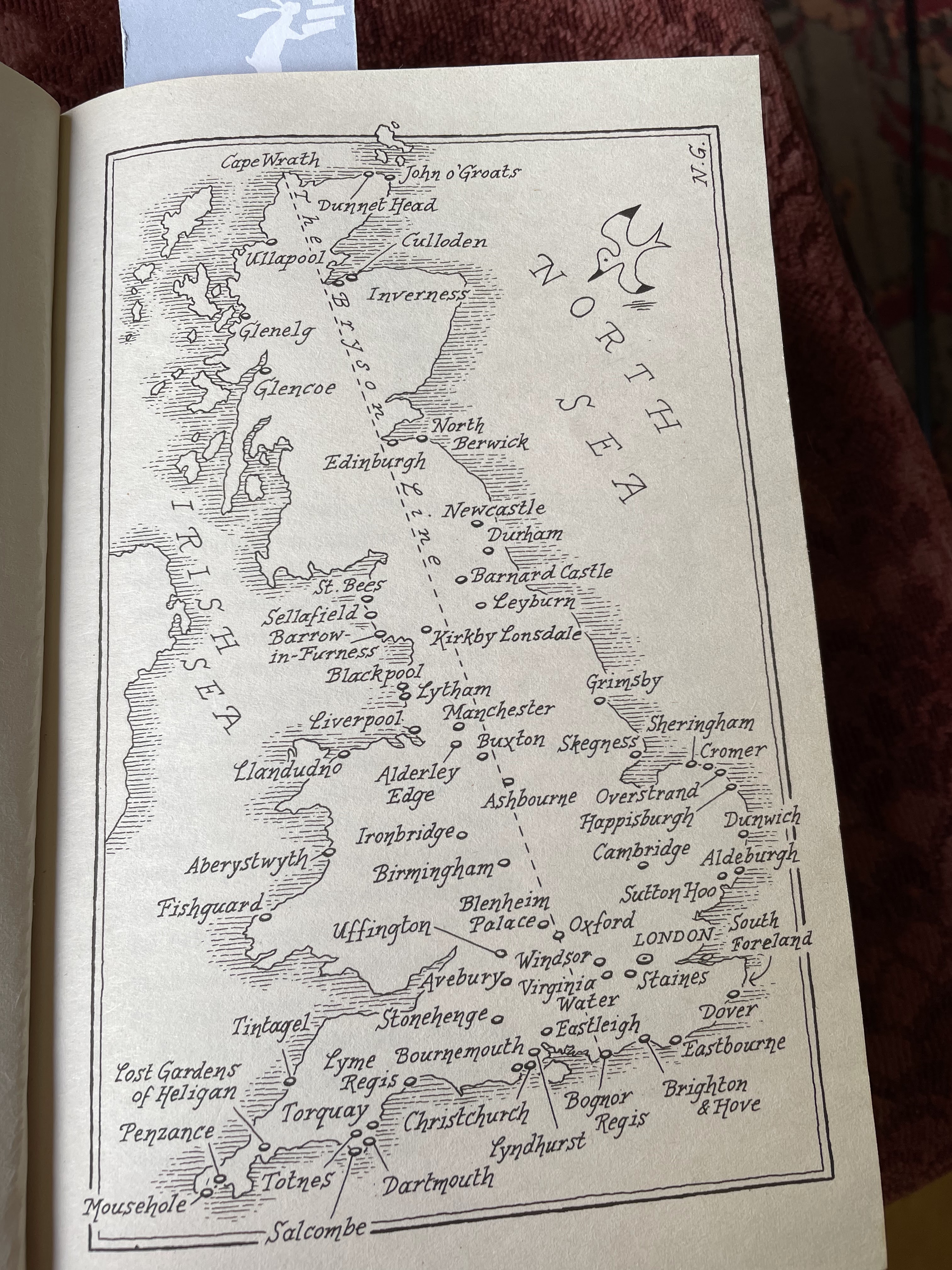
He decided to start at Bognor Regis in West Sussex on the south coast of England. He decided to try to follow the longest distance you can travel in a straight line, roughly from Bognor Regis to Cape Wrath. But he realised it wouldn’t be practical to follow it precisely, so he just started and ended at its terminal points and then meandered from place to place as his fancy took him. Click on the photo below to enlarge.

The result is he mainly visited places in the south of England, with only a few pages covering the rest of Britain. It really could have done with an index and I toyed briefly with the idea of compiling one myself. It’s an amusing book, rather than laugh out loud funny, but I got tired of his grumpiness and of his descriptions of places that were run-down and depressing and not as he remembered them – cafes that had closed, and town centres that were empty where once they had been busy and thriving. Of course any travel book is a snapshot in time, in this book that is 2015, and over time everywhere changes for better or worse.

Bryson writes in a chatty style and goes off at various tangents, talking about the history of places and telling anecdotes, which I found very interesting. Whilst he was disappointed by some towns and cities he didn’t hold back on praising the landscape – beautiful countryside, and coastal locations. I don’t think it lives up to Notes from a Small Island but it certainly gives an insight into the best and worst about Britain in 2015.

And I never found out why it’s called The Road to Little Dribbling! Any ideas, anyone?

Book Beginnings & The Friday 56: In The Heart of the Sea by Nathaniel Philbrick

Every Friday Book Beginnings on Friday is hosted by Gillion at Rose City Reader where you can share the first sentence (or so) of the book you are reading. You can also share from a book you want to highlight just because it caught your fancy.

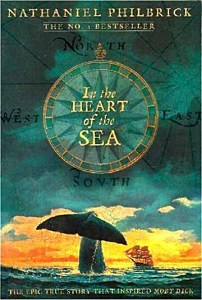
One of the books I think I’ll read soon is In the Heart of the Sea The Epic True Story That Inspired Moby Dick by Nathaniel Philbrick. I haven’t read Moby Dick. I think it might be easier to read than Moby Dick – at 238 pages it is certainly shorter. It has lots of 5 and 4 star ratings on Goodreads.


Preface February 23, 1821

Like a giant bird of prey, the whaleship moved lazily up the western coast of South America, zigging and zagging across a sea of oil. for this was the Pacific Ocean in 1821, a vast field of warm-blooded oil deposits known as sperm whales.

Also every Friday there is The Friday 56, hosted by Freda at Freda’s Voice, where you grab a book and turn to page 56 (or 56% of an eBook), find one or more interesting sentences (no spoilers), and post them.

Page 56:

Before cutting loose the whale’s mutilated corpse, the mates probed its intestinal tract with a lance searching for an opaque, ash-colored substance called ambergris. Thought to be the result of indigestion or constipation on the part of the whale, ambergris is a fatty substance used to make perfume and was worth more than its weight in gold.

Description from Goodreads:

In the Heart of the Sea brings to new life the incredible story of the wreck of the whaleship Essex – an event as mythic in its own century as the Titanic disaster in ours, and the inspiration for the climax of Moby-Dick. In a harrowing page-turner, Nathaniel Philbrick restores this epic story to its rightful place in American history.

In 1820, the 240-ton Essex set sail from Nantucket on a routine voyage for whales. Fifteen months later, in the farthest reaches of the South Pacific, it was repeatedly rammed and sunk by an eighty-ton bull sperm whale. Its twenty-man crew, fearing cannibals on the islands to the west, made for the 3,000-mile-distant coast of South America in three tiny boats. During ninety days at sea under horrendous conditions, the survivors clung to life as one by one, they succumbed to hunger, thirst, disease, and fear.

Philbrick interweaves his account of this extraordinary ordeal of ordinary men with a wealth of whale lore and with a brilliantly detailed portrait of the lost, unique community of Nantucket whalers. Impeccably researched and beautifully told, the book delivers the ultimate portrait of man against nature, drawing on a remarkable range of archival and modern sources, including a long-lost account by the ship’s cabin boy.

At once a literary companion and a page-turner that speaks to the same issues of class, race, and man’s relationship to nature that permeate the works of Melville, In the Heart of the Sea will endure as a vital work of American history.

~~~

What do you think, does it appeal to you? What are you currently reading?

Top Ten Tuesday: TTT Rewind: Books On My Spring 2019 TBR Updated

top-ten-tuesday-new

Top Ten Tuesday is a weekly meme created by The Broke and the Bookish and now hosted by Jana at That Artsy Reader Girl. For the rules see her blog.

This week’s topic is TTT Rewind (Pick a previous topic that you missed or would like to re-do/update) So, I’m updating my post Books On My Spring 2019 TBR, first posted on 19th March 2019.

I read three of them!

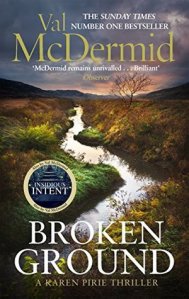
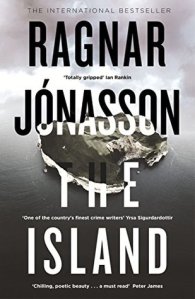
Broken Ground by Val McDermid, On the Beach by Nevil Shute, which I read only this year and have yet to write a review, and The Island by Ragnar Jónasson.

This leaves me with seven left to read:

In Cold Blood by Truman Capote – Capote reconstructs the crime and the investigation into the murders of the four members of the Clutter family on November 15, 1959, in the small town of Holcomb, Kansas.

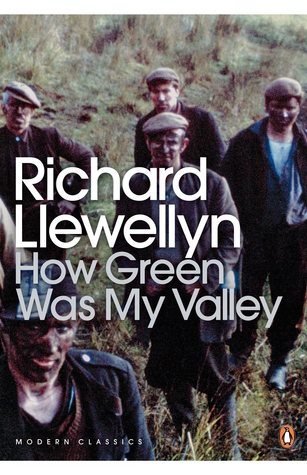
How Green Was My Valley by Richard Llewellyn – a story of life in a mining community in rural South Wales as Huw Morgan is preparing to leave the valley where he had grown up. He tells of life before the First World War.

Iris and Ruby by Rosie Thomas – the story of a teenage girl, Ruby, who runs away from home to live with her grandmother, Iris in Cairo.

Here Be Dragons by Sharon Penman – set in 13th century Wales this is the story of Llewelyn, the Prince of North Wales, and his rise to power and fame and his love for Joanna, the illegitimate daughter of King John. 

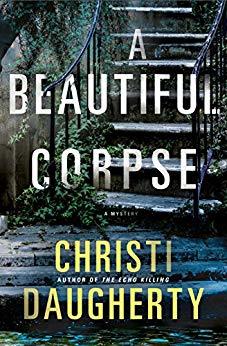
A Beautiful Corpse by Christi Daugherty – crime reporter Harper McClain unravels a tangled story of obsession and jealousy after a beautiful law student is shot in Savannah, Georgia.

A Snapshot of Murder by Frances Brody – set in Yorkshire in 1928, when  amateur detective, Kate Shackleton investigates a crime in Brontë country.

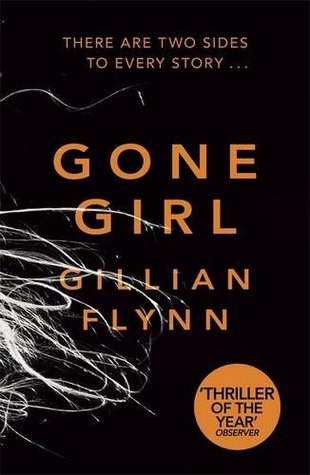
Gone Girl by Gillian Flynn – on the day of Nick and Amy’s fifth wedding anniversary, Amy suddenly disappears. The police suspect Nick. Amy’s friends reveal that she was afraid of him, that she kept secrets from him. He swears it isn’t true.

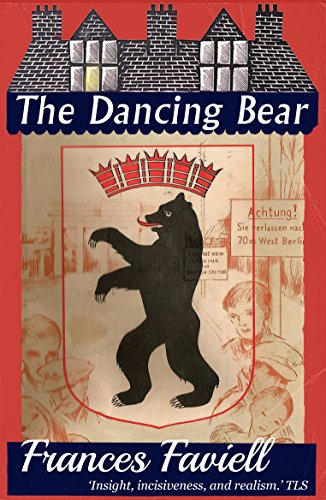
The Dancing Bear by Frances Faviell

Rating: 5 out of 5.

The Dancing Bear by Frances Faviell took me by surprise by how much I enjoyed it. I wasn’t expecting it to be so good.

Frances Faviell (1905-1959) was the pen name of Olivia Faviell Lucas, painter and author. After the war, in 1946, she went with her young son, John, to Berlin where Richard Parker, her second husband, had been posted as a senior civil servant in the post-war British Administration. It was here that she befriended the Altmann family, which prompted her first book The Dancing Bear (1954), a memoir of the Occupation seen through the eyes of both occupier and occupied. She later wrote three novels, A House on the Rhine (1955), Thalia (1957), and The Fledgeling (1958). These are now all available as Furrowed Middlebrow books.

The Dancing Bear covers the years from Autumn 1946 to Autumn 1949, with an Epilogue dated Autumn 1953 and, in this edition, an Afterword by John Parker, Faviell’s son. Her memoir is mainly about her friendship with the Altmann family – Frau Maria Altmann, her husband, Oskar and her children, Ursula, who works for a group of American service men, Lilli, a ballet dancer and son, Fritz, who was a member of the Hitler Youth and is now involved in the Black Market. Their eldest son. Kurt. is missing in Russia. Berlin had been divided into four sectors by the Allies – Britain, the United States, France and the Soviet Union – and Frances is horrified by the conditions she found. There were deaths from hunger and cold as the winter approached and queues for bread, milk, cigarettes, cinemas, buses and trams.

The complete and utter devastation of Berlin had shaken me profoundly. Nothing … had prepared one for the dead horror of this city. (page 15)

The complete absence of shops was something the Allied and German women felt. There was scarcely a single shop left standing in Berlin. The great stores and emporiums lay in dust, as did the great blocks of flats. One could not get the simplest articles except on the Black Market, and then only in exchange for cigarettes and coffee which had taken the place of money. (page 166)

The Altmanns live on the ground floor of a large ruined house – the upper storeys had disappeared and just the twisted iron girders remained, sticking up grotesquely against the sky. The ground floor looked very shaky and the windows were covered in cardboard and the door had been repaired from odd pieces of wood. It was freezing cold, and although they had a stove they had no fuel to light it and because electricity was rationed they had to use candles. There were two bedrooms, a small kitchen, a sitting room and a bathroom. With the help of her driver, Stampie, she does what she can to help them.

The British, unlike the Americans were forbidden to be friendly with the Germans, or to allow them in their homes or any of their buildings, clubs or messes and also to give them lifts, but these rules were frequently broken. At night Berlin ‘became a whirl of revelry’:

But if Berlin was a tragic city by day; at night it became a whirl of revelry. The Allies entertained on a scale which was extraordinary in a starving town, and if one went down to the Kurfurstendamm or the Kaiserdamm at night every cafe and night club was packed with revellers. (page 63)

I have only touched the surface of this book in this short post. It’s a moving memoir and I was fascinated by it all – the people, their situations, and their morale and attitudes as well as the condition of Berlin in the aftermath of World War Two. The realities of living under occupation are clearly shown, as well as the will to survive despite all the devastation and deprivation. I now want to read more of Frances Faviell’s books.

  • ASIN ‏ : ‎ B01M12EH2E
  • Publisher ‏ : ‎ Dean Street Press (3 Oct. 2016)
  • Language ‏ : ‎ English
  • Print length ‏ : ‎ 311 pages
  • My Rating: 5*