Top 5 anticipated reads for Q4 2024

Top 5 Tuesday was created by Shanah at Bionic Book Worm, and it is now being hosted by Meeghan at Meeghan Reads. It’s time to talk about all the shiny new books coming out in October, November and December 2024. What are the books you can’t wait to hold in your hands the most? For details of all of the latest prompts for October to December, see Meeghan’s post here

Here are five books I’m looking forward to reading and they are all coming out this month! They are all by authors whose books I’ve loved.

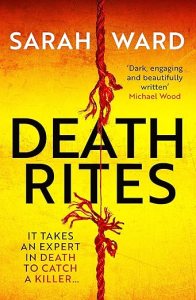
Death Rites by Sarah Ward – 3 October. This is the first in a new series, a dark and atmospheric crime thriller (Carla James Crime Thrillers Book 1).

Archaeology professor Carla James is reeling following the death of her husband. Desperate for a change of scene, she takes a job at an elite New England college. On her first day, Carla is asked to represent the department at a murder site. She initially believes there is nothing notable about the scattered debris that surrounds the body, but there is more to the case than meets the eye. This victim is just the latest in a series of unsolved deaths. Nothing obvious links them but Carla is convinced – there is a methodical killer operating in the shadows.

Can she uncover the truth before she becomes the next victim?

Midnight and Blue by Ian Rankin – 10 October. It’s the 25th Inspector Rebus book. I’ve read all the others, so I have to read this one!

John Rebus spent his life as a detective putting Edinburgh’s most deadly criminals behind bars. Now, he’s joined them…

As new allies and old enemies circle, and the days and nights bleed into each other, even the legendary detective struggles to keep his head. That is, until a murder at midnight in a locked cell presents a new mystery. They say old habits die hard… However, this is a case where the prisoners and the guards are all suspects, and everyone has something to hide. With no badge, no authority and no safety net, Rebus walks a tightrope – with his life on the line.

But how do you find a killer in a place full of them?

The Map of Bones by Kate Mosse – 10 October The fourth book in the Joubert Family Chronicles series. I love the cover!

Olifantshoek, Southern Africa, 1688. When the violent Cape wind blows from the south-east, they say the voices of the unquiet dead can be heard whispering through the deserted valley. Suzanne Joubert, a Huguenot refugee from war-torn France, arrives in search of her cousin — the notorious she-captain and pirate commander Louise Reydon-Joubert — who landed at the Cape of Good Hope more than sixty years before, then disappeared without a trace . . .

Franschhoek, Southern Africa, 1862. Nearly one hundred and eighty years after Suzanne’s perilous journey, another intrepid and courageous woman of the Joubert family — Isabelle Lepard — has journeyed to the small frontier town once known as Oliftantshoek in search of her long-lost relations. Intent on putting the women of her family back into the history books, she quickly discovers that the crimes and tragedies still shadow the present. And now, Isabelle faces a race against time if she is to discover the truth, and escape with her life . . .

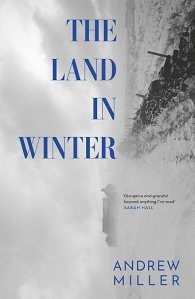
The Land in Winter by Andrew Miller – 24 October

December 1962, the West Country.

In the darkness of an old asylum, a young man unscrews the lid from a bottle of sleeping pills.

In the nearby village, two couples begin their day. Local doctor, Eric Parry, mulling secrets, sets out on his rounds, while his pregnant wife sleeps on in the warmth of their cottage. Across the field, in a farmhouse impossible to heat, funny, troubled Rita Simmons is also asleep, her head full of images of a past life her husband prefers to ignore. He’s been up for hours, tending to the needs of the small dairy farm he bought, a place where he hoped to create a new version of himself, a project that’s already faltering.

There is affection – if not always love – in both homes: these are marriages that still hold some promise. But when the ordinary cold of an English December gives way to violent blizzards – a true winter, the harshest in living memory – the two couples find their lives beginning to unravel.

Where do you hide when you can’t leave home? And where, in a frozen world, could you run to?

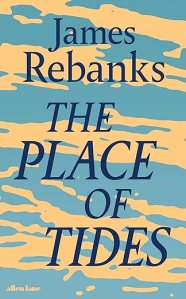
The Place of Tides by James Rebanks – 27 October because I loved his English Pastoral.

One afternoon many years ago, James Rebanks met an old woman on a remote Norwegian island. She lived and worked alone on a tiny rocky outcrop, caring for wild Eider ducks and gathering their down. Hers was a centuries-old trade that had once made men and women rich, but had long been in decline. Still, somehow, she seemed to be hanging on.

Back at home, Rebanks couldn’t stop thinking about the woman on the rocks. She was fierce and otherworldly – and yet strangely familiar. Years passed. Then, one day, he wrote her a letter, asking if he could return. Bring work clothes, she replied, and good boots, and come quickly: her health was failing. And so he travelled to the edge of the Arctic to witness her last season on the island.

This is the story of that season. It is the story of a unique and ancient landscape, and of the woman who brought it back to life. It traces the pattern of her work from the rough, isolated toil of bitter winter, to the elation of the endless summer light, when the birds leave behind their precious down for gathering, like feathered gold.

Slowly, Rebanks begins to understand that this woman and her world are not what he had previously thought. What began as a journey of escape becomes an extraordinary lesson in self-knowledge and forgiveness.

WWW Wednesday: 31 July 2024

WWW Wednesday is run by Taking on a World of Words.

The Three Ws are:

What are you currently reading?
What did you recently finish reading?
What do you think you’ll read next?

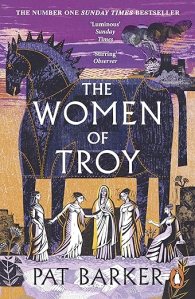
Currently I’m reading The Women of Troy by Pat Barker. this is the second book on The Women of Troy trilogy, a retelling of the classic Greek myth. I’ve recently read the first book, The Silence of the Girls (my review will follow shortly) which I loved. So far this second book looks as though it will be just as good. Troy has fallen but high winds are keeping the Greeks from sailing home.

Description from Goodreads:

Troy has fallen and the victorious Greeks are eager to return home with the spoils of an endless war—including the women of Troy themselves. They await a fair wind for the Aegean.

It does not come, because the gods are offended. The body of King Priam lies unburied and desecrated, and so the victors remain in suspension, camped in the shadows of the city they destroyed as the coalition that held them together begins to unravel. Old feuds resurface and new suspicions and rivalries begin to fester.

Largely unnoticed by her captors, the one time Trojan queen Briseis, formerly Achilles’s slave, now belonging to his companion Alcimus, quietly takes in these developments. She forges alliances when she can, with Priam’s aged wife the defiant Hecuba and with the disgraced soothsayer Calchas, all the while shrewdly seeking her path to revenge.

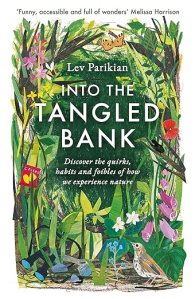
I’m also reading Into the Tangled Bank by Lev Parikian, non fiction about nature. It’s easy reading, Parikian writes with humour, in a chatty style, but also richly descriptive. I’m loving it, it is compulsive reading. He is a storyteller, so there are lots of anecdotes and stories, plus his thoughts on nature and how we view it. Amongst many other topics he ponders about the ethics of zoos – something that puzzles me too – and wonders if the definition of a nature lover is becoming that of one who loves nature programmes. There’s a lot packed into this book.

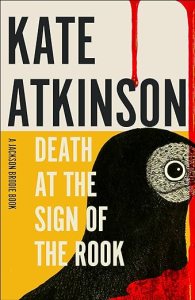
The last book I read was Death at the Sign of the Rook by Kate Atkinson, a review copy. My review will follow after the book is published on 22 August 2024. I have very mixed feelings about this book from loving parts of it to frustration at other parts.

Synopsis from Amazon:

The stage is set. The players are ready. By night’s end, a murderer will be revealed. 
Ex-detective Jackson Brodie is staving off a bad case of midlife malaise when he is called to a sleepy Yorkshire town, and the seemingly tedious matter of a stolen painting. But one theft leads to another, including the disappearance of a valuable Turner from Burton Makepeace, home to Lady Milton and her family. Once a magnificent country house, Burton Makepeace has now partially been converted into a hotel, hosting Murder Mystery weekends.

As paying guests, a vicar, an ex-army officer, impecunious aristocrats, and old friends converge, we are treated a fiendishly clever mystery; one that pays homage to the masters of the genre—from Agatha Christie to Dorothy Sayers.

What will I read next? At the moment I have no idea.

WWW Wednesday: 5 June 2024

WWW Wednesday is run by Taking on a World of Words.

The Three Ws are:

What are you currently reading?
What did you recently finish reading?
What do you think you’ll read next?

It’s been several weeks since I wrote a WWW Wednesday post. The books in this post are all from my 20 Books of Summer list.

Currently I’m reading Black Roses by Jane Thynne, a book I bought 10 years ago. It’s set in Germany in 1933 as Hitler came to power. Clara Vine, an attractive young Anglo-German actress, arrives in Berlin to find work at the famous Ufa studios. Through a chance meeting, she is unwillingly drawn into a circle of Nazi wives, among them Magda Goebbels, Anneliese von Ribbentrop and Goering’s girlfriend Emmy Sonnemann. (Goodreads). I’m enjoying this book so far, although it’s moving very slowly and I am getting a bit confused by the minor characters.

The last book I read was Great Meadow by Dirk Bogarde, subtitled on the cover, An Evocation. I couldn’t resist the cover of this book when I spotted it at a bookstall at the local village fair in July 2010. When I read the opening words in the Author’s Note at the beginning of the book I knew I wanted to read it:

An evocation, this, of the happiest days of my childhood: 1930 – 34. The world was gradually falling apart all around me, but I was serenely unaware. I was not, alas, the only ostrich. (page vii)

It has been sitting on my bookshelves since then. and I’m kicking myself that I took so long to get round to reading it because I loved it. I’ll be writing more about this book soon.

Next I’m planning to read Where Water Lies by Hilary Tailor. I put this on my 20 Books of Summer list because I loved her first book The Vanishing Tide.

Synopsis from Amazon UK

Eliza has lived two lives – one before she fell into an obsessive teenage friendship with Eric and Maggie, and the one after it was destroyed in a single afternoon. To Eliza, Eric and Maggie were irreplaceable, so she hasn’t. Instead, drifting through life alone, she spends every morning diving into her memories as she swims in Hampstead Ponds, her guilt never far below the surface.

Twenty years might have passed, yet Eliza still can’t help searching for Maggie everywhere. Then one day she spots a woman who looks just like her. Eliza has spent half her life wondering what really happened that afternoon and if Maggie’s back, will it help her finally get answers?

But memories are like ripples on water, and can be deceptive. As the past and present collide, Eliza begins to wonder: will learning the truth set her free – or will it only drag her down deeper?

Although this is a weekly meme I’m only taking part occasionally.

Shakespeare: The Man Who Pays the Rent by Judi Dench and Brenden O’Hea

Rating: 5 out of 5.

St Martin’s Press| 23 April 2024 | 228 pages|e-book |Review copy| 5*

Synopsis:

Taking a curtain call with a live snake in her wig..

Cavorting naked through the Warwickshire countryside painted green...

Acting opposite a child with a pumpkin on his head…

These are just a few of the things Dame Judi Dench has done in the name of Shakespeare

For the very first time, Judi opens up about every Shakespearean role she has played throughout her seven-decade career, from Lady Macbeth and Titania to Ophelia and Cleopatra. In a series of intimate conversations with actor & director Brendan O’Hea, she guides us through Shakespeare’s plays with incisive clarity, revealing the secrets of her rehearsal process and inviting us to share in her triumphs, disasters, and backstage shenanigans.

Interspersed with vignettes on audiences, critics, company spirit and rehearsal room etiquette, she serves up priceless revelations on everything from the craft of speaking in verse to her personal interpretations of some of Shakespeare’s most famous scenes, all brightened by her mischievous sense of humour, striking level of honesty and a peppering of hilarious anecdotes, many of which have remained under lock and key until now. Instructive and witty, provocative and inspiring, this is ultimately Judi’s love letter to Shakespeare, or rather, The Man Who Pays The Rent.

My thoughts

I was enthralled by Shakespeare: the Man Who Pays the Rent. Reading it is like being in the room with Dame Judi Dench and Brendan O’Hea as they talked about Judi’s career, her love for Shakespeare, and the numerous roles she has played over the years. Shakespeare to Judi Dench is a passionate affair, she talks about it with love.

My introduction to Shakespeare was at secondary school, when each year we studied one of his plays. Then some years ago I took an Open University course on Shakespeare, so I’ve read and seen performances of many of the plays in which she has acted. Unfortunately she wasn’t acting in any of the plays I’ve seen on stage. I enjoyed Shakespeare at school but it was only when I took the Open University course and saw the plays live on the stage that I really began to love them. And when I read Shakespeare: the Man Who Pays the Rent it brought it all back to me.

This book is a wonderful run through the plays told from Judi’s perspective and, of course, her life, giving her insight not only into the characters but also into the world of the theatre. She talks about the rehearsals, the costumes, the sets, other actors, about critics, Shakespeare’s language – similes and metaphors, the use of rhyme, prose and verse, soliloquies, asides and how to adjust your breathing – and so on. Whatever she is talking about is all so clear and relevant, full of wit and humour and understanding. It brought back such wonderful memories of the plays I’ve studied and seen performed. And as for the plays I don’t know this book makes me want to see those as well.

It is a book I shall return to whenever I need a pick me up – I loved it, it gave me so much joy. There is so much more in this book than I’ve included here – I have only covered the surface in this post. If you like Judi Dench and Shakespeare you really should read Shakespeare: the Man Who Pays the Rent by Judi Dench with Brendan O’Hea. And it includes Illustrations by Judi Dench too!

With many thanks to the authors, the publishers and NetGalley for an Uncorrected Galley.

The Road to Wigan Pier by George Orwell

Synopsis:

In the 1930s, commissioned by a left-wing book club, Orwell went to the industrial areas of northern England to investigate and record the real situation of the working class. Orwell did more than just investigate; he went down to the deepest part of the mine, lived in dilapidated and filthy workers’ houses, and used the tip of his pen to vividly reveal every aspect of the coal miners’ lives. Reading today, 80 years later, Still shockingly true. The despair and poverty conveyed by this picture have a terrifying power that transcends time and national boundaries. At the same time, the Road to Wigan Pier is also Orwell’s road to socialism as he examines his own inner self. Born in the British middle class, he recalled how he gradually began to doubt and then hate the strict class barriers that divided British society at that time. Because in his mind, socialism ultimately means only one concept: “justice and freedom.” (Goodreads)

The Road to Wigan Pier, written in 1936 and published in 1937, is a book of two halves. Orwell’s graphically unforgettable descriptions of social injustice, cramped slum housing, dangerous mining conditions, squalor, hunger and growing unemployment remains a powerful portrait of poverty, injustice and class divisions in Britain. I loved Part One, Part Two less so. I was much more interested in the social and economic conditions than in Orwell’s political views on socialism and fascism.

I knew very little about the 1930s, so I was fascinated and appalled by Orwell’s descriptions in Part One of the working conditions in the coal mines in three towns in the industrial north of England in 1936. His experience of working in a coal mine convinced him that could never have been a coal miner:

I am not a manual labourer and please God I shall never be one, but there are some kinds of manual work that i could do if I had to. At a pinch I could be a tolerable road-sweeper or an inefficient gardener or even a tenth-rate farm hand. But by no conceivable amount of effort or training could I become a coal-miner; the work would kill me in a few weeks.

Yet as bad as the conditions in the mines were in 1936, Orwell stated that it was not long since conditions had been even worse, and he went on to describe how women used to have to work underground, crawling on all fours with a harness round their waists and a chain that passed between their legs dragging tubs of coal even when they were pregnant.

The slag heaps were just ‘dumped on the earth like the emptying of a giant’s dust-bin’ on the outskirts of the mining towns and often they were on fire. At night they could be seen as ‘rivulets of fire winding this way and that, and also the slow-moving blue flames of sulphur’.

Orwell states that

… the majority of these houses are old, fifty or sixty years old at least, and great numbers of them are by any ordinary standard not fit for human habitation. They go on being tenanted simply because there are no others to be had. And that is the central fact about housing in the industrial areas: not that the houses are poky and ugly, and insanitary and comfortless, or that they are distributed in incredibly filthy slums round belching foundries and stinking canals and slag heaps that deluge them with sulphurous smoke – though all this is perfectly true – but simply that there are not enough houses to go round.

Given that the living and working conditions were so appalling it was no surprise to read Orwell’s descriptions of the miners’ health – the most distinctive thing about them were the blue scars on their noses. The coal dust entered every cut and then their skin grew over it and formed the blue stain like tattooing. Only the largest pits had pithead baths, so the miners could only wash when they got home, where it was impossible to wash all over but they could only wash in a bowl of water – and that was only the top half of their bodies. This was because none of the miners’ houses had hot water and at the time they were built no one had imagined that the miners wanted baths!

Before he’d looked into the real situation of the working class, Orwell had thought that the miners were comparatively well paid having heard that a miner was paid ten or eleven shillings a shift, concluding that every one was earning round about £2 a week or £150 a year. However the actual average earnings were only £115 11s 6d. He included a list of weekly stoppages that were given to him as typical in one Lancashire district and also a comprehensive account of their expenses, all of which reduced their earnings considerably.

He then went on to describe the rate of accidents and of those miners killed and injured – if a miner’s working life was forty years the chances were nearly seven to one against his escaping injury and not much more that twenty to one of his being killed outright, giving horrifying accounts of being buried by rock falls when a roof came down. The most understandable cause of accidents was gas explosions, but there were also ‘pot-holes’, circular holes that shot out lumps of stone big enough to kill a man and large stretches of roof were left unpropped because of the increased speed at which the coal was extracted. No other trade was this dangerous.

I struggled to keep my attention focused whilst reading Part Two. He wrote about class divisions, class prejudice and the struggle towards a liberation from the constrictions of class. He pondered whether he had been born into the lower-upper middle class or the upper middle class, or whether it was better to define the class division in terms of money – that is, a layer of society lying between £2000 ad £300 a year. In any case he thought it was not entirely explicable in terms of money as there was also a sort of shadowy caste-system involved. But a lot of Part Two just went over my head.

I was curious about the title, because there is no ‘road to Wigan Pier’ in Orwell’s book and also because I’d grown up knowing that ‘Wigan Pier’ was not a pleasure pier at the seaside – Wigan is not near the sea. It’s inland and part of Greater Manchester!

In a broadcast radio interview of 1943 Orwell elaborated on the name Wigan Pier:

Wigan is in the middle of the mining areas. The landscape is mostly slag-heaps – Wigan has always been picked on as a symbol of the ugliness of the industrial areas. At one time, on one of the muddy little canals that run round the town, there used to be a tumble-down wooden jetty; and by way of a joke some nicknamed this Wigan Pier. The joke caught on locally, and then the music-hall comedians got hold of it, and they are the ones who have succeeded in keeping Wigan Pier alive as a byword.” (Wikipedia)

For more information about the current ‘Wigan Pier’ area see this article about a proposal to redevelop the disused 18th century industrial buildings that is being led by Step Places, The Old Courts, Wigan Council and the Canal and River Trust with the aim of creating a new cultural destination.

I read this book as part of The 1936 Club hosted by Karen at Kaggsy’s Bookish Ramblings and Simon from Stuck in a Book blogs, but was too late to enter my post with the other bloggers’ links during the club event.

Maiden Voyages by Siân Evans

Rating: 5 out of 5.

Two Roads| 2021| 354 pages| paperback| Library book|5*

I first read about Maiden Voyages: Women and the Golden Age of Transatlantic Travel by Siân Evans on Cath’s blog Read-Warbler. I thought it sounded excellent, so I reserved a copy from the library. It covers a wide range of topics that fascinate me – not just travel, but also social history, both World Wars, the sinking of the Titanic, emigration, the impact that the ocean liners had on the economy. and on women’s working lives and independence, adventure and so much more besides.

It is a ‘collection of selected biographical tales, both cautionary and life-affirming, about dynamic women on the move, set primarily between the two World Wars, during the golden age of transatlantic travel.‘ (page 25)

It is well written, and thoroughly researched. Like all good non-fiction it has a bibliography and an index. For more detail about the contents of this book I think this description on Amazon UK summarises it very well and I need say no more:

Summary:

Migrants and millionairesses, refugees and aristocrats all looking for a way to improve their lives. After WW1 a world of opportunity was opening up for women … Before convenient air travel, transatlantic travel was the province of the great ocean liners and never more so than in the glory days of the interwar years. It was an extraordinary undertaking made by many women. Some traveled for leisure, some for work; others to find a new life, marriage, to reinvent themselves or find new opportunities. Their stories have remained largely untold – until now.

Maiden Voyages is a fascinating portrait of these women, and their lives on board magnificent ocean liners as they sailed between the old and the new worlds. The ocean liner was a microcosm of contemporary society, divided by class: from the luxury of the upper deck, playground for the rich and famous, to the cramped conditions of steerage or third class travel. These iconic liners were filled with women of all ages, classes and backgrounds: celebrities and refugees, migrants and millionairesses, aristocrats and crew members.

Full of incredible gossip, stories and intrigue, Maiden Voyages has a diverse cast of inspiring women – from A-listers like Josephine Baker, a dancer from St Louis who found fame in Paris, Marlene Dietrich and Wallis Simpson, Violet ‘the unsinkable’ Jessop, a crew member who survived the sinking of the Titanic, and entrepreneur Sibyl Colefax, a pioneering interior designer.

Whichever direction they were travelling, whatever hopes they entertained, they were all under the spell of life at sea, a spell which would only break when they went ashore. Maiden Voyages is a compelling and highly entertaining account of life on board: part dream factory, part place of work, independence and escape – always moving.

Siân Evans is a Welsh author, journalist, commentator, speaker, publicist and film consultant specialising in social history. She is the author of a plethora of popular social histories, including Mrs Ronnie: the Society Hostess Who Collected Kings; The Manor Reborn (tied in to a major four-part BBC1 TV series); Life Below Stairs in the Victorian and Edwardian Country HouseGhosts: Mysterious Tales from the National Trust; seven National Trust Guidebooks between 2008 and 2014 and Queen Bees, a book examining the role of six influential interwar society hostesses.