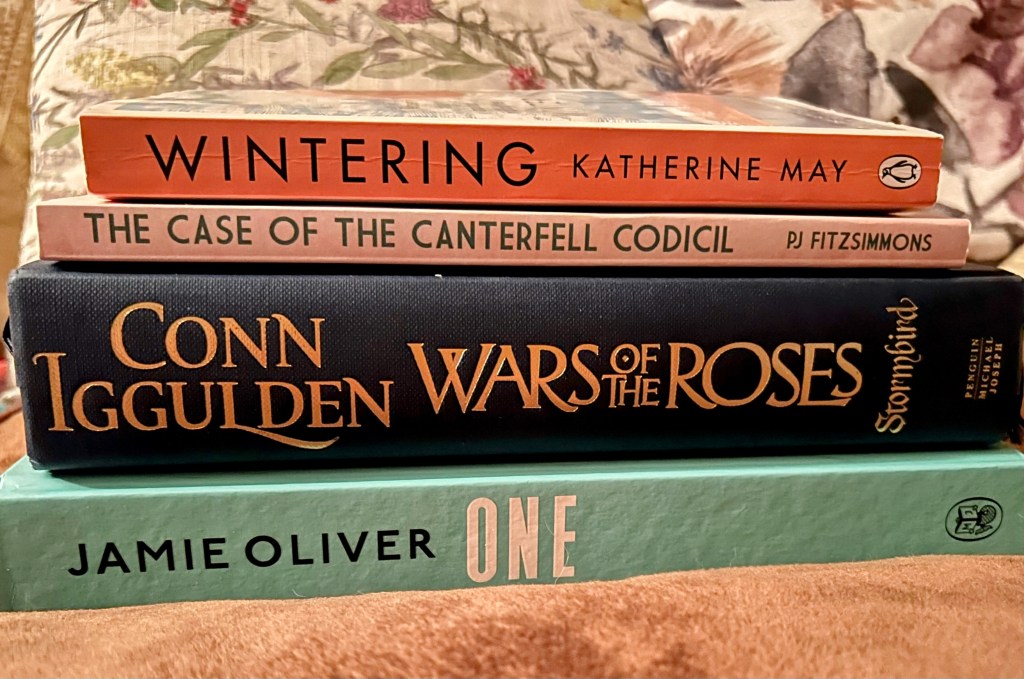
I’ve always loved books and whenever anyone asked me what I’d like for my birthday or Christmas the answer was always ‘books, please’ . So l was delighted this last Christmas to receive four books!
Two of them are books that were on my wish list and the other two were complete surprises.
I’ve got some of Jamie’s books, and this one looks like a good addition. In his introduction he writes ‘With a twinkle in my eye I want to position this book as one that is absolutely dedicated to the art of minimal washing up – you cook each recipe in just one pan or tray … it’s about making your life easier.’ I like the idea of minimal washing up and will be cooking quite a lot of these recipes.
It has over 120 recipes for tasty, fuss-free and satisfying dishes cooked in just one pan. What’s better: each recipe has just eight ingredients or fewer, meaning minimal prep (and washing up) and offering maximum convenience. With chapters including Veggie Delights, Celebrating Chicken, Frying Pan Pasta, Batch Cooking, Puds & Cakes, it all looks simply delicious.
Historical fiction has long been a great favourite of mine. I absolutely loved Sharon Penman’s The Sunne in Splendour that made me want to know more about the Wars of the Roses.So, when I found Iggulden had written a trilogy about the civil war I was keen to read it. I’ve read some of Iggulden’s other historical fiction novels and loved them, so I’m looking forward to reading this.
King Henry V – the great Lion of England – is long dead. In 1437, after years of regency, the pious and gentle Henry VI, the Lamb, comes of age and accedes to the English throne. His poor health and frailty of mind render him a weakling king -Henry depends on his closest men, Spymaster Derry Brewer and William de la Pole, Duke of Suffolk, to run his kingdom.
Yet there are those, such as the Plantagenet Richard, Duke of York, who believe England must be led by a strong king if she is to survive. With England’s territories in France under threat, and rumours of revolt at home, fears grow that Henry and his advisers will see the country slide into ruin. With a secret deal struck for Henry to marry a young French noblewoman, Margaret of Anjou, those fears become all too real.
As storm clouds gather over England, King Henry and his supporters find themselves besieged abroad and at home. Who, or what can save the kingdom before it is too late?
The Case of the Canterfell Codicil (Anty Boisjoly Mysteries Book 1) by PJ Fitzsimmons (not on my wish list). This was a complete surprise for me as I don’t know anything about this book, or the author. It’ll be good reading a new-to-me author and I do like locked room mysteries.
1920s gadabout Anty Boisjoly takes on his first case when his Oxford chum is facing the gallows, accused of the murder of his wealthy uncle.
Not one but two locked-room murders later, Boisjoly’s pitting his wits and witticisms against a subversive butler, a senile footman, a single-minded detective-inspector, an errant goat, and the eccentric conventions of the pastoral Sussex countryside to untangle a multi-layered mystery of secret bequests, ancient writs, love triangles, revenge, and a teasing twist in the final paragraph.
The Case of the Canterfell Codicil is a classic, cosy, locked-room mystery with an improbable plot inspired by Agatha Christie and prose in the style of an homage to PG Wodehouse.
Wintering: The power of rest and retreat in difficult times by Katherine May (a surprise, not on my wish list). It’s a memoir covering quite a wide range of topics, not just about winter, or rest and retreat. I’ve seen this book is one people either praise it or criticise it, so I’m keen to know what I think of it.
Wintering is a poignant and comforting meditation on the fallow periods of life, times when we must retreat to care for and repair ourselves. Katherine May thoughtfully shows us how to come through these times with the wisdom of knowing that, like the seasons, our winters and summers are the ebb and flow of life.
A moving personal narrative interwoven with lessons from literature, mythology and the natural world, May’s story offers instruction on the transformative power of rest and retreat. Illumination emerges from many sources: solstice celebrations and dormice hibernation, C.S. Lewis and Sylvia Plath, swimming in icy waters and sailing arctic seas.
Ultimately, Wintering invites us to change how we relate to our own fallow times. May models an active acceptance of sadness and finds nourishment in deep retreat, joy in the hushed beauty of winter, and encouragement in understanding life as cyclical, not linear. A secular mystic, May forms a guiding philosophy for transforming the hardships that arise before the ushering in of a new season.
The Stars Look Down by A.J. Cronin, a family saga chronicling the lives of a number of interconnected families over a period of thirty years.
The story starts in 1903 in a North Country mining town, Sleescale, a fictional town, as its inhabitants experienced social and political upheaval. It ends in 1933. It highlights the terrible conditions in the coal mines, the lack of workers’ rights and the need for change in the relationship between the coal miners and the mine owners.
It’s a long book, but I read it quickly, completely absorbed in all the sub plots and keen to know how it would all be resolved. There is plenty of drama, with scenes including a flood in the pit, killing one hundred and five miners, including David’s father and brother. Cronin’s descriptive writing is so strong, conveying the terrible conditions in the pit, as the miners find themselves trapped and slowly realise there is no way out. Those scenes in particular made a big impression on me and will stay with me for quite some time.
I Let You Go by Clare Mackintosh, a powerful novel that kept me glued to its pages;
It is set partly in Bristol, England where Jacob is killed, and then moves into a small coastal village in Wales where Jenna is trying to make a new life for herself. It’s heart-wrenching reading as Jenna tries to put the past behind her and at times I thought this was a romantic novel. But it’s not, as it becomes clear that there are secrets in her past that haunt her. It’s almost a book of two parts and the second half is dark and violent, full of suspense and menace, and really shocking twists and turns. The characters are fully rounded, extremely well-drawn and realistic. The settings are vividly described, especially of the beautiful Welsh coast line. I could picture it so well and it made me long to be there.
The Tree of Hands by Ruth Rendell, one of her best standalone books.
Why I enjoyed it so much is that it thoroughly gripped me and made me want to read on and on. It’s a psychological thriller, full of suspense, with several twists and turns that made me unsure how it would end. I was delighted by the final twist!
Benet’s son, James aged four dies from croup whilst in hospital soon after Mopsa, her mother with a history of mental illness, comes to visit. Meanwhile Carol, a young widow with three kids, two of them in care, is living nearby with Barry, her younger boyfriend. He adores her but she doesn’t want to marry him, content for him to do all the housework and look after Jason her two year old son when he is not being looked after by babysitters. The trouble starts when Mopsa kidnaps Jason and brings him back to Benet as a replacement for James.
The Silence Between Breaths by Cath Staincliffe, about a group of people on the 10.35 train from Manchester Piccadilly to London Euston. It’s a story of a routine journey that takes a terrifying turn. You know early on both from the description on Amazon and from the back cover that one of the passengers, Saheel, has a ‘deadly secret’ ie a bomb, in his rucksack. So, the tension is there from the beginning of the book and I was wondering when he was going to the let off the bomb and what would happen to the passengers.
The characterisation is superb, so that I cared about each person, the setting is so well described in such detail that it all happened before my eyes and the drama and tension grew as the events played out. One of the standout books that I’ve read this year.
There is a lot to like in this book. The setting is Tarnfield, a fictional Cumbrian village. The setting is described so well that I could ‘see’ it all. It’s picturesque, quiet and secluded, a place where everyone knows everybody’s business. The church plays a huge part in village life, but traditions are being upended by the new vicar and his fondness for playing the guitar during sermons.
And the characters are so ‘real’. I believed in them and even though there are many of them they’re all easily distinguishable and I loved the biblical references and flower clues – they’re intriguing. The plot too kept me keen to carry on reading, wanting to know the identity of the murderer.
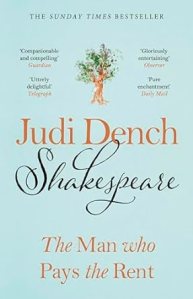
Reading it is like being in the room with Dame Judi Dench and Brendan O’Hea as they talked about Judi’s career, her love for Shakespeare, and the numerous roles she has played over the years. Shakespeare to Judi Dench is a passionate affair, she talks about it with love.
This book is a wonderful run through the plays told from Judi’s perspective and, of course, her life, giving her insight not only into the characters but also into the world of the theatre. She talks about the rehearsals, the costumes, the sets, other actors, about critics, Shakespeare’s language – similes and metaphors, the use of rhyme, prose and verse, soliloquies, asides and how to adjust your breathing – and so on. Whatever she is talking about is all so clear and relevant, full of wit and humour and understanding.
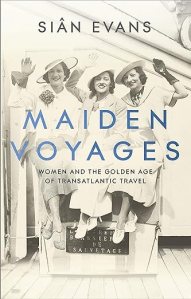
Maiden Voyages by Sian Evans, a fascinating portrait of the women, and their lives on board magnificent ocean liners as they sailed between the old and the new worlds.
It covers a wide range of topics that fascinate me – not just travel, but also social history, both World Wars, the sinking of the Titanic, emigration, the impact that the ocean liners had on the economy. and on women’s working lives and independence, adventure and so much more besides.
The ocean liner was a microcosm of contemporary society, divided by class: from the luxury of the upper deck, playground for the rich and famous, to the cramped conditions of steerage or third class travel. These iconic liners were filled with women of all ages, classes and backgrounds: celebrities and refugees, migrants and millionairesses, aristocrats and crew members.
Great Meadow by Dirk Bogarde, first published in 1992, is volume five of Bogarde’s best-selling memoirs.
A recollection of his childhood, from 1927 to 1934 when he was a 19 year old, living in a remote cottage in the Sussex Downs with his sister Elizabeth and their strict but loving nanny, Lally. For the children it was an idyllic time of joy and adventure: of gleaning at the end of summer, of oil lamps and wells, of harvests and harvest mice in the Great Meadow.
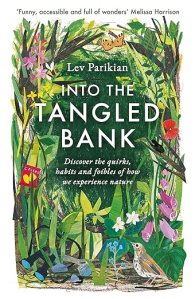
This is non fiction about nature. It’s easy reading, Parikian writes with humour, in a chatty style, but also richly descriptive. I loved it, it is compulsive reading. He is a storyteller, so there are lots of anecdotes and stories, plus his thoughts on nature and how we view it. Amongst many other topics he ponders about the ethics of zoos – something that puzzles me too – and wonders if the definition of a nature lover is becoming that of one who loves nature programmes. There’s a lot packed into this book.
Michael Rosen has grieved the loss of a child, lived with debilitating chronic illness, and faced death itself when seriously unwell in hospital with Covid. In spite of this he has survived, and has even learned to find joy in life in the aftermath of tragedy. In Getting Better, he shares his story and the lessons he has learned along the way. Exploring the roles that trauma and grief have played in his own life, Michael investigates the road to recovery, asking how we can find it within ourselves to live well again after – or even during – the darkest times of our lives. Moving and insightful, this is a wonderful book.
Spell the Month in Books is a linkup hosted by Jana on Reviews From the Stacks on the first Saturday of each month. The goal is to spell the current month with the first letter of book titles, excluding articles such as ‘the’ and ‘a’ as needed. That’s all there is to it! Some months there are optional theme challenges, such as “books with an orange cover” or books of a particular genre, but for the most part, any book you want to use is fair game!
The optional theme this month isChristmas or Nonfiction and I’ve chosen the Nonfiction option as I don’t read many Christmas-related books. The descriptions are taken from my posts on the books, where they exist.
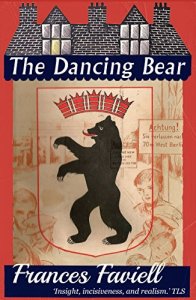
D is for The Dancing Bear by Frances Faviell, the pen name of Olivia Faviell Lucas, painter and author.
After the war, in 1946, she went with her young son, John, to Berlin where Richard Parker, her second husband, had been posted as a senior civil servant in the post-war British Administration. It was here that she befriended the Altmann family, which prompted her first book The Dancing Bear (1954), a memoir of the Occupation seen through the eyes of both occupier and occupied.It covers the years from Autumn 1946 to Autumn 1949, with an Epilogue dated Autumn 1953. Her memoir is mainly about her friendship with the Altmann family – Frau Maria Altmann, her husband, Oskar and her children, Ursula, who works for a group of American service men, Lilli, a ballet dancer and son, Fritz, who was a member of the Hitler Youth and is now involved in the Black Market. Their eldest son. Kurt. is missing in Russia. Berlin had been divided into four sectors by the Allies – Britain, the United States, France and the Soviet Union – and Frances is horrified by the conditions she found. There were deaths from hunger and cold as the winter approached and queues for bread, milk, cigarettes, cinemas, buses and trams.
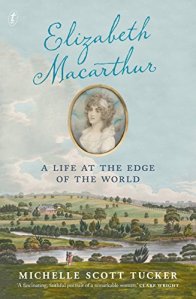
This is an extremely readable biography of a fascinating woman. It’s well researched and provides an insight into the early years of Australia’s colonial history. Elizabeth was born on 14 August 1766 in Devon, England and she married JohnMacarthur in October 1788. In June 1789 they sailed with their first child, Edward, to New South Wales where John joined his regiment, the New South Wales Corps, in the recently established colony of New South Wales.
For sixty years, Elizabeth ran the family farm in Parramatta, west of Sydney town – on her own during her husband’s long absences abroad, when she was responsible for the care of their valuable merino flocks, as well as the Camden Park estate and the direction of its convict labourers. By the time Macarthur came back from his second absence, he was overwhelmed by mental illness, and they spent the last few years of his life apart. He died in 1834. The house and gardens of her farm, aptly named ‘Elizabeth Farm’ is now an ‘access all areas’ museum. In 1850, she died in her daughter and son-in-law’s house at Watson’s Bay outside Sydney, overlooking the Pacific Ocean.
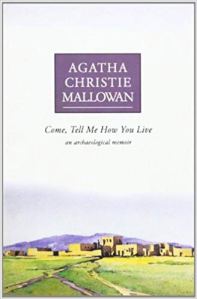
Agatha Christie had visited the Middle East in 1929 travelling on the Orient Express to Istanbul and then on to Damascus and Baghdad. She visited the excavations at Ur and returned there the following spring where she met archaeologist Max Mallowan – by the end of the summer they had decided to marry, which they did on 11 September 1930.
It’s her memoir in answer to her friends’ questions about what life was like when she accompanied Max on his excavations in Syria and Iraq in the 1930s. The emphasis in the book is on the everyday life on a dig and Agatha took an active part, helping to catalogue, label and clean the items they found as well as taking photographs and developing them. She also found time to spend on writing her books. So, although she gives a detailed account of how they worked, how they employed workmen for the excavations and servants who looked after Max and his team of archaeologists, there is not much about what they found.
She described the local people in her Epilogue as people, who know how to laugh and how to enjoy life, who are idle and gay, and who have dignity, good manners, and a great sense of humour, she also recorded their disputes: ‘Quarrelling is, in any case, almost continuous.‘ And ‘Syria is full of fiercely fanatical sects of all kinds, all willing to cut each other’s throats for the good cause! ‘
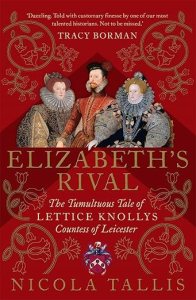
Cousin to Elizabeth I – and very likely also Henry VIII’s illegitimate granddaughter – Lettice Knollys had a life of dizzying highs and pitiful lows. Darling of the court, entangled in a love triangle with Robert Dudley and Elizabeth I, banished from court, plagued by scandals of affairs and murder, embroiled in treason, Lettice would go on to lose a husband and beloved son to the executioner’s axe. Living to the astonishing age of ninety-one, Lettice’s tale gives us a remarkable, personal lens on to the grand sweep of the Tudor Age, with those closest to her often at the heart of the events that defined it.
In the first ever biography of this extraordinary woman, Nicola Tallis’s dramatic narrative takes us through those events, including the religious turmoil, plots and intrigues of Mary, Queen of Scots, attempted coups, and bloody Irish conflicts, among others. Surviving well into the reign of Charles I, Lettice truly was the last of the great Elizabethans. (Amazon UK)
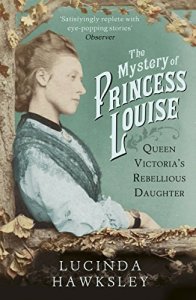
Princess Louise was Victoria’s sixth child – her fourth daughter, born on 18th March 1848. It was an agonising and terrifying birth in a year of revolution and rebellion, a time when royal families throughout Europe were being deposed and in Britain the working classes were agitating for higher pay, better working conditions and more legal rights. There is so much detail about her life in this book, packed with intrigues, scandals and secrets.
She had a difficult childhood, disliked and bullied by her mother and she often rebelled against the restrictions of life as a princess. She had an unhappy marriage to John Campbell, the Marquess of Lorne, later the 9th Duke of Argyll, a homosexual, and went with him to Canada in 1882 when he was appointed as Governor-General. Her relationship with Canada became a love-hate one, but began and ended with Canadian adoration.
The scandals arose about whether she had had an illegitimate child and her long term love affair with the sculptor Joseph Boehm. The mystery is still unresolved as Louise’s files in the Royal Archives are closed and her husband’s family archives are inaccessible.
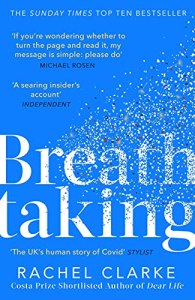
B is for Breathtaking by Rachel Clarke, a palliative care doctor.
Her book recounts her experiences during the first four months of 2020, when she worked on the Covid-19 wards in the Oxford University Hospitals system. Taken from her diary that she kept at the time it has an immediacy as she records her insomnia, her fears for her family and also the tremendous resilience, courage and empathy that she and the rest of the hospital staff had. Although it is a grim account, it is also uplifting to know the care they took of their patients and the attentiveness to their patients’ needs despite the fact that many of the staff were not trained in intensive care and had never dealt with anything like this before. Breathtaking records the compassion and kindness of numerous people, and pays tribute to both NHS staff and volunteers in dealing with such a distressing and immensely horrific situation.
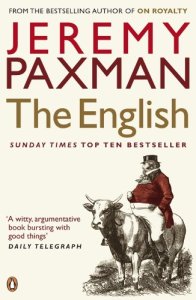
I like Paxman’s style of writing, I could almost hear him speaking as I read. He’s a person who has grown on me over the years and lately I’ve enjoyed his TV documentaries too. It’s always been entertaining to watch his interviews, even if I didn’t agree with his views – or his aggressive approach. It’s toned down in this book, but every now and then his acerbic nature comes across. He writes about food, sport, football hooligans, language, individualism, education, religion, ‘John Bull’, cities and the countryside – the English idyllic village, class structure and social tone, attitudes to women, business and trade to name but a few topics. It’s well researched and very readable, with a bibliography listing all the books he mentions plus others that presumably he has used. It seems there really is no such thing as ‘the English’ – we’re a mixture of all sorts, or as Paxman puts it, The English are a mongrel race‘. (page 59)
This is the story of a house and those who peopled it between the years 1930 and 1960. In 1930 Maxine Elliott, an American, commissioned the architect Barry Dierks to build the Chateau de l’Horizon on the land she had bought on a narrow stretch of rocks with a small promontory between Cannes and Juan-les-Pins. This is the part of the book I enjoyed the most, first of all about Maxine herself, then the description of the construction of the Chateaux and the years that Maxine owned it and lived there. Maxine really came into her own there as a superb hostess. Regular visitors included Winston Churchill, Cole Porter, Noel Coward, Somerset Maugham among many others – famous actors and actresses as well as members of the aristocracy and politicians.
The Duke and Duchess of Windsor, who lived nearby before the Second World War, were also visitors. The picture painted of them is not flattering – and there was much talk about how to address Wallis and whether the women should curtsy to her. By the time the War approached Maxine had lost her sparkle, suffering from ill health and she died in March 1940.
The Chateau was bought by Aly Khan, the Aga Khan’s heir presumptive at the time. There is quite a lot about his time there, his womanising, his marriage to Rita Hayworth and the social scene of the post-war period up to 1960. It is a fascinating and entertaining book about a pampered, luxurious and decadent world.
The next link up will be on January 4, 2025 when the theme will be: New; this could be new-to-you books, new additions to your TBR list, recently published books, or something else that you connect with the word ‘New’.
Top 5 Tuesday was created by Shanah at Bionic Book Worm, and it is now being hosted by Meeghan at Meeghan Reads. For details of all of the latest prompts for October to December, see Meeghan’s post here.
Today the topic is Book Covers: What are some of your favourite covers that you have seen this year? Maybe these were reprints, redesigns or alternate covers that came out this year, or maybe they are brand new books!!
These are books I’ve read this year – one new and the rest books that were on my TBR shelves. I love them for their combination of colours, and the scenery.
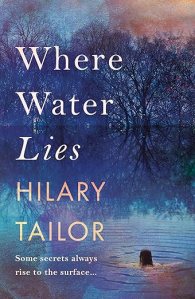
Where Water Lies by Hilary Tailor – her second novel published in June this year.
Every morning is the same for Eliza: she swims in Hampstead Ponds, diving into her memories, reliving the heady days of her teenage friendship with Eric and Maggie. The obsession, the adoration, and the sense of belonging she always craved was perfect, until everything was destroyed in a single afternoon. With guilt never far from the surface, she still asks herself: what really happened that day?
Then one morning, on a street corner, the past collides with the present. Eliza is now a respected member of the community and the carefully constructed life she has built comes crashing down. Should she track down the one person who may be able to forgive her? Or should she keep the past where it belongs?
Soon Eliza begins to wonder: will learning the truth set her free – or will it only drag her down deeper?
From the renowned author of Possession, The Children’s Book is the story of the close of what has been called the Edwardian summer: the deceptively languid, blissful period that ended with the cataclysmic destruction of World War I. In this compelling novel, A.S. Byatt summons up a whole era, revealing that beneath its golden surface lay tensions that would explode into war, revolution and unbelievable change — for the generation that came of age before 1914 and, most of all, for their children.
Famous author Olive Wellwood writes a special private book, bound in different colours, for each of her children. In their rambling house near Romney Marsh they play in a story-book world – but their lives, and those of their rich cousins and their friends, the son and daughter of a curator at the new Victoria and Albert Museum, are already inscribed with mystery. Each family carries its own secrets.
They grow up in the golden summers of Edwardian times, but as the sons rebel against their parents and the girls dream of independent futures, they are unaware that in the darkness ahead they will be betrayed unintentionally by the adults who love them.
This is non fiction about nature. It’s easy reading, Parikian writes with humour, in a chatty style, but also richly descriptive. I loved it, it is compulsive reading. He is a storyteller, so there are lots of anecdotes and stories, plus his thoughts on nature and how we view it. Amongst many other topics he ponders about the ethics of zoos – something that puzzles me too – and wonders if the definition of a nature lover is becoming that of one who loves nature programmes. There’s a lot packed into this book.
Great Meadow by Dirk Bogarde, first published in 1992, Great Meadow is volume five of Bogarde’s best-selling memoirs.
A recollection of his childhood, from 1927 to 1934 when he was a 19 year old, living in a remote cottage in the Sussex Downs with his sister Elizabeth and their strict but loving nanny, Lally. For the children it was an idyllic time of joy and adventure: of gleaning at the end of summer, of oil lamps and wells, of harvests and harvest mice in the Great Meadow.
With great sensitivity and poignancy, this memoir captures the sounds and scents, the love and gentleness that surrounded the young boy as the outside world prepared to go to war.
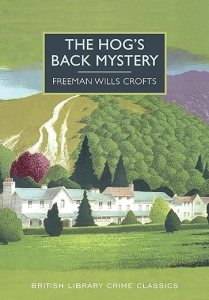
This is a British Library Crime Classic, first published in 1933, during the Golden Age of detective fiction between the two world wars. Dr James Earle and his wife live near the Hog’s Back, a ridge in the North Downs in the beautiful Surrey countryside. When Dr Earle disappears from his cottage, Inspector French of Scotland Yard is called in to investigate. At first he suspects a simple domestic intrigue – and then begins to uncover a web of romantic entanglements beneath the couple’s peaceful rural life.
Top 5 Tuesday was created by Shanah at Bionic Book Worm, and it is now being hosted by Meeghan at Meeghan Reads. For details of all of the latest prompts for October to December, see Meeghan’s post here.
Today the topic is Books I meant to read in 2024. There are so many books I would have loved to read this year but haven’t – yet. These five are nonfiction, because I mainly read fiction and forget to look at my nonfiction TBRs.
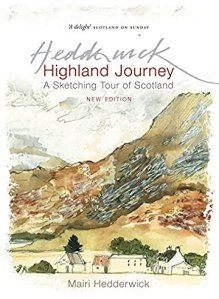
In Highland Journey Mairi Hedderwick retraces the steps of an obscure Victorian artist, John T. Reid, who made a sketching tour around Scotland in 1876. Hedderwick, a witty and immensely readable author of children’s books, achieves so much more than simply following in Reid’s footsteps; wonderfully realised, her quest becomes obsessional at times as she struggles to understand her mentor and guide with whom she shares a passion to conserve Scotland’s wild places and record them faithfully with exquisite illustration and insightful comment. I love her paintings.
Mecklenburgh Square, on the radical fringes of interwar Bloomsbury, was home to activists, experimenters and revolutionaries; among them were the modernist poet H. D., detective novelist Dorothy L. Sayers, classicist Jane Harrison, economic historian Eileen Power, and writer and publisher Virginia Woolf. They each alighted there seeking a space where they could live, love and, above all, work independently.
Francesca Wade’s spellbinding group biography explores how these trailblazing women pushed the boundaries of literature, scholarship, and social norms, forging careers that would have been impossible without these rooms of their own.
Hannah shares difficult moments along her foodie journey, such as when her joy for food is dimmed by an eating disorder. She also opens up about her struggle to start a family in an industry that takes her around the world and into the lives of people worldwide who help bring food to our tables. Their personal stories of love, discovery, and passion for food as a means of nourishing and connecting us all is a reminder that we’re all on the same journey.
Plenty is a love letter to the enterprising farmers, vintners, cheesemakers, baristas, and food people everywhere who have felt a calling to this community. Bon appétit!
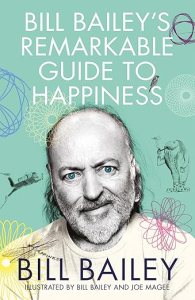
Comedian, musician & Strictly Come Dancing winner Bill Bailey brings a welcome breath of fresh air to our troubled times. Bailey admits he doesn’t have the key to happiness, but in this book he does suggest plenty of ways to help you on the way. He covers topics as wide ranging as art, singing & playing crazy golf. The chapter in which he discusses a visit to an American zoo is hysterical, especially when he describes how difficult it is to refuse someone trying to give him something free when he buys his lunch. Bill Bailey may not have the answer to happiness, but his book certainly made me laugh.
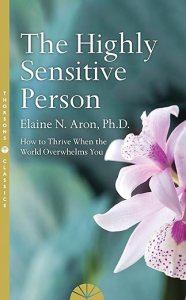
Do you have a keen imagination and vivid dreams? Is time alone each day as essential to you as food and water? Are you “too shy” or “too sensitive” according to others? Do noise and confusion quickly overwhelm you? If your answers are yes, you may be a Highly Sensitive Person (HSP).
Most of us feel overstimulated every once in a while, but for the HSP, it’s a way of life. In this groundbreaking book, Dr. Elaine Aron, a clinical psychologist, workshop leader, and an HSP herself, shows you how to identify this trait in yourself and make the most of it in everyday situations. Drawing on her many years of research and hundreds of interviews, she shows how you can better understand yourself and your trait to create a fuller, richer life.
Throughout the month of November, bloggers Liz, Frances, Heather, Rebekah and Deb invite you to celebrate Nonfiction November with us.
Week 5 (11/25-11/29) New To My TBR: It’s been a month full of amazing nonfiction books! Which ones have made it onto your TBR? Be sure to link back to the original blogger who posted about that book! (Deb)
I’ve thoroughly enjoyed taking part in Nonfiction November and there are so many fascinating books I could easily add to my TBR list. But I know my limitations, so these are my choices. I’ve listed them in A – Z title order:
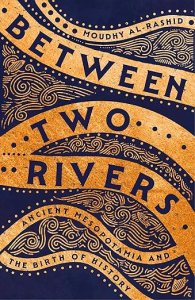
Between Two Rivers: Ancient Mesopotamia and the Birth of History by Moudhy Al-Rashid from Stephanie @ Bookfever. Thousands of years ago, in a part of the world we now call ancient Mesopotamia, people began writing things down for the very first time. Historian Dr Moudhy Al-Rashid brings us closer to this ancient past and the lives of the people who lived in this extraordinary society.
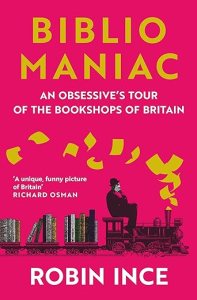
Bibliomaniac: An Obsessive’s Tour of the Bookshops of Britain by Robin Ince – from Liz @ Adventures in Reading, Running and Working from Home. In Autumn 2021, Robin Ince’s stadium tour with Professor Brian Cox was postponed due to the pandemic. Rather than do nothing, he decided he would instead go on a tour of over a hundred bookshops, from Wigtown to Penzance; from Swansea to Margate. Packed with witty anecdotes and tall tales, Bibliomaniac takes the reader on a journey across Britain as Robin explores his lifelong love of bookshops and books – and also tries to find out just why he can never have enough of them.
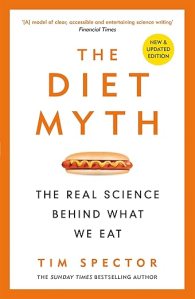
The Diet Mythby Tim Spector – from Annabel @ Annabookbel. Professor Tim Spector demystifies the common misconceptions about fat, calories, vitamins and nutrients. Only by understanding what makes our own personal microbes tick can we overcome the confusion of modern nutrition, and achieve a healthy gut and a healthy body.
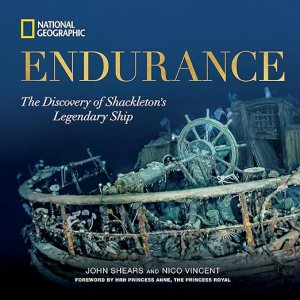
Endurance: The Discovery of Shackleton’s Legendary Ship by John Shears & Nico Vincent – from Stephanie @ Bookfever. In March 2022, an international polar expedition team made an astonishing find: the wreck of Ernest Shackleton’s legendary Endurance, lost in 1915 after being crushed by ice and then swallowed by the Weddell Sea. The harrowing story of Shackleton’s survival and rescue of all 27 men aboard is well known, but the ship has lain unseen for a century, 10,000 feet underwater—until now. The vessel remains incredibly intact, as crystal-clear photography and digital scans from the expedition reveal.
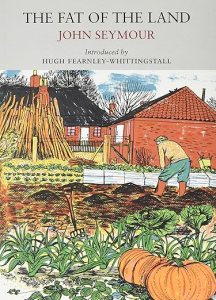
The Fat of the Land by John Seymour – from Liz @ Adventures in Reading, Running and Working from Home. I have The Complete Book of Self Sufficiency by John Seymour, a pioneer of self-sufficiency, first published in 1976, a handbook to living off the land. Years earlier, Seymour had written and published The Fat of the Land, telling of how he and his family settled in Suffolk and began a life entirely separate from the modern world. This new edition comes complete with Sally Seymour’s original illustrations, a foreword by Anne Seymour and a new introduction by Hugh Fearnley-Whittingstall.
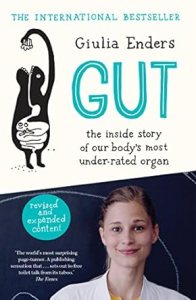
Gut by Gloria Enders – from Annabel @Annabookbel. For too long, the gut has been the body’s most ignored and least appreciated organ, but it turns out that it’s responsible for more than just dirty work: our gut is at the core of who we are. Gut, an international bestseller, gives the alimentary canal its long-overdue moment in the spotlight. Giulia Enders explains the gut’s magic, answering questions like: Why does acid reflux happen? What’s really up with gluten and lactose intolerance? How does the gut affect obesity and mood? Communication between the gut and the brain is one of the fastest-growing areas of medical research—on par with stem-cell research. Our gut reactions, we learn, are intimately connected with our physical and mental well-being.
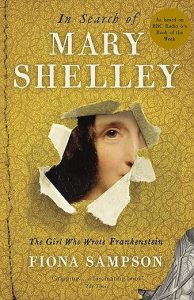
In Search of Mary Shelley: The Girl Who Wrote Frankenstein by Fiona Sampson. From Frances @ Volatine Rune. Fiona Sampson sifts through letters, diaries and records to find the real Mary Shelley. She uncovers a complex, generous character – friend, intellectual, lover and mother – trying to fulfil her own passionate commitment to writing at a time when to be a woman writer was an extraordinary and costly anomaly. Published for the 200th anniversary of the publication of Frankenstein, this is a major new work of biography by a prize-winning writer and poet.
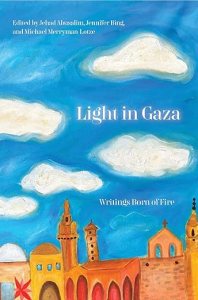
Light in Gaza: Writings Born of Fire, edited by Jehad Abusalim, Jennifer Bing, and Mike Merryman-Lotze – From Rebekah @ She Seeks Nonfiction. This is a moving and wide-ranging anthology of Palestinian writers and artists. It constitutes a collective effort to organize and center Palestinian voices in the ongoing struggle and imagines what the future of Gaza could be, while reaffirming the critical role of Gaza in Palestinian identity, history, and struggle for liberation.
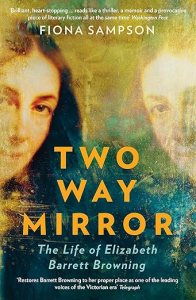
Two Way Mirror: The Life of Elizabeth Barrett Browningby Fiona Sampson. From Frances @ Volatine Rune. This vividly written biography, incorporates recent archival discoveries to reveal the woman herself: a literary giant and a high-profile activist for the abolition of slavery who believed herself to be of mixed heritage; and a writer who defied chronic illness and long-term disability to change the course of cultural history. It holds up a mirror to the woman, her art – and the art of biography itself.