Book Beginnings on Friday

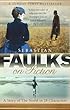
This morning I finished reading Faulks on Fiction by Sebastian Faulks, a book I’ve been reading slowly for a few weeks (my review coming soon). It’s time to choose another non-fiction book to take its place. It’s got to be a book I can read in small bites and not lose the thread, maybe a biography/autobiography, or a diary, collection of letters, or a history book.

I’ve looked at a few and have decided on this one:

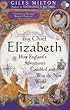
The half-timbered mansion disappeared long ago, and the paved thoroughfare lies buried beneath the dust of centuries. The Great Fire tore the heart out of this corner of Elizabethan London, devouring books, buildings and streets. One of the few things that survived is a small and insignificant-looking map – crinkled, faded, but still bearing the proud name of its owner. (page 1)

This is the beginning of Giles Milton’s about the first English settlement in the New World in the sixteenth century. It’s Big Chief Elizabeth: how England’s Adventurers gambled and won the New World. I’ve read his earlier book Nathaniel’s Nutmeg, which is a fascinating tale of the ‘competition between England and Holland for possession of the spice- producing islands of South-East Asia throughout the 17th century.’

I like the beginning of Big Chief Elizabeth, which within a few words captures the mystery and appeal of history for me. I’m looking forward to discovering more about the map and its owner.

Blurb from the back cover:

Big Chief Elizabeth has it all: gallant English seadogs, coiffured courtiers, exotic locations and lots of fights with pirates, Spaniards and Indians. (Sunday Telegraph)

Plus I’m interested to read Giles Milton’s newest book, Wolfram: the Boy who Went to War.

Book Beginnings on Friday is hosted by Katy at A Few More Pages.

Saturday Snapshots – Great Hetha Walk

We’ve been having a mix of weather recently what with wet days, windy days, dull grey days and a few beautiful sunny days. Wednesday was one of the days when the sun shone the sky was blue and it even felt a bit spring-like. So that afternoon Dave and I decided it was time we took a walk in the Cheviot Hills.

We’ve lived just north of the Cheviots for nearly two years now and have been saying ever since we arrived that we must go walking in the hills. I don’t know how many hills there are that form the range, but there are many of these rounded hills bisected by valleys. They straddle the border between England and Scotland, that area of land fought over in the past, a land where the Border Reivers held sway. The Cheviot, itself is the highest point at 815 metres and the last major peak in England, but we decided to start small with Great Hetha above College Valley and work up to walking the Marilyns.

The photo above shows the view at the start of our walk with Great Hetha on the skyline. It’s 210 metres at the summit where there are the remains of an ancient hillfort. We parked in the car park just south of Hethpool and the walk began easily enough along the private road through the Valley. The photo below shows the Valley looking south:

After a short distance and turning right it’s a steep uphill climb described in Walks in the Cheviot Hills by David Haffey as a ‘strenuous climb‘! I was soon struggling for breath. We stopped halfway up to look at the view northwards to Scotland (and to get our breath back!).

Looking up at that point we could see a small cairn on the summit, still a steep climb ahead.

It was worth the climb to reach the hillfort. This is an Iron Age hillfort dating from about 500BC. The remains of the stone ramparts are still there and it was easy to imagine what it must have been like in such an isolated place, being able to see for miles around, aware of any approach to the hill. According to the Walks guidebook such hillforts would have contained several timber-built round-houses within the stone ramparts, probably being occupied for several centuries.

From there we left the route in the guidebook and walked down the other side of the hill to the valley below and crossed the Elsdon Burn. The sky was most dramatic:

It was getting towards the end of the afternoon and as we headed back to the car, the sheep were being rounded up in the field, below a wooded dome-shaped hill known locally as the Collingwood Oaks (after Admiral Lord Collingwood – there is a hotel in Cornhill called the Collingwood Arms, more about that another time maybe). I wasn’t quick enough to take a photo of the running sheep (they were galloping!) but I managed to snap the farmer and his three sheepdogs on their way back, with the Collingwood Oaks in the background.

There are more photos of our walk on Flickr.

Saturday Snapshot is hosted by Alyce, At Home With Books.

Operation Mincemeat by Ben Macintyre: a Book Review

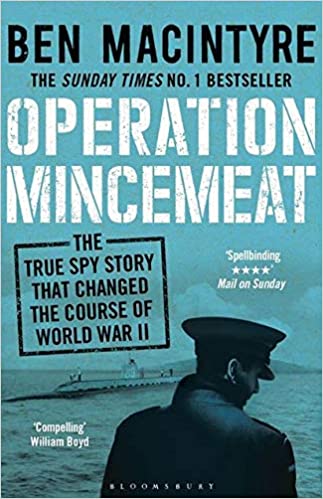
Subtitled The True Spy Story that Changed the Course of World War II, Operation Mincemeat is about the Allies’ deception plan codenamed Operation Mincemeat in 1943, which underpinned the invasion of Sicily. It was framed around a man who never was.

The success of the Sicilian invasion depended on overwhelming strength, logistics, secrecy and surprise. But it also relied on a wide web of deception, and one deceit in particular: a spectacular con trick dreamed up by a team of spies led by an English lawyer. (page xi)

At first I found this book a little confusing and far too detailed, but as I read on I became absolutely fascinated and amazed at what had actually happened. The plan was to take a dead body, equipped with false documents, deposit it on a beach in Spain, so that it would be passed over to the Germans and divert them from the real target into believing that the preparations to invade Sicily were a bluff.

Operation Mincemeat would feed them both a false real plan, and a false cover plan – which would actually be the real plan (page 58)

The corpse was a Welsh tramp who had committed suicide. His body was clothed in the uniform of an Royal Marine with documents identifying him as Major William Martin and letters about the top-secret Allied invasion plans. This involved creating a fictional character, a whole host of imaginary agents and sub-agents all with their own characteristics and imaginary lives – just as in a novel. The details of the deception were dreamt up by Ewan Montagu, a barrister and Charles Cholmondeley (pronounced Chumley), a flight-lieutenant in the RAF seconded to MI5, the Security Service. Both were enthusiastic readers, which stood them in good stead:

For the task of the spy is not so very different from that of the novellist: to create an imaginary credible world, and then to lure others into it, by words and artifice. (page 62)

The plan was not without its faults and and indeed it contained some potentially fatal flaws, but incredibly it succeeded.

Operation Mincemeat was pure make-believe; and it made Hitler believe something that changed the course of history. (page 307)

This is a book, totally outside my usual range of reading. I wasn’t expecting to enjoy it as much as I did and I think I did enjoy it because it was so far-fetched to be almost like reading a fictional spy story. I marvelled at the ingenuity of the minds of the plans’ originators and the daring it took to carry it out.

H is for Hardy

Thomas Hardy 001 (2018_05_20 15_18_26 UTC)

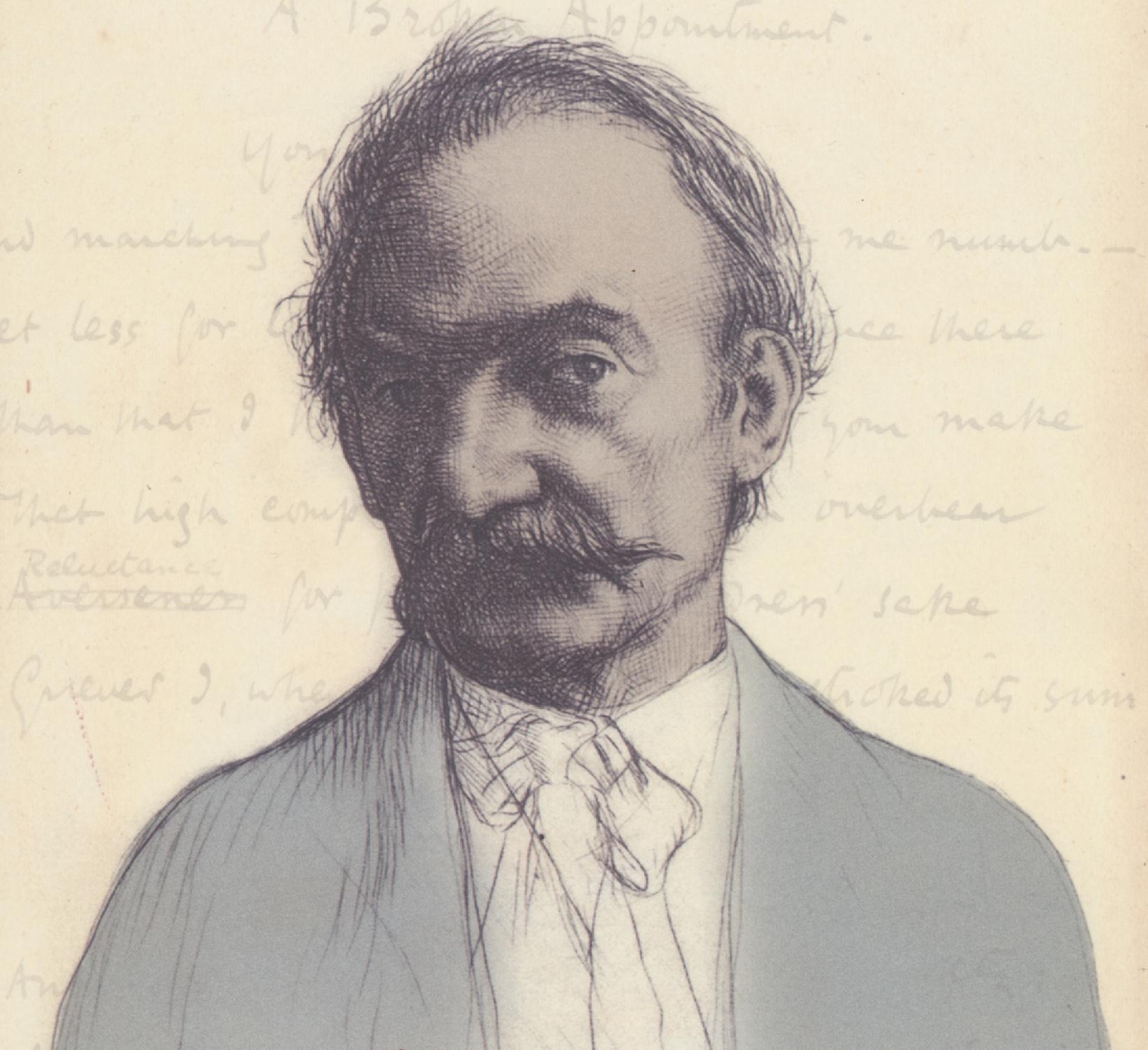
Thomas Hardy is one of my favourite authors. He was born in 1840 at Upper Bockhampton near Dorchester. What I love most about Hardy’s books are his lyrical descriptions of nature and the countryside and all his books show his great love and knowledge of the countryside in all its aspects. They also show his almost pagan sense of fate and the struggle between man and an omnipotent and indifferent fate. Hardy was a pessimist – man’s fate is inevitable, affected by chance and coincidence. It cannot be changed, only accepted with dignity. This is illustrated in his poem – Hap, written in 1866:

If but some vengeful god would call to me

From up the sky, and laugh: ‘œThou suffering thing,

Know that thy sorrow is my ecstasy,

That thy love’s loss is my hate’s profiting!’

Then would I bear, and clench myself, and die,      

Steeled by the sense of ire unmerited;

Half-eased, too, that a Powerfuller than I

Had willed and meted me the tears I shed.

But not so. How arrives it joy lies slain,

And why unblooms the best hope ever sown?

‘”Crass Casualty obstructs the sun and rain,

And dicing Time for gladness casts a moan’¦.

These purblind Doomsters had as readily strown

Blisses about my pilgrimage as pain

The first book by Thomas Hardy that I read was The Trumpet Major – I think it was in the second year at secondary school. I remember very little about it, except that it was set during the Napoleonic Wars and I wasn’t too impressed. Then I read The Mayor of Casterbridge for A level GCE and thought it was wonderful.

Hardy Casterbridge

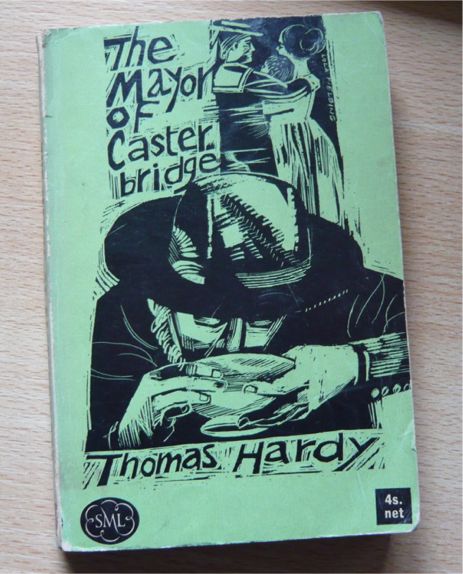
I still have my copy, with passages underlined and notes at the tops of pages – all in pencil.It’s full title is The Life and Death of the Mayor of Casterbridge: A Story of a Man of Character. It tells the tragic tale of Michael Henchard, a man of violent passions, proud, impulsive with a great need for love. It opens dramatically as he sells his wife and child to a sailor at a fair. By his own hard work over the years he eventually became the rich and respected Mayor of Casterbridge. But then the re-appearance of his wife and her daughter sets off a train of events finally bringing Henchard to ruin and degradation.

Because I enjoyed The Mayor over the years I’ve read more of Hardy’s books, including Tess of the D’Urbervilles and Jude the Obscure, both dramatic tragedies. In Jude Hardy attacked the Church and the marriage state, which received a mixed reception at the time – the Bishop of Wakefield burned his copy of the book and W H Smith withdrew it from their circulating library, but the public bought 20,000 copies, whether or not due to the scandal it aroused.  These books were considered masterpieces by some and scandalous by others.

Of the two I prefer Jude to Tess and having re-read them both more recently I still feel the same, but now I’m less impatient with the way Hardy presents Tess as a helpless victim than I had been before.  She is an innocent, raped by Angel Clare, the man she loves and Hardy highlights the hypocrisy of the times in condemning the ‘fallen woman’.

In Thomas Hardy, the Time-Torn Man Claire Tomalin writes not only about his life but also how he became a writer, poet and novelist. I began reading this book a few years ago and every now and then think I really must finish it. I stopped, as usual, overtaken by the desire to read other books- including more by Hardy himself.

The Thomas Hardy Society is an excellent source of information on the man and his works.

This is an ABC Wednesday post for the letter H.

One Book, Two Book, Three Book, Four… and Five…

Today I’m copying Simon and doing his little this-book-that-book-this-book-that-book sort of post.
  1. The book I’m currently reading:


    Cop Hater by Ed McBain – there are 13  87th Precint books – this is the first in his series. There’s a heat-wave and someone is killing cops. McBain was a Grand Master of the Mystery Writers of America and was one of three American writers to be awarded the CWA Diamond Dagger for lifetime achievement.

  2. The last book I finished:


    Gently Does It by Alan Hunter – The first of the Inspector Gently books. I read it on my Kindle and enjoyed it very much – post to follow later.
  3. The next book I want to read:


    The Weather in the Streets by Rosamond Lehmann – this is the next book for my face-to-face book group and I was talking to some of the other members yesterday who’ve already started it and they told me how good it is. It’s the story of Olivia and her love affair with a married man. I don’t often read romantic novels, so this will a change for me. I’m looking forward to reading it.
  4. The last book I bought:

    The last one I bought was The Weather in the Streets. The one before that was:

    Adam and Eve and Pinch Me by Ruth Rendell
    I bought this from the secondhand book box at Eyemouth Hospital. It’s hardback and looks practically brand new. I like buying books from the local hospitals as the money goes to a good cause. And I especially like buying them when they’re by authors I enjoy, such as Ruth Rendell.
  5. The last book I was given:


    Agatha Christie At Home by Hilary Macaskill. My husband gave me this for Christmas and I’m amazed at myself because I haven’t read it yet, although I’ve had a look at the photos. This is not just about Greenway, Agatha Christie’s Devon home but about her other houses and identifies the settings she used in her books.

Weekend Books & A New Challenge

This weekend I’ve been reading:

  • The Private Patient by P D James. I finished this yesterday and I’ll be writing about it for the next Crime Fiction Alphabet post this week.
  • The Blood Detective by Dan Waddell. I started this a few days ago.

I see that José Ignacio from The Game’s Afoot has found an interesting challenge and it is indeed a challenge:

2011 Challenge ‘Do not Accumulate, Read!!’

The rules are simple, before you buy another book, make a list of six from your TBR pile and read them. Once done you can go ahead, buy the book and, of course, read it. At the same time make another list of six books before buying the next one, and so on and so forth.

This will be difficult as this last week I’ve acquired nine books (bought and borrowed) and so I should make nine lists (and read 54 books) before I buy/acquire any more. That is some challenge, so I’m going to start the challenge from today and read 6 of my to-be-read books before I buy any more!

The new to me books this week are:

  • Her Fearful Symmetry by Audrey Niffennegger. I’ve previously borrowed a copy from the library but took it back unread. It hadn’t appealed at the time, but when I saw it on a secondhand bookstall selling in aid of the Teenage Cancer Trust I wondered if the time was right to give it another go.
  • The Weather in the Streets by Rosamond Lehmann. This is my local book group choice for May. We chose a romance due to the Royal Wedding this month.
  • Small Island by Andrea Levy – borrowed from a friend because I enjoyed The Long Song so much and she said this one is better.

Then two watercolour painting books to help me paint flowers:

I hope these will help me to paint like this. (Click on image to enlarge it.)

I’ve also recently downloaded these onto my Kindle:

  • Adventures of Pinocchio by Carlo Collodi – because I no longer have a printed version
  • THE COMPLETE FATHER BROWN MYSTERIES COLLECTION by G K Chesterton
  • The Unbearable Bassington by Saki
  • Gently Does It (Inspector George Gently 1) by Alan Hunter

I’m not sure what I’m going to read next, apart from The Weather in the Streets by Rosamond Lehmann, because that’s the May book group book, but they will all be from my to-be-read books.