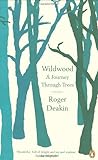
Wildwood: a Journey Through Trees by Roger Deakin

Roger Deakin was a writer, broadcaster and film-maker with a particular interest in nature and the environment. He completed the manuscript for Wildwood, his second book, just before he died in 2006. As the sub-title explains it’s about Deakin’s journeys through a wide variety of trees and woods in various parts of the world. It’s a memoir, a travelogue and also it’s about the interdependence of human beings and trees, or in his own words:

Wildwood is about the element of wood, as it exists in nature, in our souls and in our lives. (page x)

I think parts of this book are brilliant and fascinating, but my eyes glazed over in other parts as I got lost in all the facts and details that he recounts, which were just too much at times for me. But sometimes his writing is poetical, full of imagery. For example in writing about pencils he concludes:

The fine-grained, slow grown mother of all pencils is incense cedar from the forests of Oregon, where a single tree may grow 140 feet high, with a trunk five feet across, enough cedar wood to make 150,000 pencils. It is the incense cedar that infuses pencils with the nutty aroma I remember as I open my pencil-box. In a scooped out hollow in my Oregon pine work table in front of me lies a smooth, round pebble from the Hebrides. It sits snugly in the wood, like the pencil between finger and thumb, and like the hidden vein of graphite, poised inside the cedar to spin itself into words like gossamer from the spider. (page 30)

I love the image that last simile brings to my mind. I also marked these passages: ‘The pencil whispers across the page and is never dogmatic.‘ And this, ‘Rub your finger long enough on a soft-pencilled phrase and it will evaporate into a pale-grey cloud. In this way, pencil is close to watercolour painting.’ (both from page 29)

He wrote about Walnut Tree Farm, his house in Suffolk. It was a ruin when he bought it and he took enormous delight in renovating and restoring it, including personally shaping and repairing every single timber beam  – all 323 of them. His love of trees stemmed from his early years and his school days when in the sixth form he and his school friends camped in the New Forest where their Biology teacher filled them with enthusiasm, setting them to studying and mapping the natural history of a stretch of the woodland, bog and heathland.

He covers a huge area of natural history, not just trees, but also plants, birds, moths, hedges, as well as the uses of wood for living, working and pleasure. He also describes his journeys to numerous places – not just in Britain, but also to the Pyrenees, Bieszczady, Australia, east to Kazakhstan, China, and the walnut forests of Kyrgyzstan. There is so much to take in  – I really think this book deserves an index!

I liked the southern English chapters best, as the further afield he went it seemed more of a travel book. It’s a book of several parts and maybe it would have been more of a whole if Deakin had lived to see it through to publication. I think it’s a bit fragmented.

My favourite chapters cover the work of David Nash, a sculptor in wood and the paintings by Mary Newcomb. Deakin visited David Nash’s studio at Blaenau Ffestiniog, where he was particularly drawn to the Cracking Box made of oak:

As if entering the wild life of the wood, or at least taking its side, Nash has put as many difficulties in his way in the making of the box as he can. … The anarchic work thumbs its nose at the basic rules of woodwork, triumphantly so, because it holds together in spite of the wriggling of the wood as it warps and cracks. The more the wood struggles , the tighter the grips of the oak pegs in their augured sockets. (pages 154 -5)

Mary Newcomb was a Suffolk painter, who Deakin described as belonging ‘in the greenwood tradition, peering unnoticed from behind leaves like the Green Man’.. (page 179) (There is also has a chapter on the Green Man.) I hadn’t heard of Mary Newcomb and was intrigued by Deakin’s description of her work in which people seem to be part of the landscape, where proportion is very often skewed as in children’s art or ‘naive’ painting.

I also liked the chapter on walnuts, entitled Among Jaguars, describing how shapes of delicate walnut veneer are cut for the dashboards and door panels of Jaguar cars, and how the rare walnut burr veneer is produced. Walnuts figure quite prominently in Wildwood, with chapters on the walnut forests of Ferghana Valley in Kyrgyzstan.

Throughout the book Deakin referred to other books – one that stands out for me is Thomas Hardy’s The Woodlanders, one of my favourites of Hardy’s books, full of beautiful descriptions of the landscape and woods.

Overall, then I found this an interesting book, with some outstanding chapters. It’s not a book to read quickly and some parts are written much more fluently than others, but it’s full of fascinating information and meditations on the natural world. One final quotation:

To enter a wood is to pass into a different world in which we ourselves are transformed. It is no accident that in the comedies of Shakespeare, people go into the greenwood to grow, learn and change. It is where you travel to find yourself, often, paradoxically , by getting lost. Merlin sends the future King Arthur as a boy into the greenwood to fend for himself in The Sword in the Stone. There, he falls asleep and dreams himself, like a chameleon, into the lives of the animals and the trees. In As You Like It, the banished Duke Senior goes to live in the Forest of Arden like Robin Hood, and in Midsummer Night’s Dream the magical metamorphosis of the lovers takes place in a wood ‘outside Athens’ that is obviously an English wood, full of the faeries  and Robin Goodfellows of our folklore. (page x)
Memoirs of a Fox-Hunting Man by Siegfried Sassoon

Turn of the Century Salon

Memoirs of a Fox-Hunting Man by Siegfied Sassoon is a perfect choice for the Turn of the Century Salon. It’s the first part of his fictionalised autobiography. The other two books in his trilogy are Memoirs of an Infantry Officer and Sherston’s Progress.

The Book

Fox-Hunting 001

Siegfried Sassoon was born in 1886 and in Memoirs of a Fox-Hunting Man he relives his childhood, youth and experiences as an officer during the First World War. He wrote it in 1928, ten years after the War had ended, calling himself George Sherston. Life for young George/Siegfried was almost idyllic, living in the country as part of the privileged upper class, although his lifestyle exceeded his income. His aunt’s groom, Dixon, taught him to ride and introduced him to the fox-hunting world. At first Siegfried’s sympathies were with the fox and, at one of his first hunts, on spotting a fox he was alarmed so much that when his companion shrieked ‘Huick-holler’ (meaning the fox has been seen) he uttered the words ‘Don’t do that; they’ll catch him.’

Sassoon paints a beautiful picture of the English countryside and country life at the turn of the century. In the passage quoted below he wakes early on the morning of the local village flower show, looking forward to playing in the Flower Show Cricket Match:

When I unlocked the door into the garden the early morning air met me with its cold purity; on the stone step were the bowls of roses and delphiniums and sweet peas which Aunt Evelyn had carried out there before she went to bed [in preparation for the Flower Show]; the scarlet disc of the sun had climbed an inch above the hills. Thrushes and blackbirds hopped and pecked busily on the dew-soaked lawn, and a pigeon was cooing monotonously from the belt of woodland which sloped from the garden toward the Weald. Down there in the belt of river-mist a goods train whistled as it puffed steadily away from the station with a distinctly heard clanking of buffers. How little I knew of the enormous world beyond that valley and those low green hills. (page 53)

The first part of the book is carefree, as Siegfried passes through his school years and time at Cambridge University, which he left before completing his degree. Not a lot happens. His life, despite his lack of funds was a seemingly endless round of riding and hunting. He describes his friends and fox-hunting companions with affection and realism – the old country gentlemen, the benevolent gentry, the newly rich and the dare-devil younger riders, who were ‘reckless, insolent, unprincipled and aggressively competitive; but they were never dull, frequently amusing, and, when they chose, had charming manners.’ (page 235)

Siegfried, himself comes across as a likeable young man, shy, reserved, and modest, happy-go-lucky but aware of his own shortcomings.

All this changed with the onset of the First World War. He enlisted and was eventually posted to France, where because of his connections and abilities, he was appointed as a Transportation Officer stationed behind the trenches and the Front Line. But war brought him face to face with the grim realities of life and death. At first he was philosophical about the War – it seemed ‘inevitable and justifiable. Courage remained a virtue.’ But writing in 1928 he considered:

And that exploitation of courage, if I may be allowed to say a thing so obvious, was the essential tragedy of the War, which as everyone now agrees, was a crime against humanity. (page 256)

He sees men under his command die and suffer appallingly, his friends die, and Dixon his former groom who had enlisted died of pneumonia. Whilst home on leave as he talked to an old friend of Dixon’s he realised the past had gone …

  • Paperback: 320 pages
  • Publisher: Faber and Faber; 2nd edition (31 Jan 1974)
  • Language: English
  • ISBN-10: 057106454X
  • ISBN-13: 978-0571064540
  • Source: library book

The Author

Siegfried Sassoon 1915 (from Wikipedia)

Sassoon is one of the of the War Poets. Unlike others, such as Rupert Brooke, he survived the War. He came to the conclusion that the war was being needlessly prolonged. In 1917 he wrote a protest to his commanding officer. Its impact was reduced because rather than facing a court martial he was tried by a medical board and was judged to be suffering from severe shell shock. His account of the ruling is in the second part of his trilogy Memoirs of an Infantry Officer (1931). He was sent to Craiglockhart military hospital where he met Wilfred Owen, also one of the War Poets. It was in the hospital that Sassoon published some of his war poems. I’ll write more about those in another post and also more about his life when I’ve read Siegfried Sassoon: a biography by Max Egremont (which I’ve reserved at the library). In his later years he wrote The Old CenturyThe Weald of Youth andSiegfried’s Journey, three volumes of non-fictionalised autobiography.

January's Books

If you look at how many books I read in January it doesn’t look as though I did much reading with just 4 books completed. I usually average about 8 books a month! But that statistic is misleading because I’ve read just as much if not more than usual because of the length of the books.

Jaunary 2013

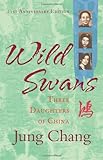
I began reading Wild Swans:Three Daughters of China by Jung Chang last year but by January I’d only read less than a quarter of it, so I began January by reading the rest of the book, which took me up to the middle of the month. Wild Swans is an amazing book (720 pages). I wrote about it in this post.It’s a harrowing book to read, but it’s also an eye-opener (for me at any rate) about what happened in China under Mao. It’s a personal story, reflecting the twentieth century history of China. A remarkable book, full of courage and spirit.

I read just one crime fiction – The Case of the Curious Bride by Erle Stanley Gardner (from TBR books). I was disappointed really with this Perry Mason book and didn’t think it was as good as other books by him that I’ve read.

Next was Deaf Sentence by David Lodge, which I liked but didn’t love. Unlike the reviewer in the Literary Review (quoted on the back cover) I didn’t find it had ‘many laugh-out-loud moments‘, just a few amusing bits that made me smile. But is it a moving and at times melancholy book.

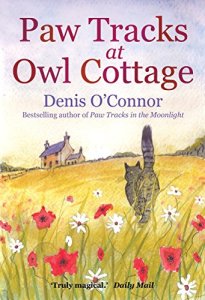
In a much lighter vein, although sad in parts is Paw Tracks at Owl Cottage by Denis O’Connor, which I read on my Kindle. It chronicles O’Connor’s experiences with four more cats, all Maine Coons, at his Northumberland cottage.

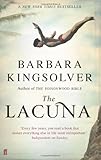
So, not a large number of books but a lot of reading, because I’ve also been reading Barbara Kingsolver’s The Lacuna, another long book which I’ve finished this morning. I suppose that goes under February’s books!

Books for Cat Lovers

I loved both these books by Denis O’Connor:

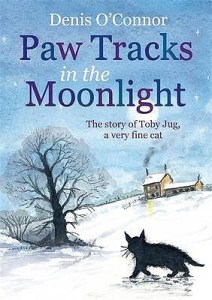
Paw Tracks in the Moonlight and Paw Tracks at Owl Cottage.

Denis O’Connor trained as a psychologist and teacher. Throughout his career he taught in schools and lectured in colleges and universities. He holds a doctorate in education and psychology and is now retired, living with his wife Catherine and his two Maine Coon cats in a remote country cottage in Northumberland.

Paw Tracks in the Moonlight tells the story of how he rescued a kitten during a snowstorm and how kitten survived, despite the vet’s prediction that he wouldn’t. O’Connor lived at Owl Cottage and as he was out at work all day he put the kitten in a jug to keep him safe and named him Toby Jug. This memoir covers the first year of Toby Jug’s life and it’s a remarkable story because this is no ordinary cat (if such a creature exists, that is). He is a Maine Coon cross. He learns to walk on a lead and even goes on a camping trip on horseback during the summer in the Cheviot Hills with O’Connor.

Paw Tracks at Owl Cottage chronicles O’Connor’s experiences with four more cats, all Maine Coons. He had moved from Owl Cottage, unable to face living there after Toby Jug died in 1978, but years later, when he took early retirement, Owl Cottage came up for sale – and he and his wife bought it. it’s a wonderful place for cats and they acquired four – Pablo, Carlos, Luis and Max. The book is divided into sections describing each cat and there are also reminisces of Toby Jug, with more stories of their lives together.

Both contain beautiful descriptions of the Northumberland countryside, most of which I’m familiar with, which made the books even more special for me. Inevitably the death of Toby Jug filled me with sadness, but both books are full of the cats’ personalities and the joy they brought to O’Connor and his wife. They demonstrate the close bonds that are possible between people and cats:

I tell them [his friends who are astonished at the close bonds]  I believe that any animal, be it a horse, dog, cat, parrot or budgerigar, will always respond to kindly attention and caring affection, and that I know this because I’ve made good friendships with them all.

But to return to how I am with our cats, I can honestly state that quite apart from loving them deeply and being loved in return, I know them inside their minds and they know me; we are linked on a mental plane of mutual affection and understanding. (page 222 of Paw Tracks at Owl Cottage)

Definitely books for cat lovers!

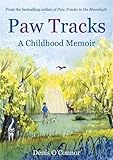
Denis O’Connor has written a third book (which I haven’t read) – Paw Tracks: a Childhood Memoir, described on Amazon as ‘a searingly honest account of how the power of nature can lift the human spirit and overcome the most unloving of childhoods.’

Wild Swans by Jung Chang

It’s taken me a couple of months to read Wild Swans: Three Daughters of China (first published in 1991), Jung Chang’s book about her grandmother, her mother and herself, telling of their lives in China up to and during the years of the violent Cultural Revolution. Her family suffered atrociously, her father and grandmother both dying painful deaths and both her mother and father were imprisoned and tortured.

Needless to say that this is a harrowing book to read, but it’s also an eye-opener (for me at any rate) about what happened in China under Mao.

Jung Chang was born in Yibin, Sichuan Province, China, in 1952. She was briefly a Red Guard at the age of fourteen, and then a peasant, a ‘barefoot doctor’, a steelworker and an electrician. She came to Britain in 1978, and in 1982 became the first person from the People’s Republic of China to receive a doctorate from a British university. Wild Swans  won the 1992 NCR Book Award and the 1993 British Book of the Year. She lives in London.

In Wild Swans she casts light on why and how Mao was able to exercise such paralysing control over the Chinese people. His magnetism and power was so strong and coupled with his immense skill at manipulation and his ability to inspire fear, it proved enough to subdue the spirit of most of the population; not to mention the absolute cruelty, torture and hardships they had to endure.

I wondered how she knew so much about what happened to her mother and grandmother (I don’t know nearly as much about mine) but in the Introduction she explains that when her mother came to visit her in London they talked every day for months. She talked about their eventful lives – her grandmother had been a concubine of a warlord general and her mother had joined the Communist underground at the age of 15. She also recorded sixty hours of her memories.

I wrote a bit about the book in a Book Beginnings post at the end of last November, when I’d just started to read it. It’s a personal story, reflecting the twentieth century history of China. A remarkable book, full of courage and spirit.

  • Paperback: 720 pages
  • Publisher: HarperPress; New edition edition (1 Mar 2012)
  • Language: English
  • ISBN-10: 0007463405
  • ISBN-13: 978-0007463404
  • Source: borrowed from a friend

This Isn't Fiction Reading Challenge

Last year I read just 12 non fiction books, a very small percentage of all the books I read. So, this year I’m aiming to read more widely, perhaps cutting back on reading crime fiction, which made up more than half my reading last year. When I saw that Birgit is hosting a non fiction challenge I thought that it would give me a push in that direction.

All non fiction genres are allowed!

Books must be at least 100 pages long (excluding appendix and annotations)!

Books must be read in their entirety and not just in part (which consequently excludes encyclopedias, then again who in their right mind would want to read one of those from beginning to end)!

No picture heavy books – you’re supposed to read not just look at pretty photos (that said, books should have a 75:25 text/picture ratio – if it’s a big tome with 300 or more pages, then it may be a 50:50 ratio)!

ARCs and re-reads are allowed!

So, what’s it going to be for you?
  • 5 Books – Kindergarden
  • 10 Books – Elementary School
  • 15 Books – High School
  • 20 or more Books – College

After looking at my list of unread non fiction on my LibraryThing catalogue I found that I have 30+ books, so I should find plenty of choice to go for the High School  level and maybe even for the College level. Most of them are autobiographies/biographies, with some history and a touch of philosophy and travel.