Top 5 Tuesday:Top 5 books with sizes in the titles

Top 5 Tuesday was created by Shanah at Bionic Book Worm, and it is now being hosted by Meeghan at Meeghan Reads. You can see the Top 5 Tuesday topics for the whole of 2025 here

Today the topic is top 5 books with sizes in the titles.

These are all books I’ve read with links to my posts on them:

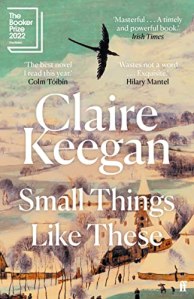
Small Things Like These by Claire Keegan. This won the 2022 Orwell Prize for Political Fiction, an award for outstanding novels and collections of short stories, first published in the UK or Ireland, that illuminate major social and political themes, present or past, through the art of narrative. It also won the Kerry Group Irish Novel of the Year 2022.

It is 1985 in a small Irish town. During the weeks leading up to Christmas, Bill Furlong, a coal merchant and family man faces into his busiest season. Early one morning, while delivering an order to the local convent, Bill makes a discovery which forces him to confront both his past and the complicit silences of a town controlled by the church.

Claire Keegan’s style of writing is a refreshing change from so many of the long and complicated books I so often read. It is precise, focused, and beautifully written bringing her characters to life – these are real, ordinary people, living ordinary lives in 1980s Ireland. And the detail is there too in all the particulars of everyday life – it packs a lot into its pages. 

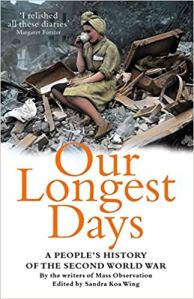
Our Longest Days: A People’s History of the Second World War by the writers of Mass Observation. For six years the people of Britain endured bombs and the threat of invasion, and more than 140,000 civilians were killed or seriously wounded. Men and women were called to serve in the armed forces in record numbers, and everyone experienced air raids and rationing. In these terrible times, volunteers of almost every age, class and occupation wrote diaries for the “Mass Observation” project, which was set up in the 1930s to collect the voices of ordinary men and women.

Using many diaries that have never been published before, this book tells the story of the war – the military conflict, and, mainly, life on the home front – through these voices. Through it all, people carry on living their lives, falling in love, longing for a good meal, complaining about office colleagues or mourning allotment potatoes destroyed by a bomb.

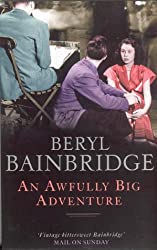
An Awfully Big Adventure by Beryl Bainbridge. First published in 1989 and shortlisted for the Booker Prize, this is set in 1950, as a Liverpool repertory theatre company are rehearsing its Christmas production of Peter Pan. The story centres around Stella, a teenager and an aspiring actress who has been taken on as the assistant stage manager.

It’s semi-autobiographical based on Beryl Bainbridge’s own experience as an assistant stage manager in a Liverpool theatre. On the face of it this is a straight forward story of the theatre company but underneath it’s packed with emotion, pathos and drama. And it’s firmly grounded in a grim post-war 1950s England, food rationing still in operation and bombed buildings still in ruins overgrown with weeds.

The title is taken from Peter Pan, the play about the boy who never grew up, whose attitude to death was ‘To die will be an awfully big adventure.’ Bainbridge’s use of Peter Pan emphasises the themes of reality versus imagination, the loss of childhood innocence, and the quest for love.

Dirty Little Secrets by Jo Spain, a psychological thriller, set in Withered Vale, a small, gated community of just seven houses, outside the small village of Marwood in Wicklow in Ireland. On the surface it is a perfect place where the wealthy live their  privileged lives and keep themselves to themselves – until a cloud of bluebottles stream out of the chimney of number 4 and Olive Collins’ dead and disintegrating body is discovered inside. She had been dead for three months and none of the neighbours had bothered to find out why she hadn’t been seen all that time. But someone must have known what had happened to her – the question being who?

The Shortest Day by Colm Toibin, a short story about the mythical past, about the strange carvings found on certain stones, about archaeology, and about the unknown customs and rituals of our ancient past. It’s storytelling at its best – a tale of wonder and mystery.

Professor O’Kelly is writing notes about Newgrange, also called Bru na Boinne, a circular mound with a retaining wall that had a narrow passageway leading into a vaulted central chamber. There are spirals and diamond shaped designs cut into some of the stones both inside the chamber itself and outside the entrance to the passageway. It’s a burial chamber, a prehistoric monument in County Meath in Ireland, that was built around 3200 BC – older than Stonehenge and the Egyptian pyramids. It’s ringed by a stone circle, stones brought from the Mournes and Wicklow Mountains.

Meanwhile deep within the chamber there were whispers among the dead that the professor was coming again. They are concerned that he would discover the secret of the light penetrating the chamber on the winter solstice – the shortest day of the year. Some of the local inhabitants know of the secret but they never talk about it, except in whispers between themselves. When he arrives they put up a number of obstacles to prevent him from entering the chamber.

Spell the Month in Books: June 2025

Spell the Month in Books is a linkup hosted by Jana on Reviews From the Stacks on the first Saturday of each month. The goal is to spell the current month with the first letter of book titles, excluding articles such as ‘the’ and ‘a’ as needed. That’s all there is to it! Some months there are optional theme challenges, such as “books with an orange cover” or books of a particular genre, but for the most part, any book you want to use is fair game!

This month’s Spell the Month in Books theme is Books that you found or currently see at the library. For this theme I’ve used books I’ve previously borrowed from the library for the letters J, U, and E and a book I’ve seen on the library’s website for the letter N.

Journey to Munich by Jacqueline Winspear – Travelling into the heart of Nazi Germany, Maisie encounters unexpected dangers – and finds herself questioning whether it’s time to return to the work she loved. But the Secret Service may have other ideas!

Uncommon Appeal of Clouds by Alexander McCall Smith – an Isabel Dalhousie book – An unexpected appeal for help from a collector who has been the victim of an art theft threatens to take Isabel Dalhousie far outside her comfort zone.

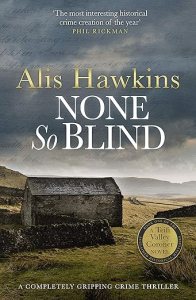
None So Blind by Alis Hawkins – West Wales, 1850. When an old tree root is dug up, the remains of a young woman are found. Harry Probert-Lloyd, a young barrister forced home from London by encroaching blindness, has been dreading this discovery. He knows exactly whose bones they are. Working with his clerk, John Davies, Harry is determined to expose the guilty. But the investigation turns up more questions than answers and raises long-buried secrets. The search for the truth will prove costly.

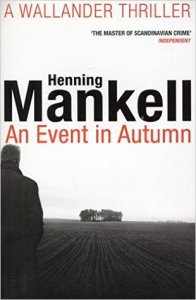
An Event in Autumn by Henning Mankell a Wallender thriller – Kurt Wallander’s life looks like it has taken a turn for the better when his offer on a new house is accepted, only for him to uncover something unexpected in the garden – the skeleton of a middle-aged woman. As police officers comb the property, Wallander attempts to get his new life back on course by finding the woman’s killer with the aid of his.

The next link up will be on July 5, 2025 when the optional theme will be: Set in a fantasy world or fictional place.

Top Ten Tuesday: Books on My Summer 2025 to-Read List

Top Ten Tuesday is a weekly meme created by The Broke and the Bookish and now hosted by Jana at That Artsy Reader Girl. For the rules see her blog.

The topic today is Books on My Summer 2025 to-Read List. I’m taking part in the 20 Books of Summer but didn’t make a list this year because In the past I don’t think I’ve ever managed to read the lists I’ve compiled because I just can’t stick to reading from a list – as soon as a book is on a list my desire to read it just dies. So, I decided to make it simple and read from my TBRs and the books on my Netgalley Shelf.

Anyway, here is a list of books I might read this summer, just picked at random from the e-books on my Kindle, without thinking too hard about which ones to list.:

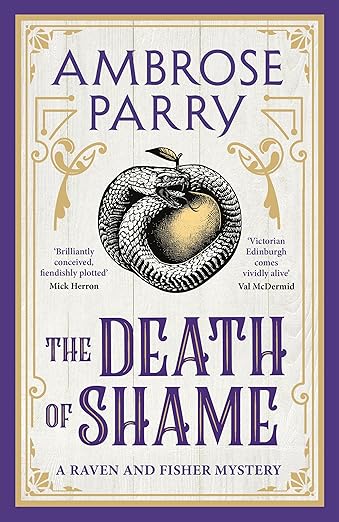
  1. The Death of Shame by Ambrose Parry (A Raven and Fisher Mystery Book 5) Historical fiction set in Victorian Edinburgh, a mix of fact and fiction incorporating the social scene, historical and medical facts.
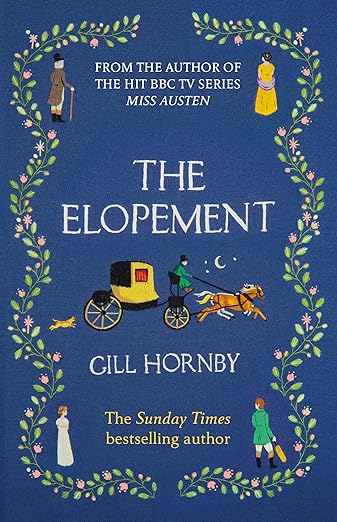
  2. The Elopement by Gill Hornby, historical fiction about the life of Jane Austen’s niece Fanny Knight and her stepdaughter.
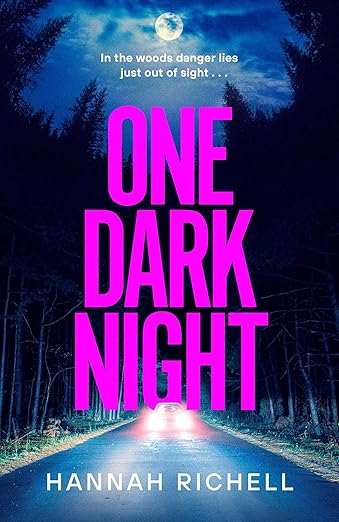
  3. One Dark Night by Hannah Richell, a gothic thriller about the murder of a young girl at Halloween.
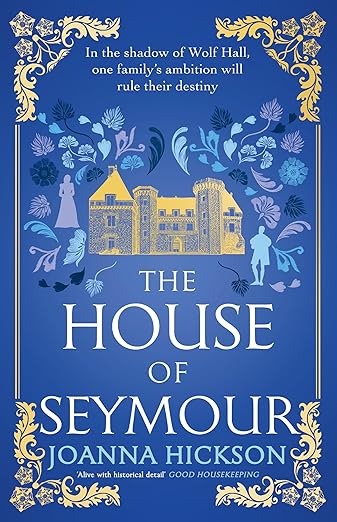
  4. The House of Seymour by Joanna Hickson, (The House of Seymour, Book 1) historical fiction set in the 15th century during King Henry VI’s reign.
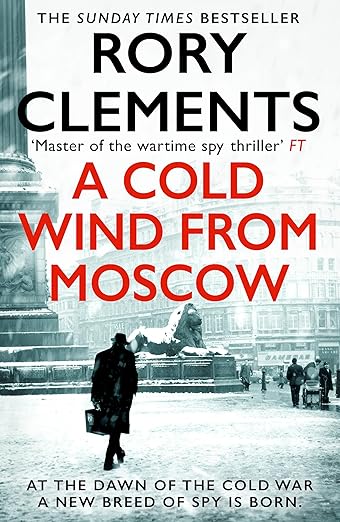
  5. A Cold Wind from Moscow by Rory Clements, (Tom Wilde Book 8) historical fiction set at the start of the Cold War,
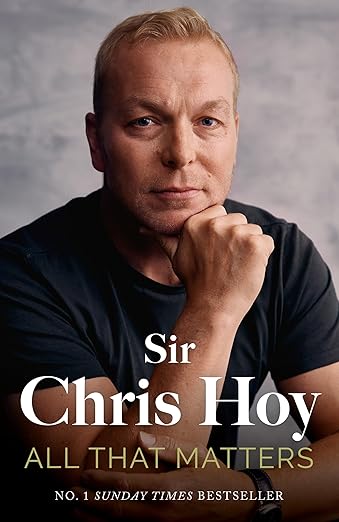
  6. All that Matters by Chris Hoy, a memoir cycling legend Sir Chris Hoy reveals the truth of his cancer diagnosis and how he is determined to find hope and happiness on the home straight.
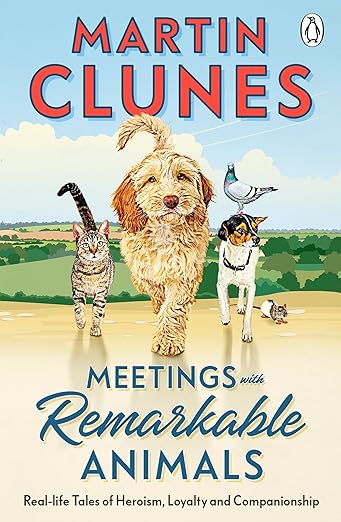
  7. Meetings With Remarkable Animals by Martin Clunes, the Heartwarming Journey of Animals Who’ve Guided, Rescued, and Saved Us in Surprising Ways.
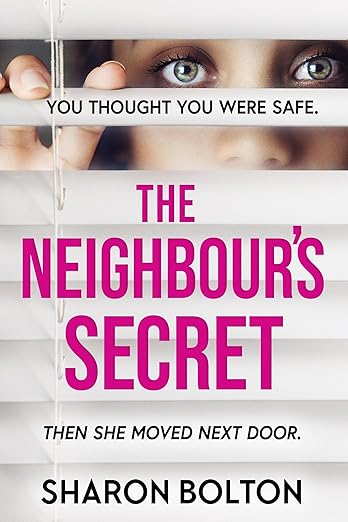
  8. The Neighbour’s Secret by Sharon Bolton, a psychological thriller.
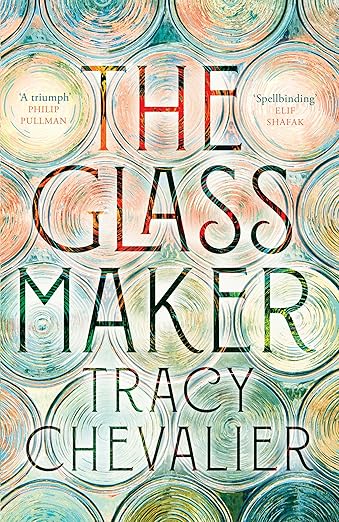
  9. The Glassmaker by Tracy Chevalier, historical fiction set in Venice in 1486.
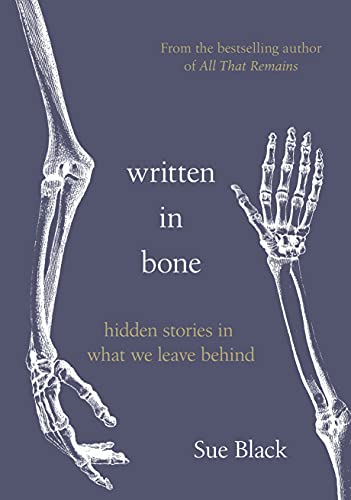
  10. Written in Bone by Sue Black, hidden stories in what we leave behind.

Top 5 Tuesday:Top 5 books with no pictures on the cover

Top 5 Tuesday was created by Shanah at Bionic Book Worm, and it is now being hosted by Meeghan at Meeghan Reads. For details of all of the latest prompts for April to June, see Meeghan’s post here.

Today the topic is top 5 books with no pictures on the cover. Meegan writes: I guess this one is more of an anti-scavenger hunt? Also, it’s up to you how far you take this one. Does a pattern count as a picture? What about a single line or spot of colour? Maybe you want to go completely blank with just the words. No matter, please share your top 5 books with no pictures on the cover.

These are all books I’ve read, three nonfiction and two novels.

Nonfiction:

Shakespeare’s Restless World by Neil MacGregor.

A beautiful book recreating Shakespeare’s world through examining twenty objects. It reveals so much about the people who lived then, who went to see Shakespeare’s plays in the 1590s and 1600s, and about their ideas and living conditions. Through looking at each object MacGregor explores a number of topics, including what people ate whilst watching plays, religion, medicine, the plague, magic, city life, treason, and the measuring of time. It’s all fascinating and informative, and easy to read. There are plenty of quotations from Shakespeare’s plays and puts both him and his work into context. For me, it was a new way of seeing into the past,

Of Women in the 21st Century by Shami Chakrabarti, a member of the House of Lords, formerly Labour’s Shadow Attorney General, and the author of On Liberty, a book about human rights violations published in 2014.

Shami Chakrabarti is passionate, and indeed angry, about the need for gender equality in her book. She examines the effects of gender injustice on a wide variety of issues in many parts of the world. In parts it reads like an academic textbook, packed full of statistics and wide ranging examples of gender injustice on a global scale. It becomes more personal however, when she writes about her own experiences her family and her background.

She covers a broad overview of many issues, rather than an in-

depth study, including violence against women, abortion, sanitary products, childcare and sex education and topics such as faith, the concept of home and displaced persons, health, wealth, education, representation, opportunity and insecurity in the 21st century. However, she remains optimistic, concluding that she believes that ‘far greater equality for women and men is realistically within our reach and well worth the stretch.’ I don’t think it is that easy and will need more than a ‘stretch’.

A Grief Observed by C S Lewis, another book I read before I began blogging, so no review.

Written after his wife’s tragic death as a way of surviving the “mad midnight moment,” A Grief Observed is C.S. Lewis’s honest reflection on the fundamental issues of life, death, and faith in the midst of loss. This work contains his concise, genuine reflections on that “Nothing will shake a man — or at any rate a man like me — out of his merely verbal thinking and his merely notional beliefs. He has to be knocked silly before he comes to his senses. Only torture will bring out the truth. Only under torture does he discover it himself.” This is a beautiful and unflinchingly honest record of how even a stalwart believer can lose all sense of meaning in the universe, and how he can gradually regain his bearings. (Goodreads)

Fiction:

After You’d Gone by Maggie O’Farrell

Alice is in a coma after being in road accident, which may or may not have been a suicide attempt. She has been grieving the death of her husband, John.

It’s quite a complicated story, following the life stories not only of Alice, but also those of her mother, Ann (who I didn’t like much),  her grandmother, Elspeth (who I did like very much), her two sisters and of John. What was it that Alice saw at Edinburgh station that shocked her so much? You don’t find out until the end of the book, although I did have an idea before that what it meant to her and why it was so upsetting. 

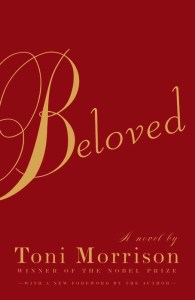
Beloved by Toni Morrison, which I read years ago before I began blogging, so I haven’t reviewed it.

Staring unflinchingly into the abyss of slavery, this spellbinding novel transforms history into a story as powerful as Exodus and as intimate as a lullaby.

Sethe, its protagonist, was born a slave and escaped to Ohio, but eighteen years later she is still not free. She has too many memories of Sweet Home, the beautiful farm where so many hideous things happened. And Sethe’s new home is haunted by the ghost of her baby, who died nameless and whose tombstone is engraved with a single word: Beloved. Filled with bitter poetry and suspense as taut as a rope, Beloved is a towering achievement by Nobel Prize laureate Toni Morrison. (Goodreads)

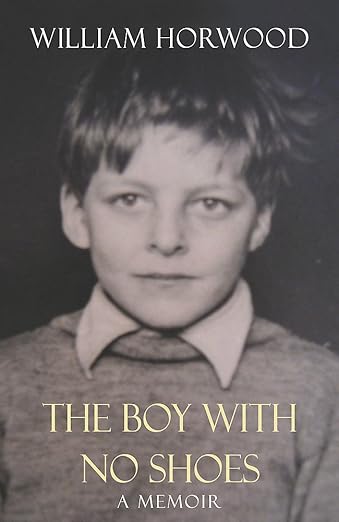
The Boy With No Shoes by William Horwood: Book Beginnings on Friday & The Friday 56

Every Friday Book Beginnings on Friday is hosted by Gillion at Rose City Reader where you can share the first sentence (or so) of the book you are reading. You can also share from a book you want to highlight just because it caught your fancy.

I’m featuring The Boy With No Shoes by William Horwood, a memoir I started to read today. William Horwood is an English novelist. His first novel, Duncton Wood, an allegorical tale about a community of moles, was published in 1980. It was followed by two sequels, forming The Duncton Chronicles, and also a second trilogy, The Book of Silence. William Horwood has also written two stand-alone novels intertwining the lives of humans and of eagles, The Stonor Eagles and Callanish , and The Wolves of Time duology. Skallagrigg, his 1987 novel about disability, love, and trust, was made into a BBC film in 1994. In addition, he has written a number of sequels to The Wind in the Willows by Kenneth Grahame.

In 2007, he collaborated with historian Helen Rappaport to produce Dark Hearts of Chicago, a historical mystery and thriller set in nineteenth-century Chicago. It was republished in 2008 as City of Dark Hearts with some significant revisions and cuts under the pen name James Conan.

The book begins with the Author’s Note:

When I was thirty-four and had been iller than I knew for two long years, my recovery began in the strangest and most magical of ways. I woke one day from dreaming and saw myself when very young, as clearly as in a black -and-white Kodak photograph. I saw how desperately the little boy I once was had needed someone to talk to in a world where no one wanted to listen.

From the Prologue:

My name is Jimmy and there was a man in my time long ago, before the Boy and the Girl, before my Darktime, before Granny came to help me; and the man held my hand and took me out of our cold house into the sun and then along a street to a great big place with a sign outside

From Chapter 1 Running:

The park keeper in his uniform and hat shouted at me and grabbed one of my ears and pulled me towards him.

‘KEEP OFF THE GRASS!’ he yelled, so close it made my eardrums ache.

Also every Friday there is The Friday 56, hosted by Freda at Freda’s Voice, but she is taking a break and Anne at My Head is Full of Books has taken on hosting duties in her absence. You grab a book and turn to page 56 (or 56% of an eBook), find one or more interesting sentences (no spoilers), and post them.

On page 56 the characters are talking about the day that Edmund Hillary from New Zealand and Sherpa Tensing from Tibet had climbed the highest mountain in the world. No one in the whole history of the world had stood on top of it before.

Uncle Max said, ‘This is a great day for England and the monarchy.’

Granny said, ‘It seems to me that it is a great day for New Zealand and for Tibet, and a bad day for Mount Everest. It is nothing to do with England at all, let alone the Queen.

Description from Goodreads:

Five-year-old Jimmy Rova is the unwanted child of a mother who rejects him, and whose other children bully him. The one thing he can call his own is a pair of shoes, a present from the only person he feels has ever loved him. When they are cruelly taken away, Jimmy spirals down into a state of loneliness and terrible loss from which there seems no recovery. This triumphant story of a boy’s struggle with early trauma and his remarkable journey into adulthood is based on William Horwood’s own remarkable childhood in south-east England after the Second World War. Using all the skills that went into the creation of his modern classics, Horwood has written an inspiring story of a journey from a past too painful to imagine to the future every child deserves.

Top Five Tuesday:Top 5 books with a place in the title

Top 5 Tuesday was created by Shanah at Bionic Book Worm, and it is now being hosted by Meeghan at Meeghan Reads. For details of all of the latest prompts for January to March, see Meeghan’s post here.

Today the topic is Top 5 books with a place in the title – any location or place in a title is fine. I decided to feature books in different countries than my own (UK) – namely Italy, Japan, Greece, Russia and France.

These are all books I’ve read with links to my reviews.

Pompeii by Robert Harris – one of my favourite books. Vesuvius erupts destroying the town of Pompeii and killing its inhabitants as they tried to flee the pumice, ash, searing heat and flames. The story begins just two days before the eruption of Mount Vesuvius and builds up to a climax. 

Nagasaki : Life After Nuclear War by Susan Southard, nonfiction, an amazing, heart-wrenching book. On August 9th 1945, two days after the atomic bombing of Hiroshima, a five-ton plutonium bomb was dropped on the small coastal town of Nagasaki. The effects were cataclysmic. It follows the lives of five of the survivors from then to the present day. 

This must be one of the most devastatingly sad and depressing books I’ve read and yet also one of the most uplifting, detailing the dropping of the bomb, which killed 74,000 people and injured another 75,000. 

The Doctor of Thessaly by Anne Zouroudi, the third in the series of her Mysteries of the Greek Detective, about Hermes Diaktoros, a mysterious fat man. I was never sure who he worked for, or how he knew of the mystery to solve. Each of the books in the series features one of the Seven Deadly Sins – in this one it is envy, a tale of revenge and retribution.

Midnight in St Petersburg by Vanora Bennett. It begins in 1911 in pre-revolutionary Russia with Inna Feldman travelling by train to St Petersburg to escape the pogroms in Kiev hoping to stay with her distant cousin, Yasha Kagan. The book is split into three sections – September – December 1911, 1916-17 and 1918-19 as Russia enters the First World War and is plunged into Revolution and life becomes increasingly dangerous for them all.

Last Seen in Massilia by Steven Saylor, historical crime fiction set in in Massilia – modern day Marseilles. It’s 49BC during Caesar’s siege of the city., featuring an investigator called Gordianus the Finder. I really liked all the details about Massilia – how it was governed – the hierarchy of the Timouchoi its ruling officials, its relationship to Rome, its traditions and customs. This is the 8th book in Saylor’s Roma Sub Rosa series set in ancient Rome.