Week 5 of Nonfiction November is hosted by Deb Nance at Readerbuzz and we’re looking back at the previous weeks. And in particularly at which ones have made it onto our TBR?
I’ve thoroughly enjoyed taking part in Nonfiction November and there are so many fascinating books I could easily add to my TBR list. But I know my limitations, so these are my choices:
Week 3 (11/10-11/16) is hosted by Liz, an ex-librarian, a freelance editor and transcriber, a runner and a volunteer. She blogs about everything from social justice and geology nonfiction to YA romance and literary fiction at Adventures in reading, Running and Working from Home
This week, pair up a nonfiction book with a fiction title. Maybe it’s a historical novel and the real history in a nonfiction version, or a memoir and a novel, or a fiction book you’ve read and you would like recommendations for background reading. Or maybe it’s just two books you feel have a link, whatever they might be. You can be as creative as you like!
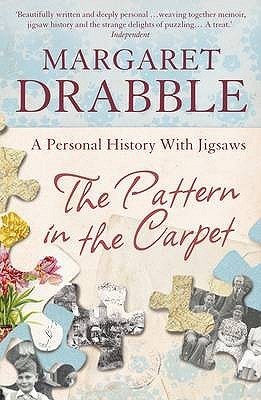
My nonfiction book is The Pattern in the Carpet by Margaret Drabble. I’ve always enjoyed doing jigsaws. So when I saw this book about jigsaw puzzles, their history and their place in her life I wanted to read it. They were a big part in my childhood and I still enjoy doing them.
Margaret Drabble describes her book thus:
This book is not a memoir, although parts of it may look like a memoir. Nor is it a history of the jigsaw puzzle, although that it was what it was once meant to be. It is a hybrid. … This book started off as small history of the jigsaw, but it has spiralled off in other directions and now I am not sure what it is.
I think is a memoir because what she does in this book is to weave her own story into a history of games, in particular jigsaws, which have offered her and many others relief from melancholy and depression. She writes about the importance of play and notes the way that doing a jigsaw is like creating order out of chaos, and because they have no verbal content they exercise a different part of the brain, bringing different neurons and dendrites into play.
I enjoyed parts of immensely – those parts about her childhood, and life at Bryn, her grandparents’ house in Long Bennington and about her beloved Aunt Phyl (Phyllis Boor) and of course those parts about jigsaws, both personal and historical, about mosaics (looking at them as a form of jigsaw), the history of children’s games and puzzles and amusements. She does ‘spiral off in other directions’ which meant in parts it lacks a clear structure in a sort of ‘stream of consciousness’ style, particularly in her reminiscences and nostalgia about life (reproduced in some jigsaws) in a rural community that no longer exists.
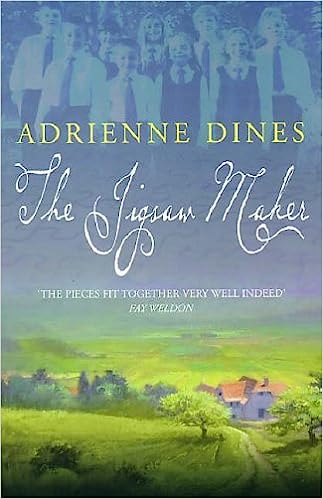
I’m pairing it with The Jigsaw Maker by Adrienne Dines, another book that appealed to me because it’s about jigsaws.
The Jigsaw Maker is a beautifully written novel, one with pace and tension in just the right places. Lizzie Flynn has a shop in a village near Kilkenny, a sort of knick-knack shop selling a variety of goods, cards, flower arrangements, and home-made sweets. The ‘Jigsaw Maker’ is Jim Nealon, a stranger who walks into her shop one morning and asks her to sell his beautiful jigsaws.
But these are no ordinary jigsaws. Jim makes wooden jigsaws, tiny intricately shaped pieces ‘finely cut so that they were more like buttons than jigsaw pieces’ And each one is individual showing a photograph of a real place accompanied by a personalised history of the scene.
He proposes to take photos of places, not the tourist attractions, but the places their ancestors might have lived and worked. He asks Lizzie to help him by writing about the scenes. To begin with he shows her a photo of the local school and asks her to picture herself back there in 1969 and write what she remembers – what it was like to be a pupil there.
It just so happens that 1969 had been quite an eventful year. This opens up the floodgates of memory for Lizzie as painful and puzzling events from that year almost over power her. Looking back at the child she was she realises that not everything was as it had appeared to her then.
It is just like a jigsaw – all the pieces are there and both the reader and Lizzie have to put them together correctly to get the correct picture. I could visualise the scenes and the characters and I became anxious for Lizzie as she realised the truth not only about the events she had seen, but also about her place in those events. There are plenty of repressed secrets that come to the surface and an added mystery too – who is Jim? Why has he come to the village and why did he ask Lizzie in particular to help him?
Headline Book Publishing| 2004| Hardback edition| 440 pages| 5*
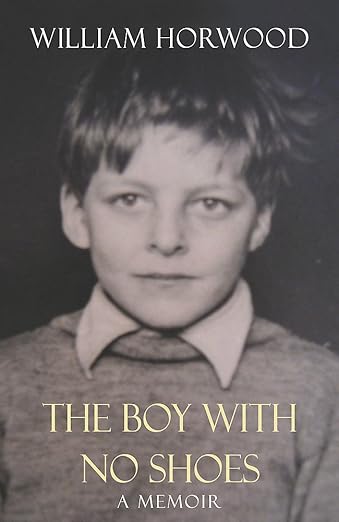
Five-year-old Jimmy Rova is the unwanted child of a mother who rejects him, and whose other children bully him. The one thing he can call his own is a pair of shoes, a present from the only person he feels has ever loved him. When they are cruelly taken away, Jimmy spirals down into a state of loneliness and terrible loss from which there seems no recovery.
This triumphant story of a boy’s struggle with early trauma and his remarkable journey into adulthood is based on William Horwood’s own remarkable childhood in south-east England after the Second World War. Using all the skills that went into the creation of his modern classics, Horwood has written an inspiring story of a journey from a past too painful to imagine to the future every child deserves. (Amazon)
William Horwood is an English novelist. He grew up on the East Kent coast, primarily in Deal. His first novel, Duncton Wood, an allegorical tale about a community of moles, was published in 1980. It was followed by two sequels, forming The Duncton Chronicles, and also a second trilogy, The Book of Silence. William Horwood has also written two stand-alone novels intertwining the lives of humans and of eagles, The Stonor Eagles and Callanish, and The Wolves of Time duology. Skallagrigg, his 1987 novel about disability, love, and trust, was made into a BBC film in 1994. In addition, he has written a number of sequels to The Wind in the Willowsby Kenneth Grahame.
When I saw The Boy With No Shoes on the secondhand bookshelves in my local village hall I thought I’d like to read it. It was a great choice as I think it’s one of the best books I’ve read this year. It’s important to read the Author’s Note carefully before you read the book, and not dive straight into it. I had to re-read it after I’d read a few chapters as I was beginning to wonder if this was really fictional. I also wasted time searching on maps to find where he lived growing up.
In his Author’s Note at the front of the book he explained why he wrote about himself as Jimmy Rova:
When I was thirty-four and had been iller than I knew for two long years, my recovery began in the strangest and most magical dream of ways. |I woke one day from dreaming and saw myself when very young, as clearly as in a black and white Kodak photograph. I saw how desperately the little boy I once was had needed someone to talk to in a world where no one wanted to listen. I decided there and then to travel back in time and let myself as adult be listener to the child. This book and my final healing is the result of that imaginative listening, over very many years.
Because the boy seemed other than himself he gave him a different name and changed the name of his home town. By so doing he was able to fill in gaps, paper over the cracks and visit distant places of emotion that he would never have reached.
It is a long and detailed book that took me nearly a month to read. It is beautifully written and as he tells the story of his very early life there are many times when it moved me to tears. His writing is so clear that the places and people he describes spring to life as you read. All the characters have depth and are believable as people.
He is just as good at portraying Jimmy’s feelings and emotions. I could feel his depth of despair, fear and confusion as he describes his first memory about the man in a time long ago who bought him a pair of shoes. That day entered his heart and stayed there forever. He called him The Man Who Was, the man who left him standing in the rain, holding his Ma’s hand, full of fear that he would not be there to keep him safe from Ma, who treated him appallingly, and he would be all alone. All that was left to him were the shoes. So, imagine how awful it was when the shoes disappeared, cruelly taken from him.
But life for Jimmy did eventually get better, especially when Granny came to live with them, but even she could not protect completely from his abusive Ma. I loved all the details of Granny’s time in Africa with ‘The African Gentleman’, who wore a funny hat on his grey and grizzled hair, and his clothes were striped black and yellow. In his hand he carried a wand like a magician. Also unforgettable is his first love, Harriet, and how his mother ended their affair.
There were others too who were kind to him. I loved his description of a new English teacher at the Grammar School, who in contrast to the Head and other teachers believed in the boys. He inspired Jimmy and transformed his life by showing him how to believe he could succeed and how to prepare for his O levels.
There were others too, His Uncle Max who took him hiking in Snowdonia. Moel Saibod was the first mountain he climbed and then others, including Snowdon, the tallest mountain in Wales and England. Then, Mr Boys who taught him to read, Mr Bubbles, a fisherman and his wife, who lived along the shore and taught him all about fishing. I could go on and on, but really if this interests you the best thing is to read the book for yourself. It is a wonderful book, that captures what life was like in the 1950s and even though my childhood was nothing like his, it brought back memories of growing up. I too, as a young woman) climbed Snowdon – Welsh name, Yr Wyddfa (I did not take the Snowdon Mountain Railway either up or down) and also Moel Saibod.
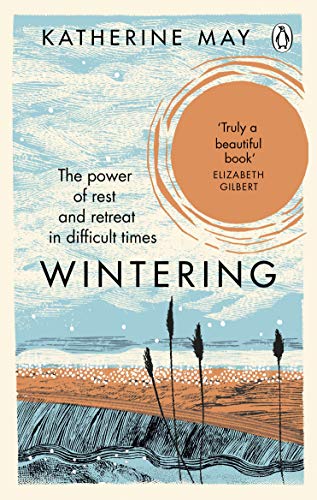
Wintering is a poignant and comforting meditation on the fallow periods of life, times when we must retreat to care for and repair ourselves. Katherine May thoughtfully shows us how to come through these times with the wisdom of knowing that, like the seasons, our winters and summers are the ebb and flow of life.
A moving personal narrative interwoven with lessons from literature, mythology and the natural world, May’s story offers instruction on the transformative power of rest and retreat. Illumination emerges from many sources: solstice celebrations and dormice hibernation, C.S. Lewis and Sylvia Plath, swimming in icy waters and sailing arctic seas.
Ultimately, Wintering invites us to change how we relate to our own fallow times. May models an active acceptance of sadness and finds nourishment in deep retreat, joy in the hushed beauty of winter, and encouragement in understanding life as cyclical, not linear. A secular mystic, May forms a guiding philosophy for transforming the hardships that arise before the ushering in of a new season.
Wintering is a season in the cold. It is a fallow period in life when you’re cut off from the world, feeling rejected, sidelined, blocked from progress, or cast into the role of an outsider. Perhaps it results from an illness; perhaps from a life event such as a bereavement or the birth of a child; perhaps it comes from a humiliation or failure. (page 9)
She then goes on to say that this book is
about learning to recognise the process, engage with it mindfully, and even to cherish it. We may never choose to winter but, we can choose how. (page 12)
This was the start of a period in her life where she felt as though she had fallen through into ‘Somewhere Else’, just as dust shifts down between the floorboards, a lonely and painful place. It was the time when her husband suddenly became very ill during the celebrations for her fortieth birthday and told her he’d vomited. Her reaction was to think:
what a nuisance it was. We’d have to cut the day short and head back home, and then he’d probably have to sleep it off. He was clutching his middle, but that didn’t seem particularly troubling under the circumstances. I wasn’t in any hurry to leave, and it must have shown, because I have a very clear memory of the sudden shock when our friend – one of our oldest ones, known from schooldays – touched me on the shoulder and said, ‘Katherine, I think H is really ill.’ (pages 2-3)
She still didn’t think it was anything really serious. But they went home, he went to bed and two hours later he said he thought he needed to go to hospital. She took him, after leaving her son with neighbours, and went home after midnight when he still hadn’t been taken to a ward. The next morning she returned to find him screaming in agony and suddenly realised she could lose him.
Whilst he was still in hospital she noticed a grumbling pain along the right side of her abdomen which she thought was in sympathy with H’s appendicitis. But about a year later she admitted to her GP that she’d ignored all the major signs of bowel cancer. This shocked me and I was concerned to know more – she’d ignored it for a year! She was referred for urgent tests and signed off sick. Was it cancer? I was worried, but it was only many pages later, she revealed that a nurse eventually told her she ‘held within her a mass of spasms and inflammations, a wonderland of malabsorption.’ This was life-changing as it wouldn’t just go away – it involved a three day diet of low-fibre eating. I felt this was tucked away within information about other topics.
There are so many topics covered that it would be an extremely long post if I went into more detail! It is divided into chapters headed October through to March, covering different topics. But I found it rather disjointed and muddled, moving from one topic to the next and from one occasion to the next, but not in a chronological sequence. It’s a mix of memoir/self-help book, intermingled with her own personal issues, experiences and reminiscences.
She writes a bit about the Danish concept of hygge, which represents cosiness as a kind of mindful practice and homely comfort, but it is more than this as she broadens her scope to include such things as, visits to Iceland and Norway; Halloween, folklore, the starkness of winter, sleep, hibernation, night time waking , SAD, Stonehenge and druids, prayer, Christmas and New Year, pregnancy, wolves, snow, swimming at New Year in the sea at Whitstable, ants, bees, Sylvia Plath’s poem Wintering, robins, and losing her voice and singing, as well as others.
It wasn’t what I’d expected, but overall I enjoyed it, although I think it could really do with an index to guide the reader to the individual topics.
It’s almost time for Novellas in November, hosted by Cathy of 746 Books and Rebecca of Bookish Beck. It’s now in it’s sixth year. I took part in 2020, 2021 and 2022.
There are no categories this year, although participants are invited to start the month with a My Year in Novellas retrospective looking at any novellas read since last NovNov, and finish it with a New to My TBR list based on the novellas that others have tempted them with over the course of the month.
There are also two buddy reads this year – Seascraper by Benjamin Wood and Sister Outsider by Audre Lorde.
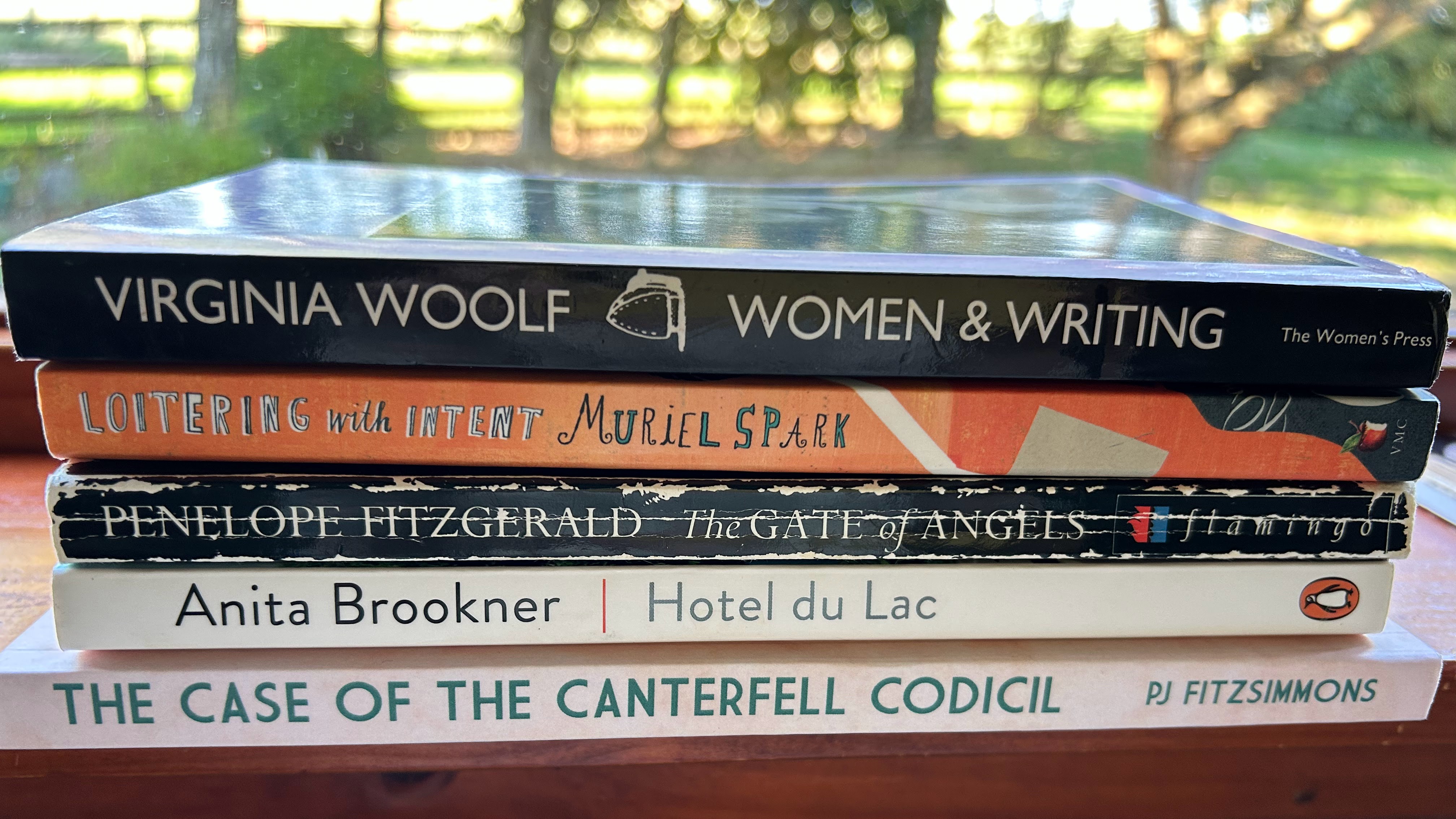
These are some of the novellas from my TBR shelves:
Women and Writing by Virginia Woolf – 198 pages
Loitering with Intent by Muriel Spark – 172 pages
The Gate of Angels by Penelope Fitzgerald – 167 pages
Hotel du Lac by Anita Brookner – 184 pages
The Case of the Canterell Codicil by PJ Fitzsimmons – 177 pages
Anty Boisjoly, nineteen-twenty-never Wodehousian gadabout and clubman , takes on his first case when his old Oxford chum and coxswain is facing the gallows, accused of the murder of his wealthy uncle.
Not one but two locked-room murders later, Anty’s pitting his wits and witticisms against a subversive butler, a senile footman, a single-minded detective-inspector, an irascible goat, and the eccentric conventions of the pastoral Sussex countryside to untangle a multi-layered mystery of secret bequests, ancient writs, love triangles, and revenge, and with a twist in the end that you’ll never see coming.