Top 5 Tuesday: 5 authors I want to try in 2025

Who are some new authors that you want to read from in 2025

Top 5 Tuesday was created by Shanah at Bionic Book Worm, and it is now being hosted by Meeghan at Meeghan Reads. For details of all of the latest prompts for January to March, see Meeghan’s post here.

Today the topic is 5 authors I want to try in 2025. Who are some new authors that you want to read from in 2025? These books are from my TBRs.

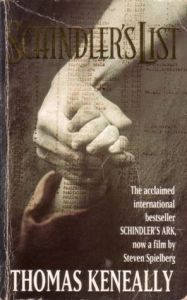
Schindler’s List by Thomas Keneally

I was really excited to read Schindler’s List when I bought it as I’d recently watched the film, Schindler’s List for a second time and was very moved by it – it had me in tears. It was first published as Schindler’s Ark. It recreates the story of Oskar Schindler, a member of the Nazi party, who risked his life to protect Jews in Nazi-occupied Poland. He rescued more than a thousand Jews from the death camps.

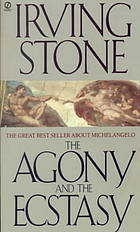
The Agony and the Ecstasy by Irving Stone is a book I’ve been longing to read for years. I’ve had it since 2007. It’s a biographical novel about Michelangelo. The copy I had was impossible to read as it was falling apart so I bought a new copy – but it’s still sitting waiting to be read. Why? Well because I have so many other books I really want to read.

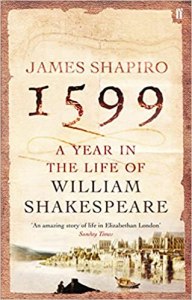
Another book I’ve had since 2007, still waiting to be read for the same reason is 1599: A Year in the Life of William Shakespeare by James Shapiro. 1599 was the year the Globe Theatre was built and that Shakespeare wrote Julius Caesar, Henry V, As You Like It and Hamlet. it’s full of detail, not just about Shakespeare, his plays and the theatre, but also about the events of his life and times!

Version 1.0.0

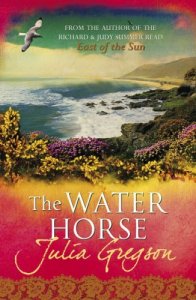
The Water Horse by Julia Gregson, a book I’ve had since 2009. It’s historical fiction based on the true story of a young Welsh woman, Jane Evans, a Welsh woman who in 1853 ran off with Welsh cattle drovers and volunteered as a nurse with Florence Nightingale in the Crimea. Catherine Carreg has grown up a tomboy, spending her days racing her ponies with Deio, the drover’s son, in a small Welsh village. But Catherine is consumed by a longing to escape the monotony of village life and, with Deio’s help, runs away to London.

Alone in the unfamiliar bustle of the city, Catherine finds a position in a rest home for sick governesses in Harley Street, run by Miss Florence Nightingale. Then, as the nation is gripped by reports of the war in the Crimea, Catherine volunteers as a nurse – and her life changes beyond all recognition.

Jeremy Hutchinson’s Case Histories by Thomas Grant – I bought this in February 2020 after watching the BBC series,The Trial of Christine Keeler, the story of the Profumo affair in 1962 as seen from her perspective. Hutchinson was Keeler’s defence barrister.

Born in 1915 into the fringes of the Bloomsbury Group, Jeremy Hutchinson went on to become the greatest criminal barrister of the 1960s, ’70s and ’80s. The cases of that period changed society for ever and Hutchinson’s role in them was second to none. In Case Histories, Jeremy Hutchinson’s most remarkable trials are examined, each one providing a fascinating look into Britain’s post-war social, political and cultural history.

Stacking the Shelves: 25 January 2025

It’s Saturday and time for Stacking the Shelves, hosted by Marlene at Reading Reality and the details are on her blog, as well as a huge amount of book reviews. Why not visit her blog if you haven’t already found it? The gorgeous graphic is also used courtesy of the site.

The idea is to share the books you are adding to your shelves, may they be physical or virtual. This means you can include books you buy in physical stores or online, books you borrow from friends or the library, review books, gifts and of course e-books!

These are all e-books I’ve either bought or acquired for free from Amazon since the beginning of this year:

The Woman In Blue: The Dr Ruth Galloway Mysteries 8  by Elly Griffiths. Somehow I missed reading this book when it first came out in 2016, so when I saw it was 99p on Amazon I bought it. It’s book 8 out of 15 in the series. When Ruth’s friend Cathbad* sees a vision of the Virgin Mary, in a white gown and blue cloak, in Walsingham’s graveyard, he takes it in his stride. Walsingham has strong connections to Mary, and Cathbad is a druid after all; visions come with the job. But when the body of a woman in a blue dressing-gown is found dead the next day in a nearby ditch, it is clear that a horrible crime has been committed, and DCI Nelson and his team are called in for what is now a murder investigation.

*I’ve read most of this series. Cathbad is one of my favourite characters.

Greek Lessons by Han Kang, the winner of the 2024 Nobel Prize in Literature, a new-to-me author. This is a new translation by Deborah Smith and Emily Yae Won, of the 2011 novel that explores how a teacher losing his sight and a pupil losing her voice form a poetic bond. It is a short book, of just 149 pages narrated by the two unnamed characters, one a woman grieving for her mother and her son, now in the custody of her ex-husband. She is also experiencing the loss of her ability to speak. The other is a man losing his connection to place and family, as well as the loss of his eyesight.  They meet when the woman attends his Ancient Greek lessons.

Eleven Numbers, a short story by Lee Child. Nathan Tyler is an unassuming professor at a middling American university with a rather obscure specialty in mathematics—in short, a nobody from nowhere. So why is the White House calling? Summoned to Washington, DC, for a top-secret briefing, Nathan discovers that he’s the key to a massive foreign intelligence breakthrough. Reading between the lines of a cryptic series of equations, he could open a door straight into the heart of the Kremlin and change the global balance of power forever. All he has to do is get to a meeting with the renowned Russian mathematician who created it. But when Nathan crashes headlong into a dangerous new game, the odds against him suddenly look a lot steeper.

Genius Gut: 10 New Gut-Brain Hacks to Revolutionise Your Energy, Mood, and Brainpower by Emily Leeming. Microbiome scientist and registered dietitian Dr Emily Leeming explains the ground-breaking evidence on the relationship between food and mood, unveiling the powerful gut-brain connection…and exciting new links to your gut bacteria. I downloaded the sample before deciding to buy this book and think it looks very interesting and easy to read for a non-scientist like me. I never thought much about my gut until I had bowel cancer eighteen months ago!

The Fake Wife by Sharon Bolton. I’ve a lot of her books and have enjoyed them all, so this is one I’m really looking forward to reading. It’s described as an absolutely gripping psychological thriller with jaw-dropping twists. Olive Anderson is dining alone at a hotel when a glamourous stranger joins her table, pretending to be her wife. What starts as a thrilling game quickly turns into something dangerous. But as much as the fake wife has her secrets, Olive just might have more . . .

Top 5 Tuesday: Top 5 books I will definitely* read in 2025

Top 5 Tuesday was created by Shanah at Bionic Book Worm, and it is now being hosted by Meeghan at Meeghan Reads. For details of all of the latest prompts for January to March, see Meeghan’s post here.

Today the topic is Top 5 books I will definitely* read in 2025. What are 5 books you really want to tick off your TBR this year? * Same disclosure every year: you won’t be subjected to punishment (from Meeghan) if you don’t read these.

I have so many TBRs that it is difficult to choose just 5. These are 5 of the books that I’ve had for several years but I’m a mood reader so just like Meeghan when I say “definitely” I mean “maybe, you know, if I feel like it”.

Whispers Under Ground by Ben Aaronovitch – Book 3 in the Rivers of London series, from Sunday Times Number One bestselling author Ben Aaronovitch.

I’ve read the first two of this series, and loved them, so why haven’t I read any more?

Peter Grant is learning magic fast. And it’s just as well – he’s already had run-ins with the deadly supernatural children of the Thames and a terrifying killer in Soho. Progression in the Police Force is less easy. Especially when you work in a department of two. A department that doesn’t even officially exist. A department that if you did describe it to most people would get you laughed at. And then there’s his love life. The last person he fell for ended up seriously dead. It wasn’t his fault, but still.

Now something horrible is happening in the labyrinth of tunnels that make up the tube system that honeycombs the ancient foundations of London. And delays on the Northern line is the very least of it. Time to call in the Met’s Economic and Specialist Crime Unit 9, aka ‘The Folly’. Time to call in PC Peter Grant, Britain’s Last Wizard.

This Poison Will Remain by Fred Vargas. The 9th book in her Commissaire Adamsberg series. I’ve read some of the earlier books.

After three elderly men are bitten by spiders, everyone assumes that their deaths are tragic accidents.

But at police headquarters in Paris, Inspector Adamsberg begins to suspect that the case is far more complex than first appears.

It isn’t long before Adamsberg is investigating a series of rumours and allegations that take him to the south of France. Decades ago, at La Miséricorde orphanage, shocking events took place involving the same species of spider: the recluse.

For Adamsberg, these haunting crimes hold the key to proving that the three men were targeted by an ingenious serial killer. His team, however, is not convinced. He must put his reputation on the line to trace the murderer before the death toll rises…

Thomas Cromwell: The untold story of Henry VIII’s most faithful servant by Tracy Borman. After reading Hilary Mantell’s historical fiction trilogy about Thomas Cromwell, I want to read this biography about him – just haven’t got round to it yet.

I feel bad about not reading the next two books, both biographies as I’ve had them for so long, I’d love to read both of them this year …

The Brontes by Juliet Barker. I visited the Bronte Parsonage Museum in Haworth, way back in 2014, and have been meaning to read this book about the family ever since.

The story of the tragic Bronte family is familiar to everyone: we all know about the half-mad, repressive father, the drunken, drug-addicted wastrel of a brother, wild romantic Emily, unrequited Anne and ‘poor Charlotte’. Or do we? These stereotypes of the popular imagination are precisely that – imaginary – created by amateur biographers from Mrs Gaskell onwards who were primarily novelists, and were attracted by the tale of an apparently doomed family of genius.

Juliet Barker’s landmark book was the first definitive history of the Brontes. It demolishes myths, yet provides startling new information that is just as compelling – but true. Based on first-hand research among all the Bronte manuscripts, many so tiny they can only be read by magnifying glass, and among contemporary historical documents never before used by Bronte biographers, this book is both scholarly and compulsively readable. THE BRONTES is a revolutionary picture of the world’s favourite literary family.

And I’ve had Thomas Hardy: The Time Torn Man by Claire Tomalin, even longer – over 15 years.

Paradox ruled Thomas Hardy’s life. His birth was almost his death; he became one of the great Victorian novelists and reinvented himself as one of the twentieth-century’s greatest poets; he was an unhappy husband and a desolate widower; he wrote bitter attacks on the English class system yet prized the friendship of aristocrats.

In the hands of Whitbread Award-winning biographer Claire Tomalin, author of the bestselling Charles Dickens: A Life and The Invisible Woman, Thomas Hardy comes vividly alive.

Recent Additions: Christmas Presents

I’ve always loved books and whenever anyone asked me what I’d like for my birthday or Christmas the answer was always ‘books, please’ . So l was delighted this last Christmas to receive four books!

Two of them are books that were on my wish list and the other two were complete surprises.

One: Simple One-Pan Wonders by Jamie Oliver (from my wish list)

I’ve got some of Jamie’s books, and this one looks like a good addition. In his introduction he writes ‘With a twinkle in my eye I want to position this book as one that is absolutely dedicated to the art of minimal washing up – you cook each recipe in just one pan or tray … it’s about making your life easier.’ I like the idea of minimal washing up and will be cooking quite a lot of these recipes.

It has over 120 recipes for tasty, fuss-free and satisfying dishes cooked in just one pan. What’s better: each recipe has just eight ingredients or fewer, meaning minimal prep (and washing up) and offering maximum convenience. With chapters including Veggie Delights, Celebrating Chicken, Frying Pan Pasta, Batch Cooking, Puds & Cakes, it all looks simply delicious.

Wars of the Roses: Stormbird Book One by Conn Iggulden (from my wish list)

Historical fiction has long been a great favourite of mine. I absolutely loved Sharon Penman’s The Sunne in Splendour that made me want to know more about the Wars of the Roses.So, when I found Iggulden had written a trilogy about the civil war I was keen to read it. I’ve read some of Iggulden’s other historical fiction novels and loved them, so I’m looking forward to reading this.

King Henry V – the great Lion of England – is long dead. In 1437, after years of regency, the pious and gentle Henry VI, the Lamb, comes of age and accedes to the English throne. His poor health and frailty of mind render him a weakling king -Henry depends on his closest men, Spymaster Derry Brewer and William de la Pole, Duke of Suffolk, to run his kingdom.

Yet there are those, such as the Plantagenet Richard, Duke of York, who believe England must be led by a strong king if she is to survive. With England’s territories in France under threat, and rumours of revolt at home, fears grow that Henry and his advisers will see the country slide into ruin. With a secret deal struck for Henry to marry a young French noblewoman, Margaret of Anjou, those fears become all too real.

As storm clouds gather over England, King Henry and his supporters find themselves besieged abroad and at home. Who, or what can save the kingdom before it is too late?

The Case of the Canterfell Codicil (Anty Boisjoly Mysteries Book 1) by PJ Fitzsimmons (not on my wish list). This was a complete surprise for me as I don’t know anything about this book, or the author. It’ll be good reading a new-to-me author and I do like locked room mysteries.

1920s gadabout Anty Boisjoly takes on his first case when his Oxford chum is facing the gallows, accused of the murder of his wealthy uncle.


Not one but two locked-room murders later, Boisjoly’s pitting his wits and witticisms against a subversive butler, a senile footman, a single-minded detective-inspector, an errant goat, and the eccentric conventions of the pastoral Sussex countryside to untangle a multi-layered mystery of secret bequests, ancient writs, love triangles, revenge, and a teasing twist in the final paragraph.


The Case of the Canterfell Codicil is a classic, cosy, locked-room mystery with an improbable plot inspired by Agatha Christie and prose in the style of an homage to PG Wodehouse.

Wintering: The power of rest and retreat in difficult times by Katherine May (a surprise, not on my wish list). It’s a memoir covering quite a wide range of topics, not just about winter, or rest and retreat. I’ve seen this book is one people either praise it or criticise it, so I’m keen to know what I think of it.

Wintering is a poignant and comforting meditation on the fallow periods of life, times when we must retreat to care for and repair ourselves. Katherine May thoughtfully shows us how to come through these times with the wisdom of knowing that, like the seasons, our winters and summers are the ebb and flow of life.

A moving personal narrative interwoven with lessons from literature, mythology and the natural world, May’s story offers instruction on the transformative power of rest and retreat. Illumination emerges from many sources: solstice celebrations and dormice hibernation, C.S. Lewis and Sylvia Plath, swimming in icy waters and sailing arctic seas.

Ultimately, Wintering invites us to change how we relate to our own fallow times. May models an active acceptance of sadness and finds nourishment in deep retreat, joy in the hushed beauty of winter, and encouragement in understanding life as cyclical, not linear. A secular mystic, May forms a guiding philosophy for transforming the hardships that arise before the ushering in of a new season.

Top Ten Tuesday: Best Books I Read in 2024

This week’s topic is:  Best Books I Read In 2024.

Top 5 fiction:

The Stars Look Down by A.J. Cronin, a family saga chronicling the lives of a number of interconnected families over a period of thirty years. 

The story starts in 1903 in a North Country mining town, Sleescale, a fictional town, as its inhabitants experienced social and political upheaval. It ends in 1933. It highlights the terrible conditions in the coal mines, the lack of workers’ rights and the need for change in the relationship between the coal miners and the mine owners.

It’s a long book, but I read it quickly, completely absorbed in all the sub plots and keen to know how it would all be resolved. There is plenty of drama, with scenes including a flood in the pit, killing one hundred and five miners, including David’s father and brother. Cronin’s descriptive writing is so strong, conveying the terrible conditions in the pit, as the miners find themselves trapped and slowly realise there is no way out. Those scenes in particular made a big impression on me and will stay with me for quite some time.

I Let You Go by Clare Mackintosh, a powerful novel that kept me glued to its pages;

It is set partly in Bristol, England where Jacob is killed, and then moves into a small coastal village in Wales where Jenna is trying to make a new life for herself. It’s heart-wrenching reading as Jenna tries to put the past behind her and at times I thought this was a romantic novel. But it’s not, as it becomes clear that there are secrets in her past that haunt her. It’s almost a book of two parts and the second half is dark and violent, full of suspense and menace, and really shocking twists and turns. The characters are fully rounded, extremely well-drawn and realistic. The settings are vividly described, especially of the beautiful Welsh coast line. I could picture it so well and it made me long to be there.

The Tree of Hands by Ruth Rendell, one of her best standalone books.

Why I enjoyed it so much is that it thoroughly gripped me and made me want to read on and on. It’s a psychological thriller, full of suspense, with several twists and turns that made me unsure how it would end. I was delighted by the final twist!

Benet’s son, James aged four dies from croup whilst in hospital soon after Mopsa, her mother with a history of mental illness, comes to visit. Meanwhile Carol, a young widow with three kids, two of them in care, is living nearby with Barry, her younger boyfriend. He adores her but she doesn’t want to marry him, content for him to do all the housework and look after Jason her two year old son when he is not being looked after by babysitters. The trouble starts when Mopsa kidnaps Jason and brings him back to Benet as a replacement for James.

The Silence Between Breaths by Cath Staincliffe, about a group of people on the 10.35 train from Manchester Piccadilly to London Euston. It’s a story of a routine journey that takes a terrifying turn. You know early on both from the description on Amazon and from the back cover that one of the passengers, Saheel, has a ‘deadly secret’ ie a bomb, in his rucksack. So, the tension is there from the beginning of the book and I was wondering when he was going to the let off the bomb and what would happen to the passengers.

The characterisation is superb, so that I cared about each person, the setting is so well described in such detail that it all happened before my eyes and the drama and tension grew as the events played out. One of the standout books that I’ve read this year.

The Flower Arranger at All Saints by Lis Howell

There is a lot to like in this book. The setting is Tarnfield, a fictional Cumbrian village. The setting is described so well that I could ‘see’ it all. It’s picturesque, quiet and secluded, a place where everyone knows everybody’s business. The church plays a huge part in village life, but traditions are being upended by the new vicar and his fondness for playing the guitar during sermons.

And the characters are so ‘real’. I believed in them and even though there are many of them they’re all easily distinguishable and I loved the biblical references and flower clues – they’re intriguing. The plot too kept me keen to carry on reading, wanting to know the identity of the murderer.

Top 5 nonfiction:

Shakespeare: The Man who Pays the Rent by Judi Dench, Brendan O’Hea, an enthralling book.

Reading it is like being in the room with Dame Judi Dench and Brendan O’Hea as they talked about Judi’s career, her love for Shakespeare, and the numerous roles she has played over the years. Shakespeare to Judi Dench is a passionate affair, she talks about it with love.

This book is a wonderful run through the plays told from Judi’s perspective and, of course, her life, giving her insight not only into the characters but also into the world of the theatre. She talks about the rehearsals, the costumes, the sets, other actors, about critics, Shakespeare’s language – similes and metaphors, the use of rhyme, prose and verse, soliloquies, asides and how to adjust your breathing – and so on. Whatever she is talking about is all so clear and relevant, full of wit and humour and understanding.

Maiden Voyages by Sian Evans, a fascinating portrait of the women, and their lives on board magnificent ocean liners as they sailed between the old and the new worlds.

It covers a wide range of topics that fascinate me – not just travel, but also social history, both World Wars, the sinking of the Titanic, emigration, the impact that the ocean liners had on the economy. and on women’s working lives and independence, adventure and so much more besides.

The ocean liner was a microcosm of contemporary society, divided by class: from the luxury of the upper deck, playground for the rich and famous, to the cramped conditions of steerage or third class travel. These iconic liners were filled with women of all ages, classes and backgrounds: celebrities and refugees, migrants and millionairesses, aristocrats and crew members.

Great Meadow by Dirk Bogarde, first published in 1992,  is volume five of Bogarde’s best-selling memoirs.

A recollection of his childhood, from 1927 to 1934 when he was a 19 year old, living in a remote cottage in the Sussex Downs with his sister Elizabeth and their strict but loving nanny, Lally. For the children it was an idyllic time of joy and adventure: of gleaning at the end of summer, of oil lamps and wells, of harvests and harvest mice in the Great Meadow.

Into the Tangled Bank: Discover the Quirks, Habits and Foibles of How We Experience Nature by Lev Parikian

This is non fiction about nature. It’s easy reading, Parikian writes with humour, in a chatty style, but also richly descriptive. I loved it, it is compulsive reading. He is a storyteller, so there are lots of anecdotes and stories, plus his thoughts on nature and how we view it. Amongst many other topics he ponders about the ethics of zoos – something that puzzles me too – and wonders if the definition of a nature lover is becoming that of one who loves nature programmes. There’s a lot packed into this book.

Getting Better by Michael Rosen

Michael Rosen has grieved the loss of a child, lived with debilitating chronic illness, and faced death itself when seriously unwell in hospital with Covid. In spite of this he has survived, and has even learned to find joy in life in the aftermath of tragedy. In Getting Better, he shares his story and the lessons he has learned along the way. Exploring the roles that trauma and grief have played in his own life, Michael investigates the road to recovery, asking how we can find it within ourselves to live well again after – or even during – the darkest times of our lives. Moving and insightful, this is a wonderful book.

Spell the Month in Books – December 2024

Spell the Month in Books is a linkup hosted by Jana on Reviews From the Stacks on the first Saturday of each month. The goal is to spell the current month with the first letter of book titles, excluding articles such as ‘the’ and ‘a’ as needed. That’s all there is to it! Some months there are optional theme challenges, such as “books with an orange cover” or books of a particular genre, but for the most part, any book you want to use is fair game!

The optional theme this month is Christmas or Nonfiction and I’ve chosen the Nonfiction option as I don’t read many Christmas-related books. The descriptions are taken from my posts on the books, where they exist.

D is for The Dancing Bear by Frances Faviell, the pen name of Olivia Faviell Lucas, painter and author.

After the war, in 1946, she went with her young son, John, to Berlin where Richard Parker, her second husband, had been posted as a senior civil servant in the post-war British Administration. It was here that she befriended the Altmann family, which prompted her first book The Dancing Bear (1954), a memoir of the Occupation seen through the eyes of both occupier and occupied.It covers the years from Autumn 1946 to Autumn 1949, with an Epilogue dated Autumn 1953. Her memoir is mainly about her friendship with the Altmann family – Frau Maria Altmann, her husband, Oskar and her children, Ursula, who works for a group of American service men, Lilli, a ballet dancer and son, Fritz, who was a member of the Hitler Youth and is now involved in the Black Market. Their eldest son. Kurt. is missing in Russia. Berlin had been divided into four sectors by the Allies – Britain, the United States, France and the Soviet Union – and Frances is horrified by the conditions she found. There were deaths from hunger and cold as the winter approached and queues for bread, milk, cigarettes, cinemas, buses and trams.

E is for Elizabeth Macarthur: a Life at the Edge of the World by Michelle Scott Tucker

This is an extremely readable biography of a fascinating woman. It’s well researched and provides an insight into the early years of Australia’s colonial history. Elizabeth was born on 14 August 1766 in Devon, England and she married John Macarthur in October 1788. In June 1789 they sailed with their first child, Edward, to New South Wales where John joined his regiment, the New South Wales Corps, in the recently established colony of New South Wales.

For sixty years, Elizabeth ran the family farm in Parramatta, west of Sydney town – on her own during her husband’s long absences abroad, when she was responsible for the care of their valuable merino flocks, as well as the Camden Park estate and the direction of its convict labourers. By the time Macarthur came back from his second absence, he was overwhelmed by mental illness, and they spent the last few years of his life apart. He died in 1834. The house and gardens of her farm, aptly named ‘Elizabeth Farm’ is now an ‘access all areas’ museum. In 1850, she died in her daughter and son-in-law’s house at Watson’s Bay outside Sydney, overlooking the Pacific Ocean.

C is for Come Tell Me How You Live by Agatha Christie Mallowan

Agatha Christie had visited the Middle East in 1929 travelling on the Orient Express to Istanbul and then on to Damascus and Baghdad. She visited the excavations at Ur and returned there the following spring where she met archaeologist Max Mallowan – by the end of the summer they had decided to marry, which they did on 11 September 1930.

It’s her memoir in answer to her friends’ questions about what life was like when she accompanied Max on his excavations in Syria and Iraq in the 1930s. The emphasis in the book is on the everyday life on a dig and Agatha took an active part, helping to catalogue, label and clean the items they found as well as taking photographs and developing them. She also found time to spend on writing her books. So, although she gives a detailed account of how they worked, how they employed workmen for the excavations and servants who looked after Max and his team of archaeologists, there is not much about what they found.

She described the local people in her Epilogue as people, who know how to laugh and how to enjoy life, who are idle and gay, and who have dignity, good manners, and a great sense of humour, she also recorded their disputes: ‘Quarrelling is, in any case, almost continuous.‘ And ‘Syria is full of fiercely fanatical sects of all kinds, all willing to cut each other’s throats for the good cause! 

E is for Elizabeth’s Rival: The Tumultuous Tale of Lettice Knollys, Countess of Leicester by Nicola Tallis – I haven’t read this yet, it’s one of my TBRs.

Cousin to Elizabeth I – and very likely also Henry VIII’s illegitimate granddaughter – Lettice Knollys had a life of dizzying highs and pitiful lows. Darling of the court, entangled in a love triangle with Robert Dudley and Elizabeth I, banished from court, plagued by scandals of affairs and murder, embroiled in treason, Lettice would go on to lose a husband and beloved son to the executioner’s axe. Living to the astonishing age of ninety-one, Lettice’s tale gives us a remarkable, personal lens on to the grand sweep of the Tudor Age, with those closest to her often at the heart of the events that defined it.

In the first ever biography of this extraordinary woman, Nicola Tallis’s dramatic narrative takes us through those events, including the religious turmoil, plots and intrigues of Mary, Queen of Scots, attempted coups, and bloody Irish conflicts, among others. Surviving well into the reign of Charles I, Lettice truly was the last of the great Elizabethans. (Amazon UK)

M is for The Mystery of Princess Louise by Lucinda Hawksley.

Princess Louise was Victoria’s sixth child – her fourth daughter, born on 18th March 1848. It was an agonising and terrifying birth in a year of revolution and rebellion, a time when royal families throughout Europe were being deposed and in Britain the working classes were agitating for higher pay, better working conditions and more legal rights. There is so much detail about her life in this book, packed with intrigues, scandals and secrets.

She had a difficult childhood, disliked and bullied by her mother and she often rebelled against the restrictions of life as a princess. She had an unhappy marriage to John Campbell, the Marquess of Lorne, later the 9th Duke of Argyll, a homosexual, and went with him to Canada in 1882 when he was appointed as Governor-General. Her relationship with Canada became a love-hate one, but began and ended with Canadian adoration.

The scandals arose about whether she had had an illegitimate child and her long term love affair with the sculptor Joseph Boehm. The mystery is still unresolved as Louise’s files in the Royal Archives are closed and her husband’s family archives are inaccessible.

B is for Breathtaking by Rachel Clarke, a palliative care doctor.

Her book recounts her experiences during the first four months of 2020, when she worked on the Covid-19 wards in the Oxford University Hospitals system. Taken from her diary that she kept at the time it has an immediacy as she records her insomnia, her fears for her family and also the tremendous resilience, courage and empathy that she and the rest of the hospital staff had. Although it is a grim account, it is also uplifting to know the care they took of their patients and the attentiveness to their patients’ needs despite the fact that many of the staff were not trained in intensive care and had never dealt with anything like this before. Breathtaking records the compassion and kindness of numerous people, and pays tribute to both NHS staff and volunteers in dealing with such a distressing and immensely horrific situation.

E is for The English: a Portrait of a People by Jeremy Paxman

I like Paxman’s style of writing, I could almost hear him speaking as I read. He’s a person who has grown on me over the years and  lately I’ve enjoyed his TV documentaries too. It’s always been entertaining to watch his interviews, even if I didn’t agree with his views – or his aggressive approach. It’s toned down in this book, but every now and then his acerbic nature comes across. He writes about food, sport, football hooligans, language, individualism, education, religion, ‘John Bull’, cities and the countryside – the English idyllic village, class structure and social tone, attitudes to women, business and trade to name but a few topics. It’s well researched and very readable, with a bibliography listing all the books he mentions plus others that presumably he has used. It seems there really is no such thing as ‘the English’ – we’re a mixture of all sorts, or as Paxman puts it, The English are a mongrel race‘. (page 59)

R is for The Riviera Set by Mary S Lovell

This is the story of a house and those who peopled it between the years 1930 and 1960. In 1930 Maxine Elliott, an American, commissioned the architect Barry Dierks to build  the Chateau de l’Horizon on the land she had bought on a narrow stretch of rocks with a small promontory between Cannes and Juan-les-Pins. This is the part of the book I enjoyed the most, first of all about Maxine herself, then the description of the construction of the Chateaux and the years that Maxine owned it and lived there. Maxine really came into her own there as a superb hostess. Regular visitors included Winston Churchill, Cole Porter, Noel Coward, Somerset Maugham among many others – famous actors and actresses as well as members of the aristocracy and politicians. 

The Duke and Duchess of Windsor, who lived nearby before the Second World War, were also visitors. The picture painted of them is not flattering – and there was much talk about how to address Wallis and whether the women should curtsy to her. By the time the War approached Maxine had lost her sparkle, suffering from ill health and she died in March 1940.

The Chateau was bought by Aly Khan, the Aga Khan’s heir presumptive at the time. There is quite a lot about his time there, his womanising, his marriage to Rita Hayworth and the social scene of the post-war period up to 1960. It is a fascinating and entertaining book about a pampered, luxurious and decadent world.

The next link up will be on January 4, 2025 when the theme will be: New; this could be new-to-you books, new additions to your TBR list, recently published books, or something else that you connect with the word ‘New’.