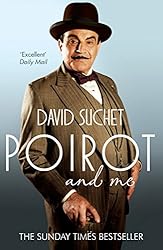
Poirot and Me by David Suchet and Geoffrey Wansell

Prologue

It is a damp, chill Friday morning in November and I am feeling old, very old; so old, indeed, that I am on the brink of death. I have lost two stone in weight, my face is the colour of aged parchment, and my hands are gnarled  like human claws.

I must have watched nearly all, if not all, of David Suchet’s performances as Agatha Christie’s Hercule Poirot. For me he was the perfect Poirot, so it was a given that I would read his autobiography, Poirot and Me, written with the help of his friend Geoffrey Wansell. And it really lives up to its title, as the main subject is David Suchet’s role as Poirot. His first performance as Poirot was in 1988. Over the intervening twenty five years he played the part in every one of the seventy Poirot stories that Agatha Christie wrote, with the exception of a tiny short story called The Lemesurier Inheritance (a story in Poirot’s Early Cases and in The Under Dog).

When I started watching the TV dramas it had been years since I’d read any of Agatha Christie’s books and I wasn’t aware that the early shows were based on her short stories – actually I didn’t even know then that she had written any short stories at all. I’ve read nearly all of her full length novels, but only a few of her short stories so far.

I think Poirot and Me may not appeal to people who are not readers of Agatha Christie’s books as it consists largely of Suchet’s summaries of the stories and how he went about analysing Poirot’s character and how he played the part. He began by compiling a list of Poirot’s characteristics, then considering his voice and his appearance. He made 92 ‘character points’ and his original list is reproduced in the book, along with photos of locations, the cast and crew.

He was most concerned that his portrayal of Poirot should be faithful to the character that Agatha Christie had created. He immersed himself so completely in the character that at times he didn’t know where Poirot ended and he began! Even so, some of the dramatisations are not strictly faithful to the original stories, for various reasons; additional characters are included and some of the plots are expanded versions, especially where the original short stories were slight. Or, for example, as in the case of the collection of short stories that make up The Twelve Labours of Hercules, the stories are so diverse that the screenwriter created an almost entirely new story, though using some of the characters.

At the end of each of the Poirot series, David Suchet didn’t know if any more were in the pipeline and he continued to play other parts in film,  on TV and on the stage. I found this just as interesting as the sections on his role as Poirot and it emphasises his qualities as an actor –  he is a ‘character’ actor, a Shakespearean actor and with the exception of Poirot his roles have been pretty dark and menacing parts. I particularly remember him in Blott on the Landscape, in which he played the malevolent gardener and in The Way We Live Now as the sinister financier Melmotte.

He thinks the charm of the Poirot stories is that

… they reveal a world where manners and morals are quite different from today. There are no overt or unnecessary sex scenes, no alcoholic, haunted detectives in Poirot’s world. He lives in a simpler, some would say more human, era; a lost England, seen through the admiring eyes of this foreigner, this little Belgian detective. For me, that makes the stories all the more appealing, for although the days he lives in seem far away, they are all the more enchanting because of it. (page 64 in the hardback edition)

I think so too – and I think the same charm and appeal can be found in the Miss Marple stories.

David Suchet wrote that when Hercule Poirot died on that late November afternoon in 2012 (as he filmed Curtain) a part of him died, but for me and doubtless for many others, Poirot lives on not just in Agatha Christie’s stories but also in David Suchet’s wonderful performances as his ‘cher ami‘, Hercule Poirot.

  • Hardcover: 320 pages (also available in paperback and on Kindle)
  • Publisher: Headline; 1st edition (7 Nov. 2013)
  • Language: English
  • ISBN-10: 0755364198
  • ISBN-13: 978-0755364190
  • Source: my local library

This Week in Books: 20 May 2015

My week in books

This Week in Books is a weekly round-up hosted by Lypsyy Lost & Found, about what I’ve been reading Now, Then & Next. A similar meme is run by Taking on a World of Words.

Now:

I’m currently  reading three books.

Golden Age etc

The Golden Age of Murder by Martin Edwards – the story of detective fiction written by the authors in the Detection Club between the two World Wars.  I’m reading this slowly, enjoying all the details about authors whose books I’ve read such as Agatha Christie and authors I’ve only heard of. I can see I’m going to have a long list of books to read by the end of this book.

Harbour Streetthe sixth Vera Stanhope murder mystery by Ann Cleeves. In Newcastle, Detective Joe Ashworth and his daughter Jessie travel home on the busy Metro. The train is stopped unexpectedly, and Jessie sees that one woman doesn’t leave with the other passengers: Margaret Krukowski has been fatally stabbed. This was adapted for television and I watched it when it was first broadcast last year but can’t remember the identity of the murderer!

Poirot and Me by David Suchet – his account of how he came to play Hercule Poirot in TV’s Agatha Christie’s Poirot in 1988 until the final episode in 2013. I think I must have watched all the episodes, some more than once and it’s interesting to get David Suchet’s perspective.

Then:

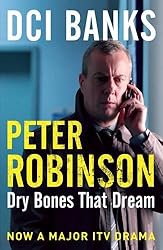
A few days ago I finished reading Dry Bones That Dream by Peter Robinson, a DCI Banks Mystery. I wrote about it earlier this week in this post.

Next:

As usual I’m not sure what I’ll read next. I’m very tempted to read one of the books I added to the TBR piles yesterday when I went to Barter Books in Alnwick. Yesterday was also the fortnightly visit of the library van and I collected three books I’d reserved- I’ll do a separate post about all these books.

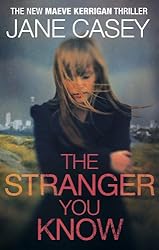
The one that is calling to me right now is The Stranger You Know by Jane Casey. This is the fourth Maeve Kerrigan book and I’ve read the first three.
Maeve is investigating the murders of three women who have been strangled in their homes by the same killer. It appears that they knew their killer and had let him in.

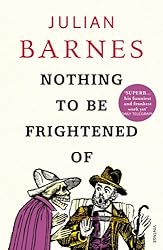
Nothing To Be Frightened Of by Julian Barnes

I read Nothing To be Frightened Of over several weeks, reading short sections at a time. This book is described on the back cover by Penelope Lively as:

A maverick form of family memoir that is mainly an extended reflection on the fear of death and on that great consolation, religious belief … it is entertaining, intriguing, absorbing … an inventive and invigorating slant on what is nowadays called “life writing”.

It is a collection of thoughts centred around Barnes’s fear of death and so inevitably he considers the question of religion and especially God – in fact he begins his book with this statement: I don’t believe in God, but I miss him.

Later, he writes, Missing God is rather like Being English, a feeling aroused mainly by attack. When my country is abused, a dormant, if not to say narcoleptic, patriotism stirs. And when it comes to God, I find myself more provoked by atheistic absolutism than by, say, the often bland, tentative hopefulness of the Church of England. (page 77)

His agnosticism doesn’t help him with his fear of dying, but then, again, he thinks that faith does not necessarily remove the fear of death anyway – there are those who fear death among those who have faith as well as among the irreligious.

But this is more than a book about dying because interwoven with his thoughts about his agnosticism and death are anecdotes about his family and himself, thoughts on literature (particularly French literature) and it’s relationship to life. I found it all fascinating,  but it’s his autobiographical passages that I found the most interesting, sharing details about his family’s beliefs and the deaths of his parents and grandparents, of the rivalry between him and his brother, his mother’s solipsism and manipulative behaviour, his father’s seemingly passive approach to life and the difficulties of really knowing a person.

He states that it is easier with fiction than with life – fictional characters are easier to see, whereas in real life ‘the better you know someone , the less well often you see them. … They may be so close as to be out of focus … Often when we talk about someone very familiar, we are referring back to the time when we first properly saw them, when they were held in the most useful -and flattering light – light at the correct focal distance.’ (page 157)

He and his brother have different memories of their parents and grandparents and of their own early relationship, which shows how unreliable memory can be. I suppose I agree more with his brother, the philosopher Jonathan Barnes, who thinks that memories are often false and not to be trusted without external support, rather than Julian, who says he is more trusting, or self deluding, so shall continue as all my memories are true.

This is by no means a gloomy, pessimistic book.  It’s written in an informal tone, almost as though he is talking to the reader, and not being divided into chapters adds to that sense of being involved in a conversation. But is far from being a simple read – there is an awful lot packed into this book, an intensely personal book that reflects the complexity of our views of life and death. It gave me much to think about and even made me chuckle in parts.

And finally thinking about being remembered/forgotten after his death, Barnes considers who will be his last reader because with that reader he will finally be forgotten – and then he reflects that your last reader is, by definition, someone who didn’t recommend your books to anyone else. You bastard! Not good enough, eh? (page 226)

I think it extremely unlikely that I’ll be his last reader!

Reading Challenge: Non Fiction Reading Challenge 2015. This is only the 5th non fiction book I’ve read so far this year!

Stacking the Shelves

STSmall

Stacking The Shelves is all about sharing the books you are adding to your shelves. This means you can include ‘real’ and ‘virtual’ books (ie physical and ebooks) you’ve bought, books you’ve borrowed from friends or the library, review books, and gifts.

This is my first entry in Stacking the Shelves. These are last week’s new arrivals:

In the heart of the sea

First ‘real’ books. It was Mother’s Day last Sunday and my son bought me this book, In the Heart of the Sea: the Epic True Story that Inspired Moby Dick by Nathaniel Philbrick – wonderful!

From the back cover:

The sinking of the Nantucket whaleship Essex by an enraged spermwhale far out in the Pacific in November 1820 set in train one of the most dramatic sea stories of all time. Accounts of the unprecedented whale attack inspired Herman Melville’s mighty novel Moby Dick, but In the Heart of the Sea goes beyond these events to describe what happened when the twenty mixed-race crewmen took to three small boats and what, three months later, the whaleship Dauphin, cruising off the coast of South America, discovered when it spotted a tiny boat sailing erratically across an open ocean.

The other books in the photo above are library books:

  • Collins Artist’s Little Book of Inspiration by Hazel Soan – a lovely little book looking at the basics elements of a painting using watercolours, oils and acrylics, with demonstrations and projects to try. I like just looking at the paintings!
  • The Reckoning by Jane Casey, the second in her Maeve Kerrigan series. I reserved this because I’d enjoyed the first one, The Burning and wanted to read more. This one begins with the murders of two paedophiles.
  • Conan Doyle: the Man who Created Sherlock Holmes by Andrew Lycett. This book was on a display stand and even though it’s a huge, heavy book I fancied reading it. It was probably on display following the  recent TV drama Arthur and George, which I enjoyed. I read Julian Barnes’ book of the same name some years ago, which pre-dates this biography.

When Lovereading offered a review copy of Dacre’s War by Rosemary Goring I didn’t hesitate because I’d loved Rosemary Goring’s earlier novel, After Flodden.

Dacres War

Dacre’s War is set 10 years after the battle of Flodden in the Scottish and English borders, a story of ‘personal and political vengeance’ as Adam Crozier sets out to take revenge on Lord Thomas Dacre, who had ordered the death of his father. It’s due to be published on 14 May 2015.

Lastly, the latest ebook I’ve downloaded is today’s Kindle Daily Deal, Last Man in Tower by Aravind Adiga. A. N. Wilson ‘was absolutely mesmerized by this novel’ and thinks ‘that Aravind Adiga is already, with this, his second book, the most exciting novelist writing in English today.’ 

Last Man in Tower

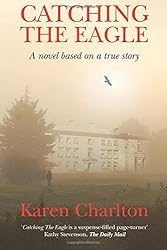
Catching the Eagle by Karen Charlton

I wanted to read a novel by a local author so I checked the library website for North East writers, where I found Catching the Eagle by Karen Charlton.
Summary from the book cover:

Easter Monday, 1809: Kirkley Hall manor house is mysteriously burgled. When suspicion falls on Jamie Charlton, he and his family face a desperate battle to save him from the gallows.

When 1,157 rent money is stolen from Kirkley Hall, it is the biggest robbery Northumberland has ever known. The owner sends for Stephen Lavender, a principal officer with the Bow Street magistrate’s court in London, to investigate the crime. Suspicion soon falls on impoverished farm labourer, Jamie Charlton, and the unpopular steward, Michael Aynsley.

Jamie Charlton is a loving family man but he is hot-tempered and careless. As the case grows against him, it seems that only his young brother, William, can save him from an impending miscarriage of justice.

But William is struggling with demons of his own–he is falling in love with Jamie’s wife.’Catching the Eagle’, the first novel in the Regency Reivers series, is a fictionalized account of a trial that devastated a family and divided a community.

This is not just by a local author, and set in Northumberland, it is also based on a true story –  that of Karen Charlton’s husband’s ancestors.

I liked the opening of Catching the Eagle beginning with a Prologue, setting the scene as an eagle soared over the Northumberland landscape:

… its huge shadow caressed the ruined walls of crumbling castles and the creaking rotting stumps of ancient gibbets.The eagle plucked unsuspecting prey from the bleak, snow-covered fells and drank from remote rocky waterfalls dripping with golden daggers.

It landed in a tree above a labourer’s cottage where Jamie Charlton lived with his wife Priscilla and their children. I like Karen Charlton’s leisurely descriptive style of writing and found the whole book to be fascinating.  She has written an even-handed account of the robbery and the subsequent trials, so much so that I began to wonder whether Jamie Charlton was innocent or guilty, although you know from the outset that he was transported as a convicted felon to New South Wales. Did he or did he not steal the money? And what will happen to the eagle?

This is the type of historical fiction that I like. The characters come across as real people, with real problems in a real time and place (Northumberland 1809 – 1811). It highlights the social and cultural setting. Jamie was without influence or money behind him up against a judicial system run by people with power who needed to find a culprit. His family suffered along with him as he languished in goal in squalor, where he was caged as he awaited trial – not once, but twice.

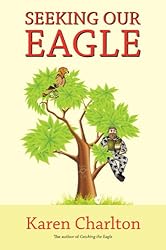
I wondered whether Stephen Lavender, the detective employed by  Nathaniel Ogle, the owner of Kirkley Hall was also a real historical figure. Karen Charlton has also written Seeking Our Eagle, another fascinating book, an account of how she came to write Catching the Eagle whilst researching her husband’s family history.  And yes, Stephen Lavender did exist and he was a detective. He later became the Deputy Chief Constable of Manchester after the formation of the police force by Sir Robert Peel.
Indeed reading Catching the Eagle reminded me of The Suspicions of Samuel Whicher by Kate Summerscale, featuring Detective Inspector Jonathan Whicher of Scotland Yard, the book that won the Samuel Johnson Prize for Non-Fiction in 2008.

Karen Charlton has done her research very well and has written a novel full of intrigue, tension and realism that kept me captivated from start to finish. See her website, Karen Charlton, to read more about Karen and her books.

She has also written The Heiress of Linn Hagh, a spin-off novel from Catching the Eagle, which features Detective Stephen Lavender and his sidekick, Constable Woods. And there are more Detective Lavender Series books on the way!

Catching the Eagle:

  • Paperback: 280 pages
  • Publisher: Famelton Publishing; 1 edition (19 July 2014)
  • ISBN-10: 0992803640
  • ISBN-13: 978-0992803643
  • Product Dimensions: 15.2 x 1.8 x 22.9 cm
  • Source: Library book

Seeking the Eagle:

  • Format: Kindle Edition
  • File Size: 1969 KB
  • Print Length: 166 pages
  • Publisher: Famelton Publishing; 1st edition (7 Aug. 2012)
  • Sold by: Amazon Media EU S.à r.l.
  • Language: English
  • ASIN: B008UZYOR2
  • Source: I bought it

As always I didn’t read either book just for any Reading Challenges, but Catching the Eagle does fit very well into a couple – the 2015  Historical Fiction Reading Challenge and the What’s in a Name Challenge, in the book with an animal in the title category and Seeking Our Eagle into the Nonfiction Reading Challenge.

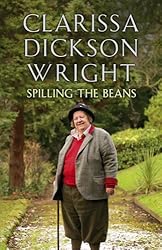
Spilling the Beans by Clarissa Dickson Wright

I’ve left it a bit too long to write about Spilling the Beans, Clarissa Dickson Wright’s autobiography because I’ve now forgotten much of the detail.  It’s a book I really enjoyed, but I finished it nearly two weeks ago! I’ve  been feeling a bit under the weather recently with a rotten cold and although I have been reading I haven’t been able to summon up enough mental energy to write much!

I quoted from the opening of the book in this post, with these details about Clarissa:

Clarissa Dickson Wright was an English celebrity chef ‘“ one of the Two Fat Ladies, a television personality, writer, businesswoman, and former barrister. She died last year on 15 March in the Edinburgh Royal Infirmary. Clarissa was a huge character in more than her size! Her autobiography is fascinating, coming from a privileged and wealthy background she had a difficult childhood- her father, a well respected surgeon was also an alcoholic who beat his wife and Clarissa.

After her mother died she took comfort from alcohol and at the mid point of the book she was as she described it ‘˜sunk in gin’ and homeless. I am looking forward to reading about her road to recovery.

In the rest of the book she described her period of homelessness, sleeping on benches in the Victoria Coach Station for two nights, but spending the rest of the time staying with friends, until she took jobs in domestic service, where she learned to cook. I liked her attitude to being a servant:

I have never understood the aversion to domestic service … I am not sufficiently bourgeoise to worry about my place in the class system and if you don’t understand this, well, that’s your problem. I had no sense of downshifting; maybe I should have had but pragmatism is the saving of many an alcoholic. (page 154)

She then went on to tell about her ‘dark night of the soul’ and her time at addiction centres, the treatment and her eventual recovery. All this took years and she was very honest and open.

She also wrote about her bookselling experience – all totally news to me – her time at ‘Cooks for Books’ changed her life and later after she had moved to Scotland in the late 1980s  she ran the Cook’s Bookshop in Edinburgh near the Grassmarket. She was declared bankrupt three times, was rector of Aberdeen University for six years. And then, of course, there were her TV shows – Two Fat Ladies, with Jennifer Paterson and Clarissa and The Countryman with Johnny Scott. She was a staunch supporter of the Countryside Alliance, against the ban on foxhunting .

Despite all her difficulties and her alcoholism this is an upbeat autobiography, ending on a positive note: “Believe me on one thing: I have a splendidly enjoyable life”. And believe me this is  a ‘splendidly enjoyable’ autobiography.

My copy is a hardback book, which I bought, but it is also available in paperback and ebook.

Note: I didn’t read this book to meet any challenges, but it does:

There is a spot just by the Scots Border at Berwick-upon-Tweed, where the train passes a stretch of the sea coast. Looking out of the window I felt, Oh it’s so lovely to be home, and if it’s home, I thought, I’d better stay and I have been here ever since. (page 225)

For another review see Cath’s blog Read Warbler.